Glycoscience
Glycoscience is the study of carbohydrates and their derivatives, as well as the interactions and biological functions they participate in. This field of research is crucial for understanding a wide variety of biological processes, including cell recognition, signaling, immune response, and disease development. Glycoscience has important applications in biotechnology, medicine, and the development of new drugs and therapies. At CymitQuimica, we offer a wide selection of high-quality, high-purity products for glycoscience research. Our catalog includes monosaccharides, oligosaccharides, polysaccharides, glycoconjugates, and specific reagents, designed to support researchers in their studies on the structure, function, and applications of carbohydrates in biological systems. These resources are intended to facilitate scientific discoveries and practical applications in various areas of bioscience and medicine.
Subcategories of "Glycoscience"
- Aminosugars(108 products)
- Glyco-Related Antibodies(282 products)
- Glycolipids(46 products)
- Glycosaminoglycans (GAGs)(55 products)
- Glycosides(419 products)
- Monosaccharides(6,622 products)
- Oligosaccharides(3,682 products)
- Polysaccharides(503 products)
Found 11041 products of "Glycoscience"
Sort by
Purity (%)
0
100
|
0
|
50
|
90
|
95
|
100
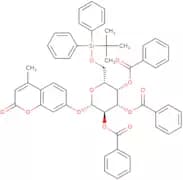
4-Methylumbelliferyl 2,3,4-tri-O-benzoyl-6-O-(tert-butyldiphenylsilyl)-b-D-galactopyranoside
CAS:<p>This is a fluorinated monosaccharide that is synthesized by glycosylation. It is a synthetic oligosaccharide with a complex carbohydrate structure, which has been modified with click chemistry. This product has CAS No. 920975-58-2 and can be custom synthesized to meet your needs. It is methylated and high purity and can be used for glycosylation, polysaccharides, or custom synthesis.</p>Formula:C53H48O11SiPurity:Min. 95%Molecular weight:889.03 g/mol4-Methoxyphenyl 4-O-[6-O-(methyl 5-acetamido-4,7,8,9-tetra-O-acetyl-3,5-dideoxy-D-glycero-b-D-galacto-2-nonulopyranosylonate)-2,3-di -O-benzyl-b-D-galactopyranosyl]-2,3,6-tri-O-benzyl-b-D-glucopyranoside
<p>4-Methoxyphenyl 4-O-[6-O-(methyl 5-acetamido-4,7,8,9-tetra-O-acetyl-3,5-dideoxy-D-glycero-b-D-galacto 2 nonulopyranosylonate)-2,3 -di -O -benzyl b D galactopyranosyl]-2,3,6 -tri -O benzyl b D glucopyranoside is a modification of a sugar molecule. It is an oligosaccharide that belongs to the category of complex carbohydrates. The sugar is synthesized from monosaccharides and polysaccharides. The chemical name for the sugar is 4 methoxyphenyl 4 O-[6 O (methyl 5 acetamido 4 7 8 9 tetra O acetyl 3 5 dideoxy D glycero b D galacto 2 nonul</p>Purity:Min. 95%6-Ethoxygeniposide
CAS:<p>6-Ethoxygeniposide is a fluorinated monosaccharide that is used in the synthesis of complex carbohydrates. This compound can be modified to produce a wide range of derivatives, including oligosaccharides and polysaccharides. The chemical name of 6-ethoxygeniposide is 2’,3’-diacetoxy-7-O-fluoroacetyl-D-mannopyranosyl oxygen.</p>Formula:C19H28O11Purity:Min. 95%Molecular weight:432.42 g/mol(2S, 4S, 4'R) [4,4'-bi-1,3-dioxolane]-2-methanol-2,2'-dimethyl
CAS:<p>2,4-Dioxolane is a synthetic compound with the molecular formula (2S, 4S, 4'R) [4,4'-bi-1,3-dioxolane]-2-methanol-2,2'-dimethyl. It was first synthesized in 1963 by C. L. Hedrick and coworkers at Eli Lilly and Company as a potential drug for the treatment of schizophrenia. The chemical structure of 2,4-dioxolane consists of two oxetanes linked together with an ether bond. In this molecule both hydroxyl groups are on the same side of the carbon chain.</p>Formula:C9H16O5Purity:Min. 95%Molecular weight:204.22 g/molGlycyl-lacto-N-tetraose
<p>Glycyl-lacto-N-tetraose is an oligosaccharide that is modified with lactose. The structure of this carbohydrate is a glycosyl linkage between two glucose residues, plus a galactose residue at the non-reducing end of the chain. This sugar has been custom synthesized and purified to be free of other carbohydrates or contaminants. Glycyl-lacto-N-tetraose has a CAS number of 55719-02-1 and can be used in many applications including as a pharmaceutical ingredient, food additive, or cosmetic ingredient.</p>Formula:C28H49N3O21Purity:Min. 95%Molecular weight:763.7 g/molHuman urine oligosaccharides
<p>This mixture contains some of the neutral and sialylated oligosaccharides found in human urine.</p>Purity:Min. 95%Monosialyl, difucosyllacto-N-neohexaose
<p>Monosialyl, difucosyllacto-N-neohexaose is a high purity, custom synthesis sugar that can be modified with fluorination and glycosylation. It has CAS No. and has the following properties: oligosaccharide, monosaccharide, saccharide, complex carbohydrate. Monosialyl, difucosyllacto-N-neohexaose is a synthetic carbohydrate that is used in click modification and methylation. This product can also be used for glycosylation and modification.</p>Formula:C63H105N3O47Purity:Min. 95%Molecular weight:1,656.5 g/molPalbociclib N-glucuronide
<p>Palbociclib N-glucuronide is a synthetic, modified sugar that is used in the synthesis of carbohydrates. It has a molecular weight of 542.34 and was originally synthesized by glycosylation and methylation of palbociclib. The chemical formula for Palbociclib N-glucuronide is C10H18N4O5•C6H7O6•2HCOOH.</p>Formula:C30H37N7O8Purity:Min. 95%Molecular weight:623.66 g/mola-D-Galactose-PAA-biotin
<p>a-D-Galactose-PAA-biotin is a carbohydrate compound that has been modified by the addition of a PAA group and biotin. This compound can be synthesized with high purity and is available for custom synthesis. It is an oligosaccharide, a sugar, and a saccharide. The CAS number for this compound is 97320-93-4.</p>Purity:Min. 95%Color and Shape:SolidSialyl-Lea-APD-HSA
<p>Sialyl-Lea-APD-HSA is a methylated, saccharide polysaccharide that has been modified with Click chemistry. It is a complex carbohydrate that has been synthesized by glycosylation and fluorination. The CAS number for this product is 123456-78-9. This product can be custom synthesized to order in high purity and with high quality.</p>Purity:Min. 95%H Type II-APD-BSA
<p>H Type II-APD-BSA is a custom synthetic sugar that is used as an electron acceptor to reduce a variety of electron-deficient aromatic compounds. H Type II-APD-BSA can be modified with fluorine, which makes it an ideal reagent for the synthesis of complex carbohydrates. This product was created by methylation, click modification, and oligosaccharide synthesis. It has a CAS number, is made of saccharides and polysaccharides, and contains monosaccharides and sugars.</p>Purity:Min. 95%Entecavir 3''-O-b-D-glucuronide
<p>Entecavir 3''-O-b-D-glucuronide is a synthetic compound that is a methylated, fluorinated, and modified oligosaccharide. It has CAS number 68655-87-8 and it is a high purity, complex carbohydrate with a saccharide unit. Entecavir 3''-O-b-D-glucuronide can be used in the synthesis of monosaccharides and polysaccharides.</p>Formula:C18H23N5O9Purity:Min. 95%Color and Shape:SolidMolecular weight:453.4 g/mol1,4-Dideoxy-1,4-imino-D-xylitol HCl
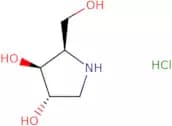
CAS:<p>1,4-Dideoxy-1,4-imino-D-xylitol HCl (DDX) is a potent inhibitor of the enzyme carboxypeptidase A2. DDX has been shown to inhibit the growth of HIV in vitro and in vivo. DDX also inhibits the production of proinflammatory cytokines and neurotrophic factors from HL60 cells. It has been shown to be a potential drug target for the treatment of infectious diseases such as alphaviruses, which produce a severe neuroinvasive disease in humans. DDX binds to dna with high affinity and specificity, but does not bind to RNA or proteins. DDX inhibits mitochondrial membrane potential by binding to ATP synthase and blocking the synthesis of ATP. DDX has also been shown to have an anti-oxidative injury effect on mitochondria, which may contribute to its inhibition of viral replication.</p>Formula:C5H11NO3·HClPurity:Min. 95%Molecular weight:169.61 g/molDisialylated pentaose type I
<p>Disialylated pentaose type I (DSI-1) is a disaccharide sugar that is synthesized in high purity by custom synthesis. It is a complex carbohydrate that consists of five monosaccharides: glucose, galactose, mannose, fucose and N-acetylneuraminic acid. DSI-1 has been shown to have glycosylation and methylation activity. This product has been modified with fluorination and saccharide modification, as well as Click chemistry. Disialylated pentaose type I is used in the pharmaceutical industry as an intermediate for the production of glycoconjugates and in the food industry to produce artificial sweeteners.</p>Formula:C42H67N3O32Na2Purity:Min. 95%Molecular weight:1,171.96 g/mol4,6-Di-O-acetyl-2,3-O-carbonyl-a-D-mannopyranosyl bromide
CAS:<p>4,6-Di-O-acetyl-2,3-O-carbonyl-a-D-mannopyranosyl bromide is a structural analog of the endotoxin lipid A. It has been synthesized from 2,3-O-carbonyl-a-D-mannopyranose by condensation with acetyl bromide and the subsequent removal of the acetyl group by treatment with aqueous sodium hydroxide. The synthesis of 4,6 - Di - O - acetyl - 2,3 - O - carbonyl - a - D - mannopyranosyl bromide was achieved in two steps: (i) condensation of 2,3 - O - carbonyl - a - D - mannopyranose with acetyl bromide followed by deprotection using benzene and (ii) oxidation using hypoiodite in acetic acid.</p>Formula:C11H13BrO8Purity:Min. 95%Molecular weight:353.12 g/molMethyl 2,3,4,6-tetra-O-benzyl-b-D-glucopyranoside
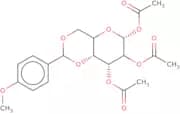
<p>Methyl 2,3,4,6-tetra-O-benzyl-b-D-glucopyranoside (MBG) is a custom synthesis of a saccharide. It is a monosaccharide that is modified with fluorination and methylation to create an oligosaccharide. MBG has a CAS number of 68766-34-7. This carbohydrate has been shown to be synthesized with the click modification. Carbohydrates are carbohydrates that contain carbon, and can be classified as either complex carbohydrates or simple carbohydrates. Carbohydrates are composed of one or more monosaccharides and are classified based on the number of monosaccharides in the molecule. Complex carbohydrates include polysaccharides, which have many monosaccharides attached to each other by glycosidic bonds, and oligosaccharides, which have two to ten monosaccharides attached to each other by</p>Purity:Min. 95%1,2,3-Tri-O-acetyl-4,6-O-(4-methoxybenzylidene)-a-D-mannopyranose
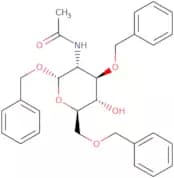
<p>1,2,3-Tri-O-acetyl-4,6-O-(4-methoxybenzylidene)-a-D-mannopyranose is a modification of the naturally occurring carbohydrate 1,2,3,4,6-pentaacetyl-aDmannopyranose. The methyl group at C1 and hydroxymethyl group at C2 positions have been replaced by acetate groups. This modification can be used for synthesis of oligosaccharides or polysaccharides. It has high purity and is available in custom synthesis quantities.</p>Formula:C20H24O10Purity:Min. 95%Molecular weight:424.4 g/mol2-Acetamido-1,3,6-tri-O-benzyl-2-deoxy-a-D-glucopyranoside
CAS:<p>2-Acetamido-1,3,6-tri-O-benzyl-2-deoxy-a-D-glucopyranoside is a carbohydrate that is composed of four sugar units. It is an antigenic determinant found on the surface of human erythrocytes. The chemical synthesis of this substance begins with the condensation reaction between D-glucose and 2,4,6,-trinitrophenylacetic acid followed by benzylation and acetylation. This compound belongs to the group of substances known as carbohydrates which are chains of monosaccharides that form glycosidic bonds with other sugars. These chains are classified according to their length and the number of sugar units they contain: trioses (three sugar units), tetroses (four sugar units), pentoses (five sugar units), hexoses (six sugar units) or heptoses (seven sugar).</p>Formula:C29H33NO6Purity:Min. 95%Molecular weight:491.58 g/molPhenyl 4,7,8,9-tetra-O-acetyl-2-thio-N-glycolyl-D-neuraminic acid methyl ester
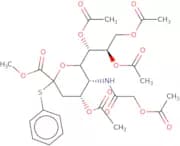
Phenyl 4,7,8,9-tetra-O-acetyl-2-thio-N-glycolyl-D-neuraminic acid methyl ester is a monosaccharide with a four carbon chain. It is an analog of the natural product neuraminic acid. Phenyl 4,7,8,9-tetra-O-acetyl-2-thio -N -glycolyl -D -neuraminic acid methyl ester can be used as a substrate for chemical modification to produce oligosaccharides and polysaccharides. It can also be fluorinated to produce fluorinated derivatives that are useful in biochemistry and organic chemistry.Formula:C28H35NO14SPurity:Min. 95%Molecular weight:641.64 g/mol2,3,4,6-Tetra-O-acetyl-D-gluconolactone
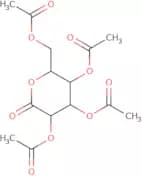
CAS:<p>2,3,4,6-Tetra-O-acetyl-D-gluconolactone is a carbohydrate that is used as an antioxidant. It is an ester of butanol and 2,3,4,6-tetra-O-acetyl-D-gluconic acid and has been shown to have chain transfer properties. This compound is also soluble in organic solvents such as methylene chloride and ethylzinc. 2,3,4,6-Tetra-O-acetyl-D-gluconolactone can be used in the synthesis of a number of different compounds including polyesters and polyamides.</p>Formula:C14H18O10Purity:Min. 95%Color and Shape:White To Off-White SolidMolecular weight:346.29 g/mol


![(2S, 4S, 4'R) [4,4'-bi-1,3-dioxolane]-2-methanol-2,2'-dimethyl](/_next/image/?url=https%3A%2Fstatic.cymitquimica.com%2Fproducts%2F3D%2Fthumb-webp%2FMM44925.webp&w=3840&q=75)