Glycoscience
Glycoscience is the study of carbohydrates and their derivatives, as well as the interactions and biological functions they participate in. This field of research is crucial for understanding a wide variety of biological processes, including cell recognition, signaling, immune response, and disease development. Glycoscience has important applications in biotechnology, medicine, and the development of new drugs and therapies. At CymitQuimica, we offer a wide selection of high-quality, high-purity products for glycoscience research. Our catalog includes monosaccharides, oligosaccharides, polysaccharides, glycoconjugates, and specific reagents, designed to support researchers in their studies on the structure, function, and applications of carbohydrates in biological systems. These resources are intended to facilitate scientific discoveries and practical applications in various areas of bioscience and medicine.
Subcategories of "Glycoscience"
- Aminosugars(108 products)
- Glyco-Related Antibodies(282 products)
- Glycolipids(46 products)
- Glycosaminoglycans (GAGs)(55 products)
- Glycosides(419 products)
- Monosaccharides(6,622 products)
- Oligosaccharides(3,682 products)
- Polysaccharides(503 products)
Found 11041 products of "Glycoscience"
Sort by
Purity (%)
0
100
|
0
|
50
|
90
|
95
|
100
Raltegravir b-D-glucuronide
CAS:<p>Raltegravir b-D-glucuronide is a synthetic, fluorinated analog of raltegravir. It is a potent HIV-1 integrase inhibitor that has been shown to be active against the majority of HIV-1 strains. Raltegravir b-D-glucuronide is less potent than the parent compound and exhibits reduced antiviral activity in vitro. Raltegravir b-D-glucuronide is metabolized to raltegravir and eliminated in urine as the glucuronide conjugate.</p>Formula:C26H29FN6O11Purity:Min. 95%Color and Shape:White PowderMolecular weight:620.54 g/molFluconazole D-glucuronide
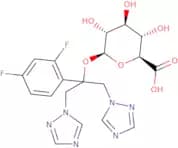
CAS:<p>Fluconazole D-glucuronide is a synthetic, fluorinated sugar that has been modified with a glycosylation. It is synthesized by reacting fluconazole with the sugar glucuronic acid in the presence of an enzyme called glycosyltransferase. Fluconazole D-glucuronide is a custom synthesis, and it can be used as a pharmaceutical intermediate to produce other compounds. Fluconazole D-glucuronide is also used as an analytical standard for quantifying fluconazole in biological samples.</p>Purity:Min. 95%Ethyl 4-O-allyl-3,6-di-O-benzyl-2-O-levulinoyl-b-D-thioglucopyranoside
<p>Ethyl 4-O-allyl-3,6-di-O-benzyl-2-O-levulinoyl-b-D-thioglucopyranoside is a carbonylated sugar. It is used as an intermediate in the synthesis of glycosides and saccharides. This chemical can be custom synthesized to meet your requirements. Ethyl 4-O-allyl-3,6-di-O-benzyl 2,5,6 trideoxygalactoside can be methylated, glycosylated, or fluorinated to produce different derivatives.</p>Purity:Min. 95%Disialylnonasaccharide-β-PNP
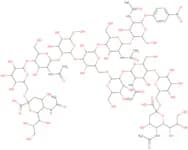
CAS:<p>Disialylnonasaccharide-β-PNP is a synthetic glycosylated oligosaccharide. It has a disialic acid residue at the reducing end and β-linked nonasaccharide residues at the nonreducing end. Disialylnonasaccharide-β-PNP is used as a monomer for the synthesis of polysaccharides, which are complex carbohydrates. Click modification of the saccharide unit can be carried out with an azido or nitro group. Disialylnonasaccharide-β-PNP is typically found in high purity and can be modified to suit your needs.</p>Formula:C90H141N7O64Purity:Min. 95%Molecular weight:2,345.1 g/mola-Cyclodextrin sulfate sodium salt
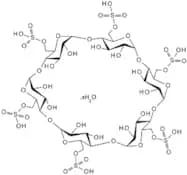
CAS:<p>Alpha-cyclodextrin (α-CD) derivative with a hydrophilic exterior and lipophilic cavity (smaller than β-CDs and γ-CDs) to allocate certain guest molecules. This structural characteristic enables applications in molecular encapsulation, solubility enhancement, and stabilization across multiple industries. In pharmaceuticals, it serves as a drug delivery vehicle, enhancing the bioavailability and stability of active ingredients. The food industry utilizes it as a stabilizer for flavors, colors, and nutrients, as well as a functional ingredient for its effects on lipid metabolism. In cosmetics, it acts as a complex agent for fragrances and active components. Its applications extend to analytical chemistry for chiral separation and to materials science for developing smart materials and nanosystems.</p>Purity:Min. 95%Color and Shape:White PowderMethyl D-glucofuranoside
CAS:<p>Methyl D-glucofuranoside is a model compound of a sugar that has been modified with an acyl group. The hydroxy group in this molecule is the site of attachment for other molecules that can modify the sugar. In impure samples, methyl glycosides are frequently observed due to their high solubility in water. Methyl glycosides have been used as a synthetic intermediate in the production of empagliflozin, an anti-diabetic drug. Protocatechuic acid and nucleophilic reagents are often used during synthesis to convert the hydroxyl group into an ether or ester linkage. This modification makes methyl D-glucofuranoside more soluble in organic solvents. Methyl D-glucofuranoside has two stereoisomers: (S) and (R). The erythro form is most common, but there are also traces of the threo form present in some samples.</p>Formula:C7H14O6Purity:Min. 95%Color and Shape:SolidMolecular weight:194.18 g/molDextran 70 - MW 64,000 to 76,000, EP
CAS:<p>Complex glucan (a 1-6) from Leuconostoc spp.; extender in blood transfusions.</p>Purity:Min. 95%T-antigen-HSA
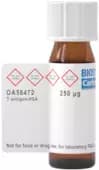
<p>T-antigen-HSA is a synthetic, high-purity, custom synthesis glycoprotein with click modification. It is a complex carbohydrate that contains an oligosaccharide and a saccharide, which are attached to the protein backbone through an amide linkage. T-antigen-HSA is synthesized using recombinant DNA technology and can be modified by fluorination, methylation, or other modifications. This product has CAS No.</p>Purity:Min. 95%Color and Shape:White PowderMethyl-4-deoxy-a-L-threo-hex-4-enopyranosiduronic acid
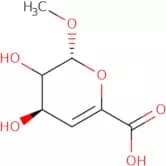
CAS:<p>Methyl-4-deoxy-a-L-threo-hex-4-enopyranosiduronic acid is a sugar that belongs to the group of complex carbohydrates. This compound is made up of a saccharide and a monosaccharide, which are glycosylated with other saccharides. Methylation and glycosylation of this molecule create an oligosaccharide. The structure of this molecule has been modified by fluorination, methylation, and glycosylation. This product is synthesized from raw materials, such as sugar.<br>Methyl - 4 - deoxy - a - L - threo - hex - 4 - enopyranosiduronic acid is used in Click modification reactions to modify the carbohydrate chain. This product is also used in the synthesis of various compounds with different functions, such as fluoroquinolones or antibiotics.</p>Formula:C7H10O6Purity:Min. 95%Molecular weight:190.15 g/molFluorescein isothiocyanate-dextran - Average MW 20,000
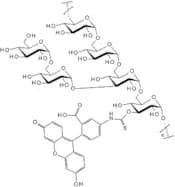
CAS:<p>Anterograde and retrograde tracer in neurons; biologically inert</p>Purity:Min. 95%Allyl 3-O-benzyl-a-L-rhamnopyranoside
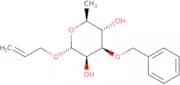
CAS:<p>Allyl 3-O-benzyl-a-L-rhamnopyranoside is an oligosaccharide that is a modification of the disaccharide, allyl 3-O-benzyl-a-D-galactopyranoside. Allyl 3-O-benzyl-a-L-rhamnopyranoside has been synthesized from D-(+)-glucose and L-(+)-rhamnose. The compound has a molecular weight of 756.40 g/mol. It is a white to off white powder that is soluble in water, but insoluble in ethanol at low concentrations. It can be used as a carbohydrate or sugar for research purposes.</p>Formula:C16H22O5Purity:Min. 95%Molecular weight:294.35 g/mol2-(4-Methoxybenzyl)phenyl6-O-(ethoxycarbonyl)-β-D-glucopyranoside
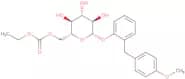
CAS:<p>Canagliflozin is a type of antidiabetic agent that is used to treat patients with type 2 diabetes. This drug works by decreasing the reabsorption of glucose in the kidneys, which increases the excretion of glucose, and thus reduces blood sugar levels. Canagliflozin also lowers blood pressure and has been shown to reduce cholesterol levels. It is an inhibitor of SGLT-1, a transporter protein in the kidney that is responsible for renal glucose reabsorption. The use of canagliflozin has been studied in animal models, where it was found to significantly increase glomerular filtration rate (GFR) and decrease blood pressure. It is recommended that canagliflozin be taken together with other anti-diabetic medications, such as insulin or metformin, due to its potential side effects on GFR and blood pressure.</p>Formula:C23H28O9Purity:Min. 95%Molecular weight:448.46 g/molD-Galactose diethyldithioacetal
CAS:<p>D-Galactose diethyldithioacetal is a phenylhydrazone that has an affinity for the C-3 position of sugars. It is synthesised from D-galactose and diethyldithiocarbonyl chloride, with a borohydride reduction to give the hydroxyl group. The hydroxyl group reacts with methyl glycosides or carbohydrates to produce 3-substituted glycosides or 3-substituted carbohydrate. D-Galactose diethyldithioacetal also inhibits glycosidase enzymes, which are enzymes that break down sugars, and thus prevents the digestion of sugars. The chemical structure of D-galactose diethyldithioacetal was determined by magnetic resonance spectroscopy. The product was found to be L-fucitol (a sweetener) after desulfurization using hydrogen gas for removal of sulfur compounds.</p>Formula:C10H22O5S2Purity:Min. 95%Molecular weight:286.41 g/molD-Glucose 2-phosphate
CAS:<p>D-Glucose 2-phosphate (D-G6P) is a glycolysis intermediate that is generated by the enzyme phosphoglucose isomerase. It is necessary for the synthesis of glycogen and starch, as well as for the formation of glucose 6-phosphate in glycolysis. D-G6P has been shown to be an important substrate for enzymes involved in phosphate transfer. D-G6P also plays a role in mitochondrial function, as it can be converted to ATP by the enzyme pyruvate kinase. D-G6P has been shown to alter physiological effects in wild type strains of yeast and plants, as well as having disease activity against human serum.</p>Formula:C6H13O9PPurity:Min. 95 Area-%Color and Shape:PowderMolecular weight:260.14 g/mol4,7,8,9-Tetra-O-acetyl-N-acetyl-D-neuraminic acid methyl ester
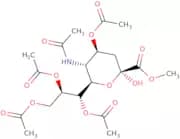
CAS:<p>4,7,8,9-Tetra-O-acetyl-N-acetyl-D-neuraminic acid methyl ester is a modified form of sialic acid. This compound is a glycosylation product that has been modified with methyl groups and fluorine atoms. The fluorination of the molecule increases its stability and prevents it from being hydrolyzed by enzymes such as β-galactosidase. 4,7,8,9-Tetra-O-acetyl-N-acetyl-D-neuraminic acid methyl ester is often used in the synthesis of polysaccharides and oligosaccharides for medical purposes. This compound can be custom synthesized for research purposes or to meet special requirements.</p>Formula:C20H29NO13Purity:Min. 95%Color and Shape:White to off-white solid.Molecular weight:491.44 g/mol4-(Methylnitrosamino)-1-(3-pyridyl)-1-butanol-N-b-D-glucuronide
CAS:<p>4-(Methylnitrosamino)-1-(3-pyridyl)-1-butanol-N-b-D-glucuronide is a glycosylated, modified sugar with a fluorinated methyl group. It is synthesized in the laboratory and does not occur naturally. The sugar moiety of this compound contains an oligosaccharide that consists of a complex carbohydrate, including saccharides, monosaccharides, and polysaccharides. This modification can be done by click chemistry or by other methods. 4-(Methylnitrosamino)-1-(3-pyridyl)-1-butanol-N-b-D-glucuronide is high purity and modification products are available upon request.</p>Formula:C16H23N3O8Purity:Min. 95%Molecular weight:385.37 g/mol3-Hydroxystanozolol glucuronide
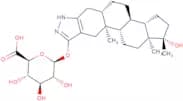
CAS:<p>3-Hydroxystanozolol glucuronide is a metabolite of stanozolol that has been found in human urine. 3-Hydroxystanozolol glucuronide is formed as an intermediate during the metabolic conversion of stanozolol to its active form, which then is hydrolyzed by erythrocyte esterases or glucuronidases to form 3-hydroxystanozolol. This metabolite has been validated as an analytical marker for monitoring the use of stanozolol in sport and population studies.</p>Formula:C26H38N2O8·C2H6Purity:Min. 95%Molecular weight:536.66 g/molEthyl 2,3,4-tri-O-benzyl-L-fucopyranoside
<p>Ethyl 2,3,4-tri-O-benzyl-L-fucopyranoside is a polysaccharide that is modified by the addition of benzyl groups to the hydroxyl group at C2. This modification increases the resistance of this compound to degradation by glycosidases and also prevents any undesired reactions with other saccharides. Ethyl 2,3,4-tri-O-benzyl-L-fucopyranoside is a custom synthesis that can be made in high purity and with high carbohydrate content. The CAS number for this compound is 61721–76–8.</p>Formula:C29H34O5Purity:Min. 95%Molecular weight:462.58 g/molMethyl b-neuraminic acid methyl ester
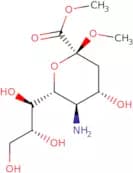
CAS:<p>Methyl b-neuraminic acid methyl ester is a synthetic monosaccharide that is used for the synthesis of oligosaccharides and polysaccharides. Methylation of this compound provides a convenient way to introduce fluorine atoms into saccharides, which can be used for click chemistry reactions. Methyl b-neuraminic acid methyl ester is also used in the synthesis of glycosylated proteins, as it can be easily hydrolyzed by enzymes such as sialidase and neuraminidase. This product is sold at high purity and custom synthesis.</p>Formula:C11H21NO8Purity:Min. 95%Molecular weight:295.29 g/mol3,5:6,7-Di-O-isopropylidene-D-glycero-D-gulo-heptonic acid-γ-lactone
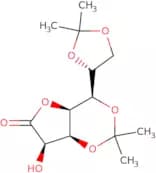
CAS:<p>3,5:6,7-Di-O-isopropylidene-D-glycero-D-gulo-heptonic acid-gamma-lactone is a synthetic sugar that has been modified with methyl groups. The chemical can be used in the synthesis of saccharides and polysaccharides. It is also possible to use this chemical as a click modification agent for proteins or other biomaterials. This product has a CAS number of 6605-22-7 and can be synthesized in high purity. The product is fluorinated and complex carbohydrates.</p>Formula:C13H20O7Purity:Min. 95%Molecular weight:288.29 g/mol