Glycoscience
Glycoscience is the study of carbohydrates and their derivatives, as well as the interactions and biological functions they participate in. This field of research is crucial for understanding a wide variety of biological processes, including cell recognition, signaling, immune response, and disease development. Glycoscience has important applications in biotechnology, medicine, and the development of new drugs and therapies. At CymitQuimica, we offer a wide selection of high-quality, high-purity products for glycoscience research. Our catalog includes monosaccharides, oligosaccharides, polysaccharides, glycoconjugates, and specific reagents, designed to support researchers in their studies on the structure, function, and applications of carbohydrates in biological systems. These resources are intended to facilitate scientific discoveries and practical applications in various areas of bioscience and medicine.
Subcategories of "Glycoscience"
- Aminosugars(108 products)
- Glyco-Related Antibodies(282 products)
- Glycolipids(46 products)
- Glycosaminoglycans (GAGs)(55 products)
- Glycosides(419 products)
- Monosaccharides(6,622 products)
- Oligosaccharides(3,682 products)
- Polysaccharides(503 products)
Found 11041 products of "Glycoscience"
Sort by
Purity (%)
0
100
|
0
|
50
|
90
|
95
|
100
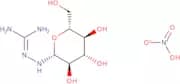
N1-b-D-Glucopyranosylamino-guanidine HNO3
CAS:<p>N1-b-D-Glucopyranosylamino-guanidine HNO3 is a modification of the sugar N1-b-D-glucopyranosylamino. It is a monosaccharide that can be methylated and glycosylated, and is an example of a complex carbohydrate. The compound can also undergo fluorination or saccharide modifications such as click chemistry. It is synthesized with high purity and has been used in research to study the interactions between carbohydrates and proteins.</p>Formula:C7H16N4O5·HNO3Purity:Min. 95%Molecular weight:299.24 g/molm-Methoxytopolin-9-glucoside
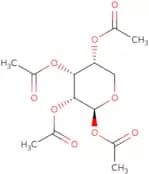
CAS:<p>M-methoxytopolin-9-glucoside is a synthetic oligosaccharide that has been modified with fluorination and methylation. It is an important intermediate for the synthesis of complex carbohydrates. M-methoxytopolin-9-glucoside can be used in the production of glycosylated polysaccharides, including glycoproteins, proteoglycans, and mucopolysaccharides. This product is offered at a purity level of > 98% and can be used for custom synthesis.</p>Formula:C19H23N5O6Purity:Min. 95%Molecular weight:417.42 g/mol1,2,3,4-Tetra-O-acetyl-β-D-ribopyranose
CAS:<p>1,2,3,4-Tetra-O-acetyl-b-D-ribopyranose is a lipase inhibitor that belongs to the class of lipolytic enzymes. It has been shown to be an effective inhibitor of lipases and has demonstrated enantiopure selectivity for the hydrolysis of racemic mixtures. This substance is used in industrial processes as a surrogate for other more expensive substances. The 1,2,3,4-Tetra-O-acetyl-b-D-ribopyranose has been used as a screening tool to identify potential inhibitors of human pancreatic lipase. The results have shown that this compound inhibits the activity of this enzyme with high specificity and sensitivity.</p>Formula:C13H18O9Purity:Min. 95%Color and Shape:PowderMolecular weight:318.28 g/mol1-O-Propargyl 3, 4, 6- tri-O-acetyl- D- fructofuranose
<p>1-O-Propargyl 3, 4, 6-tri-O-acetyl-D-fructofuranose is a synthetic oligosaccharide that can be used as a fluorinated building block for the synthesis of glycosides. It can be modified with various reagents such as methylation, monosaccharide or sugar modification. The CAS number for this compound is 54733-90-5.</p>Purity:Min. 95%3,5-O-Isopropylidene-L-arabinofuranose
<p>3,5-O-Isopropylidene-L-arabinofuranose is a sugar that is used in the synthesis of saccharides. It is a monosaccharide that can be modified by fluorination, methylation, and custom synthesis. This product has been shown to be an excellent substrate for click chemistry and can be used as an intermediate in the production of oligosaccharides and polysaccharides. 3,5-O-Isopropylidene-L-arabinofuranose has a high purity level and can be used as a replacement for other sugars in complex carbohydrate synthesis.</p>Purity:Min. 95%N-Acetyl-D-galactosamine, plant-based
CAS:<p>N-Acetyl-D-galactosamine (GalNAc) is an aldohexose. It forms a key part of both N- and O-linked glycoproteins, glycolipids, gangliosides, blood groups, glycosaminoglycans (chondroitin and dermatan sulfate) and human milk oligosaccharides.This N-Acetyl-D-galactosamine product (MA184543) is plant-based and produced synthetically from Arabic gum.GalNAc clusters and derivatives, typically composed of three (or more) GalNAc moieties arranged in a specific spatial configuration, are a powerful tool for targeted delivery of nucleic acid therapeutics, specifically in liver targeted therapies. These multivalent ligands effectively bind and internalize via the asialoglycoprotein receptor (ASGPR) expressed on the surface of hepatocytes.</p>Formula:C8H15NO6Purity:Min. 97 Area-%Molecular weight:221.21 g/mol3-Deoxy-3,3-difluoro-1,2-O-isopropylidene-a-D-xylofuranose
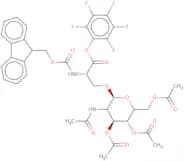
<p>3-Deoxy-3,3-difluoro-1,2-O-isopropylidene-a-D-xylofuranose is a custom synthesis that is a complex carbohydrate. This product has CAS No. and is a polysaccharide with methylation and glycosylation. 3DDFIOPY has high purity, fluorination, and click modification. It is a sugar or carbohydrate with a saccharide that can be modified with methylation and glycosylation.</p>Formula:C8H12F2O4Purity:Min. 95%Molecular weight:210.18 g/mol2-Acetamido-3,4,6-tri-O-acetyl-2-deoxy-a-D-galactopyranosyl-(N-Fmoc)-L-serine pentafluorophenyl ester
CAS:<p>The 2-acetamido-3,4,6-tri-O-acetyl-2-deoxy-a-D-galactopyranosyl-(N-Fmoc)-L-serine pentafluorophenyl ester is a synthetic sugar that has been modified using the Click chemistry. It is a complex carbohydrate that can be used in the synthesis of oligosaccharides and polysaccharides. This product is custom synthesized to order and has high purity. The 2AA3TA2DO6TFA2DGA2DGAPFPE2SAR2LSE5 is an oligosaccharide with a monosaccharide at the reducing end and methylated at the nonreducing end. The 2AA3TA2DO6TFA2DGA2DGAPFPE2SAR2LSE5 has been fluorinated at the saccharide position on the nonreducing end</p>Formula:C38F5H35N2O13Purity:Min. 95%Molecular weight:822.69 g/mol6-a-D-Glucopyranosylmaltotriose tetradecaacetate
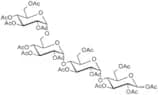
CAS:<p>6-a-D-Glucopyranosylmaltotriose tetradecaacetate is a synthetic carbohydrate that is used as a building block for the synthesis of complex carbohydrates. It is synthesized from maltotriose by glycosylation with 6-a-D-glucopyranose and subsequent enzymatic hydrolysis. 6-a-D-Glucopyranosylmaltotriose tetradecaacetate has been shown to be resistant to modification of its methyl groups, which makes it an ideal candidate for custom synthesis. This compound has been shown to be stable under physiological conditions, which makes it ideal for use in biomedical applications.<br>6-a-D-Glucopyranosylmaltotriose tetradecaacetate can be used in the synthesis of oligosaccharides or polysaccharides due to its high purity, which is comparable to that of dext</p>Formula:C52H70O35Purity:Min. 95%Molecular weight:1,255.09 g/mola-Tetrasaccharide-APE-KLH
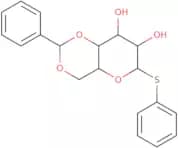
<p>a-Tetrasaccharide-APE-KLH is a modification of the original tetrasaccharide APE-KLH conjugate. This modified conjugate has increased stability and higher binding affinity to the Fc receptor, which is required for antibody therapy. It is synthesized by custom synthesis and has high purity, with a CAS number of 674797-36-5. The monosaccharides in this conjugate are methylated and glycosylated, with a molecular weight of 1254. The saccharides are fluorinated and saccharide with a molecular weight of 1354.</p>Purity:Min. 95%Phenyl 4,6-O-benzylidene-b-D-thiogalactopyranoside
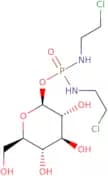
CAS:<p>Phenyl 4,6-O-benzylidene-b-D-thiogalactopyranoside is a synthetic monosaccharide that is custom synthesized. It has a CAS number of 138922-03-9 and can be used in the modification of complex carbohydrates, saccharides, oligosaccharides, and polysaccharides. It is also used for methylation and fluorination. Phenyl 4,6-O-benzylidene-b-D-thiogalactopyranoside has a molecular weight of 270.27 g/mol and a melting point of 221 degrees Celsius.</p>Formula:C19H20O5SPurity:Min. 95%Color and Shape:PowderMolecular weight:360.42 g/molGlufosfamide
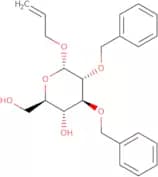
CAS:<p>Glufosfamide is a cytotoxic drug that is used in the treatment of some types of cancer. It is a prodrug that requires conversion to its active form, glufosfamid, by esterase enzymes before it can exert its genotoxic effects. Glufosfamide has shown to be active against platinum-resistant ovarian cancer and solid tumours. This drug also has been shown to inhibit the growth of prostate cancer cells and miapaca-2 cells, which are derived from pancreatic cancer. Glufosfamide has been found to have low toxicity in mice, but there may be adverse reactions when combined with other drugs such as erythromycin or ketoconazole.</p>Formula:C10H21Cl2N2O7PPurity:Min. 95%Molecular weight:383.16 g/molAllyl 2,3-di-O-benzyl-a-D-glucopyranoside
CAS:<p>Allyl 2,3-di-O-benzyl-a-D-glucopyranoside is a plant growth regulator that stimulates callus formation. It belongs to the group of auxins and has been shown to promote callus growth in Arabidopsis thaliana cultivars, such as glaberrima and kinetin. This compound has also been shown to stimulate the formation of calli from coconut explants.</p>Formula:C23H28O6Purity:Min. 95%Molecular weight:400.46 g/molN-Glycolyl GM1 ganglioside
<p>N-Glycolyl GM1 ganglioside has a core tetrasaccharide structure (Galβ1,3GalNAcβ1,4Galβ1,4Glc) with N-glycolyl sialic acid linked α2,3 to the central galactose residu,e and ceramide linked β to position 1 on the reducing terminal glucose residue (Ledeen, 2009). SV40, Py, and the human BK viruses are unusual among viruses in that they use glycolipids as their major cell surface receptors. SV40 uses the N-glycolylneuraminic acid (NeuGc) analog of the ganglioside GM1 [GM1(Gc)] as the cell surface receptor and it gave markedly stronger binding signals than the NeuAc analog [GM1(Ac)] (Campanero-Rhodes, 2007).</p>Purity:Min. 95%Benzyl N,N'-di-acetyl-b-chitobioside
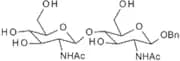
CAS:<p>Benzyl N,N'-di-acetyl-b-chitobioside is a fluorinated glycoside. It is a synthetic compound that has been modified by the addition of a benzyl group to the acetyl group at the C3 position and an N,N'-diacetyl group to the b-chitobioside. This modification has been carried out in order to improve its water solubility and bioavailability.</p>Formula:C23H34N2O11Purity:Min. 95%Color and Shape:PowderMolecular weight:514.52 g/molMaltotriose
CAS:<p>Shortest chain oligosaccharide that can be classified as a maltodextrin. A component of liquid glucose (a commercial sweetener composed of glucose, maltose, maltotriose and maltotetrose).</p>Formula:C18H32O16Purity:Min. 90.0 Area-%Molecular weight:504.45 g/molN-Acetyl-D-lactosamine BSA (3 atom spacer)
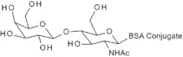
CAS:<p>N-Acetyl-D-lactosamine BSA (3 atom spacer) is a synthetic oligosaccharide with 3 acetyl groups on the reducing end and a biotin-streptavidin complex attached to the nonreducing end. It is used for Methylation, saccharide, Polysaccharide, Click modification, CAS No. 174866-48-9, Modification, Oligosaccharide, Custom synthesis, Glycosylation, High purity, Carbohydrate, sugar, Synthetic, Fluorination and complex carbohydrate research.</p>Purity:Min. 95%Methyl 2,3,4,6-tetra-O-acetyl-b-D-thiogalactopyranoside
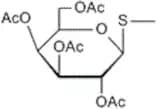
CAS:<p>Methyl 2,3,4,6-tetra-O-acetyl-b-D-thiogalactopyranoside is a synthetic carbohydrate with the CAS number 55722-48-0. Methyl 2,3,4,6-tetra-O-acetyl-b-D-thiogalactopyranoside is used in the synthesis of oligosaccharides and monosaccharides. This product can be custom synthesized to meet your specifications. Methyl 2,3,4,6-tetra-O-acetyl-b -D -thiogalactopyranoside has been fluorinated and glycosylated for the synthesis of complex carbohydrates and saccharides. This product has high purity and can be customized to meet your specifications.</p>Formula:C15H22O9SPurity:Min. 95%Molecular weight:378.4 g/molHyaluronate octasaccharide
CAS:<p>Hyaluronate octasaccharide is a regulatory molecule that has been found to be useful for staining and as a chondrocyte culture supplement. Hyaluronate octasaccharide is composed of two sugar molecules: glucuronic acid and N-acetylglucosamine. The molecular weight of this compound is about 5000 Daltons, and it has been found to show high levels of proton hydrogen bonding interactions with other molecules in the extracellular matrix. It also contains oligosaccharides and disaccharides. Hyaluronate octasaccharide can be used in vitro to stimulate cell growth, which may be due to its ability to stabilize collagen and elastin fibers by binding with collagenase.</p>Formula:C56H86N4O45Purity:Min. 95%Molecular weight:1,535.3 g/mol