Glycoscience
Glycoscience is the study of carbohydrates and their derivatives, as well as the interactions and biological functions they participate in. This field of research is crucial for understanding a wide variety of biological processes, including cell recognition, signaling, immune response, and disease development. Glycoscience has important applications in biotechnology, medicine, and the development of new drugs and therapies. At CymitQuimica, we offer a wide selection of high-quality, high-purity products for glycoscience research. Our catalog includes monosaccharides, oligosaccharides, polysaccharides, glycoconjugates, and specific reagents, designed to support researchers in their studies on the structure, function, and applications of carbohydrates in biological systems. These resources are intended to facilitate scientific discoveries and practical applications in various areas of bioscience and medicine.
Subcategories of "Glycoscience"
- Aminosugars(108 products)
- Glyco-Related Antibodies(282 products)
- Glycolipids(46 products)
- Glycosaminoglycans (GAGs)(55 products)
- Glycosides(419 products)
- Monosaccharides(6,622 products)
- Oligosaccharides(3,682 products)
- Polysaccharides(503 products)
Found 11041 products of "Glycoscience"
Sort by
Purity (%)
0
100
|
0
|
50
|
90
|
95
|
100
Naltrexone 3-D-glucuronide-D4
<p>Naltrexone 3-D-glucuronide-D4 is a carbohydrate. It is a glycosylation product of naltrexone. The compound has been synthesized by the methylation of naltrexone and the glycosylation of the resultant product with glucose. Naltrexone 3-D-glucuronide-D4 is a high purity, custom synthesis, synthetic carbohydrate with a CAS number.</p>Purity:Min. 95%α-D-Maltotetraose
CAS:<p>α-D-Maltotetraose is a natural carbohydrate that has been shown to have potential as an anticancer agent. It is an inhibitor of tumor-associated kinases and has been found to induce apoptosis in cancer cells. α-D-Maltotetraose has also been shown to inhibit streptokinase, an enzyme involved in the breakdown of blood clots. This carbohydrate analog has been detected in human urine and may play a role in regulating gastrin secretion. Studies have shown that α-D-Maltotetraose can inhibit the growth of Chinese hamster ovary cells, suggesting its potential as a novel anticancer therapy.</p>Formula:C24H42O21Purity:Min. 95%Molecular weight:666.6 g/molAMP-Deoxynojirimycin - Solution in ethanol
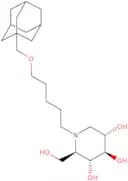
CAS:<p>Potent inhibitor of non-lysosomal glucosylceramidase, without having any effect on glucosylceramide synthase and glucosidases. Anti-inflammatory and immunosuppressive effect of AMP-DNM demonstrated in a model of hapten-induced colitis in vivo. Reduces glycosphingolipids and increases insulin sensitivity in murine models of obesity-related insulin resistance. Induces sterol regulatory element-binding protein (SREBP) target genes in HepG2 cells, activating cholesterol biosynthesis.</p>Formula:C22H39NO5Purity:Min. 95%Color and Shape:Colorless Clear LiquidMolecular weight:397.55 g/mol2,3,4-Tri-O-benzoyl-L-fucopyranosyl bromide
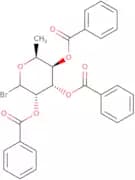
CAS:<p>2,3,4-Tri-O-benzoyl-L-fucopyranosyl bromide is a synthetic compound that is used as a reagent in the synthesis of complex carbohydrates. It is also an intermediate in the synthesis of oligosaccharides and polysaccharides. This product can be modified by methylation, glycosylation and fluorination to generate desired products. The CAS number for this product is 855662-12-3.</p>Formula:C27H23BrO7Purity:Min. 95%Molecular weight:539.37 g/mol1,2, 4,6-Tetra-O-acetyl-3-O-carbamoyl- D-mannopyranose
CAS:<p>1,2,4,6-Tetra-O-acetyl-3-O-carbamoyl-D-mannopyranose is a synthetic sugar that belongs to the class of glycosides. It can be used in the synthesis of oligosaccharides and polysaccharides. This product is custom synthesized on request and can be modified with fluorination, methylation or click modification. It is available in high purity and has a CAS number of 99748-11-5.</p>Formula:C15H21NO11Purity:Min. 95%Molecular weight:391.33 g/mol6-O-Acetyl-1,2:3,5-di-O-methylidene-a-D-glucofuranose
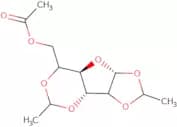
CAS:<p>6-O-Acetyl-1,2:3,5-di-O-methylidene-a-D-glucofuranose is a methylated saccharide that is a member of the polysaccharides. The compound has been modified using click chemistry to produce a fluorescent derivative. 6-O-Acetyl-1,2:3,5-di-O-methylidene-a-D-glucofuranose is also used for glycosylation and can be synthesized to provide high purity carbohydrates or sugars. It has an CAS number of 3244800 and may be used as a fluorinated complex carbohydrate.</p>Formula:C12H18O7Purity:Min. 95%Color and Shape:White to off-white solid.Molecular weight:274.27 g/molHexasaccharide dp6
<p>Hexasaccharide dp6 is a synthetic hexasaccharide that mimics heparin. It binds to the antithrombin III and pentasaccharide in human plasma, which are proteins that inhibit blood clotting. Hexasaccharide dp6 also has affinity for peptides from HIV-1 and anti-HIV activity. Hexasaccharide dp6 can be used to prevent coagulation or as an antithrombotic agent.</p>Formula:C36H93N15O57S9Purity:Min. 95%Molecular weight:1,936.78 g/molCarboxymethyl cellulose sodium - Viscosity 4000-6000 mPa·s
CAS:<p>Please enquire for more information about Carboxymethyl cellulose sodium - Viscosity 4000-6000 mPa·s including the price, delivery time and more detailed product information at the technical inquiry form on this page</p>N1-b-D-Glucopyranosylamino-guanidine HCl
CAS:<p>N1-b-D-Glucopyranosylamino-guanidine HCl is a synthetic, fluorinated, monosaccharide. It is a complex carbohydrate that can be modified to create a custom synthesis for glycosylation, methylation, or click modification. This product is CAS No. 109853-81-8 and has high purity.</p>Formula:C7H16N4O5·HClPurity:Min. 95%Color and Shape:White to off-white solid.Molecular weight:272.69 g/mol1,2,3,5-Tetra-O-acetyl-D-ribofuranose
CAS:<p>1,2,3,5-Tetra-O-acetyl-D-ribofuranose is a dietary supplement that can be found in the form of palladium complexes. This compound has been shown to have anti-inflammatory properties and may be effective against cancer cells. 1,2,3,5-Tetra-O-acetyl-D-ribofuranose is an acetylated pyridazine derivative with antimicrobial and antibacterial effects. It has also been shown to inhibit the synthesis of purines and pyrimidines by cleaving the 6th carbon from ribose. 1,2,3,5-Tetra-O-acetyl-D-ribofuranose is synthesized by chlorination of 2,6-, 3-, 5-, or 7-(chloropurinomethyl)pyridine with mercuric chloride or nitrosyl chloride. The cleavage products are hydroxyl group</p>Purity:Min. 95%5-Deoxy α-L-arabinose and 5-Deoxy β-L-arabinose
CAS:<p>5-Deoxy alpha-L-arabinose and 5-Deoxy beta-L-arabinose are enantiopure compounds that are used in the synthesis of 5-deoxy-l-ribose, which is a precursor to nucleic acids. The reaction products are produced by hydrolyzing rhamnan with hydrochloric acid. This product can be used as a substrate for DNA polymerase and RNA polymerase, which are enzymes involved in the synthesis of nucleic acids. This product also has an acidic nature, which makes it suitable for use in phase chromatography. It has been shown to have stereoselective properties and can be used as an acid catalyst for other reactions.</p>Formula:C5H10O4Purity:Min. 95 Area-%Molecular weight:134.13 g/molRef: 3D-W-201034
1gTo inquire5gTo inquire10gTo inquire500mgTo inquire2500mgTo inquire-Unit-ggTo inquire1-O-Tosyl-2,3:4,5-di-O-isopropylidene-L-arabinitol
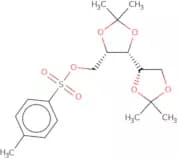
CAS:<p>1-O-Tosyl-2,3:4,5-di-O-isopropylidene-L-arabinitol is a sugar that is used in the synthesis of oligosaccharides and complex carbohydrates. This product can be custom synthesized to meet your needs. It has been shown to react with fluorine at high temperatures and with CH3OH/NaOH at low temperatures. 1-O-Tosyl-2,3:4,5-di-O-isopropylidene arabinitol can also be glycosylated or methylated. The CAS number for this product is 1241674-36-1.</p>Formula:C18H26O7SPurity:Min. 95%Color and Shape:SolidMolecular weight:386.46 g/molα-Methyl-γ-hydroxy-1,N2-propano-2’-deoxyguanosine
CAS:<p>α-Methyl-γ-hydroxy-1,N2-propano-2’-deoxyguanosine is a chemical that inhibits the production of reactive oxygen species (ROS) and prevents oxidative DNA damage. It has been shown to inhibit skin cancer in animal studies and to have an inhibitory effect on cancer gene therapy in human cell cultures. α-Methyl-γ-hydroxy-1,N2-propano-2’-deoxyguanosine has also been found to be genotoxic in humans, which may be due to its ability to induce repair genes.<br>α -Methyl -γ -hydroxy -1,N2 -propano -2 ‘deoxyguanosine is a carcinogen that has been shown to cause cancer in animals. It damages DNA by forming covalent bonds with it and alters the genetic information stored in the DNA. When this happens, cells cannot divide normally and grow out of</p>Formula:C14H19N5O5Purity:Min. 95%Molecular weight:337.33 g/mol8-Ethoxycarbonylheptyl N,N'-di-O-acetyl-b-chitobioside
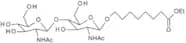
<p>8-Ethoxycarbonylheptyl N,N'-di-O-acetyl-b-chitobioside is a custom synthesis of an oligosaccharide. It is a complex carbohydrate that is composed of saccharides and has a CAS number. 8-Ethoxycarbonylheptyl N,N'-di-O-acetyl-b-chitobioside is modified with methylation, glycosylation and click modification. This product is also fluorinated. 8-Ethoxycarbonylheptyl N,N'-di-O-acetyl-b-chitobioside has high purity and can be used as a sugar in the synthesis of other compounds.</p>Formula:C26H46N2O13Purity:Min. 95%Molecular weight:594.65 g/mol6-Deoxy-6-Fluorocyclomaltoheptaose
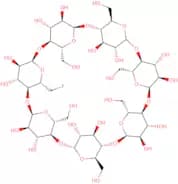
CAS:<p>The 6-deoxy-6-fluorocyclomaltoheptaose is a low molecular weight compound that has been found to have anti-amylase activity. This substance is characterized by its chromatographic techniques, which can be used to identify the chemical structure of the molecule. The 6-deoxy-6-fluorocyclomaltoheptaose has been found to consist of an amylase inhibitor and an enzyme substrate. It exhibits specificity for the catalytic site of amylase, which is located in subsite 1, and it attacks this substrate at the 6-position of glucose. This substance is not as potent as other amylase inhibitors such as d-glucose, but it does show greater specificity for amylase than other substances with similar structures.</p>Formula:C42H69FO34Purity:Min. 95%Molecular weight:1,136.98 g/molN-(3,4,6-Tri-O-acetyl-b-D-glucopyranosyl)piperidine
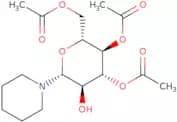
CAS:<p>N-(3,4,6-Tri-O-acetyl-b-D-glucopyranosyl)piperidine is a glycosylation agent that can be used to modify saccharides and oligosaccharides. This compound is used in the synthesis of complex carbohydrates, such as glycogen and starch. It can also be used to modify the sugar chains on glycoproteins and glycolipids. N-(3,4,6-Tri-O-acetyl-b-D-glucopyranosyl)piperidine is a white powder that has not been tested for toxicity.</p>Formula:C17H27NO8Purity:Min. 95%Molecular weight:373.4 g/molBlood Group B trisaccharide-APE,Biotin-BSA
<p>Gala1-3(Fuca1-2)Gal Conjugated to BSA via Biotin & an aminophenyl ethyl spacer</p>Purity:Min. 95%Methyl 2,3-di-O-benzyl-4,6-O-benzylidene-a-D-mannopyranoside
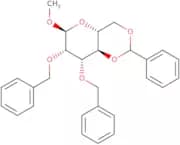
CAS:<p>Methyl 2,3-di-O-benzyl-4,6-O-benzylidene-a-D-mannopyranoside is a custom synthesis of a complex carbohydrate. It is an Oligosaccharide and Polysaccharide that has been modified by methylation and glycosylation. This carbohydrate is saccharide with a high purity and a high degree of Fluorination. Methyl 2,3-di-O-benzyl-4,6-O-benzylidene-a-D-mannopyranoside is synthesized by Click chemistry using sugar as the starting material. The synthesis involves two steps: first, the sugar moiety was protected by benzylation to yield benzyl 2,3 di O acetate; second, it was methylated to give the desired product.</p>Formula:C28H30O6Purity:Min. 95%Molecular weight:462.55 g/molNGA5FB N-Glycan
<p>NGA5FB is a custom synthesis, modification, and fluorination of a glycan. It is a monosaccharide with a methylation and click modification on the terminal glucose. This glycan is synthesized with an oligosaccharide saccharide that contains a complex carbohydrate. The CAS No. for this product is 2279-97-0.</p>Purity:Min. 95%Methyl-2,3-O-isopropylidene-a-D-mannopyranoside
CAS:<p>Methyl-2,3-O-isopropylidene-a-D-mannopyranoside is a glycosyl compound synthesized by the enzymatic hydrolysis of mannose. It has an alcohol group and a heptopyranoside group. The glycosyl compound is used in the synthesis of various pharmaceuticals and agrochemicals.</p>Purity:Min. 95%