Glycoscience
Glycoscience is the study of carbohydrates and their derivatives, as well as the interactions and biological functions they participate in. This field of research is crucial for understanding a wide variety of biological processes, including cell recognition, signaling, immune response, and disease development. Glycoscience has important applications in biotechnology, medicine, and the development of new drugs and therapies. At CymitQuimica, we offer a wide selection of high-quality, high-purity products for glycoscience research. Our catalog includes monosaccharides, oligosaccharides, polysaccharides, glycoconjugates, and specific reagents, designed to support researchers in their studies on the structure, function, and applications of carbohydrates in biological systems. These resources are intended to facilitate scientific discoveries and practical applications in various areas of bioscience and medicine.
Subcategories of "Glycoscience"
- Aminosugars(108 products)
- Glyco-Related Antibodies(282 products)
- Glycolipids(46 products)
- Glycosaminoglycans (GAGs)(55 products)
- Glycosides(419 products)
- Monosaccharides(6,622 products)
- Oligosaccharides(3,682 products)
- Polysaccharides(503 products)
Found 11041 products of "Glycoscience"
Sort by
Purity (%)
0
100
|
0
|
50
|
90
|
95
|
100
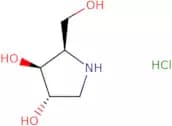
1,4-Dideoxy-1,4-imino-D-xylitol HCl
CAS:<p>1,4-Dideoxy-1,4-imino-D-xylitol HCl (DDX) is a potent inhibitor of the enzyme carboxypeptidase A2. DDX has been shown to inhibit the growth of HIV in vitro and in vivo. DDX also inhibits the production of proinflammatory cytokines and neurotrophic factors from HL60 cells. It has been shown to be a potential drug target for the treatment of infectious diseases such as alphaviruses, which produce a severe neuroinvasive disease in humans. DDX binds to dna with high affinity and specificity, but does not bind to RNA or proteins. DDX inhibits mitochondrial membrane potential by binding to ATP synthase and blocking the synthesis of ATP. DDX has also been shown to have an anti-oxidative injury effect on mitochondria, which may contribute to its inhibition of viral replication.</p>Formula:C5H11NO3·HClPurity:Min. 95%Molecular weight:169.61 g/mol1,2,3,4-Tetra-O-benzoyl-L-fucopyranose
CAS:<p>Tetra-O-benzoyl-L-fucopyranose is a glycosylate nucleoside that is synthesized from the sugar L-fucose. It is an activated form of fucose, which can be used for the synthesis of guanosine diphosphate. Tetra-O-benzoyl-L-fucopyranose has been used to synthesize large amounts of guanosine diphosphate, which is a nucleoside that participates in the synthesis of DNA and RNA.</p>Formula:C34H28O9Purity:Min. 95%Molecular weight:580.58 g/mol3,4,6-Tri-O-benzyl-2-deoxy-D-glucopyranose
CAS:<p>3,4,6-Tri-O-benzyl-2-deoxy-D-glucopyranose is a sugar moiety that consists of 3,4 and 6 triacetate groups. It is used as a glycosylation agent to increase the stability of glycoprotein drugs and in the synthesis of chemical reagents such as perchlorate. In addition, it has been shown to be an effective catalyst for the synthesis of various alcohols. This sugar moiety also has high stereoselectivity and yields when used in reactions with acetyl or benzyl alcohols. Finally, this moiety may be substituted with other functional groups such as flavonoids or alcohols in order to change its characteristics.</p>Formula:C27H30O5Purity:Min. 95%Molecular weight:434.52 g/molLacto-N-fucopentaose II-BSA
<p>Lacto-N-fucopentaose II-BSA is a glycosylation agent that is derived from the natural substrate N-acetylgalactosamine. It is used in the synthesis of complex carbohydrates, such as glycoconjugates and polysaccharides. Lacto-N-fucopentaose II-BSA can be modified with methyl groups or fluorine atoms to generate derivatives, which are useful for studying glycosylation reactions. The CAS number for this product is 46645-96-8. This product is synthesized using custom methods and has been purified to high purity levels.</p>Purity:Min. 95%D-Glucitol-2-13C
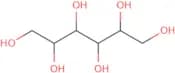
CAS:<p>D-Glucitol-2-13C is a stable isotope-labeled analog of mannitol, which is a sugar alcohol used as an osmotic diuretic. It has been shown to have anticancer properties by inducing apoptosis in cancer cells. D-Glucitol-2-13C has been used as a metabolic tracer in studies investigating tumor metabolism and the effects of kinase inhibitors on cancer cell proliferation. This compound can be detected using luciferase-based assays and has potential as a diagnostic tool for cancer detection. Additionally, D-Glucitol-2-13C has been found in Chinese urine samples and may have a role in protein metabolism. Overall, this compound shows promise as an important tool in cancer research and diagnosis.</p>Formula:C6H14O6Purity:Min. 95%Molecular weight:182.17 g/molTri-b-GalNAc-PEG5-carboxylic acid
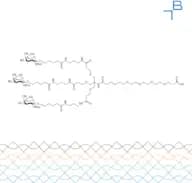
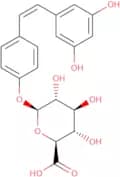
CAS:<p>Tri-b-GalNAc-PEG5-carboxylic acid, a trivalent beta-GalNAc ligand with a monodisperse PEG5 linker and carboxylic acid group for conjugation, targets the asialoglycoprotein receptor (ASGPR) for lysosomal degradation research (LYTACs). This facilitates efficient cargo delivery, such as RNA or Cas9 complexes, to hepatocytes.</p>Formula:C75H134N10O35Purity:Min. 95%Molecular weight:1,735.92 g/molcis-Resveratrol 4'-O-b-D-glucuronide
CAS:<p>cis-Resveratrol 4'-O-b-D-glucuronide is a synthetic compound that is a sugar, with a molecular weight of 598. It is an oligosaccharide and has been modified with fluorination on the C2 position. cis-Resveratrol 4'-O-b-D-glucuronide is the methylated form of resveratrol. It has been shown to have anti-inflammatory properties and can be used for the treatment of inflammation associated with arthritis, psoriasis, or septic shock. cis-Resveratrol 4'-O-b-D-glucuronide binds to polysaccharides in the body and inhibits their ability to bind to glycoproteins on cell surfaces. This results in a decrease in inflammation and other inflammatory responses that are mediated by these cells.</p>Formula:C20H20O9Purity:Min. 95%Molecular weight:404.37 g/molTri-b-GalNAc-b-alanine-PEG3-FITC
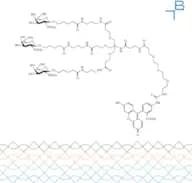
<p>Tri-b-GalNAc-b-alanine-PEG3-FITC is a synthetic probe consisting of three GalNAc ( N-acetylgalactosamine) residues linked to a beta-alanine spacer, followed by a PEG3 linker and a fluorescein isothiocyanate (FITC) fluorophore. This probe is designed to mimic the natural glycosylation patterns found in mucins and other glycoproteins, allowing for the investigation of carbohydrate-protein interactions, particularly those involving the asialoglycoprotein receptor (ASGPR) expressed on hepatocytes. The PEG3 linker provides flexibility and spacing between the glycan and the fluorescent tag, while the FITC moiety enables the detection and tracking of the probe using fluorescence-based techniques such as flow cytometry, fluorescence microscopy, and high-throughput screening assays. This versatile tool is valuable for researchers studying glycobiology, cell-cell interactions, and the development of targeted drug delivery systems.</p>Formula:C94H143N13O37SPurity:Min. 95%Molecular weight:2,079.3 g/mol1-Deoxy-L-ribose
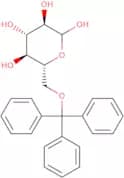
CAS:<p>1-Deoxy-L-ribose is a metabolite of acetone. It is a monosaccharide that contains one less oxygen atom than its parent compound. 1-Deoxy-L-ribose is found in the urine and blood of humans and animals. In animals, it can be synthesized from glucose by the enzyme ribose 1-phosphate reductase. This reaction requires an energy source such as ATP or NADH to reduce ribose 1,5-bisphosphate to 1,4-dihydroxyacetone phosphate, which then undergoes spontaneous dehydration to form 1-deoxy-D-ribose.</p>Formula:C5H10O4Purity:Min. 95%Molecular weight:134.13 g/mol6-O-Trityl-D-glucose
CAS:<p>6-O-Trityl-D-glucose is a sugar derivative that is synthesized by reacting 6,6'-dichloro-1,1'-binaphthyl with D-glucose. It has been used as a model for the stereospecific hydrolysis of polystyrene catalyzed by lipase. The reactive carbonyl group in the molecule allows for substitution reactions to occur at the hydroxyl groups and yields are dependent on the substituent effects.</p>Formula:C25H26O6Purity:Min. 95%Color and Shape:White To Off-White SolidMolecular weight:422.47 g/mol1,2-O-Isopropylidene-5-O-pivaloyl-a-D-glucofuranosiduronoic acid-6,3-lactone
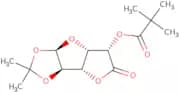
CAS:<p>1,2-O-Isopropylidene-5-O-pivaloyl-a-D-glucofuranosiduronoic acid is a sugar molecule. It is a saccharide with the molecular formula C10H14O5. The CAS number for this product is 78748-89-7. This product is also known as 1,2:3,4:5',6'-O'pivaloyl β--glucopyranose or pivaloyl D--glucofuranoside 6,3'-lactone. It has a purity of 99% and can be custom synthesized to customer specifications. This product does not have an expiration date and can be methylated, glycosylated, and click modified.</p>Formula:C14H20O7Purity:Min. 95%Molecular weight:300.3 g/molIsorhamnetin 3-sophoroside-7-rhamnoside
CAS:<p>Isorhamnetin 3-sophoroside-7-rhamnoside is a homogeneous catalyst that has been used in the synthesis of nanoparticles. The catalytic activity of this compound was found to be high, with a reported turnover frequency of up to 5 million turnovers per minute. The Suzuki coupling reaction was used to synthesize nanoparticles by reacting an organic acid with an aryl halide or metal salt. Isorhamnetin 3-sophoroside-7-rhamnoside was one of the catalysts in this process and was shown to have a high yield when combined with palladium. This synthetic method also eliminates the need for organic solvents, which can be toxic and expensive.>>END>></p>Purity:Min. 95%Tri-b-GalNAc-gly-biotin
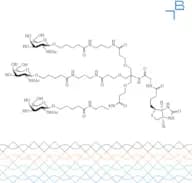
<p>Tri-b-GalNAc-Gly-biotin is used for studying ASGPR-mediated processes. This molecule combines three terminal beta-N-acetylgalactosamine (GalNAc) sugars for efficient ASGPR binding with a glycine (Gly) spacer and a biotin moiety. The GalNAc moiety facilitates specific targeting to hepatocytes, while the glycine spacer provides flexibility. The terminal biotin group serves a dual purpose: it allows for straightforward purification of ASGPR-interacting molecules via affinity chromatography and enables further bioconjugation via established streptavidin-biotin conjugation strategies. This combination makes tri-b-GalNAc-Gly-biotin valuable for isolating ASGPR-binding ligands from complex mixtures, studying ASGPR-ligand interactions, and potentially developing targeted probes for in vitro and in vivo applications.</p>Formula:C73H127N13O30SPurity:Min. 95%Molecular weight:1,698.93 g/molMan5GlcNAc
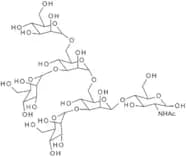
CAS:<p>Man5GlcNAc is a glycoprotein that is expressed in the Golgi apparatus of mammalian cells. It is cleaved by alpha-mannosidase II and alpha-mannosidase I, which are enzymes located in the golgi apparatus. Man5GlcNAc has been shown to be an effective glp-1 analogue, which is a hormone that stimulates insulin secretion. This protein has also been shown to have structural similarities to high mannose type oligosaccharides, which are found on the surface of some bacteria. The protein may also act as a signal peptide for proteins that are exported from the golgi to the cell membrane.</p>Formula:C38H65NO31Purity:Min. 95%Color and Shape:PowderMolecular weight:1,031.91 g/mol5-Azido-5-deoxy-D-fructose
CAS:<p>5-Azido-5-deoxy-D-fructose is a chiral compound that has been synthesized by the catalytic hydrogenation of 5-azido-4,6-dideoxy-D-glucose. The kinetic and stereoselective synthesis of 5-azido-5-deoxy-D-fructose is achieved by using an acetylating agent to first generate the corresponding acetic acid derivative. The enantiomeric excess in this reaction was 88%. This compound can be used as a precursor for the synthesis of polyhydroxylated compounds, such as 3,4,5,6 tetrahydroxybenzoate.</p>Formula:C6H11N3O5Purity:Min. 98 Area-%Color and Shape:White PowderMolecular weight:205.17 g/molGenistein D4-7-O-glucoside
<p>Genistein D4-7-O-glucoside is a custom synthesis of genistein. The modification of the sugar molecule with fluorine and methyl groups, as well as the addition of an oligosaccharide chain, has been completed. This product is under CAS No. which will be provided to qualified customers upon request. Genistein D4-7-O-glucoside is a complex carbohydrate that has been modified by Oligosaccharide and saccharide, with glycosylation occurring at Carbohydrate.</p>Purity:Min. 95%4'-Hydroxy atomoxetine b-D-glucuronide
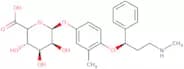
CAS:<p>4'-Hydroxy atomoxetine b-D-glucuronide is a synthetic compound that has been modified for use in the synthesis of saccharides and oligosaccharides. The modification is a high-yielding, efficient, and economical method for the preparation of complex carbohydrates. This compound is an intermediate in the synthesis of glycosylations. It can be used for the click modification of proteins or polysaccharides.br>br><br>4'-Hydroxy atomoxetine b-D-glucuronide is an intermediate in the synthesis of glycosylations. It can be used for the click modification of proteins or polysaccharides. Click chemistry is a form of chemical reaction used to modify molecules by attaching them to other molecules with similar reactive groups, such as hydroxyl groups, through a process called "click" chemistry. The term was coined by K. Barry Sharpless at Stanford University in 2000 after he demonstrated that certain metal</p>Formula:C23H29NO8Purity:Min. 95%Molecular weight:447.49 g/mol4-Formylphenyl 2-acetamido-3,4,6-tri-O-acetyl-2-deoxy-b-D-glucopyranoside
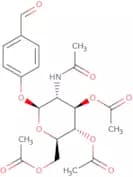
CAS:<p>4-Formylphenyl 2-acetamido-3,4,6-tri-O-acetyl-2-deoxy-β--glucopyranoside is a pyranoside that is a potent inhibitor of the enzyme glycosidase. It is used to study the interactions between enzymes and substrates. The crystal structure of 4FFAP has been determined using X-ray diffraction data. This compound has a six membered ring with two acetamido groups and one carbonyl group attached to the same carbon atom in the ring. 4FFAP interacts with other molecules through hydrogen bonding and van der Waals forces.</p>Formula:C21H25NO10Purity:Min. 95%Molecular weight:451.42 g/mol2,3:4,5-Di-O-isopropylidene-b-D-fructopyranose-D12
Controlled Product<p>2,3:4,5-Di-O-isopropylidene-b-D-fructopyranose (2,3:4,5-di-OIPF) is a synthetic sugar that has been fluorinated and methylated. 2,3:4,5-Di-OIPF can be used as a building block for the synthesis of oligosaccharides or polysaccharides. It can also be modified with an acetal group to form an acetal sugar.</p>Formula:C12H8D12O6Purity:Min. 95%Molecular weight:272.35 g/molAlphadolone 21-b-D-glucuronide
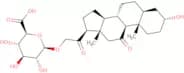
CAS:<p>Alphadolone 21-b-D-glucuronide (ADG) is a synthetic compound that belongs to the group of carbohydrates. ADG is a sugar that has been modified with fluorination and methylation. It is also glycosylated and click modified. This product is custom synthesized for research purposes only.</p>Formula:C27H40O10Purity:Min. 95%Molecular weight:524.6 g/mol