Glycoscience
Glycoscience is the study of carbohydrates and their derivatives, as well as the interactions and biological functions they participate in. This field of research is crucial for understanding a wide variety of biological processes, including cell recognition, signaling, immune response, and disease development. Glycoscience has important applications in biotechnology, medicine, and the development of new drugs and therapies. At CymitQuimica, we offer a wide selection of high-quality, high-purity products for glycoscience research. Our catalog includes monosaccharides, oligosaccharides, polysaccharides, glycoconjugates, and specific reagents, designed to support researchers in their studies on the structure, function, and applications of carbohydrates in biological systems. These resources are intended to facilitate scientific discoveries and practical applications in various areas of bioscience and medicine.
Subcategories of "Glycoscience"
- Aminosugars(108 products)
- Glyco-Related Antibodies(282 products)
- Glycolipids(46 products)
- Glycosaminoglycans (GAGs)(55 products)
- Glycosides(419 products)
- Monosaccharides(6,622 products)
- Oligosaccharides(3,682 products)
- Polysaccharides(503 products)
Found 11041 products of "Glycoscience"
Sort by
Purity (%)
0
100
|
0
|
50
|
90
|
95
|
100
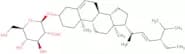
Stigmasterol glucoside
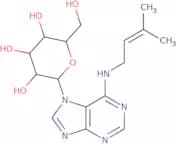
CAS:<p>Stigmasterol glucoside is a phenolic compound that has been isolated from the aerial parts of the plant Stachytarpheta jamaicensis. It has inhibitory properties against Gram-positive and Gram-negative bacteria, including methicillin-resistant Staphylococcus aureus. In addition, it has shown to have significant cytotoxicity against human colon cancer cells.<br>Stigmasterol glucoside is soluble in water and shows phase transition at about 60 °C. The chemical structure of stigmasterol glucoside contains a hydroxybenzoic acid group, which can form an ester with an organic acid such as acetic acid or benzoic acid. The hydroxyl group present in this compound can also react with an amine to form an amide bond. This reactivity may be responsible for its biological activities.</p>Formula:C35H58O6Purity:Min. 95%Molecular weight:574.83 g/molN6-Isopentenyladenine-7-glucoside
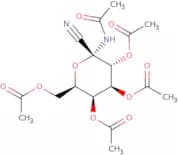
CAS:<p>N6-Isopentenyladenine-7-glucuronide is a synthetic monosaccharide that is used in the synthesis of complex carbohydrates. It is also a fluorinated compound that has been modified to form a glucuronide, which is an organic compound with a sugar and an alcohol group. N6-Isopentenyladenine-7-glucuronide can be used as a raw material for the production of oligosaccharides and polysaccharides, which are complex carbohydrates. This product can be custom synthesized to meet different requirements. It is available in high purity and the CAS number for this product is 59384-58-6.</p>Formula:C16H23N5O5Purity:Min. 95%Molecular weight:365.38 g/mol1-Acetamido-2,3,4,6-tetra-O-acetyl-1-deoxy-b-D-galactopyranosyl cyanide
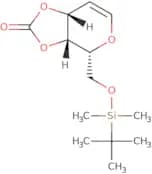
CAS:<p>1-Acetamido-2,3,4,6-tetra-O-acetyl-1-deoxy-b-D-galactopyranosyl cyanide is a fluorinated carbohydrate that is synthesized through the Click reaction. The product has a high degree of purity and can be used in pharmaceuticals and as a research tool. It can also be used to modify saccharides or oligosaccharides.</p>Formula:C17H22N2O10Purity:Min. 95%Molecular weight:414.36 g/mol6-O-tert-Butyldimethylsilyl-3,4-O-carbonyl-D-galactal
CAS:<p>6-O-tert-Butyldimethylsilyl-3,4-O-carbonyl-D-galactal is a modification of the sugar galactal. It is an oligosaccharide that can be synthesized from galactose and 6-O-tert-butyldimethylsilylchloride. It is used as a starting material for the synthesis of complex carbohydrates, as well as polysaccharides. This product has an average purity of 98% and is available in quantities of 50 grams.</p>Purity:Min. 95%1,3,4,6-Tetra-O-acetyl-2-O-trifluoromethanesulfonyl-b-D-talopyranose
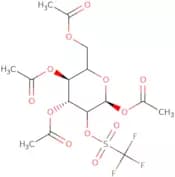
<p>1,3,4,6-Tetra-O-acetyl-2-O-trifluoromethanesulfonyl-b-D-talopyranose (TATP) is a radiopharmaceutical that is used in positron emission tomography (PET) scans. TATP has been shown to be sensitive to changes in the body's metabolism and can be used to identify areas of inflammation or disease. TATP is a nucleophilic compound that can be hydrolyzed by basic conditions such as hydroxide ion or hydrogen peroxide. Hydrolysis of TATP yields galactose and trifluoromethanesulfonic acid. The yield of TATP from the reaction with hydroxide ion is low because it reacts quickly with water. This compound has been used as a contrast agent for imaging because it is readily taken up by cells and accumulates in areas of high metabolic activity such as tumors</p>Formula:C15H19F3O12SPurity:Min. 95%Molecular weight:480.37 g/mol2-Acetamido-1,3-di-O-benzyl-4,6-O-benzylidene-2-deoxy-b-D-glucopyranoside
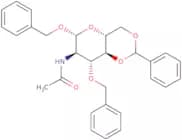
CAS:<p>2-Acetamido-1,3-di-O-benzyl-4,6-O-benzylidene-2-deoxy-b-D-glucopyranoside is a modification of a carbohydrate. It is a complex carbohydrate that has been synthesized by custom synthesis. It is an oligosaccharide with high purity and monosaccharides methylated at the hydroxyl group. The glycosylation and polysaccharide have been synthesized with fluorination and saccharides.</p>Formula:C29H31NO6Purity:Min. 95%Molecular weight:489.56 g/mol10,11-Dihydro-10-hydroxycarbamazepine O-b-D-glucuronide
CAS:<p>10,11-Dihydro-10-hydroxycarbamazepine O-b-D-glucuronide is a sugar that is synthesized by the modification of 10,11-dihydrocarbamazepine. It has been shown to inhibit the growth of Mycobacterium tuberculosis in a dose dependent manner. This compound has also been shown to inhibit the synthesis of DNA and RNA in bacterial cells, which may be due to its ability to inhibit glycosylation and methylation reactions.</p>Formula:C21H22N2O8Purity:Min. 95%Molecular weight:430.41 g/mol2-Acetonyl-1,3,4,6-tetra-O-acetyl-2-deoxy-b-D-galactopyranoside
<p>2-Acetonyl-1,3,4,6-tetra-O-acetyl-2-deoxy-b-D-galactopyranoside is a synthetic sugar that has been modified to contain an acetyl group at the C2 position. The synthesis of this compound is based on the modification of galactose with acetic anhydride. This product has been shown to be resistant to hydrolysis by esterases or glucuronidases and can also inhibit bacterial growth in culture. It is a monosaccharide with a CAS number of 85583-40-7. It is also used as a precursor for the synthesis of complex carbohydrates.</p>Purity:Min. 95%Asialo-GM1-pentasaccharide-APD-HSA
<p>Asialo-GM1-pentasaccharide-APD-HSA is a complex carbohydrate that is custom synthesized. It has high purity and CAS No. This product is a monosaccharide, methylated, glycosylated, polysaccharide with sugar and fluorinated saccharides.</p>Purity:Min. 95%Methyl cellulose - USP testing specifications, viscosity: 1,500 cP
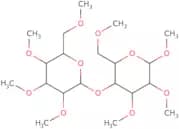
CAS:<p>Methyl cellulose is a synthetic polymer of cellulose. It is prepared by treating the natural polymer with a methylating agent, such as dimethyl sulfate. Methylation is carried out in the presence of an acid catalyst to produce mainly methyl ethers and methyl esters. The degree of substitution may be controlled by the amount of catalyst. Methyl cellulose is used as a thickener, emulsifier, or stabilizer in many food products, including ice cream and toothpaste.</p>Purity:Min. 95%Raloxifene 4'-D-glucuronide D4
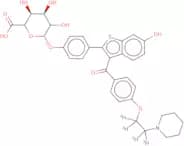
Controlled Product<p>Raloxifene 4'-D-glucuronide D4 is an Oligosaccharide, Carbohydrate, complex carbohydrate. It is a Custom synthesis, Synthetic and it has a CAS No. It is also Monosaccharide, Methylation and Glycosylation. This product contains Fluorination and saccharide.</p>Formula:C34H31NO10SD4Purity:Min. 95%Molecular weight:653.73 g/molPerindoprilat acyl-b-D-glucuronide
CAS:<p>Perindoprilat acyl-β-D-glucuronide is a synthetic, high purity compound that is custom synthesized and modified. It has been prepared by the click modification of perindoprilat with 1,3-dicyclohexylcarbodiimide (DCC) and 4-dimethylaminopyridine (DMAP). This product is useful for the synthesis of saccharides and complex carbohydrates. Perindoprilat acyl-β-D-glucuronide is a white solid at room temperature. The molecular formula is C14H20N2O7 with a molecular weight of 328.32 g/mol. The CAS number is 120381-56-8.</p>Formula:C23H36N2O11Purity:Min. 95%Color and Shape:White to off-white solid.Molecular weight:516.54 g/molAmyl 2-acetamido-2-deoxy-b-D-glucopyranoside
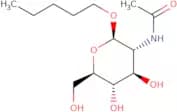
CAS:<p>Amyl 2-acetamido-2-deoxy-b-D-glucopyranoside is a chemical compound that is used as an additive for industrial purposes. It is soluble in n-butanol, ethylene glycol, ferrocene, and methanol. The molecular weight of this chemical compound is 542.07 g/mol.</p>Formula:C13H25NO6Purity:Min. 95%Molecular weight:291.34 g/mol2-Deoxy-2-N-(2'-thioacetyl)-D-glucosamine
CAS:<p>2-Deoxy-2-N-(2'-thioacetyl)-D-glucosamine is a synthetic sugar that is custom synthesized. It is a monosaccharide with a high purity and can be used as an oligosaccharide or complex carbohydrate. This compound has been fluorinated and has been modified with Click chemistry to produce the desired glycosylation, methylation, and saccharide modification. 2-Deoxy-2-N-(2'-thioacetyl)-D-glucosamine can be used in the synthesis of glycoproteins, glycolipids, polysaccharides, and other carbohydrates.</p>Formula:C8H15NO6SPurity:Min. 95%Molecular weight:253.27 g/molLumefantrine glucuronide - (mixture of diasteromers)
<p>Lumefantrine glucuronide is a sugar molecule that is glycosylated. It is the active form of lumefantrine and has been shown to be effective against malaria. Lumefantrine glucuronide binds to the parasite's RBCs, inhibiting the conversion of glucose into glycogen, thus preventing the production of ATP. Lumefantrine glucuronide is synthesized by attaching a sugar molecule to an amino acid backbone through an amide bond. The sugar molecule in this case is known as Glucuronic acid and it can be methylated or fluorinated. Lumefantrine glucuronide is also modified with Click chemistry, which involves attaching a reactive group to a chemical species that reacts with other chemical species at a distance. This modification allows for the attachment of polymers such as saccharides or oligosaccharides onto lumefantrine glucuronide.</p>Formula:C36H40Cl3NO7Purity:Min. 95%Molecular weight:705.06 g/molGlcnacβ(1-3)GalNAc-α-Thr
CAS:<p>Glcnacβ(1-3)GalNAc-α-Thr is a polysaccharide that is found in the human body, which is a complex carbohydrate. It is an oligosaccharide modification of galactose and alpha-threonine. Glcnacβ(1-3)GalNAc-α-Thr can be custom synthesized to order with high purity and monosaccharide content. This product is used for research purposes and has not been approved for therapeutic use. The CAS number for this compound is 286959-52-2.</p>Formula:C20H35N3O13Purity:Min. 95%Molecular weight:525.5 g/mol2-Furanylmethylbeta-D-glucopyranoside
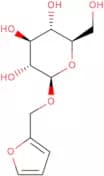
CAS:<p>2-Furanylmethylbeta-D-glucopyranoside is a glycosylation agent that is used in complex carbohydrate synthesis. It can be synthesized by the addition of two molecules of methyl bromide to 2,3,4-trihydroxybenzoic acid followed by fluorination with sulfur tetrafluoride. This compound can also be modified with an acetate group at the para position on the furan ring. This modification has been shown to increase the binding affinity to polysaccharides and Oligosaccharides. 2-Furanylmethylbeta-D-glucopyranoside is typically supplied as a white powder and is CAS No. 141360-95-4.</p>Formula:C11H16O7Purity:Min. 95%Molecular weight:260.24 g/molMethyl (methyl 3-deoxy-D-arabino-hept-2-ulopyranosid)onate-7-phosphate
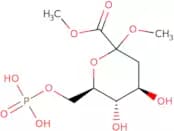
CAS:<p>Methyl (methyl 3-deoxy-D-arabino-hept-2-ulopyranosid)onate-7-phosphate is a Glycosylation, Oligosaccharide, sugar, Synthetic, Fluorination, Custom synthesis, Methylation, Monosaccharide, Polysaccharide, saccharide with CAS No. 91382-80-8. It is typically used as a modifier of complex carbohydrate. This product has high purity and can be modified.</p>Formula:C9H17O10PPurity:Min. 95%Molecular weight:316.2 g/mol5-O-Benzyl-1-deoxy-D-xylulose
CAS:<p>5-O-Benzyl-1-deoxy-D-xylulose is a sugar which is obtained by the catalytic hydrogenolysis of 5-o-benzyl-1,5-pentanediol. It is an intermediate in the synthesis of xylitol from sorbitol and can be used in the production of benzaldehyde. The reaction mechanism involves aldol condensation with elimination of water to form hydroxyacetone, followed by chemoenzymatic dehydration to give 1,5 pentanediol. This compound is also used as an intermediate for the synthesis of D-xylulose.</p>Formula:C12H16O4Purity:Min. 95%Molecular weight:224.25 g/mol3-O-Methyl-1,2-O-(1-methylethylidene)-a-D-ribofuranose
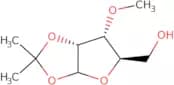
CAS:<p>3-O-Methyl-1,2-O-(1-methylethylidene)-a-D-ribofuranose is an Oligosaccharide that is a custom synthesis. This product is manufactured by the Glycosylation and Fluorination of 3-O-methyl 1,2,-O-(1-methylethylidene) a D ribofuranose. The product is then methylated and monosaccharide and polysaccharides are synthesized. Click modification of the molecule can be performed to produce a complex carbohydrate. The product has high purity and can be modified for specific purposes.</p>Purity:Min. 95%