Glycoscience
Glycoscience is the study of carbohydrates and their derivatives, as well as the interactions and biological functions they participate in. This field of research is crucial for understanding a wide variety of biological processes, including cell recognition, signaling, immune response, and disease development. Glycoscience has important applications in biotechnology, medicine, and the development of new drugs and therapies. At CymitQuimica, we offer a wide selection of high-quality, high-purity products for glycoscience research. Our catalog includes monosaccharides, oligosaccharides, polysaccharides, glycoconjugates, and specific reagents, designed to support researchers in their studies on the structure, function, and applications of carbohydrates in biological systems. These resources are intended to facilitate scientific discoveries and practical applications in various areas of bioscience and medicine.
Subcategories of "Glycoscience"
- Aminosugars(108 products)
- Glyco-Related Antibodies(282 products)
- Glycolipids(46 products)
- Glycosaminoglycans (GAGs)(55 products)
- Glycosides(419 products)
- Monosaccharides(6,622 products)
- Oligosaccharides(3,682 products)
- Polysaccharides(503 products)
Found 11041 products of "Glycoscience"
Sort by
Purity (%)
0
100
|
0
|
50
|
90
|
95
|
100
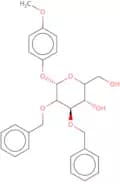
4-Methoxyphenyl 2,3-di-O-benzyl-b-D-galactopyranoside
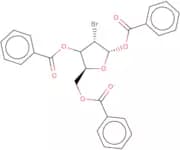
<p>4-Methoxyphenyl 2,3-di-O-benzyl-b-D-galactopyranoside is a high purity synthetic compound that can be custom synthesized to your specifications. This product is a carbohydrate with the molecular formula C7H8O6 and molecular weight of 232.14. The CAS number for this compound is 51878-93-5.</p>Formula:C27H30O7Purity:Min. 95%Molecular weight:466.52 g/mol1,3,5-Tri-O-benzoyl-2-bromo-2-deoxy-a-L-arabinofuranose
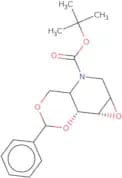
CAS:<p>1,3,5-Tri-O-benzoyl-2-bromo-2-deoxy-a-L-arabinofuranose is a synthetic sugar molecule. It is a complex carbohydrate that can be modified by methylation and glycosylation. The carbons in the sugar backbone have been fluorinated to create a high purity product. The CAS number for this compound is 2011707-39-2.</p>Formula:C26H21BrO7Purity:Min. 95%Molecular weight:525.34 g/mol2,3-Anhydro-4,6-O-benzylidene-N-Boc-1,5-deoxy-1,5-imino-D-glucitol
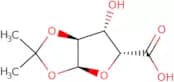
CAS:<p>2,3-Anhydro-4,6-O-benzylidene-N-Boc-1,5-deoxy-1,5-imino-D-glucitol is a fluorinated monosaccharide that is synthesized by reacting 2,3-anhydro-4,6-(O)-benzylidene glucose with Boc anhydride in the presence of triethylamine. It is an oligosaccharide derived from D-(+)-glucose and consists of a 1,5 anhydro ring linked to a 1,5 imino sugar. 2,3 Anhydro 4,6 O benzylidene N Boc 1 5 deoxy 1 5 imino D glucitol has been used as a building block for glycosylation reactions and has been shown to be useful in click chemistry. This compound is also available in various purity levels.</p>Formula:C18H23NO5Purity:Min. 95%Molecular weight:333.38 g/mol1,2-O-Isopropylidene-a-D-xylofuranuronic acid
CAS:<p>1,2-O-Isopropylidene-a-D-xylofuranuronic acid is a methylated form of the sugar xylofuranose. It is also known as 1,2-di-O-methylxylofuranuronic acid. The compound belongs to the class of oligosaccharides and polysaccharides. It has CAS number 35522-89-5 and molecular weight of 206.24 g/mol. It is soluble in water and ethanol but insoluble in ether. It can be used for chemical synthesis and modification of saccharide chains.</p>Formula:C8H12O6Purity:Min. 95%Molecular weight:204.18 g/mol4-Methoxyphenyl 3-O-benzyl-β-D-glucopyranoside
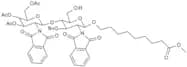
CAS:<p>4-Methoxyphenyl 3-O-benzyl-b-D-glucopyranoside is a plant extract that is used for its ability to inhibit the activity of phosphatases. It has been shown to activate extracellular phosphatase, an enzyme that plays a role in the regulation of the body's immune system and the activation of phagocytic cells. 4MPBG also inhibits the expression of inflammatory genes and therefore may be useful in treating HIV infection. This compound has also been shown to be effective against cancer by preventing cell proliferation and causing cell death. In addition, it has been shown to have anti-coagulation properties by inhibiting coagulation factor Xa, which prevents blood from clotting.</p>Formula:C20H24O7Purity:Min. 95%Molecular weight:376.4 g/mol8-Methoxycarbonyloctyl-3-O-benzyl-2,2'-dideoxy-2,2'-diphthalimido-3',4',6-tri-O-acetyl-b-cellobiose
CAS:<p>8-Methoxycarbonyloctyl-3-O-benzyl-2,2'-dideoxy-2,2'-diphthalimido-3',4',6-tri-O-acetyl-b -cellobiose is a cellobiose with an 8 methoxycarbonyl group at the C8 position. It can be used in the synthesis of oligosaccharides and polysaccharides. The compound has been synthesized by methylation, click modification, and fluorination. The CAS number is 106445-30-1. 8MCOBBIOSE has a purity of > 98% and may have a white to off white powder appearance.</p>Formula:C51H58N2O18Purity:Min. 95%Molecular weight:987.01 g/mol2-Acetamido-1,2-dideoxynojirimycin hydrochloride
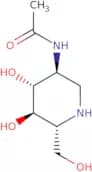
CAS:<p>2-Acetamido-1,2-dideoxynojirimycin hydrochloride is used in the treatment of human ovarian carcinoma. It has been shown to inhibit glycosidase enzymes with binding constants in the micromolar range. 2-Acetamido-1,2-dideoxynojirimycin hydrochloride has been shown to be a potential inhibitor of mammalian cell transport involving complex oligosaccharides. This drug also inhibits the enzymatic degradation of glycoproteins and other proteins by glycosidases. 2-Acetamido-1,2-dideoxynojirimycin hydrochloride is a synthetic analog of nijirimycin, which is a naturally occurring antibiotic obtained from cultures of Streptomyces nijirimensis. The clinical significance of this drug is that it can be used as an antiangiogenic agent and chemo sensitizing</p>Formula:C8H16N2O4·HClPurity:(%) Min. 97%Color and Shape:White PowderMolecular weight:204.22 g/molMethyl 2,4-di-O-acetyl-b-D-xylopyranoside
CAS:<p>Methyl 2,4-di-O-acetyl-b-D-xylopyranoside (MDX) is an epoxide that has been found to stimulate the growth of Schizophyllum commune and other fungi. It is structurally related to vicinal diols, which are known to inhibit esterases and hydrolyze acetyl groups. The acetyl groups on MDX can be reduced by hydride reduction or by hydrolysis with acetylated esters. MDX inhibits bacterial growth by inhibiting protein synthesis through its structural similarity to deoxyribose phosphate, a component of DNA.</p>Formula:C10H16O7Purity:Min. 95%Molecular weight:248.2 g/molTri-fucosyl-Lewis Y-heptasaccharide-APE, HSA
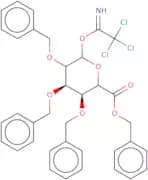
<p>Tri-fucosyl-Lewis Y-heptasaccharide-APE, HSA is a complex carbohydrate that has been custom synthesized and glycosylated. It was modified with methylation and fluorination to create a high purity product. This complex carbohydrate has a CAS number of 107386-00-6 and is composed of sugar molecules. It is a polysaccharide with the following structure:</p>Purity:Min. 95%2,3,4-Tri-O-benzyl-D-glucuronide benzyl ester trichloroacetimidate
<p>The compound is a custom synthesis and modification of a complex carbohydrate. It has been synthesized by glycosylation, methylation, and click chemistry. The compound can be used as a building block for the synthesis of saccharides. It is also useful in the synthesis of polysaccharides, which are polymers consisting of long chains of sugars. The compound is a highly pure and fluorinated sugar that can be used in research as a standard or control.</p>Formula:C36H34Cl3NO7Purity:Min. 95%Molecular weight:699.02 g/mola1,4-Mannobiose-BSA
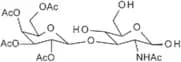
<p>a1,4-Mannobiose-BSA is a complex carbohydrate that can be synthesized in the laboratory. It is composed of mannose and glucose units. This molecule has been modified with methyl groups, which can be used for click chemistry reactions. Mannobiose-BSA is a polysaccharide with CAS number 56938-64-2. It has been modified by Click chemistry and glycosylation to yield high purity compounds.</p>Purity:Min. 95%2-Acetamido-3-O-(2,3,4,6-tetra-O-acetyl-b-D-galactopyranosyl)-2-deoxy-D-glucopyranose
CAS:<p>2-Acetamido-3-O-(2,3,4,6-tetra-O-acetyl-b-D-galactopyranosyl)-2-deoxy-D-glucopyranose is a custom synthesis of an oligosaccharide. It is fluorinated at the 2 position and methylated on the 3 position. This glycosylation product has been shown to be resistant to degradation by enzymes that hydrolyze glycosidic bonds.</p>Formula:C22H33NO15Purity:Min. 95%Molecular weight:551.5 g/mol6-O-Carboxymethyl-D-glucose
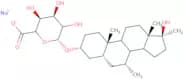
CAS:<p>6-O-Carboxymethyl-D-glucose (CMG) is a trityl glucanotransferase substrate that is used in the synthesis of carboxymethylated polysaccharides. This compound can be obtained from glucose by treatment with a glucanotransferase enzyme. CMG has been shown to have an inhibitory effect on pancreatic acinar cells and also inhibits acidic proteases in saliva, which leads to its use as an anti-inflammatory drug.</p>Formula:C8H14O8Purity:Min. 95%Color and Shape:White Off-White PowderMolecular weight:238.19 g/mol7-a,17-a-Dimethyl-5-b-androstane-3-a,17-b-diol glucuronide
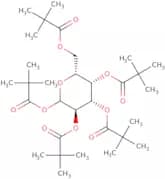
<p>7-a,17-a-Dimethyl-5-b-androstane-3-a,17-b-diol glucuronide is a monosaccharide that is found in the brain and liver of humans. It is a synthetic compound that has been modified with methylation and glycosylation. This product also has high purity and can be custom synthesized to meet customer specifications.</p>Formula:C27H43O8·NaPurity:Min. 95%Molecular weight:518.62 g/mol1,2,3,4,6-Penta-O-pivaloyl-b-D-galactopyranoside
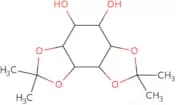
CAS:<p>1,2,3,4,6-Penta-O-pivaloyl-b-D-galactopyranoside is a high purity custom synthesis sugar. It is the product of a click modification, fluorination, glycosylation and carbamylation. This compound is also methylated and modified with an oligosaccharide and monosaccharide. The CAS number for 1,2,3,4,6-Penta-O-pivaloyl-b-D-galactopyranoside is 108342-85-4.</p>Formula:C31H52O11Purity:Min. 95%Molecular weight:600.74 g/mol1,2:5,6-Di-O-isopropylidene-D-chiro-inositol
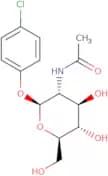
CAS:<p>1,2:5,6-Di-O-isopropylidene-D-chiro-inositol is a complex carbohydrate that is obtained by methylation of D-chiro-inositol. It is an important component of a number of glycosidic linkages in glycoconjugates and polysaccharides. The compound has been modified with fluorination to increase its stability in organic solvents and to facilitate the attachment of other atoms or molecules. 1,2:5,6-Di-O-isopropylidene-D-chiro-inositol can be used for the synthesis of oligosaccharides and monosaccharides for custom purposes.</p>Formula:C12H20O6Purity:Min. 95%Molecular weight:260.28 g/mol4-Chlorophenyl 2-acetamido-2-deoxy-b-D-glucopyranoside
CAS:<p>4-Chlorophenyl 2-acetamido-2-deoxy-b-D-glucopyranoside is a molecule that belongs to the class of acid molecules and has been implicated in the metabolism of corynebacterium. The metabolic pathway for this molecule has been studied using databases and datasets, with population simulations and profile data being generated to help identify potential strategies for its positioning in the market. This molecule is also related to death, which may be related to its positioning.</p>Formula:C14H18ClNO6Purity:Min. 95%Molecular weight:331.75 g/mol4'-Hydroxypropranolol-2-O-b-D-glucuronide
<p>4'-Hydroxypropranolol-2-O-b-D-glucuronide is a custom synthesis that has been modified with glycosylation, methylation, and fluorination. It is a complex carbohydrate that has CAS number and is a polysaccharide. 4'-Hydroxypropranolol-2-O-b-D-glucuronide is synthesized by the modification of an oligosaccharide, saccharide, or sugar with methylation and glycosylation. This product also contains a click modification.</p>Purity:Min. 95%2,4-Di-O-acetyl-1,6-anhydro-3-O-benzyl-b-L-idopyranose
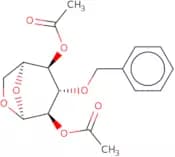
CAS:<p>2,4-Di-O-acetyl-1,6-anhydro-3-O-benzyl-b-L-idopyranose is a synthetic carbohydrate that has been modified with a click reaction. The compound can be used as a building block for the synthesis of complex carbohydrates and oligosaccharides. It is also used in the production of high purity monosaccharides and glycosylates. 2,4-Di-O-acetyl-1,6-anhydro-3-O-benzylidopyranose is soluble in water and exhibits a melting point of ~170°C. It has an n D 25 value of 1.5381 at 20°C.</p>Formula:C17H20O7Purity:Min. 95%Molecular weight:336.34 g/mol2-Deoxy-2,2-difluoro-D-threo-pentofuranos-1-ulose-3,5-dibenzoate
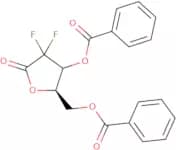
CAS:<p>2-Deoxy-2,2-difluoro-D-threo-pentofuranos-1-ulose-3,5-dibenzoate is a custom synthesis of an oligosaccharide. It is a polysaccharide that contains saccharides and other modifications such as methylation and glycosylation. This product is a sugar with high purity and fluorination. Click modification is the process by which 2,2'-dF (fluorine) is introduced into the furanose ring at the C4 position. Fluorination increases the stability of the molecule and increases its resistance to hydrolysis by enzymes. The addition of this fluorine group also decreases the reactivity of the molecule with water, making it more stable for storage.</p>Formula:C19H14F2O6Purity:Min. 95%Color and Shape:SolidMolecular weight:376.31 g/mol