Glycoscience
Glycoscience is the study of carbohydrates and their derivatives, as well as the interactions and biological functions they participate in. This field of research is crucial for understanding a wide variety of biological processes, including cell recognition, signaling, immune response, and disease development. Glycoscience has important applications in biotechnology, medicine, and the development of new drugs and therapies. At CymitQuimica, we offer a wide selection of high-quality, high-purity products for glycoscience research. Our catalog includes monosaccharides, oligosaccharides, polysaccharides, glycoconjugates, and specific reagents, designed to support researchers in their studies on the structure, function, and applications of carbohydrates in biological systems. These resources are intended to facilitate scientific discoveries and practical applications in various areas of bioscience and medicine.
Subcategories of "Glycoscience"
- Aminosugars(108 products)
- Glyco-Related Antibodies(282 products)
- Glycolipids(46 products)
- Glycosaminoglycans (GAGs)(55 products)
- Glycosides(419 products)
- Monosaccharides(6,622 products)
- Oligosaccharides(3,682 products)
- Polysaccharides(503 products)
Found 11041 products of "Glycoscience"
Sort by
Purity (%)
0
100
|
0
|
50
|
90
|
95
|
100
Gala1-2Gal-HSA
<p>Gala1-2Gal-HSA is a modified, complex carbohydrate. The carbohydrate is synthesized by methylating, glycosylating and polysaccharide synthesis to produce Gala1-2Gal-HSA. It has CAS No. and can be custom synthesized with high purity. Gala1-2Gal-HSA is a monosaccharide that can be fluorinated or saccharide that can be glycosylated or methylated. Gala1-2Gal-HSA has many applications in the biomedical field such as inhibiting inflammation and preventing cancer metastasis.</p>Purity:Min. 95%Heparin disaccharide III-H disodium salt
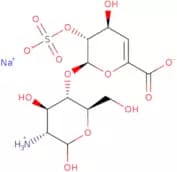
CAS:<p>Heparin is a polysaccharide consisting of repeating units of glucosamine and glucuronic acid that has been shown to have anti-coagulant, antithrombotic, and anti-inflammatory properties. Heparin disaccharide III-H disodium salt is a heparin disaccharide that has been modified by the addition of sodium ions. This heparin disaccharide has been shown to inhibit the proliferation of leukaemia cells in vitro, which may be due to its inhibition of DNA synthesis or cell cycle progression. The mechanism by which this heparin disaccharide inhibits cell growth is not yet known. Research into this mechanism could lead to new treatments for cancer and other diseases.</p>Formula:C12H18NNaO13SPurity:Min. 95%Molecular weight:439.33 g/molMethyl 2,3,4-tri-O-acetyl-6-O-trityl-a-D-glucopyranoside
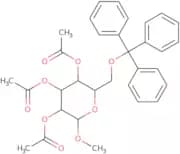
CAS:<p>Methyl 2,3,4-tri-O-acetyl-6-O-trityl-a-D-glucopyranoside is a custom synthesis. It is a monosaccharide that has been modified with fluorination and methylation. This chemical is soluble in water and is used as an intermediate for the synthesis of oligosaccharides and polysaccharides.</p>Formula:C32H34O9Purity:Min. 95%Molecular weight:562.62 g/molMethyl D-galactopyranoside
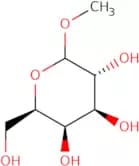
CAS:<p>Methyl D-galactopyranoside is a lectin that binds to galactose residues in the glycosidic linkage of oligosaccharides. Methyl D-galactopyranoside is used in functional theory to determine the number of lysine residues on the dodecyl chain. This lectin has been shown to bind to anomeric linkages, which are different types of sugar molecules that have a carbon atom at the same position. The binding of this lectin to oligosaccharides can be detected by matrix-assisted laser desorption ionization mass spectrometry (MALDI MS). Methyl D-galactopyranoside has also been shown to have high salt and carbohydrate binding properties, as well as binding with galactose, trimethyl, and hydroxymethyl groups.</p>Formula:C7H14O6Purity:Min. 95%Color and Shape:PowderMolecular weight:194.18 g/mol1,2,3,4,6-Penta-O-acetyl-1-thio-β-D-galactopyranose
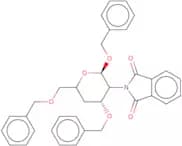
CAS:<p>1,2,3,4,6-Penta-O-acetyl-1-thio-beta-D-galactopyranose is a nucleoside that is a derivative of glucopyranose. It is an aprotic molecule and can be used as an aprotic solvent. 1,2,3,4,6-Penta-O-acetyl-1-thio-beta-D-galactopyranose has been shown to inhibit viral growth in vitro by interfering with the synthesis of DNA and RNA. The compound inhibits the growth of herpes simplex virus type 1 (HSV) and vaccinia virus (VACV) but not influenza A virus (IAV). This drug also has antiplasmodial activity against the erythrocytic stages of Plasmodium falciparum.</p>Formula:C16H22O10SPurity:Min. 95%Molecular weight:406.41 g/mol1,3,6-Tri-O-benzyl-2,4-dideoxy-2-phthalimido-b-D-glucopyranoside
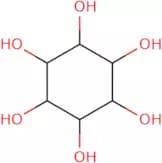
<p>The chemical structure of 1,3,6-Tri-O-benzyl-2,4-dideoxy-2-phthalimido-b-D-glucopyranoside is shown below.</p>Formula:C35H33NO6Purity:Min. 95%Molecular weight:563.64 g/molallo-Inositol
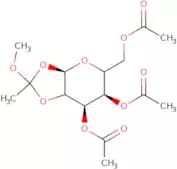
CAS:<p>Allo-inositol is a naturally occurring molecule that is classified as a vitamin. It is a member of the B-complex group of vitamins and has been shown to inhibit growth of cells in the HL-60 cell line. The optimum concentration for allo-inositol was found to be at 100 μM, with an IC50 value of 67 μM. Allo-inositol also has inhibitory properties against ovarian cancer cells and has been investigated as a potential treatment for ovarian cancer. Allo-inositol can be converted into myo-inositol in mammalian cells and may have anticancer effects through this conversion.</p>Formula:C6H12O6Purity:Min. 95%Molecular weight:180.16 g/mol3,4,6-Tri-O-acetyl-b-L-idopyranose 1,2-(methyl orthoacetate)
CAS:<p>3,4,6-Tri-O-acetyl-b-L-idopyranose 1,2-(methyl orthoacetate) is a methylated saccharide that is used as a building block for the synthesis of complex carbohydrates. It is synthesized by the reaction of 3,4,6-tri-O-acetyl-b-L-idopyranose with methyl orthoacetate in presence of acid catalyst. 3,4,6-Tri-O-acetyl - b - L - idopyranose 1,2-(methyl orthoacetate) has been shown to have antihyperglycemic effects when administered orally to mice and rats. The compound also has an inhibitory effect on the glycosaminoglycan production in human chondrocytes.</p>Formula:C15H22O10Purity:Min. 95%Molecular weight:362.33 g/mol4-Toluoyl-2-O-benzyl-4,6-O-benzylidene-a-D-thiomannopyranoside
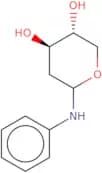
CAS:<p>4-Toluoyl-2-O-benzyl-4,6-O-benzylidene-a-D-thiomannopyranoside is an oligosaccharide that contains a sugar moiety. It is synthetically derived from a sugar, such as D-glucose. This compound has been modified with fluorination and methylation. The resulting product is water soluble and can be used as a reagent in glycosylation reactions to form complex carbohydrates.</p>Formula:C27H28O5SPurity:Min. 95%Molecular weight:464.57 g/mol2-Deoxy-D-ribose-anilide
CAS:<p>2-Deoxy-D-ribose-anilide is a fluorinated monosaccharide that is used as a synthetic building block for the synthesis of oligosaccharides, polysaccharides, and other complex carbohydrates. This compound has been modified with methyl groups and click chemistry to form new types of sugars. 2-Deoxy-D-ribose-anilide is also available in high purity and can be used for glycosylation reactions.</p>Formula:C11H15NO3Purity:Min. 95%Color and Shape:Off-White To Light (Or Pale) Yellow SolidMolecular weight:209.24 g/mol2,3,6-Trimethyl-γ-cyclodextrin
CAS:<p>This gamma-cyclodextrin (γ-CD) derivative is a modified cyclic oligosaccharide composed of eight glucose units, featuring a larger cavity size than α- and β-cyclodextrins. This structural characteristic allows γ-CDs to form inclusion complexes with a wider range of guest molecules, making it particularly versatile in various industries. In the food sector, it is used as a carrier and stabilizer for flavors, fat-soluble vitamins, and polyunsaturated fatty acids, protecting volatile compounds from evaporation. In pharmaceuticals, it enhances the solubility and bioavailability of poorly water-soluble drugs and, thanks to its larger ring size, allows for the encapsulation of larger molecules or even entire drug molecules. γ-CDs and derivatives are also used for environmental remediation and, in analytical chemistry, for the extraction and concentration of target substances.</p>Formula:C72H128O40Purity:Min. 95%Color and Shape:PowderMolecular weight:1,633.8 g/molForosamine
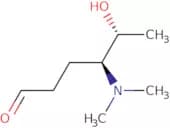
CAS:<p>Forosamine is a spinosyn analog that has been shown to be an effective control agent against bacterial strains. It is a β-amino acid and has a chemical structure similar to the natural spinosyns. Forosamine has been shown to have a broad spectrum of activity against animal health-related bacteria, including those resistant to other antibiotics. Forosamine’s mode of action is not well understood, but it may involve the inhibition of protein synthesis. Forosamine's molecular modeling suggests that the molecule contains a hydroxyl group, which may be responsible for its antibacterial activity.</p>Purity:Min. 95%a1,2-Mannobiose-BSA
<p>a1,2-Mannobiose-BSA is a glycosylation that can be used for the synthesis of complex carbohydrate. It is methylated and click modified with fluorine, which renders it resistant to proteolytic degradation. This product is also available in various purities and modifications.</p>Purity:Min. 95%Lacto-N-fucopentaose III-APD-HSA
<p>Lacto-N-fucopentaose III-APD-HSA is a custom synthesis, complex carbohydrate that has been modified with methylation and glycosylation. It is an oligosaccharide that is found in human serum albumin. Lacto-N-fucopentaose III-APD-HSA has been shown to have antitumor activity. It also inhibits the growth of bacteria by binding to bacterial DNA gyrase and topoisomerase IV, which are enzymes that maintain the integrity of bacterial DNA. This compound binds to two sites on the 16S ribosomal RNA of bacteria and can inhibit protein synthesis, leading to cell death by inhibiting production of proteins vital for cell division. Lacto-N-fucopentaose III-APD-HSA has undergone fluorination and click modification.<br>Methylation: A process whereby a methyl group (-CH3) is added to an organic molecule via a chemical</p>Purity:Min. 95%2-Deoxy-scyllo-inosose
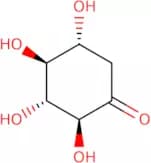
CAS:<p>2-Deoxy-scyllo-inosose is a biochemical with an unknown function. It is not a substrate for any known enzyme, but has been shown to be a substrate for the synthesis of corynebacterium glutamicum. The reaction mechanism of 2-deoxy-scyllo-inosose is still unclear, but it has been proposed that this molecule undergoes dehydration and then undergoes an acid catalyzed aldol cyclization to form 3-aminohexanol. This reaction produces fluorescence resonance energy transfer in group p2 subtilisin.<br>2DOS is also an antimicrobial agent which exhibits activity against Gram positive bacteria such as Streptococcus pyogenes, Enterococcus faecalis, and Bacillus subtilis.</p>Formula:C6H10O5Purity:Min. 95%Color and Shape:White PowderMolecular weight:162.14 g/molD-Ribopyranosyl thiosemicarbazide
CAS:<p>D-Ribopyranosyl thiosemicarbazide is a glycosylation agent that can be used in the synthesis of complex carbohydrates. It also has the ability to modify sugar structures, such as methylation, click modification, and fluorination. This reagent can be used for the modification of saccharides, oligosaccharides, and monosaccharides. D-Ribopyranosyl thiosemicarbazide is synthesized from d-ribose and thiosemicarbazide. The CAS number for this product is 95352-77-5.</p>Formula:C6H13N3O4SPurity:Min. 95%Molecular weight:223.25 g/molAllyl 2,3-di-O-benzyl-a-D-glucopyranoside
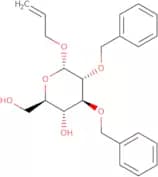
CAS:<p>Allyl 2,3-di-O-benzyl-a-D-glucopyranoside is a plant growth regulator that stimulates callus formation. It belongs to the group of auxins and has been shown to promote callus growth in Arabidopsis thaliana cultivars, such as glaberrima and kinetin. This compound has also been shown to stimulate the formation of calli from coconut explants.</p>Formula:C23H28O6Purity:Min. 95%Molecular weight:400.46 g/molBlood group B trisaccharide-APE-Biotin-BSA
<p>Gala1-3(Fuca1-2)Gal Conjugated to BSA via Biotin & an aminophenyl ethyl spacer</p>Purity:Min. 95%5-(S-2-Pyridin-3-yl-pyrrolidine)-1-yl-5-deoxy-1,2-isopropylidene-a-D-xylofuranose
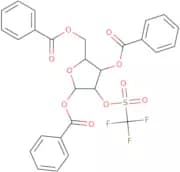
CAS:<p>5-(S-2-Pyridin-3-yl-pyrrolidine)-1-yl-5-deoxy-1,2-isopropylidene-a-D-xylofuranose is a glycosylated sugar which can be modified with methyl groups, fluorine atoms, and saccharides. This compound has been synthesized in the laboratory and has not been found in nature. It is soluble in water and ethanol. The compound is available for custom synthesis to order.</p>Formula:C17H24N2O4Purity:Min. 95%Molecular weight:320.39 g/mol1,3,5-Tri-O-benzoyl-2-O-(trifluoromethanesulfonyl)-a-D-ribofuranose
CAS:<p>1,3,5-Tri-O-benzoyl-2-O-(trifluoromethanesulfonyl)-a-D-ribofuranose is a nucleoside that is phosphorylated by the enzyme deoxycytidine kinase to form 1,3,5-tri-O-benzoyl-2'-O-(trifluoromethanesulfonyl)-a-[D]ribofuranosyl phosphate. This compound has been shown to activate immune cells in vitro and in vivo. The activation of immune cells may be due to its ability to inhibit the expression of enzymes that are required for DNA synthesis. 1,3,5-Tri-O-benzoyl-2'-O-(trifluoromethanesulfonyl)-a-[D]ribofuranosyl phosphate also inhibits the expression of enzymes involved in DNA replication and cell proliferation.</p>Formula:C27H21F3O10SPurity:Min. 95%Color and Shape:PowderMolecular weight:594.51 g/mol