Glycoscience
Glycoscience is the study of carbohydrates and their derivatives, as well as the interactions and biological functions they participate in. This field of research is crucial for understanding a wide variety of biological processes, including cell recognition, signaling, immune response, and disease development. Glycoscience has important applications in biotechnology, medicine, and the development of new drugs and therapies. At CymitQuimica, we offer a wide selection of high-quality, high-purity products for glycoscience research. Our catalog includes monosaccharides, oligosaccharides, polysaccharides, glycoconjugates, and specific reagents, designed to support researchers in their studies on the structure, function, and applications of carbohydrates in biological systems. These resources are intended to facilitate scientific discoveries and practical applications in various areas of bioscience and medicine.
Subcategories of "Glycoscience"
- Aminosugars(108 products)
- Glyco-Related Antibodies(282 products)
- Glycolipids(46 products)
- Glycosaminoglycans (GAGs)(55 products)
- Glycosides(419 products)
- Monosaccharides(6,622 products)
- Oligosaccharides(3,682 products)
- Polysaccharides(503 products)
Found 11041 products of "Glycoscience"
Sort by
Purity (%)
0
100
|
0
|
50
|
90
|
95
|
100
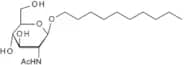
Decyl 2-acetamido-2-deoxy-b-D-glucopyranoside
CAS:<p>Decyl 2-acetamido-2-deoxy-b-D-glucopyranoside is a glycoside that is found in the cell walls of photosynthetic organisms. It is one of the main sugars found in bacteria, fungi, and plants. In these organisms, it is linked to amino acids through amido bonds. Decyl 2-acetamido-2-deoxy-b-D-glucopyranoside has been shown to be a substrate for galactosidases, β-glycosidases, and α mannosidases. The thermal analysis of this compound shows an exothermic transition at around 200°C that may indicate its involvement in a chemical reaction. This compound also has lyotropic properties and can form micelles in water with high concentrations. The thermal parameters for this molecule are <br>T(transition) = 220°C<br>ΔH(transition) = -6 kcal/</p>Formula:C18H35NO6Purity:Min. 95%Molecular weight:361.47 g/molD-Fructose-1,6-diphosphate monocalcium salt
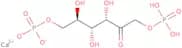
CAS:<p>D-Fructose-1,6-diphosphate monocalcium salt is a complex carbohydrate that is produced by methylation of D-fructose 1,6-diphosphate. This compound belongs to the class of saccharides and has been modified using fluorination. It is also an important glycosylation site for many proteins. In addition, it can be used as a synthetic substrate in click chemistry and as a building block for oligosaccharides or polysaccharides.</p>Formula:C6H12O12P2·CaPurity:Min. 95%Molecular weight:378.18 g/molRibaric acid disodium salt
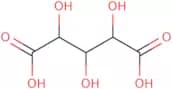
CAS:<p>Ribaric acid is a polycarboxylic acid that is used as a disinfectant and corrosion inhibitor. It has been shown to have synergistic effects with other compounds, such as azobenzene. Ribaric acid also has the ability to inhibit the growth of bacteria, enzymes and fungi. The structure of ribaric acid is composed of alternating carboxylate groups and hydroxyl groups, which give it its biodegradable properties. It can be used in deionized water due to its high resistance to hydrolysis. One study showed that ribaric acid inhibited the growth of bacteria by disrupting their cell wall synthesis and inhibiting their DNA synthesis by interacting with bacterial DNA gyrase.</p>Formula:C5H6Na2O7Purity:Min. 95%Molecular weight:224.08 g/mol6,6'-Di-O-tert-butyldiphenylsilyl-lactal
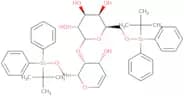
CAS:<p>6,6'-Di-O-tert-butyldiphenylsilyl-lactal is an oligosaccharide that has been modified with a click modification. This chemical is synthesized from lactal and contains three monosaccharides. The monosaccharides are 6,6'-di-O-tert-butyldiphenylsilyl-lactal and two different sugars. It is a white to off white solid that is soluble in water. The chemical can be used for glycosylation reactions or for other modifications of carbohydrates.</p>Purity:Min. 95%2,3,4-Triacetate-β- D- glucopyranosyl bromide
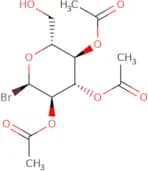
CAS:<p>2,3,4-Triacetate-beta-D-glucopyranosyl bromide is a custom synthesis of an oligosaccharide. It is a complex carbohydrate that can be modified to create a saccharide with methylation and glycosylation. This product has CAS No. 13032-61-6 and can be used in research for the modification of saccharides and carbohydrates.</p>Purity:Min. 95%Promethazine N-b-D-glucuronide
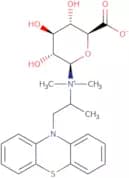
CAS:<p>Promethazine is a phenothiazine derivative that has antihistaminic, anticholinergic, and sedative properties. It is used as an antiemetic and to relieve allergy symptoms. Promethazine N-b-D-glucuronide is a custom synthesis of promethazine with methylation at the nitrogen atom on the side chain, click modification of the methyl group on the side chain, oligosaccharides attached to the nitrogen atom on the side chain, polysaccharide attached to the nitrogen atom on the side chain, saccharide attached to the nitrogen atom on the side chain, carbonyl group attached to the nitrogen atom on the side chain, fluorination at C5 position of sugar ring in promethazine N-b-D-glucuronide molecule, complex carbohydrate (sugar) in promethazine N-b-D-glucuronide molecule. Promethazine N-b-D-glucuron</p>Formula:C23H28N2O6SPurity:Min. 95%Molecular weight:460.54 g/mol6-Azido-6-deoxy-D-mannose
CAS:<p>6-Azido-6-deoxy-D-mannose is a hexose sugar that has been implicated in the binding of lectins to glycoclusters. Lectins are carbohydrate binding proteins found on the surface of cells and some viruses, which bind to specific carbohydrates via their sugar moieties. This process is called lectinosis and it is sometimes used as a form of immune evasion by pathogens. 6-Azido-6-deoxy-D-mannose can be used as a linker to attach affinity ligands or affinity tags to glycoclusters, which are clusters of glycoconjugates that have an important biological function. 6AoDM also has anti-microbial properties, making it an opportunistic pathogen.</p>Formula:C6H11N3O5Purity:Min. 95%Molecular weight:205.17 g/molBenzyl 4-O-(2,3,4,6-tetra-O-benzyl-a-D-galactopyranosyl)-2,3-di-O-benzyl-b-D-galactopyranoside
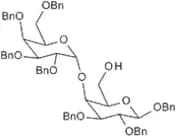
<p>Benzyl 4-O-(2,3,4,6-tetra-O-benzyl-a-D-galactopyranosyl)-2,3-di-O-benzylb -D-galactopyranoside is a Fluorination and Glycosylation product. It is a Custom Synthesis of Monosaccharide and Oligosaccharide. The CAS number for this product is 106835-99-8.</p>Formula:C61H64O11Purity:Min. 95%Molecular weight:973.15 g/mol3-Deoxy-1,2:5,6-di-O-isopropylidene-a-D-glucofuranose
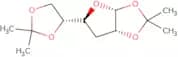
CAS:<p>3-Deoxy-1,2:5,6-di-O-isopropylidene-a-D-glucofuranose is an oligosaccharide that belongs to the group of polysaccharides. It is a methylated saccharide with a high degree of purity and can be custom synthesized for use as a carbohydrate in pharmaceuticals. 3-Deoxy-1,2:5,6-di-O-isopropylidene-a-D-glucofuranose is used in the synthesis of glycosylations and has been shown to have antiviral activity against Epstein Barr virus by inhibiting viral protein synthesis.</p>Formula:C12H20O5Purity:Min. 95%Molecular weight:244.29 g/mol1,2,3,4,6-Penta-O-benzoyl-b-D-galactopyranose
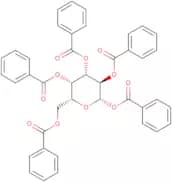
CAS:<p>Penta-O-benzoyl-b-D-galactopyranose is a pentasaccharide that has been shown to have an inhibitory effect on the growth of corynebacterium, which may be due to its ability to modulate fatty acid synthesis. Penta-O-benzoyl-b-D-galactopyranose is a disaccharide that is used as a diagnostic agent for corynebacteria. It is also used as a growth factor in the production of Corynebacterium glutamicum. The safety profile of this drug has not been evaluated in humans.</p>Formula:C41H32O11Purity:Min. 95%Molecular weight:700.71 g/mol2,3,4-Tri-O-acetyl-a-D-arabinopyranosyl cyanide
<p>2,3,4-Tri-O-acetyl-a-D-arabinopyranosyl cyanide is a synthetic compound that is used to synthesize complex carbohydrates. This product can be customized for customers' needs and has high purity.</p>Purity:Min. 95%16a-Hydroxyestrone 16-b-D-glucuronide
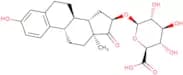
CAS:<p>16a-Hydroxyestrone 16-b-D-glucuronide is a conjugate of the hydroxyestrone and glucuronic acid. It is a metabolite of estradiol, which is the most potent estrogen produced by the human body. The compound has been found in urine, saliva, and breast milk. 16a-Hydroxyestrone 16-b-D-glucuronide is an inactive steroid that can be conjugated with glucuronic acid to form a water soluble molecule that can be excreted in the urine or bile.</p>Formula:C24H30O9Purity:Min. 95%Molecular weight:462.49 g/mol3-Methylphenyl 2-acetamido-3,4,6-tri-O-acetyl-2-deoxy-b-D-glucopyranoside
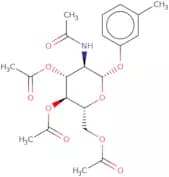
CAS:<p>3-Methylphenyl 2-acetamido-3,4,6-tri-O-acetyl-2-deoxy-b-D-glucopyranoside is a synthetic chemical compound. It has been shown to have antiviral activity and inhibit the growth of bacteria.</p>Formula:C21H27NO9Purity:Min. 95%Molecular weight:437.44 g/molEthyl 2,3,4-tri-O-benzoyl-b-D-thioglucopyranosiduronic acid methyl ester
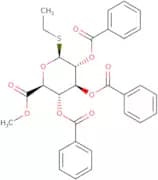
CAS:<p>Ethyl 2,3,4-tri-O-benzoyl-b-D-thioglucopyranosiduronic acid methyl ester is a modification to the sugar molecule. It is an oligosaccharide that has been synthesized and modified by methylation, glycosylation, and fluorination. The CAS number for this compound is 302965-09-9. This compound has a high purity and can be used in various types of research including the synthesis of complex carbohydrates.</p>Formula:C30H28O9SPurity:Min. 95%Molecular weight:564.6 g/molIsopropyl 2-acetamido-2-deoxy-b-D-glucopyranoside
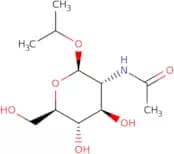
CAS:<p>Isopropyl 2-acetamido-2-deoxy-b-D-glucopyranoside is a chromatographic agent used in liquid chromatography. It is a reaction product of polysaccharides and fatty acids, which are extracted from fruits. Isopropyl 2-acetamido-2-deoxy-b-D-glucopyranoside has been shown to inhibit the growth of typhimurium and other viruses in cell culture. The safety profile of this compound has not been established in humans and should be tested before use in vivo.</p>Formula:C11H21NO6Purity:Min. 95%Molecular weight:263.29 g/molBenzyl 2-acetamido-3,4,6-tri-O-acetyl-2-deoxy-a-D-galactopyranoside
CAS:<p>Benzyl 2-acetamido-3,4,6-tri-O-acetyl-2-deoxy-a-D-galactopyranoside is a custom synthesis of a complex carbohydrate. It reacts with the terminal hydroxyl group of an oligosaccharide to form an ether bond and also has fluorescent properties.</p>Formula:C21H27NO9Purity:Min. 95%Molecular weight:437.44 g/mol5-Deoxy-D-xylose
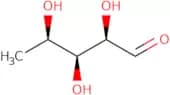
CAS:<p>5-Deoxy-D-xylose is a metabolite that is produced as a byproduct of the metabolism of l-arabinose. It can be found in urine, saliva, and cerebrospinal fluid. 5-Deoxy-D-xylose has been shown to have a role in mediating the effects of nitroacetate and hydrogen fluoride on nitric oxide synthase. This compound also has an anti-inflammatory effect, which may be due to its ability to inhibit the production of neopterin. The isomers form from 5-deoxy-D-xylose are tautomeric with each other and their optical isomers are chemically different from one another. 5-Deoxy-D-xylose can exist as a cyclic form or as an open chain form.</p>Formula:C5H10O4Purity:Min. 95%Molecular weight:134.13 g/mol2,3,4,6-Tetra-O-acetyl-b-D-galactopyranosyl formamide
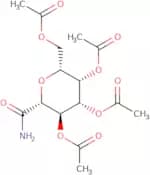
CAS:<p>2,3,4,6-Tetra-O-acetyl-b-D-galactopyranosyl formamide is a modification of the galactose sugar. It is an oligosaccharide and a complex carbohydrate that can be custom synthesized. This modification has a high purity and can be used to create monosaccharides, methylation and glycosylation. 2,3,4,6-Tetra-O-acetyl-b-D-galactopyranosyl formamide can also be used for polysaccharide synthesis with CAS No. 108739-88-4.</p>Formula:C15H21NO10Purity:Min. 95%Molecular weight:375.33 g/molGalNAcβ(1-4)GlcNAc-β-pNP
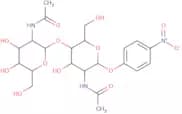
CAS:<p>Galnacβ(1-4)GlcNAc-β-PNP is a high purity, custom synthesized, synthetic carbohydrate. It is a complex carbohydrate that has been modified with a click modification at the reducing end of the sugar to attach an amine group. The sugar has also been methylated and glycosylated. The sugar has been fluorinated and saccharide, which is a monosaccharide or polysaccharide.</p>Formula:C22H31N3O13Purity:Min. 95%Color and Shape:PowderMolecular weight:545.5 g/mol3,6-Di-O-triisopropylsilyl-D-galactal
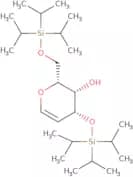
CAS:<p>3,6-Di-O-triisopropylsilyl-D-galactal is a synthetic sugar that is used as a reagent for glycosylation. It has been shown to react with the aldehyde group of an alcohol to form an acetal. The product can be hydrolyzed under acidic conditions to release the desired sugar product. 3,6-Di-O-triisopropylsilyl-D-galactal is soluble in water and ethanol and has CAS number 201053-37-4.</p>Purity:Min. 95%