Glycoscience
Subcategories of "Glycoscience"
- Aminosugars(108 products)
- Glyco-Related Antibodies(283 products)
- Glycolipids(46 products)
- Glycosaminoglycans (GAGs)(55 products)
- Glycosides(419 products)
- Monosaccharides(6,619 products)
- Oligosaccharides(3,711 products)
- Polysaccharides(505 products)
Found 11027 products of "Glycoscience"
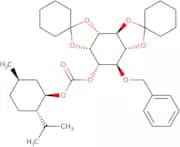
6-O-Benzyl-1-(-)-carboxymenthyl-2,3;4,5-di-O-cyclohexylidene-D-myo-inositol
CAS:6-O-Benzyl-1-(-)-carboxymenthyl-2,3;4,5-di-O-cyclohexylidene-D-myo-inositol is a novel glycosylation substrate for the synthesis of oligosaccharides. It is synthesized by fluorination and methylation of 1,2,3,4,5,-pentaacetoxycyclopentane. The fluorinated product can be further modified to produce various saccharides. This compound can be used as a custom synthesis in the synthesis of complex carbohydrates with high purity.
Formula:C36H52O8Purity:Min. 95%Molecular weight:612.79 g/molRef: 3D-MB05735
Discontinued productGM2-Oligosaccharide-spacer-NH2 ammonium
GM2-Oligosaccharide-spacer-NH2 ammonium is a complex carbohydrate with an oligosaccharide spacer and a hydrophobic NH2 group. The product is custom synthesized to your specifications and is available in high purity. It can be modified with fluorination or click chemistry. GM2-Oligosaccharide-spacer-NH2 ammonium is used in the synthesis of polysaccharides, saccharides, and carbohydrates. Some of its applications include modifying proteins, monosaccharides, and sugars.
Formula:C44H75N7O27·NH3Purity:Min. 95%Molecular weight:1,151.13 g/mol3-Amino-2,3-dideoxy-D-myo-inositol
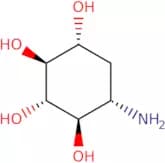
CAS:3-Amino-2,3-dideoxy-D-myo-inositol (3ADMI) is a gene product that belongs to the class of chemical biology. It is an actuator that has been shown to be able to bind and activate enzymes. 3ADMI is used as a substrate in the calibration of enzyme kinetics and as an analog for aminoglycosides. The conjugates of 3ADMI have been shown to prevent viral replication by inhibiting the synthesis of DNA or RNA.
Formula:C6H13NO4Purity:Min. 95%Color and Shape:White/Off-White SolidMolecular weight:163.17 g/molRef: 3D-MI44770
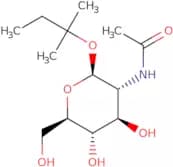
Discontinued producttert-Amyl 2-acetamido-2-deoxy-b-D-glucopyranoside
CAS:Tert-Amyl 2-acetamido-2-deoxy-b-D-glucopyranoside is a synthetic derivative of the natural sugar nucleotide, UDP-N-acetylgalactosamine. It is a precursor for the synthesis of glycosaminoglycans, which are important components of proteoglycans and glycosaminoglycan aggregates. Tert-Amyl 2-acetamido-2-deoxy-b-D-glucopyranoside has been modified by fluorination and methylation to provide increased stability and reactivity. This product is available in high purity with a CAS number of 262849-66-1.
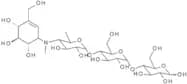
Formula:C13H25NO6Purity:Min. 95%Molecular weight:291.34 g/molN-Methyl acarbose
N-Methyl acarbose is a synthetic, high purity, fluorinated carbohydrate with a variety of applications. It has been modified to contain methyl groups on the carbons adjacent to the anomeric carbon, which are used for click chemistry and other bioconjugation reactions. N-Methyl acarbose can be used in glycosylation reactions and offers a wide range of custom synthesis options. This compound is a complex sugar that contains both glucose and fructose monomers.
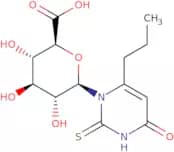
Formula:C26H45NO18Purity:Min. 95%Molecular weight:659.63 g/molPropylthiouracil N-b-D-glucuronide
CAS:Propylthiouracil N-b-D-glucuronide is a glycosylation product of propylthiouracil, which is the active form of this drug. It has been shown to inhibit thyroid hormone synthesis by binding to the enzyme thyroid peroxidase. Propylthiouracil N-b-D-glucuronide is used in the treatment of thyrotoxicosis, and can also be used as an antithyroid agent for hyperthyroidism. It is chemically synthesized from propylthiouracil with a glycosyl group added at the C3 position on the thiourea ring by glycosyltransferases. This compound has also been fluorinated and polysaccharided, modified and saccharided, oligosaccharided or sugar, synthetic or monosaccharide, custom synthesis or high purity.
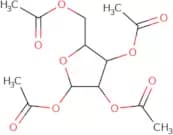
Formula:C13H18N2O7SPurity:Min. 95%Molecular weight:346.36 g/mol1,2,3,5-Tetra-o-acetyl-D-xylofuranose
CAS:1,2,3,5-Tetra-o-acetyl-D-xylofuranose is a fatty acid that is found in human red blood cells. It is used as a biochemical marker to diagnose the activity index of fatty acids in the red cell membrane. The activity index can be used to determine whether an individual has metabolic disorders such as hepatic steatosis or lc-ms/ms method. 1,2,3,5-Tetra-o-acetyl-D-xylofuranose also has antimicrobial effects against bacteria and fungi and can be used for the treatment of infectious diseases.
Formula:C13H18O9Purity:Min. 95%Molecular weight:318.28 g/molRef: 3D-SBA92746
Discontinued productD-Xylulose 5-phosphate sodium
CAS:D-Xylulose 5-phosphate sodium salt is a synthetic monosaccharide that can be used in the synthesis of oligosaccharides, polysaccharides, and complex carbohydrates. It is also used in glycosylation reactions. D-Xylulose 5-phosphate sodium salt has been fluorinated to provide better stability and solubility. The compound has a molecular weight of 206.06 g/mol and a CAS number of 105931-44-0. This product is available for custom synthesis upon request.
Formula:C5H11O8PNaPurity:Min. 95%Color and Shape:PowderMolecular weight:252.09 g/molRef: 3D-MX182933
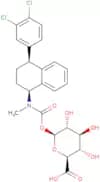
Discontinued productSertraline carbamoyl glucuronide
CAS:Sertraline is a selective serotonin reuptake inhibitor (SSRI) that is used primarily in the treatment of depression and anxiety. It inhibits the serotonin transporter protein, making more serotonin available for binding to postsynaptic receptors. Sertraline also has a minor inhibitory effect on norepinephrine and dopamine reuptake, but its primary function is as a selective serotonin reuptake inhibitor. The major metabolite of sertraline is sertraline carbamoyl glucuronide, which is formed through glucuronidation by UGT2B7. This metabolite has been found to be bifurcated with one half being excreted in urine and the other half being excreted in faeces. The half that undergoes urinary excretion has been shown to have a half-life of 24 hours whereas the other half has a much shorter half-life of 2 hours. Carbamoylation of sertraline may
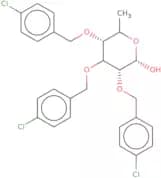
Formula:C24H25Cl2NO8Purity:Min. 95%Molecular weight:526.36 g/mol2,3,5-Tri-O-p-chlorobenzyl-L-fucopyranoside
CAS:2,3,5-Tri-O-p-chlorobenzyl-L-fucopyranoside is a modified sugar and an effective inhibitor of the glycosidase enzymes. It has been shown to inhibit the synthesis of glycogen in vitro. 2,3,5-Tri-O-p-chlorobenzyl-L-fucopyranoside is a major component of commercially available agarose gel electrophoresis buffers and is also used for modification of proteins by click chemistry. The compound can be custom synthesised with a high degree of purity and can be fluorinated for use in mass spectrometry.
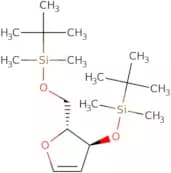
Formula:C27H27Cl3O5Purity:Min. 95%Molecular weight:537.86 g/mol1,4-Anhydro-2-deoxy-3,5-bis-O-(t-butyldimethylsilyl)-D-erythro-pent-1-enitol
CAS:1,4-Anhydro-2-deoxy-3,5-bis-O-(t-butyldimethylsilyl)-D-erythro-pent-1-enitol is a custom synthesis that has been fluorinated. It is a high purity oligosaccharide with a complex carbohydrate structure. This product was synthesized by click modification and methylation of the saccharide. It is a monosaccharide and sugar with a molecular formula C8H14FNO6S.Formula:C17H36O3Si2Purity:Min. 95%Color and Shape:Clear LiquidMolecular weight:344.64 g/molRef: 3D-MA06401
Discontinued product2,4-O-Ethylidene-D-erythrose
CAS:2,4-O-Ethylidene-D-erythrose is a trimerization product of glyoxal and acetaldehyde. It is an aldehyde that can be used as a precursor to other compounds. The hydrated form of 2,4-O-ethylidene-D-erythrose has been rationalized by the mesoxalic acid and water molecules to form the trimer. This compound can be produced from the glycolaldehyde and sulfoxide in an oxidation reaction with hydrogen peroxide. The acetylation of 2,4-O-ethylidene-D-erythrose produces isoxazolidines which are stereoselective.
Formula:C6H10O4Purity:Min. 95%Molecular weight:146.14 g/mol(2R,3R,4S,5R,6S)-3,4,5-Trihydroxy-2-hydroxymethyl-7,9-diaza-1-oxa-spiro[4,5]decane-10-one-8-thione
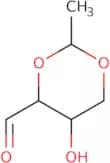
CAS:(2R,3R,4S,5R,6S)-3,4,5-Trihydroxy-2-hydroxymethyl-7,9-diaza-1-oxa-spiro[4,5]decane-10-one-8-thione is a custom synthesis of a polysaccharide. It has been modified to include fluorination and methylation. The monosaccharides present are glucose and galactose. This polysaccharide also has a saccharide linkage to an oligosaccharide that contains glycosylation sites for sugar groups.
Formula:C8H12N2O6SPurity:Min. 95%Molecular weight:264.26 g/mol3-Fucosyllactose-BSA
3-Fucosyllactose is a high purity synthetic sugar that is custom synthesized to order. It has a click modification, fluorination and glycosylation. 3-Fucosyllactose is a monosaccharide with CAS No. 160159-69-2. 3-Fucosyllactose has the ability to be modified for glycoengineering and glycobiology studies. It can be used in the synthesis of complex carbohydrates, such as oligosaccharides and monosaccharides.
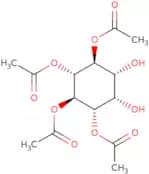
Purity:Min. 95%3,4,5,6-Tetra-O-acetyl-D-myo-inositol
CAS:3,4,5,6-Tetra-O-acetyl-D-myo-inositol is a carbohydrate that can be used as a monosaccharide or an oligosaccharide. It is produced by the modification of inositol with acetate and fluoride. The compound has been shown to have anti-inflammatory properties and can be used as a drug target for treating inflammation. 3,4,5,6-Tetra-O-acetyl-D-myo-inositol is also methylated and glycosylated.
Formula:C14H20O10Purity:Min. 95%Molecular weight:348.3 g/molHesperetin 3'-O-beta-D-glucuronide
CAS:Hesperetin 3'-O-beta-D-glucuronide is a glycosylate that is obtained by the glycosylation of hesperidin. Hesperetin 3'-O-beta-D-glucuronide is a sugar with a glycosylation site at the C3 position of the aglycone. It has shown to be an efficient inhibitor of Triglyceride Synthetase, which reduces triglycerides in the body. Hesperetin 3'-O-beta-D-glucuronide also has been shown to inhibit insulin release and increase insulin sensitivity in vitro.
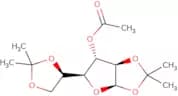
Formula:C22H22O12Purity:Min. 95%Molecular weight:478.4 g/mol3-O-Acetyl-1,2:5,6-di-O-isopropylidene-a-D-galactofuranose
CAS:3-O-Acetyl-1,2:5,6-di-O-isopropylidene-a-D-galactofuranose is a synthetic modified oligosaccharide with a molecular weight of 591.3 g/mol. It has been shown to inhibit the growth of various bacterial strains in the lab and can be used as an antibiotic for bacterial infections. 3-O-Acetyl-1,2:5,6-di-O-isopropylidene galactofuranose is a monosaccharide composed of two acetyl groups and one isopropylidene group. Its glycosylation and methylation patterns are also known.
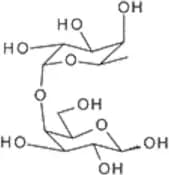
Formula:C14H22O7Purity:Min. 95%Molecular weight:302.32 g/mol4-O-(α-L-Fucopyranosyl)-D-galactopyranose
CAS:4-O-(a-L-Fucopyranosyl)-D-galactopyranose is a glycosidic sugar that has an alpha-1,3 linkage and a galactose residue. The sequence of this sugar is the same as that of D-galactose. 4-O-(a-L-Fucopyranosyl)-D-galactopyranose belongs to the group of carbohydrates. It is found in plants, animals, or fungi and can be used as a precursor for the synthesis of many other compounds.
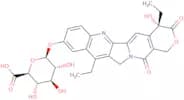
Formula:C12H22O10Purity:Min. 95%Color and Shape:PowderMolecular weight:326.3 g/molSN-38 glucuronide
CAS:SN-38 glucuronide is a metabolite of irinotecan that inhibits the growth of cancer cells by binding to the DNA polymerase, blocking the synthesis of DNA. SN-38 glucuronide has potent antitumor activity and high values for inhibiting tumor metastasis. It is mainly excreted in urine as a conjugate with glucuronic acid, which may be why urine samples are often used to measure its concentration. SN-38 glucuronide also interacts with other drugs, including chemical inhibitors and ATP-binding cassette transporters, which can affect its pharmacological properties.
Formula:C28H28N2O11Purity:Min. 97.5 Area-%Color and Shape:PowderMolecular weight:568.53 g/molRef: 3D-MS16856
Discontinued productOlmesartan acid O-b-D-glucuronide
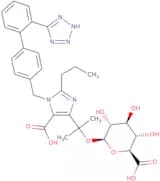
CAS:Olmesartan acid O-b-D-glucuronide is a synthetic, high purity, and custom synthesis oligosaccharide. It can be fluorinated in the presence of a base to give a fluorinated compound with the following CAS number: 369395-57-3. Olmesartan acid O-b-D-glucuronide is an oligosaccharide that has been modified by click chemistry. This modification results in a polysaccharide that contains saccharides connected through ether linkages. The saccharides are made up of monosaccharides and disaccharides, which are all sugars.
Formula:C30H34N6O9Purity:Min. 95%Molecular weight:622.63 g/mol

![(2R,3R,4S,5R,6S)-3,4,5-Trihydroxy-2-hydroxymethyl-7,9-diaza-1-oxa-spiro[4,5]decane-10-one-8-thione](/_next/image/?url=https%3A%2Fstatic.cymitquimica.com%2Fproducts%2F3D%2Fthumb-webp%2FMT01909.webp&w=3840&q=75)