Glycoscience
Subcategories of "Glycoscience"
- Aminosugars(108 products)
- Glyco-Related Antibodies(284 products)
- Glycolipids(46 products)
- Glycosaminoglycans (GAGs)(55 products)
- Glycosides(422 products)
- Monosaccharides(6,674 products)
- Oligosaccharides(4,042 products)
- Polysaccharides(517 products)
Found 11404 products of "Glycoscience"
D-Mannosaminuronic acid
D-Mannosaminuronic acid is a monosaccharide that has been isolated from the seed of the African plant, Acacia drepanolobium. It is found to be an antigenic component of shigella and related enterobacteria and plays an important role in the biosynthesis of glycolipids. D-Mannosaminuronic acid can be hydrolyzed by acidic enzymes such as lipases, esterases, phosphatases, or proteases. This process may lead to the liberation of fatty acids and sugars. The purified enzyme preparations have been shown to catalyze the synthesis of D-mannosaminuronic acid from mannose and fructose.
Purity:Min. 95%L-Glycero-L-galacto-heptose
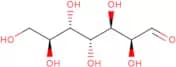
CAS:L-Glycero-L-galacto-heptose is a cyclitol that is structurally similar to glycerol and galactose. It has been found in the Australian sea urchin Strongylocentrotus franciscanus. L-Glycero-L-galacto-heptose can be synthesized by reacting methyl glycosides with calcium ions. This reaction produces an electrophoretic mobility that is greater than that of glycerol, which may be due to the greater degree of hydrogen bonding between methyl glycosides and calcium ions. The presence of hydroxyl groups on the sugar residue allows for the formation of hydrogen bonds with neighboring molecules. These interactions lead to a conformation that is different from other cyclitols, such as D-glycero-D-galactopyranose, which has no hydroxyl group on its sugar residue.
Formula:C7H14O7Purity:Min. 95%Molecular weight:210.2 g/mol1,2,3,4-Tetra-O-benzyl-6-O-tert-butyldiphenylsilyl-a-D-mannopyranose
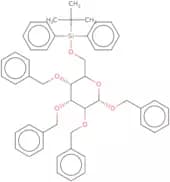
CAS:1,2,3,4-Tetra-O-benzyl-6-O-tert-butyldiphenylsilyl-a-D-mannopyranose is a synthetic glycoside that can be used as a building block for the synthesis of complex carbohydrates. It is a fluorinated sugar that can be modified with methyl groups and other functional groups. This product is available in high purity and can be custom synthesized to meet your specific needs.
Formula:C50H54O6SiPurity:Min. 95%Molecular weight:779.07 g/mol1,4-Anhydro-6-chloro-6-deoxy-D-glucitol
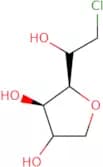
1,4-Anhydro-6-chloro-6-deoxy-D-glucitol is a complex carbohydrate that has been fluorinated and modified with methyl groups. It can be custom synthesized to produce high purity compounds. 1,4-Anhydro-6-chloro-6-deoxy-D-glucitol is used in synthesis of saccharides and oligosaccharides. The compound has been modified with Click chemistry to produce glycosylation products. It can also be used as an intermediate for the synthesis of sugar derivatives.
1,4-Anhydro-6-chloro-6-deoxy--D--glucitol has the following chemical structure:Formula:C6H11ClO4Purity:Min. 95%Molecular weight:182.61 g/mol1,2:3,4:5,6-Tri-O-isopropylidene-D-glycero-L-gulo-heptitol
1,2:3,4:5,6-Tri-O-isopropylidene-D-glycero-L-gulo-heptitol is a fluorinated monosaccharide that is synthesized from D-glucose. It is used as an experimental carbohydrate for glycosylation and modification reactions with other compounds. 1,2:3,4:5,6-Tri-O-isopropylidene-D-glycero-L-gulo-heptitol has a CAS number of 152400–59–1.
Purity:Min. 95%n-Dodecyl-β-D-maltoside
CAS:Dodecyl maltoside (DDM) is a non-ionic detergent that consists of a hydrophilic maltose head and a hydrophobic long chain alkyl tail. It has a relatively low critical micelle concentration of 0.17 mM and is considered a gentle but powerful detergent. DDM is often the best tool for solubilising/crystallising membrane proteins. Membrane proteins usually have α-helical structures that are easily destroyed when the protein is released from its membrane environment. DDM can often preserve these structures during the solubilisation. In addition, membrane proteins can often be renatured when isolated with DDM.
Formula:C24H46O11Molecular weight:510.63 g/mol6-Amino-6-deoxy-D-lactosylamine
6-Amino-6-deoxy-D-lactosylamine is a modified sugar that is used to synthesize glycosides. It is also used as a reagent for the methylation of saccharides and polysaccharides. This product can be custom synthesized or ordered from our catalog. We offer high purity 6-amino-6-deoxy-D-lactosylamine, which has been chemically modified with fluorine and has a CAS number of 7092-12-3. It is available in different quantities and can be ordered with other custom modifications, such as Click chemistry.
Purity:Min. 95%Octyl-b-D-glucuronide methyl ester
Octyl-b-D-glucuronide methyl ester is a synthetic molecule that can be used for a variety of purposes, including modification, fluorination, methylation and monosaccharide synthesis. This product is also available in various concentrations. Click modification, oligosaccharides and polysaccharides are all possible uses for this product. Octyl-b-D-glucuronide methyl ester has been shown to have many applications, such as glycosylation and sugar synthesis. This product has been shown to be useful in the production of complex carbohydrates.
Purity:Min. 95%6-Chloro-6-deoxy-D-mannono-1,4-lactone
6-Chloro-6-deoxy-D-mannono-1,4-lactone is a saccharide that belongs to the group of polysaccharides. It can be custom synthesized and modified to meet your needs. 6CMDL is a synthetic carbohydrate product with high purity, which can be used in the synthesis of glycosylations or as a fluorinated mannose analogue.
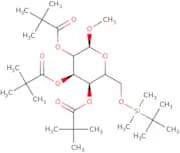
6CMDL has been shown to have a methylation activity that can be used for the modification of carbohydrates or oligosaccharides.Formula:C6H9ClO5Purity:Min. 95%Molecular weight:196.59 g/molMethyl 6-O-tert-butyldimethylsilyl-2,3,4-tri-O-pivaloyl-a-D-mannopyranoside
Methyl 6-O-tert-butyldimethylsilyl-2,3,4-tri-O-pivaloyl-a-D-mannopyranoside is a synthetic glycosylation agent that can be used for the synthesis of complex carbohydrates. This product has been fluorinated and saccharide modified. Methyl 6-O-tert-butyldimethylsilyl-2,3,4-tri-O-pivaloyl-aDmannopyranoside is available in CAS number: 5756782.
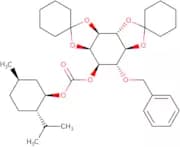
Formula:C28H52O9SiPurity:Min. 95%Molecular weight:560.81 g/mol6-O-Benzyl-1-(-)-carboxymenthyl-2,3:4,5-di-O-cyclohexylidene-L-myo-inositol
CAS:6-O-Benzyl-1-(-)-carboxymenthyl-2,3:4,5-di-O-cyclohexylidene-L-myo-inositol is a synthetic oligosaccharide with the chemical formula C9H14FNO5. It is a monosaccharide composed of a single sugar unit, inositol, which has been modified with benzyl groups on the 6th and 1st positions of the inositol ring. This compound is used as an intermediate in the synthesis of other saccharides.
Formula:C36H52O8Purity:Min. 95%Molecular weight:612.79 g/mol2,5-Dideoxy-2,5-imino-glycero-D,L-mannoheptitol
2,5-Dideoxy-2,5-imino-glycero-D,L-mannoheptitol is a methylated saccharide that has been modified with a click reaction. It is used in the synthesis of oligosaccharides and glycosylations. This product is an excellent choice for custom synthesis projects due to its high purity, low cost, and short lead time.
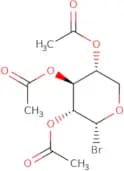
Purity:Min. 95%a-Acetobromo-D-xylose
CAS:a-Acetobromo-D-xylose is an oligosaccharide sugar used in glycosylation and polysaccharide modifications. It is synthesized by the fluorination of xylose with acetic acid, bromine, and a base. The product is purified by vacuum distillation and recrystallization. In addition to its use as a carbohydrate, this product can be modified using methylation or click chemistry to create derivatives.
Formula:C11H15BrO7Purity:Min. 95%Molecular weight:339.14 g/mol2,3,6-Tri-O-benzyl-γ-cyclodextrin
This gamma-cyclodextrin (γ-CD) derivative is a modified cyclic oligosaccharide composed of eight glucose units, featuring a larger cavity size than α- and β-cyclodextrins. This structural characteristic allows γ-CDs to form inclusion complexes with a wider range of guest molecules, making it particularly versatile in various industries. In the food sector, it is used as a carrier and stabilizer for flavors, fat-soluble vitamins, and polyunsaturated fatty acids, protecting volatile compounds from evaporation. In pharmaceuticals, it enhances the solubility and bioavailability of poorly water-soluble drugs and, thanks to its larger ring size, allows for the encapsulation of larger molecules or even entire drug molecules. γ-CDs and derivatives are also used for environmental remediation and, in analytical chemistry, for the extraction and concentration of target substances.
Formula:C216H224O40Purity:Min. 95%Molecular weight:3,460.07 g/mol2-Deoxy-D-ribose
CAS:Used in synthetic organic chemistry and natural product synthesis. Induces apoptosis by inhibiting the synthesis and increasing the efflux of glutathione. It is used for synthesis of optically active dipyrrolyl alkanols from pyrroles on the surface of montmorillonite KSF clay.
Formula:C5H10O4Purity:Min. 99.0 Area-%Molecular weight:134.13 g/molGDP-D-mannose disodium salt
CAS:GDP-D-mannose is a natural mannosyl donor and substrate for mannosyltransferases that catalyses mannosylation, for instance during the synthesis of the trimannoside core of complex, high-mannose or hybrid N-glycans. GDP-D-mannose is widely used in (chemo)enzymatic synthesis of oligosaccharides and its biosynthesis occurs from glucose-6-phosphate over several steps. GDP-D-mannose consists of a D-mannose unit, α-glycosydically linked to the nucleotide guanosine diphosphate (GDP). Examples of this important reaction would be the transfer of mannosyl moieties onto the dolichol-P-P-GlcNAc2 precursor of N-glycans in the endoplasmatic reticulum, with release of GDP, or the mannosylation reactions during GPI-anchor (bio)synthesis. GDP-D-mannose has also been used for the in vitro synthesis of b-mannan oligosaccharides.
Formula:C16H23N5O16P2Na2Purity:Min. 95 Area-%Molecular weight:649.3 g/molD-Allose pentaacetate
CAS:D-Allose pentaacetate is a modified oligosaccharide that can be used as a synthetic intermediate in the production of complex carbohydrates. It has been shown to have high purity and is easily synthesized in a laboratory setting. D-Allose pentaacetate is a monosaccharide with five acetate groups that can be methylated or glycosylated, which makes it an ideal candidate for modification. D-Allose pentaacetate has CAS No. 144071-49-8 and can be found on PubChem CID: 1215965.
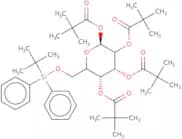
Formula:C16H22O11Purity:Min. 95%Color and Shape:PowderMolecular weight:390.34 g/mol1,2,3,4-Tetra-O-pivaloyl-6-O-(tert-butyldiphenylsilyl)-b-D-glucopyranose
1,2,3,4-Tetra-O-pivaloyl-6-O-(tert-butyldiphenylsilyl)-b-D-glucopyranose is a custom synthesis of an oligosaccharide with a polysaccharide. The carbohydrate is modified with fluorination and methylation. This product has high purity and is synthesized using click chemistry. Monosaccharides are attached to the sugar backbone in order to form complex carbohydrates. This product can be used as a synthetic sugar or in the production of other oligosaccharides.
Formula:C42H62O10SiPurity:Min. 95%Molecular weight:755.04 g/molD-Fructose 1-phosphate disodium
CAS:Please enquire for more information about D-Fructose 1-phosphate disodium including the price, delivery time and more detailed product information at the technical inquiry form on this page
Formula:C6H11Na2O9PPurity:90%Color and Shape:PowderMolecular weight:304.1 g/mol1,2:3,5-Di-O-isopropylidene-b-L-apiose
CAS:1,2:3,5-Di-O-isopropylidene-b-L-apiose is a sugar that is used in the production of glycosylation and methylation. It is an oligosaccharide of the monosaccharide apiose and has a molecular weight of 432.06 g/mol. 1,2:3,5-Di-O-isopropylidene-b-L-apiose can be synthesized by the modification of natural apiose with chloromethyl groups at C3 and C5 positions. It is also possible to modify 1,2:3,5-Di-O-isopropylidene apiose with other functional groups such as fluorine or glycosylation. This compound can be used in the synthesis of complex carbohydrates such as heparin, hyaluronic acid, and chitin.
Formula:C11H18O5Purity:Min. 95%Molecular weight:230.26 g/mol