Glycoscience
Subcategories of "Glycoscience"
- Aminosugars(108 products)
- Glyco-Related Antibodies(284 products)
- Glycolipids(46 products)
- Glycosaminoglycans (GAGs)(55 products)
- Glycosides(419 products)
- Monosaccharides(6,622 products)
- Oligosaccharides(3,701 products)
- Polysaccharides(505 products)
Found 11034 products of "Glycoscience"
1,2-a-1,2-a-D-Mannotriose 1-O-propylamine acetate salt
1,2-a-1,2-a-D-Mannotriose 1-O-propylamine acetate salt is a synthetic oligosaccharide.
Formula:C23H43O18NPurity:Min. 95%Molecular weight:621.58 g/molPropyl b-D-glucuronide
CAS:Propyl b-D-glucuronide is a synthetic compound that belongs to the family of carbohydrates. It has a fluorinated hydroxyl group at the C3 position and an esterified carboxylic acid at the C1 position. This compound can be used as a building block for oligosaccharides and polysaccharides, which are complex carbohydrates. Propyl b-D-glucuronide is soluble in water and has a molecular weight of 176.Formula:C9H16O7Purity:Min. 95%Color and Shape:Tan To Brown SolidMolecular weight:236.22 g/mol6-Deoxy-γ-cyclodextrin
This gamma-cyclodextrin (γ-CD) derivative is a modified cyclic oligosaccharide composed of eight glucose units, featuring a larger cavity size than α- and β-cyclodextrins. This structural characteristic allows γ-CDs to form inclusion complexes with a wider range of guest molecules, making it particularly versatile in various industries. In the food sector, it is used as a carrier and stabilizer for flavors, fat-soluble vitamins, and polyunsaturated fatty acids, protecting volatile compounds from evaporation. In pharmaceuticals, it enhances the solubility and bioavailability of poorly water-soluble drugs and, thanks to its larger ring size, allows for the encapsulation of larger molecules or even entire drug molecules. γ-CDs and derivatives are also used for environmental remediation and, in analytical chemistry, for the extraction and concentration of target substances.Formula:C48H80O32Purity:Min. 95%Molecular weight:1,169.13 g/mol2-Acetamido-2-deoxy-3-O-(a-D-galactopyranosyl)-D-galactopyranose
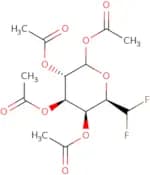
CAS:2-Acetamido-2-deoxy-3-O-(a-D-galactopyranosyl)-D-galactopyranose is a high purity synthetic oligosaccharide. It is an off white to light yellow powder with a molecular weight of 514.06 and a melting point of >200 degrees Celsius. The chemical formula for this product is C12H24O11N2. This product has been fluorinated, methylated, glycosylated, and click modified to create a complex carbohydrate that can be used in the synthesis of other molecules.Formula:C14H25NO11Purity:Min. 90.0 Area-%Molecular weight:383.35 g/mol1,2,3,4-Tetra-O-acetyl-6-deoxy-6,6-difluoro-L-galactose
CAS:fucosylation inhibitor
Formula:C14H18F2O9Molecular weight:368.28 g/molN-Acetyl-D-glucosamine - plant source
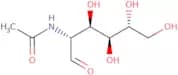
CAS:N-acetyl D-glucosamine (GlcNAc) is an aldohexose (2-acetamido-2-deoxyglucose) in which the hydroxyl group at position 2 is replaced by NHAc (Collins, 2006). N-acetyl D-glucosamine forms the exoskeletons of molluscs and insects as the building block of the polysaccharide chitin (Rudrapatnam, 2003). N-acetyl D-glucosamine is a key component of N- and O-linked glycans, present in glycolipids and the glycosaminoglycan hyaluronic acid (Fallacara, 2018). A recent study has suggested that N-acetyl D-glucosamine may have therapeutic potential for COVID-19 as it affects the spike protein-ACE2 receptor interaction during the infection with SARS-CoV-2 virus (Baysal, 2021).Formula:C8H15NO6Purity:Min. 98 Area-%Color and Shape:PowderMolecular weight:221.21 g/mol2-Acetylamino-3,4-O-benzylidene-2-deoxy-D-arabino-1,4-lactone
2-Acetylamino-3,4-O-benzylidene-2-deoxy-D-arabino-1,4-lactone is a synthetic compound that is used to modify the carbohydrate chains in Glycopeptides. This modification can be done by either fluorination or methylation. The click modification has been shown to be effective for complex carbohydrates such as oligosaccharides and polysaccharides.Purity:Min. 95%Ethyl 2,3-di-O-benzoyl-4,6-O-benzylidene-b-D-thiogalactopyranoside - non-animal origin
CAS:Ethyl 2,3-di-O-benzoyl-4,6-O-benzylidene-b-D-thiogalactopyranoside - non animal origin is a custom synthesis that is modified to include fluorination and methylation. This product is also an oligosaccharide or saccharide with a complex carbohydrate. The CAS No. for this product is 56119-30-3.Purity:Min. 95%3-O-Benzyl-1,2:5,6-di-O-isopropylidene-D-allofuranose
3-O-Benzyl-1,2:5,6-di-O-isopropylidene-D-allofuranose is a modification of the carbohydrate that is produced synthetically. It belongs to the group of modified carbohydrates and can be used as a monosaccharide or an oligosaccharide. 3-O-Benzyl-1,2:5,6-di-O-isopropylidene-D allofuranose has been shown to have high purity and can be methylated and glycosylated for custom synthesis. This compound has CAS number 93343-70-2.Purity:Min. 95%Methylanthranilate glucoside
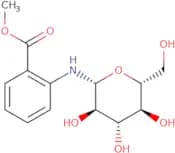
CAS:Methylanthranilate glucoside is a carbohydrate that is custom synthesized to order. It is a synthetic, high purity, methylated, glycosylated, and click-modified oligosaccharide. This product has CAS No. 1875079-80-3 and can be used in medical research for the identification of saccharides or glycans with a specific modification pattern.Formula:C14H19NO7Purity:Min. 95%Color and Shape:PowderMolecular weight:313.3 g/molMethyl 4-O-(b-D-galactopyranosyl)-D-glucopyranoside
CAS:Methyl 4-O-(b-D-galactopyranosyl)-D-glucopyranoside is a cell death inducer that induces apoptosis in cancer cells. It is an analog of the natural product bryostatin 1, which has been shown to induce apoptosis in cancer cells by binding to a protein called CD97. This compound induces apoptosis by binding to CD97, inhibiting the formation of ATP, and activating caspases. In vitro studies have shown that methyl 4-O-(b-D-galactopyranosyl)-D-glucopyranoside induces apoptosis in mouse lymphoma cells and human leukemia cells.
Formula:C13H24O11Purity:Min. 95%Color and Shape:White PowderMolecular weight:356.32 g/mol6-O-Tert.butyldimethylsilyl - 2, 3- O- isopropylidene-L- gulonic acid γ-lactone
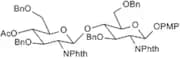
6-O-Tert.butyldimethylsilyl - 2, 3- O- isopropylidene-L- gulonic acid gamma-lactone is a glycosylate of 6-O-tert.butyl dimesitylglycolic acid. It is a monosaccharide with an α--glycosidic linkage that may be used in the synthesis of complex carbohydrates or as a sugar surrogate for saccharide chemistry applications. This product can be custom synthesized to your specifications and has high purity.Purity:Min. 95%4-Methoxyphenyl 4-O-(4-O-acetyl-3,6-di-O-benzyl-2-deoxy-2-phthalimido-b-D-glucopyranosyl)-3,6-di-O-benzyl-2-deoxy-2-phthalimido-b-D- glucopyranoside
CAS:4-Methoxyphenyl 4-O-(4-O-acetyl-3,6-di-O-benzyl-2-deoxy-2-phthalimido-b-D-glucopyranosyl)-3,6-di-O-benzyl -2,4,6-(1',4'-dioxan)-tris(2,3,5',6'-tetraethoxy)phenolFormula:C65H60N2O15Purity:Min. 95%Molecular weight:1,109.17 g/mol2,3,5-Tri-O-benzoyl-2- C- methyl- D- arabinonic acid γ-lactone
2,3,5-Tri-O-benzoyl-2- C- methyl- D- arabinonic acid gamma-lactone is a modification of an oligosaccharide. It is synthesized by the benzoylation of 2,3,5-trihydroxybenzoic acid with methyl iodide and sodium carbonate in acetic acid. The product is purified by recrystallization from methanol and water to yield a white crystalline solid. The chemical formula for 2,3,5-tri-O-benzoyl-2- C- methyl--D--arabinonic acid gamma lactone is C14H16O8. The molecular weight of the compound is 478.26 g/molPurity:Min. 95%Salicylic acid ethyl ester b-D-glucuronide
The synthesis of this compound is accomplished by a two-step process. First, the methylation of salicylic acid ethyl ester with sodium methoxide in methanol followed by the addition of b-D-glucuronide to afford the desired product. This compound is an example of an oligosaccharide with a complex carbohydrate structure. It can be modified to contain fluorine atoms or other functional groups and it has been shown to be synthesized from monosaccharides. The sugar chain can include a variety of saccharides, such as glucose, galactose, or fructose. The synthesis of this compound is accomplished by a two-step process. First, the methylation of salicylic acid ethyl ester with sodium methoxide in methanol followed by the addition of b-D-glucuronide to afford the desired product. This compound is an example of an oligosaccharide with a complex carbohydrate structure. It canFormula:C15H18O9Purity:Min. 95%Molecular weight:342.3 g/molBenzyl 2-acetamido-2-deoxy-6-O-(b-D-galactopyranosyl)-a-D-galactopyranoside
CAS:This compound is a custom synthesis. It is an oligosaccharide, polysaccharide and modification of saccharides. The compound has been modified with methylation, glycosylation, and fluorination. This compound is a high purity product with the CAS number 93496-44-7.Formula:C21H31NO11Purity:Min. 95%Color and Shape:PowderMolecular weight:473.47 g/molD-Xylose-1-phosphate triethylammonium
CAS:D-Xylose-1-phosphate triethylammonium is a synthetic compound that is used as an intermediate in the synthesis of oligosaccharides and polysaccharides. It has been shown to be a substrate for glycosylation reactions, with the potential to form glycosidic bonds with a variety of monosaccharides and polysaccharides. This product can also be fluorinated or methylated, and can undergo click modification or other modifications to make it suitable for use in various applications. D-Xylose-1-phosphate triethylammonium is available in high purity and can be custom synthesized according to customer specifications.Formula:C5H11O8PPurity:Min. 95%Color and Shape:PowderMolecular weight:230.11 g/mol2-Amino-2-deoxy-D-fucose
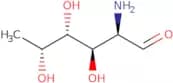
CAS:2-Amino-2-deoxy-D-fucose is a sugar molecule that is found in the cell wall of bacteria, including Staphylococcus aureus. It may be used to treat microbial infections by binding to bacterial cell walls and causing them to lose their ability to adhere to host cells. This sugar molecule may also be effective against Pseudomonas aeruginosa. 2-Amino-2-deoxy-D-fucose has been shown to inhibit the growth of P. aeruginosa in vitro by inhibiting the synthesis of fatty acids and increasing the production of hydrogen fluoride, which leads to cell death.Formula:C6H13NO4Purity:Min. 95%Molecular weight:163.17 g/molD-myo-Inositol 1,4,5-triphosphate potassium salt
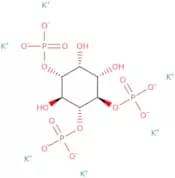
CAS:D-myo-Inositol 1,4,5-triphosphate potassium salt is an ion channel activator. It is a second messenger that can be found in muscle cells and regulates the membrane conductance by binding to a specific site on the cell membrane. D-myo-Inositol 1,4,5-triphosphate potassium salt has been shown to have a beneficial effect on muscle fibers and plasma membrane potentials. This compound also alters hormone levels and liver function. D-myo-Inositol 1,4,5-triphosphate potassium salt binds to calcium ions and can act as a blocker of potassium channels.Formula:C6H9K6O15P3Purity:Min. 95%Color and Shape:PowderMolecular weight:648.64 g/mol2,3,4,6-Tetra-O-acetyl-β-D-glucopyranosyl fluoride
CAS:2,3,4,6-Tetra-O-acetyl-b-D-glucopyranosyl fluoride is a fluorinated carbohydrate. It is a complex carbohydrate that consists of the sugar galactose. The glycosylation and polysaccharide modifications are used to synthesize this compound. These modifications are done by chemical reactions that include methylation, click chemistry, and glycosylation. This chemical has not been evaluated for safety in humans or animals, but it has been shown to be safe in rats when administered at doses up to 500 mg/kg. 2,3,4,6-Tetra-O-acetyl-b-D-glucopyranosyl fluoride can be found under CAS No. 2823-46-3 and is soluble in water at 25 °C with a solubility of 1 g/L.Formula:C14H19FO9Purity:Min. 95%Color and Shape:PowderMolecular weight:350.29 g/molMethyl 4,6-O-benzylidene-a-D-galactopyranoside
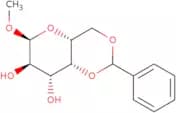
CAS:Methyl 4,6-O-benzylidene-a-D-galactopyranoside is a high purity, custom synthesis, sugar modified product. It has a CAS No. 72904-85-9, and can be synthesized by the click modification of methyl 1,4-O-diacetyl D-mannopyranoside. The fluorination of the glucose moiety in this molecule is accomplished using NCS/BF3 complex in acetonitrile. Glycosylation is achieved using NEM/HBTU and DCC in DMF. The saccharide is then modified with methyl 4,6-O-benzylidene alditol acetate to yield Methyl 4,6-O-benzylidene a D galactopyranoside. This product can also be synthesized by the glycosylation of methyl 2,5 dihydroxyacetophenone with methylFormula:C14H18O6Purity:Min. 95%Color and Shape:White to off-white solid.Molecular weight:282.29 g/molLinamarin
CAS:Cyanogenic glycosideFormula:C10H17NO6Purity:Min. 97 Area-%Color and Shape:White PowderMolecular weight:247.25 g/mol3,4,6-Tri-O-acetyl-2-deoxy-2-phthalimido-D-glucopyranose
CAS:3,4,6-Tri-O-acetyl-2-deoxy-2-phthalimido-D-glucopyranose is a modified sugar that belongs to the group of carbohydrates. It is a monosaccharide that has been synthesized by the modification of 2,3,4,6-tetraacetyl glucose with 3,4,6-trihydroxybenzaldehyde. The compound is an off white powder and can be used in glycosylation reactions. This product has been shown to have high purity and can be custom synthesized to meet your needs.Formula:C20H21NO10Purity:Min. 95%Molecular weight:435.38 g/molTetra-O-acetyl-L-rhamnopyranose
CAS:Tetra-O-acetyl-L-rhamnopyranose is a custom synthesis, complex carbohydrate. It is an Oligosaccharide, Polysaccharide, Modification, saccharide with Methylation, Glycosylation, Carbohydrate that has CAS No. 7404-35-5. Tetra-O-acetyl-L-rhamnopyranose has High purity and Fluorination properties. This product can be Synthetic or Custom synthesis for industrial applications.Formula:C14H20O9Purity:Min. 95%Molecular weight:332.3 g/molD-Arabinaric acid dipotassium salt
CAS:D-Arabinaric acid dipotassium salt is a custom synthesis with complex carbohydrate, which can be modified by methylation, glycosylation, and carbonylation. It has CAS number 6703-05-5 and a high purity. This product is also fluorinated, which makes it an excellent synthetic reagent.Formula:C5H6K2O7Purity:Min. 95 Area-%Color and Shape:White Off-White PowderMolecular weight:256.29 g/molSucralfate
CAS:Sucralfate is a drug that is used to treat and prevent injury-related inflammation by forming a protective barrier on the lining of the stomach and duodenum. Sucralfate has been shown to be effective in the treatment of infectious diseases, such as viral or bacterial infections, and also for radiation enteritis and ulcerative colitis. Sucralfate may interfere with the absorption of other drugs, such as acyclic nucleoside phosphonates, which are used to treat HIV/AIDS. This drug has also been shown to have anti-inflammatory properties through inhibition of prostaglandin synthesis. Sucralfate has been shown to have anti-inflammatory properties through inhibition of prostaglandin synthesis.
Formula:C12H54Al16O75S8Color and Shape:White Off-White PowderMolecular weight:2,086.74 g/mol1,3:1,4-b-Glucotriose (B)
CAS:1,3:1,4-B-Glucotriose (B) is a carbohydrate that is a monosaccharide. It is also an oligosaccharide that is classified as a complex carbohydrate. This compound can be synthesized with high purity and custom synthesis. 1,3:1,4-B-Glucotriose (B) can be modified with fluorination, methylation, glycosylation, and click modification. This product has CAS No. 157544-59-7.Formula:C18H32O16Purity:Min. 95%Color and Shape:White PowderMolecular weight:504.44 g/molGlycerone phosphate dilithium salt
CAS:Glycerone phosphate dilithium salt is a cross-linking agent that has been used in clinical trials as a dietary supplement. It has been shown to reduce the levels of ATP, adenine nucleotides, and 6-phosphate. Glycerone phosphate dilithium salt is not metabolized by cellular enzymes and can be used as an alternate energy source for cells that are low in ATP or have high rates of glycolysis. When glycerone phosphate dilithium salt is added to fat cells in culture, it increases the rate of lipid synthesis.Formula:C3H5Li2O6PPurity:Min. 93%Color and Shape:PowderMolecular weight:181.92 g/mol2-Azido-2-deoxy-D-glucose
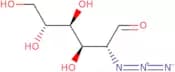
CAS:2-Azido-2-deoxy-D-glucose is the azido analogue of D-glucosamine and may be used as a metabolic chemical reporter by direct labelling of glycans. The azide group is used to link to a fluorescent marker, enabling secondary visualisation and identification of glycoproteins. The azide moiety of 2-azido-2-deoxy-D-glucose has been used to form triazoles via a 1,3-dipolar cycloaddition reaction in the synthesis of molecules with improved solubility used to inhibit p38a MAPK for anti-inflammation.Formula:C6H11N3O5Purity:Min. 97 Area-%Color and Shape:White PowderMolecular weight:205.17 g/mol1,6-Anhydro-2-azido-2-deoxy-b-D-glucopyranose
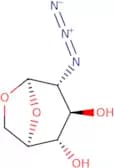
CAS:1,6-Anhydro-2-azido-2-deoxy-b-D-glucopyranose is a sugar. It belongs to the group of carbohydrates and has a molecular weight of 198.15 g/mol. The CAS number for this compound is 67546-20-7. 1,6-Anhydro-2-azido-2,3,4,5,6,7,8,9,10,-hexahydroxybenzoate (1) is an intermediate in the synthesis of 1,6 anhydro 2 azido 2 deoxy b D glucopyranose (2). In this reaction 2 are reacted with sodium azide and potassium hydroxide in ethanol to give 2 as a white crystalline solid with mp 169°C. This product can be used as a monosaccharide or modified monosaccharide for glycosylation or methylation reactions.Formula:C6H9N3O4Purity:Min. 95%Color and Shape:SolidMolecular weight:187.15 g/mol(3R, 5R) -1-Benzyl-3, 4, 5- piperidinetriol
(3R, 5R) -1-Benzyl-3, 4, 5- piperidinetriol is a modification of the parent compound. The modification of the parent compound is accomplished by the introduction of a benzyl group at the 3' and 5' positions of the molecule. This modification can be used to synthesize oligosaccharides, which are complex carbohydrates. (3R, 5R) -1-Benzyl-3, 4, 5- piperidinetriol is synthesized from high purity (99%) monosaccharide methylated with formaldehyde in aqueous solution with hydrochloric acid and sodium hydroxide as catalysts. It has CAS number 8056-97-2 and molecular weight of 231.24 grams per mole.Purity:Min. 95%GQ1b-Ganglioside sodium
CAS:GQ1b ganglioside (sodium salt) has a core tetrasaccharide structure (Galβ1,3GalNAcβ1,4Galβ1,4Glc) with two sialic acids (NeuAc) linked α2,3/α2,8 to the inner galactose residue, two sialic acids (NeuAc) linked α2,3/α2,8 to the terminal galactose residue and ceramide linked β to position 1 on the reducing terminal glucose residue (Ledeen, 2009). Anti-GQ1b ganglioside antibody is associated with Miller Fisher syndrome and is also found in patients with related conditions that may share the same pathogenic mechanism, such as, Bickerstaff brainstem encephalitis. Thus, the measurement of the anti-GQ1b antibody in suspected cases of Miller Fisher syndrome is a useful diagnostic marker (Paparounas, 2004). It has been found that GQ1b ganglioside contributes to synaptic transmission and synapse formation. Low concentrations of GQ1b ganglioside, evoked dopamine (DA) release from laboratory tissues (Chen, 2018).Formula:C106H182N6O56·4NaPurity:Min. 95%Color and Shape:White PowderMolecular weight:2,528.55 g/mol2,3,4,6-Tetra-O-benzyl-a-D-glucopyranosyl trichloroacetimidate
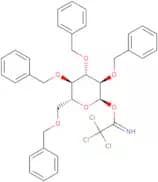
CAS:2,3,4,6-Tetra-O-benzyl-a-D-glucopyranosyl trichloroacetimidate is a supernucleophile that reacts with saccharides to form glycosides. It is a reactive compound that can be used in syntheses to create new disaccharides. 2,3,4,6-Tetra-O-benzyl-a-D-glucopyranosyl trichloroacetimidate was used in the synthesis of a glycoside analogue of glucopyranose. This compound has also been shown to react with imidates.
Formula:C36H36Cl3NO6Purity:Min. 95%Color and Shape:White PowderMolecular weight:685.03 g/molα1,3-Galactobiosyl β-methyl glycoside
a1,3-Galactobiosyl b-methyl glycoside is a fluorinated saccharide that possesses the same chemical structure as N-acetylgalactosamine. It has been synthesized by click modification with methyl iodide and methyl bromoacetate. The synthesis of this compound was achieved by glycosylation of galactose with 1,3-diiodo-2,2'-bithiopropane followed by methylation of the resulting glycosylation product with methyl bromoacetate to form the desired compound. This carbohydrate can be used in a variety of applications including anti-inflammatory drugs, antibiotics, and cancer treatments.Formula:C13H24O11Purity:Min. 95%Color and Shape:White/Off-White SolidMolecular weight:356.32 g/molN-(Succinyl)-O-b-D-galactopyranosylhydroxylamine
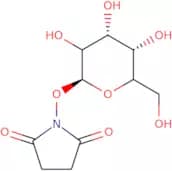
N-(Succinyl)-O-b-D-galactopyranosylhydroxylamine is a custom synthesis of an oligosaccharide with a modified sugar. The modification includes fluorination and succinylation of the hydroxyl group at the b position on the galactose ring. This sugar is also known as a complex carbohydrate and is found in saccharides, carbohydrates, and sugars. This product is synthesized to provide high purity with a click modification for use in methylation reactions.Formula:C10H15NO8Purity:Min. 95%Molecular weight:277.23 g/mol1,2,3,4,6-Penta-O-benzoyl-D-mannopyranose
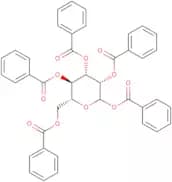
CAS:1,2,3,4,6-Penta-O-benzoyl-D-mannopyranose is a high purity sugar that is custom synthesized to be used in glycosylation reactions. It has been shown to be effective for Click chemistry and can be fluorinated or methylated. 1,2,3,4,6-Penta-O-benzoyl-D-mannopyranose is a synthetic sugar that can be modified by glycosylation reactions. This sugar has the CAS No. 96996-90-6 and is known as Methyl 1-(1'-methylpropyl)-1H-[1',2',3',4',5',6']pentaoxacyclohexane.Formula:C41H32O11Purity:Min. 95%Color and Shape:White PowderMolecular weight:700.69 g/molGlucosamine sulfate potassium chloride
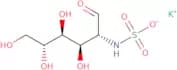
CAS:Glucosamine sulfate potassium chloride is a reaction solution that contains glucosamine and hydrochloric acid. It is used in the treatment of osteoarthritis and related diseases, as well as for the prevention of cardiovascular disease. Glucosamine sulfate potassium chloride has been shown to reduce pain and improve the clinical response in patients with osteoarthritis. The synergic effect of glucosamine sulfate potassium chloride may be due to its ability to inhibit the degradation of collagen by hydrochloric acid. This drug also increases the production of glycoside derivatives from glucose, which are important for basic protein synthesis. Glucosamine sulfate potassium chloride can be used as a dietary supplement for infants, who have fatty acid deficiencies.Formula:(C6H14NO5)2SO4•(KCl)2Purity:Min. 95%Molecular weight:605.52 g/mol2,6-di-O-methyl-3-O-n-pentyl-γ-cyclodextrin
This gamma-cyclodextrin (γ-CD) derivative is a modified cyclic oligosaccharide composed of eight glucose units, featuring a larger cavity size than α- and β-cyclodextrins. This structural characteristic allows γ-CDs to form inclusion complexes with a wider range of guest molecules, making it particularly versatile in various industries. In the food sector, it is used as a carrier and stabilizer for flavors, fat-soluble vitamins, and polyunsaturated fatty acids, protecting volatile compounds from evaporation. In pharmaceuticals, it enhances the solubility and bioavailability of poorly water-soluble drugs and, thanks to its larger ring size, allows for the encapsulation of larger molecules or even entire drug molecules. γ-CDs and derivatives are also used for environmental remediation and, in analytical chemistry, for the extraction and concentration of target substances.Formula:C104H192O40Purity:Min. 95%Molecular weight:2,082.61 g/mola-D-[UL-13C6]Glucose-1-phosphate dipotassium salt hydrate
CAS:a-D-[UL-13C6]Glucose-1-phosphate dipotassium salt hydrate is a kinetic and structural analysis of the glucose phosphate metabolic pathway. It has been used to study biochemical properties of the glucose phosphate metabolic pathway, and to study the control mechanisms for this process. Specifically, it has been used to determine kinetic parameters that are necessary for understanding glucose metabolism. This compound has also been used to study hydrogen bonding interactions between monoclonal antibodies and ganoderma lucidum and transfer reactions of immobilized enzymes. The pH optimum for this compound is 4.5, and it can be synthesized from solanum tuberosum.Formula:C6H11K2O9P·xH2OPurity:Min. 95%Color and Shape:PowderMolecular weight:342.27 g/mol(1S) -1- [(2S, 3R) - 3- Hydroxy- 1- ((4-methoxyphenyl)methyl) - 2- azetidinyl] -1, 2- ethanediol
(1S) -1- [(2S, 3R) - 3- Hydroxy- 1- ((4-methoxyphenyl)methyl) - 2- azetidinyl] -1, 2- ethanediol is a synthetic monosaccharide. It can be used in the synthesis of oligosaccharides and glycosylations. Click modification, methylation, and fluorination are all possible modifications for this product. The CAS number for this item is 52634-73-0.Purity:Min. 95%3-O-(a-D-Mannopyranosyl)-D-mannopyranose
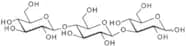
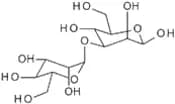
CAS:Isolated from the products of the acid reversion of D-mannoseFormula:C12H22O11Purity:Min. 95 Area-%Color and Shape:White PowderMolecular weight:342.3 g/molN-[(4'-Dimethylaminophenyl)-1-propenyl]imino-2,3,4,6-tetra-O-pivaloyl-D-glucopyranose
CAS:N-[(4'-Dimethylaminophenyl)-1-propenyl]imino-2,3,4,6-tetra-O-pivaloyl-D-glucopyranose is a fluorinated sugar that can be used for the synthesis of glycoconjugates. It is an oligosaccharide with an acetal linkage to the hydroxyl group at C2 and a pivaloyl group linked to the hydroxyl group at C3. This compound has been shown to be effective in methylation reactions.Formula:C37H58N2O9Purity:Min. 95%Molecular weight:674.88 g/mol2,3:4,5-Di-O-isopropylidene-L-arabitol
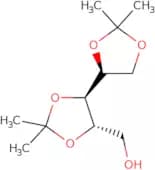
CAS:2,3:4,5-Di-O-isopropylidene-L-arabitol is a modification of an oligosaccharide in which the hydroxyl group at position 4 on the D-ribose moiety has been replaced with an isopropylidene group. The synthesis of 2,3:4,5-Di-O-isopropylidene-L-arabitol can be achieved by methylation and fluorination of L-arabinose. This compound is used in glycosylations and polysaccharide syntheses. 2,3:4,5-Di-O-isopropylidene-L--arabitol is also found as a natural constituent of many plants. 2,3:4,5--Di--O--isopropylidene--L--arabitol is chemically described as α-(1→6)-D--glucopFormula:C11H20O5Purity:Min. 95%Color and Shape:PowderMolecular weight:232.27 g/molFagomine
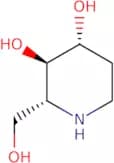
CAS:Fagomine is a hypoglycemic agent with antimicrobial properties. It is an alpha-mannosidase inhibitor, which prevents the release of glucose from glycogen by inhibiting an enzyme in the glycosylation pathway. The molecular docking analysis shows that fagomine binds to the active site of mitochondrial membrane potential complex I and inhibits its catalytic activity. Fagomine also has a risk of causing metabolic disorders, such as hyperglycemia, hyperinsulinemia, and hyperlipidemia. Studies have shown that fagomine can be used to treat hyperglycemia in both type 1 and type 2 diabetes mellitus patients.Formula:C6H13NO3Purity:Min. 98 Area-%Color and Shape:Off-White PowderMolecular weight:147.17 g/molDextran sulfate sodium salt - MW 500,000
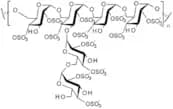
CAS:Dextran sulphate is a dextran derivative whose ulcer (colitis) -causing properties were first reported in hamsters and extrapolated a few years later to mice and rats. The exact mechanisms through which dextran sulphate induces intestinal inflammation are unclear but may be the result of direct damage of the monolayer of epithelial cells in the colon, leading to the crossing of intestinal contents (for e.g. commensal bacteria and their products) into underlying tissue and therefore induction of inflammation. The dextran sulphate sodium induced ulceration model in laboratory animals has some advantages, when compared to other animal models of colitis, due to its simplicity and similarities to human inflammatory bowel disease.Formula:C9H11NO2Purity:Min. 95%Color and Shape:White Powder2-Azido- 2- deoxy- 3, 4:5, 6- bis- O- isopropylidene-D- mannonic acid methyl ester
2-Azido-2-deoxy-3,4:5,6-bis-O-isopropylidene-D-mannonic acid methyl ester is a synthetic carbohydrate molecule that has been synthesized from 2,2'-azido-2,2'-dideoxyribose. The monosaccharide moiety of the molecule has been fluorinated to create a reactive site for modification with other molecules. This modification can be done by glycosylation or polysaccharide attachment. The azido group on the sugar can be modified with any number of different methyl groups and this is done through a process called Click chemistry. The chemical formula for 2ADDMEM is C8H12N4O8F. The CAS Number for 2ADDMEM is 103510-60-1 and it has an average purity of 99%.Purity:Min. 95%1,6-Anhydro-b-D-galactopyranose
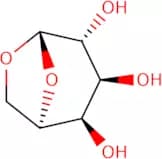
CAS:Used for preparation of biologically active compoundsFormula:C6H10O5Purity:Min. 97 Area-%Color and Shape:White Off-White PowderMolecular weight:162.14 g/mol3-Deoxy-3-fluoro-D-xylopyranose
3-Deoxy-3-fluoro-D-xylopyranose is a carbohydrate, modification, saccharide and oligosaccharide. It is an Oligosaccharide sugar that has a CAS number of 104863-98-2. 3DFX can be custom synthesized in high purity with methylation and glycosylation. This product can be used for click modification with the desired molecule.Purity:Min. 95%Sugammadex sodium
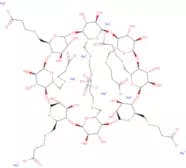
CAS:Steroid-based neuromuscular blocker reversing agentFormula:C72H112O48S8·8NaPurity:Min. 95%Color and Shape:PowderMolecular weight:2,186.08 g/molMethyl 4,6-O-benzylidene-2-deoxy-a-D-glucpyranosid-3-ulose
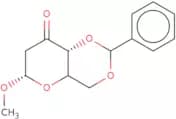
CAS:Methyl 4,6-O-benzylidene-2-deoxy-a-D-glucpyranosid-3-ulose is a custom synthesis of a complex carbohydrate. It is an Oligosaccharide with a Polysaccharide backbone. The modification of the saccharide is Methylation and Glycosylation. Click chemistry was used to introduce fluorine atoms into the sugar ring. The Carbohydrate is a sugar, which is a chemical compound that consists of carbon, hydrogen and oxygen atoms. It has high purity and fluoroination at the C1 position. This synthetic product can be used in various applications such as food additives, pharmaceuticals, or agrochemicals.Formula:C14H16O5Purity:Min. 95%Molecular weight:264.27 g/mol











![a-D-[UL-13C6]Glucose-1-phosphate dipotassium salt hydrate](/_next/image/?url=https%3A%2Fstatic.cymitquimica.com%2Fproducts%2F3D%2Fthumb-webp%2FMG64091.webp&w=3840&q=75)
![(1S) -1- [(2S, 3R) - 3- Hydroxy- 1- ((4-methoxyphenyl)methyl) - 2- azetidinyl] -1, 2- ethanediol](/_next/image/?url=https%3A%2Fstatic.cymitquimica.com%2Fproducts%2F3D%2Fthumb-webp%2FMM163533.webp&w=3840&q=75)
![N-[(4'-Dimethylaminophenyl)-1-propenyl]imino-2,3,4,6-tetra-O-pivaloyl-D-glucopyranose](/_next/image/?url=https%3A%2Fstatic.cymitquimica.com%2Fproducts%2F3D%2Fthumb-webp%2FMD08489.webp&w=3840&q=75)