Glycoscience
Glycoscience is the study of carbohydrates and their derivatives, as well as the interactions and biological functions they participate in. This field of research is crucial for understanding a wide variety of biological processes, including cell recognition, signaling, immune response, and disease development. Glycoscience has important applications in biotechnology, medicine, and the development of new drugs and therapies. At CymitQuimica, we offer a wide selection of high-quality, high-purity products for glycoscience research. Our catalog includes monosaccharides, oligosaccharides, polysaccharides, glycoconjugates, and specific reagents, designed to support researchers in their studies on the structure, function, and applications of carbohydrates in biological systems. These resources are intended to facilitate scientific discoveries and practical applications in various areas of bioscience and medicine.
Subcategories of "Glycoscience"
- Aminosugars(108 products)
- Glyco-Related Antibodies(282 products)
- Glycolipids(46 products)
- Glycosaminoglycans (GAGs)(55 products)
- Glycosides(419 products)
- Monosaccharides(6,622 products)
- Oligosaccharides(3,682 products)
- Polysaccharides(503 products)
Found 11041 products of "Glycoscience"
Sort by
Purity (%)
0
100
|
0
|
50
|
90
|
95
|
100
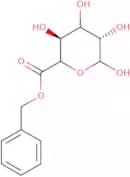
Benzyl D-glucuronate
CAS:<p>Used for the synthesis of 1β-O-acyl glucuronides</p>Formula:C13H16O7Purity:Min. 95%Color and Shape:White PowderMolecular weight:284.26 g/mol3-O-(β-D-Galactopyranosyl)-D-glucopyranose
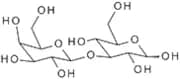
CAS:<p>3-O-(β-D-Galactopyranosyl)-D-glucopyranose is a custom synthesis, modification, and fluorination of a monosaccharide. It is a synthetic and modified saccharide. The molecular formula for this compound is C6H10O5 and its molecular weight is 180.17 g/mol. This chemical has been assigned CAS No. 28447-38-3 and has the following structure:</p>Formula:C12H22O11Purity:Min. 95%Color and Shape:White PowderMolecular weight:342.3 g/mol4,6-O-(4-Methoxybenzylidene)-1,2,3-tri-O-pivaloyl-b-D-galactopyranose
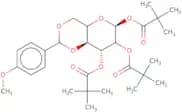
<p>4,6-O-(4-Methoxybenzylidene)-1,2,3-tri-O-pivaloyl-b-D-galactopyranose is a custom synthesis of a complex carbohydrate. It is an oligosaccharide that has been modified with methylation and glycosylation. The CAS number for this compound is 123097-29-2. This compound has a high purity and has been fluorinated with the click reaction. It is a synthetic sugar that is also a polysaccharide.</p>Formula:C29H42O10Purity:Min. 95%Molecular weight:550.65 g/molThymol-β-D-glucopyranoside
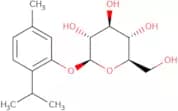
CAS:<p>Thymol-b-D-glucopyranoside is a bactericidal agent that is resistant to encapsulation. It has been shown to be effective against animals and typhimurium in an incubated population and endogenous deaminase inhibitor strategy. The porcine activated food chemistry and abattoir experiments show that thymol-b-D-glucopyranoside has the potential to reduce populations of bacteria in the gastrointestinal tract by inhibiting protein synthesis.</p>Formula:C16H24O6Purity:Min. 95%Color and Shape:PowderMolecular weight:312.36 g/molSucrose octasulfate triethylammonium salt
CAS:<p>This compound is generally known as sucralfate and is a medication for the treatment of active duodenal ulcers. It is also used for the treatment of gastroesophageal reflux disease (GERD) and stress ulcers. Sucralfate is a sucrose sulfate-aluminium complex that binds to the ulcer, creating a physical barrier that protects the gastrointestinal tract from stomach acid and prevents the degradation of mucus. It also promotes bicarbonate production and acts like an acid buffer with cytoprotective properties.</p>Formula:C12H22O35S8•(C6H15N)xPurity:Min. 95%Color and Shape:White Off-White PowderMolecular weight:982.81 g/mol3,4-O-Isopropylidene-L-arabinose
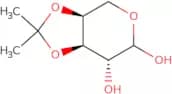
CAS:<p>3,4-O-Isopropylidene-L-arabinose (3,4-OIRA) is an isopropylidene derivative of L-arabinose. 3,4-OIRA has been shown to be a substrate for glycosylation reactions with various other sugars. It can also undergo methylation reactions and has been modified by fluorination. 3,4-OIRA is a food additive that belongs to the category of complex carbohydrates.</p>Formula:C8H14O5Purity:Min. 98 Area-%Color and Shape:PowderMolecular weight:190.19 g/molmeso-Erythritol
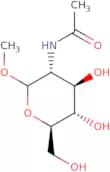
CAS:<p>Natural sweetener; vasodilator</p>Formula:C4H10O4Purity:Min. 98 Area-%Color and Shape:White PowderMolecular weight:122.12 g/molMethyl 2-acetamido-2-deoxy-β-D-galactopyranoside
CAS:<p>Methyl 2-acetamido-2-deoxy-β-D-galactopyranoside is an acetamido derivative of the sugar galactose. It is a white powder that is soluble in water and sparingly soluble in methanol. Methyl 2-acetamido-2-deoxy-β-D-galactopyranoside is used as a substituent for the synthesis of other compounds.</p>Formula:C9H17NO6Purity:Min. 95%Color and Shape:White PowderMolecular weight:235.24 g/mol1,5-a-L-Arabinobiose
CAS:<p>1,5-a-L-Arabinobiose is a sugar that is found in mammalian tissue and has been shown to have enzyme activities. It can be prepared by high performance liquid chromatography and titration calorimetry. 1,5-a-L-Arabinobiose has hydrogen bonding interactions with its neighbouring molecules and surface methodology. It also has structural analysis with hydrogen bonds and phenolic acids. 1,5-a-L-Arabinobiose is used as a probiotic bacteria growth factor in microalgal cultures.</p>Formula:C10H18O9Purity:Min. 95 Area-%Color and Shape:PowderMolecular weight:282.24 g/molGal-b-1-3-GalNAc-b-1-4-Gal-b-1-4-Glc-b-ethylazide
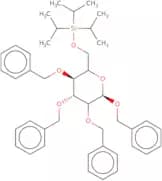
<p>Gal-b-1-3-GalNAc-b-1-4-Gal-b-1-4-Glc is a polysaccharide that is an important component of the outer membrane of Gram negative bacteria. It has been synthesized and modified with methylation, saccharide, Click modification, and glycosylation. The oligosaccharide has a high purity and is synthesized by custom synthesis. GalNAc is purified by HPLC and fluorinated to achieve complex carbohydrate.</p>Purity:Min. 95%1,2,3,4-Tetra-O-benzyl-6-O-triisopropylsilyl-b-D-galactopyranose
<p>1,2,3,4-Tetra-O-benzyl-6-O-triisopropylsilyl-b-D-galactopyranose is a synthetic compound that is used as an intermediate in the synthesis of oligosaccharides and polysaccharides. It is a methylated derivative of galactose. The silyl protecting group on the benzyl side chain can be removed by hydrolysis with acid to give 1,2,3,4-tetra-O-(hydroxymethyl)galactopyranose. This product can be converted to 1-(2,3,4,-trihydroxypropoxy)-2-(1,1'-biphenyl)-6H-thiopyran using click chemistry. The hydroxymethyl group on position 4 can be fluorinated at the 4' position to give 1-(2',3',4'-trihydroxyprop</p>Formula:C43H56O6SiPurity:Min. 95%Molecular weight:697.01 g/mol1,4-Anhydro-D-glucitol
CAS:<p>1,4-Anhydro-D-glucitol is a compound that belongs to the group of monosaccharides and has biological properties. It has also been used in the production of acetate extracts from fetal bovine erythrocytes. The ester linkages are formed between 1,4-anhydro-D-glucitol and sodium salt by reaction with acetic anhydride. The reaction mechanism has been studied in detail, and it was found that hydroxyl groups on the molecule react with sodium ions to form an ester linkage. This compound is toxicologically safe at high doses, but can become toxic at lower doses due to its acid formation potential.</p>Formula:C6H12O5Purity:Min. 97.0 Area-%Molecular weight:164.16 g/molRef: 3D-W-202151
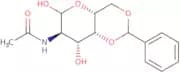
5gTo inquire10gTo inquire25gTo inquire50gTo inquire2500mgTo inquire-Unit-ggTo inquire2-Acetamido-4,6-O-benzylidene-2-deoxy-D-galactopyranose
CAS:<p>2-Acetamido-4,6-O-benzylidene-2-deoxy-D-galactopyranose is a fluorescent dye that binds to the hydroxyl group of nucleic acids. It can be used for microscopy of cells and bacteria in culture. This dye is also used for the measurement of cavitation activity. The dye is added at a concentration of 0.1% to the cell culture media. After 24 hours, it can then be observed with a microscope under UV light. 2-Acetamido-4,6-O-benzylidene-2-deoxy-D-galactopyranose has been shown to have lysis effects on cells such as agarose gels and mammalian cells, leading to cell death by apoptosis or necrosis. It's also used as an indicator in gel electrophoresis experiments because it can bind to DNA and RNA molecules, which makes</p>Formula:C15H19NO6Purity:Min. 95%Color and Shape:White PowderMolecular weight:309.31 g/mol2,3-Dimethyl-6-amino-6-deoxy-γ-cyclodextrin
<p>This gamma-cyclodextrin (γ-CD) derivative is a modified cyclic oligosaccharide composed of eight glucose units, featuring a larger cavity size than α- and β-cyclodextrins. This structural characteristic allows γ-CDs to form inclusion complexes with a wider range of guest molecules, making it particularly versatile in various industries. In the food sector, it is used as a carrier and stabilizer for flavors, fat-soluble vitamins, and polyunsaturated fatty acids, protecting volatile compounds from evaporation. In pharmaceuticals, it enhances the solubility and bioavailability of poorly water-soluble drugs and, thanks to its larger ring size, allows for the encapsulation of larger molecules or even entire drug molecules. γ-CDs and derivatives are also used for environmental remediation and, in analytical chemistry, for the extraction and concentration of target substances.</p>Formula:C64H120N8O32Purity:Min. 95%Molecular weight:1,513.67 g/molGlycogen - from bovine liver
CAS:<p>Glycogen is a highly branched polysaccharide of glucose that serves as a form of energy storage in animals and fungi. It is the main storage form of glucose in the body. In humans, glycogen is made and stored primarily in liver and muscle cells and functions as the second most important energy storage molecule to fat which is held in adipose tissue. Glycogen is analogous to starch and has a structure similar to amylopectin, but is more extensively branched and compact than starch. It occurs as granules in the cytosol/cytoplasm in many cell types, and plays an important role in the glucose cycle.</p>Formula:(C6H10O5)nPurity:Min. 95%Color and Shape:PowderMolecular weight:162.05282Eugenol-β-D-glucuronide
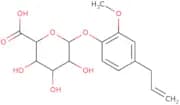
CAS:<p>Eugenol-glucuronide is an indirubin analog that has been found to have potent anticancer properties. It acts as a kinase inhibitor, blocking the activity of proteins that are involved in cancer cell growth and proliferation. Eugenol-glucuronide induces apoptosis, a process by which damaged or abnormal cells are eliminated from the body. It has been shown to be effective against human and Chinese hamster ovary tumor cells in vitro. This medicinal compound is excreted in urine and has potential for use in cancer treatment as an inhibitor of tumor growth.</p>Formula:C16H20O8Purity:Min. 95%Molecular weight:340.32 g/molGlycyl-asialo, galactosylated biantennary
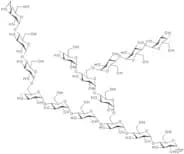
<p>Glycyl-asialo, galactosylated biantennary is a high purity custom synthesis of sugar. Glycyl-asialo, galactosylated biantennary is custom synthesized by the click modification of glycosylation and fluorination with methylation and modification. The CAS number for glycyl-asialo, galactosylated biantennary is **********.</p>Formula:C64H108N6O46Purity:Min. 95%Molecular weight:1,697.56 g/molUDP-3-O-(R-3-hydroxymyristoyl)-GlcNAc disodium
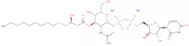
<p>Substrate for UDP-3-O-acyl-N-acetylglucosamine deacetylase (LpxC)</p>Formula:C31H53N3O19P2•Na2Purity:Min. 95%Color and Shape:White PowderMolecular weight:879.67 g/molMethyl cellulose - USP (viscosity ca 1500cP)
CAS:<p>Cellulose derivative, food thickener and emulsifier, bulk forming laxative</p>Color and Shape:PowderBlood Group A trisaccharide-BSA
<p>Core antigen ABO trisaccharide conjugated to BSA</p>Purity:Min. 95%Color and Shape:SolidBlood group A-BSA
<p>A-BSA is an antibody that competes with the blood group antigen for binding to erythrocytes. The A-BSA is immobilized on a microtitre plate and incubated with the blood group antigen and human blood group antiserum. The concentration of A-BSA in the solution is determined by measuring the enzyme-linked immunosorbent assay (ELISA) signal using a spectrophotometer. This measurement is used to determine the concentration of blood group antigen in the sample.</p>Purity:Min. 95%Color and Shape:PowderGDP-D-mannose diammonium salt
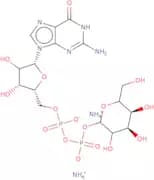
<p>GDP-D-mannose diammonium salt is a custom synthesis. It has been modified with fluorination, methylation, and monosaccharide substitution. The structure of this compound consists of a glucose molecule bonded to a D-mannose molecule by an oxygen linkage at the 1-position. This product has been synthetically modified to include a click modification and oligosaccharides. GDP-D-mannose diammonium salt is used for the production of polysaccharides as well as glycosylation reactions.</p>Formula:C16H23N5O16P2·N2H8Purity:Min. 95%Molecular weight:639.4 g/molD-Glucosamine-2-N, 3-O, 6-O-trisulfate sodium salt
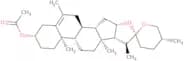
<p>D-Glucosamine-2-N, 3-O, 6-O-trisulfate sodium salt is a high purity oligosaccharide that can be custom synthesized. This product is composed of sugar, Click modification, fluorination, glycosylation, and methylation. It has CAS No. and Oligosaccharide. This product is used in the production of complex carbohydrates due to its saccharide composition.</p>Formula:C6H10NNa3O14S3Purity:Min. 95%Color and Shape:White/Off-White SolidMolecular weight:485.31 g/mol6-Methyldiosgenin Acetate
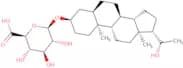
CAS:<p>6-Methyldiosgenin acetate is a saponin that is found in the plant Balanites aegyptiaca. It has been shown to have anti-inflammatory and anti-tumor effects, as well as antioxidant properties. 6-Methyldiosgenin acetate also has been shown to stimulate the production of nitric oxide (NO) in endothelial cells, which may contribute to its anti-inflammatory effects. The chemical structure of 6-methyldiosgenin acetate is similar to that of furostanol and spirostanol, which are both saponins found in plants that can be used for the treatment of cancer. In addition, sapogenols are known to have a variety of therapeutic activities including antidiabetic, antiviral and anticancer activity.</p>Formula:C30H46O4Purity:Min. 95%Molecular weight:470.68 g/molPregnanediol 3α-O-β-D-glucuronide
CAS:<p>Pregnanediol 3α-O-β-D-glucuronide is a glucuronide metabolite of progesterone, which is a key steroid hormone in the reproductive system. This compound is derived from the metabolic conversion of progesterone, primarily within the liver, where it undergoes glucuronidation. This process involves the addition of glucuronic acid, mediated by the enzyme UDP-glucuronosyltransferase, enhancing the compound’s solubility for renal excretion.</p>Formula:C27H44O8Purity:Min. 95%Color and Shape:PowderMolecular weight:496.63 g/molp-Lacto-N-neohexaose
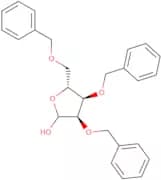
CAS:<p>Neutral hexasasaccharide naturally present in human breast milk</p>Formula:C40H68N2O31Purity:(%) Min. 90%Color and Shape:PowderMolecular weight:1,072.96 g/mol2,3,5-Tri-O-benzyl-D-ribofuranose
CAS:<p>2,3,5-Tri-O-benzyl-D-ribofuranose is a carbohydrate that can be synthesized through an efficient method. It is a glycoside with an oxotitanium (oxo) group. The synthesis of this compound requires magnesium as the activating agent and o-glycosylation. The glycoconjugates of this compound are found in organisms such as fungi, yeast, and bacteria. In addition to its carbohydrate function, 2,3,5-Tri-O-benzyl-D-ribofuranose has been shown to have antimicrobial properties. This sugar has also been shown to have antiviral properties due to its ability to inhibit the enzyme ribonucleotide reductase (RNR).</p>Formula:C26H28O5Purity:Min. 95%Color and Shape:White PowderMolecular weight:420.5 g/mol2,6-Dimethyl-a-cyclodextrin >70%
CAS:<p>Alpha-cyclodextrin (α-CD) derivative with a hydrophilic exterior and lipophilic cavity (smaller than β-CDs and γ-CDs) to allocate certain guest molecules. This structural characteristic enables applications in molecular encapsulation, solubility enhancement, and stabilization across multiple industries. In pharmaceuticals, it serves as a drug delivery vehicle, enhancing the bioavailability and stability of active ingredients. The food industry utilizes it as a stabilizer for flavors, colors, and nutrients, as well as a functional ingredient for its effects on lipid metabolism. In cosmetics, it acts as a complex agent for fragrances and active components. Its applications extend to analytical chemistry for chiral separation and to materials science for developing smart materials and nanosystems.</p>Formula:C48H84O30Purity:Min. 95%Color and Shape:PowderMolecular weight:1,141.16 g/molD-myo-Inositol-1,3,5-triphosphate sodium salt
<p>D-myo-Inositol-1,3,5-triphosphate sodium salt is a Glycosylation, complex carbohydrate. It can be Methylated, Click modified, Polysaccharide, Fluorinated and Saccharide. D-myo-Inositol-1,3,5-triphosphate sodium salt can be Modified by Modification and Sugar. D-myo-Inositol-1,3,5-triphosphate sodium salt is Synthetic. It has CAS No. and Monosaccharide Custom synthesis. D-myo-Inositol-1,3,5-triphosphate sodium salt is High purity.</p>Formula:C6H12O15P3·xNaPurity:Min. 95%Molecular weight:417.07 g/molDimethylthexylsilyl 2-azido-2-deoxy-b-L-fucopyranoside
<p>Dimethylthexylsilyl 2-azido-2-deoxy-b-L-fucopyranoside is a custom synthesis, complex carbohydrate. It is an Oligosaccharide with CAS No. and Polysaccharide that has been modified with Methylation, Glycosylation, Click modification and Carbohydrate. This compound is a sugar and a high purity. The compound has been fluorinated and it's synthetic.</p>Purity:Min. 95%4-O-(2,3,4,6-Tetra-O-acetyl-b-D-glucopyranosyl)-1,2,3,6-tetra-O-acetyl-b-D-thioglucopyranose
CAS:<p>4-O-(2,3,4,6-Tetra-O-acetyl-b-D-glucopyranosyl)-1,2,3,6-tetra-O-acetyl-b-D-thioglucopyranose is a glycosylated saccharide that belongs to the group of complex carbohydrates. The glycosylation of 4-O-(2,3,4,6,-Tetra-O-acetyl b -D -glucopyranosyl)-1,2,3,6,-tetra -O -acetyl b -D -thioglucopyranose is achieved by the enzymatic reaction of an acetate donor and an acceptor molecule in the presence of glucose 1 phosphate (G1P) and UDP sugar pyrophosphorylase. It has been modified by methylation with dimethyl sulphate in the presence of</p>Formula:C28H38O18SPurity:Min. 95%Molecular weight:694.66 g/molValidamine acetate
CAS:<p>Inhibitor of beta-glucosidase</p>Formula:C17H25NO9Purity:Min. 95%Molecular weight:387.38 g/molD-Allose pentaacetate
CAS:<p>D-Allose pentaacetate is a modified oligosaccharide that can be used as a synthetic intermediate in the production of complex carbohydrates. It has been shown to have high purity and is easily synthesized in a laboratory setting. D-Allose pentaacetate is a monosaccharide with five acetate groups that can be methylated or glycosylated, which makes it an ideal candidate for modification. D-Allose pentaacetate has CAS No. 144071-49-8 and can be found on PubChem CID: 1215965.</p>Formula:C16H22O11Purity:Min. 95%Color and Shape:PowderMolecular weight:390.34 g/mol1-O-Methyl-α-D-mannopyranoside
CAS:<p>Methyl alpha-D-mannopyranoside is a methylated sugar used as an inhibitor of lectin-conjugate binding. It is commonly used in protein purification for eluting glycoproteins and other glycoconjugates from affinity chromatography columns of agarose lectin. In addition, Methyl alpha-D-mannopyranoside can be used in the mannosylation of lipid nanoparticles (LNPs) for vaccine or drug delivery which targets Antigen Presenting Cells (APCs) through mannose receptors. Methyl alpha-D-mannopyranoside is also known as Methyl alpha-D-mannoside or alpha-Methyl-D-mannoside.</p>Formula:C7H14O6Purity:Min. 99.0 Area-%Molecular weight:194.18 g/molRef: 3D-M-4150
1kgTo inquire100gTo inquire250gTo inquire500gTo inquire2500gTo inquire-Unit-kgkgTo inquire4-Methylphenyl 3-O-[(4-methoxyphenyl)methyl]-4,6-O-[(R)-phenylmethylene]-1-thio-α-D-mannopyranoside
CAS:<p>4-Methylphenyl 3-O-[(4-methoxyphenyl)methyl]-4,6-O-[(R)-phenylmethylene]-1-thio-α-D-mannopyranoside is a synthetic glycosaminoglycan. It is a complex carbohydrate that contains a saccharide and an oligosaccharide bound to each other by an aminosugar link. 4-Methylphenyl 3-O-[(4-methoxyphenyl)methyl]-4,6-O-[(R)-phenylmethylene]-1-thio-α-D mannopyranoside has been synthesized with the use of Click chemistry and fluorination. The CAS number for this compound is 1071226–24–8. This compound was custom synthesized in high purity.</p>Formula:C28H30O6SPurity:Min. 95%Molecular weight:494.6 g/molGD1b-Ganglioside sodium
CAS:<p>GD1b (shown as sodium salt) is one of the major gangliosides in neuronal and glial membranes. It has a core tetrasaccharide structure (Galβ1,3GalNAcβ1,4Galβ1,4Glc) with itâs two sialic acids linked α2,3/α2,8 to the inner galactose residue and ceramide linked β to position 1 on the reducing terminal glucose residue (Ledeen, 2009). GD1b acts as a receptor for BK virus as well as for heat-labile LTII-a toxin, produced by enteropathogenicâ¯E. coli. GD1b ganglioside also interacts with tetanus neurotoxin (TeNT) and is crucial for its entry into cells (Kolter, 2012).</p>Purity:Min. 95%Color and Shape:PowderHexa-guluronic acid sodium
CAS:<p>Hexa-guluronic acid sodium salt (1,4-linked α-L-sodium guluronohexaose) is one of a number of oligosaccharides obtained from alginate which is a polysaccharide in brown seaweeds containing: blocks of repeating mannuronic acid sequences (M-M-M-M etc), repeating guluronic acid sequences (G-G-G-G etc), and alternating M-G-M-G sequences. This oligosaccharide can be released by acid hydrolysis (Shimokawa, 1996) and a number of biological activities have been discussed in a recent review (Xing, 2020).</p>Formula:C36H44O37Na6Purity:Min. 95%Color and Shape:White PowderMolecular weight:1,206.65 g/molOsmaronin
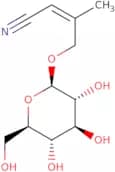
CAS:<p>Leucine-âderived gamma-hydroxynitrile glucoside</p>Formula:C11H17NO6Purity:Min. 95%Molecular weight:259.26 g/molLactitol monohydrate
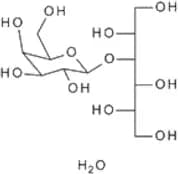
CAS:<p>Lactitol is a sugar alcohol that is used in the food industry as a low-calorie sweetener and preservative. Lactitol has physiological effects such as increasing the glomerular filtration rate and decreasing serum cholesterol levels. It also inhibits inflammatory bowel disease by suppressing the production of proinflammatory cytokines, such as TNF-α, IL-1β, IL-6, and IL-8, which are associated with intestinal inflammation. Lactitol is used as an excipient for tablets or capsules to improve their dissolution properties and to provide bulk. Lactitol does not show any significant toxicity in animal studies and has been shown to be safe for human consumption at up to 15g/day.</p>Formula:C12H24O11·H2OPurity:Min. 95%Color and Shape:White PowderMolecular weight:362.33 g/mol(2S, 3S, 4S) -3-Benzyloxy- 4- (hydroxymethyl) - 1- (phenylmethyl) -2- azetidinecarboxylic acid
<p>2-Amino-3,4-dihydroxybenzoic acid is an organic compound. It is a white solid that is soluble in water and polar organic solvents. 2-Amino-3,4-dihydroxybenzoic acid is used as an anti-inflammatory agent and for the treatment of arthritis.</p>Purity:Min. 95%2-Keto-L-galactonic acid
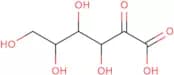
CAS:<p>2-Keto-L-galactonic acid is a chemical compound that belongs to the group of fatty acids. It is produced by the degradation of polyunsaturated fatty acids and has been shown to be a potential control agent for hepatic steatosis. 2-Keto-L-galactonic acid also inhibits the synthesis of dinucleotide phosphate in rat liver cells, leading to an accumulation of intracellular potassium ion. This compound inhibits the uptake of glucose by activating ATPase, which leads to an increase in intracellular pH. The uptake of 2-keto-L-galactonic acid into cells has been shown using cell culture experiments with wild type and mutant strains.</p>Formula:C6H10O7Purity:Min. 95%Molecular weight:194.14 g/mol1,2-O-Isopropylidene-3-deoxy-3-fluoro-a-D-ribofuranose
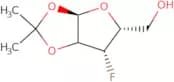
CAS:<p>1,2-O-Isopropylidene-3-deoxy-3-fluoro-a-D-ribofuranose is a custom synthesis. It is a complex carbohydrate that has been modified by methylation and glycosylation. This molecule has been fluorinated to produce a high purity product with the desired properties. The 1,2-O-isopropylidene group provides for increased stability and solubility of the product.</p>Formula:C8H13FO4Purity:Min. 95%Molecular weight:192.18 g/molMethyl 2,3,4-tri-O-benzyl-b-D-glucopyranoside
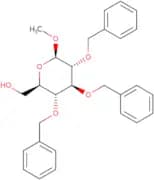
CAS:<p>Methyl 2,3,4-tri-O-benzyl-β-D-glucopyranoside is a modified sugar. It can be used in the synthesis of oligosaccharides and polysaccharides. This product is stable to organic solvents and has high purity. Methyl 2,3,4-tri-O-benzyl-β-D-glucopyranoside can be fluorinated by reacting with hydrogen fluoride gas to produce methyl 2,3,4-[tri(trifluoromethyl)oxy]benzyl β D glucopyranoside. The product is also available in the form of click modification (a type of chemical modification). Methyl 2,3,4-tri-O-benzyl-β D glucopyranoside is a custom synthesis that is CAS No. 435680 3.</p>Formula:C28H32O6Purity:Min. 95%Molecular weight:464.55 g/mol2-O-(a-D-Galactopyranosyl)-b-D-fucopyranosyl propylamine
CAS:<p>2-O-(a-D-Galactopyranosyl)-b-D-fucopyranosyl propylamine is a glycosylated synthetic compound with a molecular weight of 726.2. It is an excellent substrate for the glycosylation of proteins and nucleic acids, as well as an excellent candidate for Click modification, fluorination, saccharide modification and custom synthesis. 2-O-(a-D-Galactopyranosyl)-b-D-fucopyranosyl propylamine is a high purity product available in bulk quantities.</p>Formula:C15H29NO10Purity:Min. 95%Molecular weight:383.39 g/molDextran sulfate sodium salt - MW 150,000
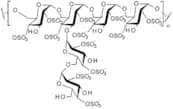
CAS:<p>Induces ulceration; used to model inflammatory bowel disease</p>Purity:Min. 95%Color and Shape:Powder2-Amino-1,6-anhydro-2-deoxy-β-D-glucopyranose
CAS:<p>Please enquire for more information about 2-Amino-1,6-anhydro-2-deoxy-β-D-glucopyranose including the price, delivery time and more detailed product information at the technical inquiry form on this page</p>Formula:C6H11NO4Purity:Min. 95%Molecular weight:161.16 g/molPentagalloylglucose - Bio-X ™
CAS:<p>A gallotannin found in plants, with various biological activities. Its anti-cancer effect has been demonstrated in several cancer cell lines, mediated by inhibition of DNA replication, proliferation and angiogenesis. Elicits anti-inflammatory, antioxidative and anti-diabetic effects. Recently, it has been identified as an inhibitor of c-Myc in hepatocellular carcinoma and multiple myeloma cells.</p>Formula:C41H32O26Purity:Min. 98 Area-%Color and Shape:PowderMolecular weight:940.68 g/molL-Arabinose
CAS:<p>The aldopentose L-arabinose (Ara) is, after xylose, the second most abundant pentose in nature. It is found in plant cell walls as a component of polysaccharides, including: hemicelluloses, pectin, arabinogalactan-protein complexes and in exudate plant gums, such as: Gum Arabic (Feher, 2018). L-Arabinopyranose is an important component of the mycobacterial cell wall and is involved in the synthesis of arabinogalactan and lipoarabinomannan, which suggests that it can modulate cell wall permeability and drug resistance. Mycobacterium smegmatis is a useful tool for research into Mycobacteria due to it being a "fast grower" and non-pathogenic (Zhou, 2019).</p>Formula:C5H10O5Purity:Min. 99 Area-%Color and Shape:White PowderMolecular weight:150.13 g/mol1,2,3,4-Tetra-O-benzyl-6-O-tert-butyldiphenylsilyl-a-D-mannopyranose
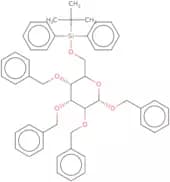
CAS:<p>1,2,3,4-Tetra-O-benzyl-6-O-tert-butyldiphenylsilyl-a-D-mannopyranose is a synthetic glycoside that can be used as a building block for the synthesis of complex carbohydrates. It is a fluorinated sugar that can be modified with methyl groups and other functional groups. This product is available in high purity and can be custom synthesized to meet your specific needs.</p>Formula:C50H54O6SiPurity:Min. 95%Molecular weight:779.07 g/molChitobiose dihydrochloride
CAS:<p>Chitobiose 2HCl is a synthetic sugar that has been modified using Click chemistry. It is a fluorescent sugar that can be used as an indicator for protein-sugar interactions. Chitobiose 2HCl is soluble in water and has a molecular weight of 258.078 g/mol.</p>Formula:C12H24N2O9•(HCl)2Purity:Min. 95%Molecular weight:413.25 g/mol











![4-Methylphenyl 3-O-[(4-methoxyphenyl)methyl]-4,6-O-[(R)-phenylmethylene]-1-thio-α-D-mannopyranoside](/_next/image/?url=https%3A%2Fstatic.cymitquimica.com%2Fproducts%2F3D%2Fthumb-webp%2FMM182805.webp&w=3840&q=75)