Glycoscience
Glycoscience is the study of carbohydrates and their derivatives, as well as the interactions and biological functions they participate in. This field of research is crucial for understanding a wide variety of biological processes, including cell recognition, signaling, immune response, and disease development. Glycoscience has important applications in biotechnology, medicine, and the development of new drugs and therapies. At CymitQuimica, we offer a wide selection of high-quality, high-purity products for glycoscience research. Our catalog includes monosaccharides, oligosaccharides, polysaccharides, glycoconjugates, and specific reagents, designed to support researchers in their studies on the structure, function, and applications of carbohydrates in biological systems. These resources are intended to facilitate scientific discoveries and practical applications in various areas of bioscience and medicine.
Subcategories of "Glycoscience"
- Aminosugars(108 products)
- Glyco-Related Antibodies(282 products)
- Glycolipids(46 products)
- Glycosaminoglycans (GAGs)(55 products)
- Glycosides(419 products)
- Monosaccharides(6,624 products)
- Oligosaccharides(3,682 products)
- Polysaccharides(504 products)
Found 11047 products of "Glycoscience"
Sort by
Purity (%)
0
100
|
0
|
50
|
90
|
95
|
100
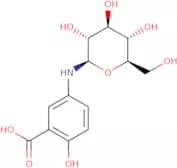
N-D-Glucopyranosyl-5-aminosalicylic acid
CAS:<p>5-Aminosalicylic acid (5-ASA) is an anti-inflammatory drug that belongs to the class of drugs called nonsteroidal anti-inflammatory drugs (NSAIDs). 5-ASA is an acidic compound that is a metabolite of salicylic acid. It is used in the treatment of rheumatoid arthritis, osteoarthritis, and other inflammatory diseases. The preparation of 5-ASA involves homogenizing liver tissue and then extracting it with water. This extract can be chromatographed using preparative high performance liquid chromatography (HPLC) or spectroscopically analyzed by mass spectrometry. 5-ASA has been shown to have hepatoprotective effects in rats when given at a dose of 400 mg/kg body weight by intraperitoneal injection.</p>Formula:C13H17NO8Purity:Min. 95%Molecular weight:315.28 g/molNA4 N-Glycan
CAS:<p>NA4 is a n-glycan with an average molecular weight of about 3.5 kDa. NA4 is found in the blood and urine of human beings and other mammals, as well as in the milk from cows. It is a major component of mucus secreted by the respiratory tract, and it can be found in the outer layer of the skin. NA4 contains a single N-acetylglucosamine (NAG) residue at its reducing end.</p>Formula:C90H150N6O66Purity:Min. 95%Color and Shape:PowderMolecular weight:2,372.15 g/mol2,4-Di-O-Benzyl-D-mannopyranose
2,4-Di-O-Benzyl-D-mannopyranose is a custom synthesis of a carbohydrate. It is a fluorinated derivative of D-mannopyranose that has been modified with methylation and glycosylation.Purity:Min. 95%Mannioside A
CAS:<p>Mannioside A is a postulated antigen that may be found in the Dracaena genus of plants. This compound has been shown to have an affinity for membranes, which could possibly be used as a strategy for vaccines and other pharmaceutical products. Mannioside A also has hemolytic activity, which may be useful in developing new treatments for autoimmune disorders such as multiple sclerosis.</p>Purity:Min. 95%1,2,4,6-Tetra-O-acetyl-3-O-propargyl-D-glucopyranose
1,2,4,6-Tetra-O-acetyl-3-O-propargyl-D-glucopyranose is a custom synthesis of a monosaccharide. The 1,2,4,6-tetra acetyl group and the 3-O propargyl group are introduced to the D glucose ring by modifications. This modification increases the stability of the molecule and protects it from hydrolysis. The glycosylation is performed with an oligosaccharide to form a complex carbohydrate.Purity:Min. 95%Benzyl 2-acetamido-3,4-di-O-benzyl-2-deoxy-a-D-galactopyranoside
<p>Benzyl 2-acetamido-3,4-di-O-benzyl-2-deoxy-a-D-galactopyranoside is a custom synthesis. It is an oligosaccharide with a CAS number and a complex carbohydrate. The modification of the saccharide includes methylation, glycosylation, and click modification. Carbohydrates are sugar molecules that are polymers of monosaccharides.</p>Purity:Min. 95%GM1-Lysoganglioside sodium
CAS:GM1-Lysoganglioside (sodium salt) has the core tetrasaccharide structure (Galβ1,3GalNAcβ1,4Galβ1,4Glc) with sialic acid linked α2,3 to the inner galactose residue and sphingosine linked β to position 1 on the reducing terminal glucose residue (Ledeen, 2009). GM1 lysoganglioside has been shown that it is capable of binding amyloid-β proteins and can act as a seed for amyloid fibril formation, in early stages of Alzheimerâs disease (Chiricozzi, 2020).Formula:C55H97N3O30·xNaPurity:Min. 95%Color and Shape:White PowderMolecular weight:1,280.36 g/molDihydrozeatin-9-glucoside
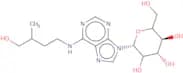
CAS:Dihydrozeatin-9-glucoside is a conjugate of the natural product dihydrozeatin and glucose. The glucoside has been found to inhibit the growth of plants, which may be due to its ability to bind to polyclonal antibodies. Dihydrozeatin-9-glucoside is also an immunogen that has been shown to produce monoclonal antibodies in tissue culture. It has been used for immunoaffinity chromatography and as a biochemical marker for plant tissue cultures. Dihydrozeatin-9-glucoside binds to wheat leaf cells and inhibits their growth, making it a potential tool for the study of plant cell death.Formula:C16H25N5O6Purity:Min. 95 Area-%Color and Shape:White PowderMolecular weight:383.4 g/mol2-Acetamido-3,4,6-tri-O-benzyl-2-deoxy-a-D-galactopyranosyl-(N-Fmoc)-L-serine
CAS:2-Acetamido-3,4,6-tri-O-benzyl-2-deoxy-a-D-galactopyranosyl-(N-Fmoc)-L-serine is a custom synthesis chemical. It is a monosaccharide that can be modified with methylation, fluorination, and click chemistry. This chemical has been used in the synthesis of oligosaccharides and polysaccharides. 2-Acetamido-3,4,6-tri-O-benzyl-2-deoxy--a--D--galactopyranosyl-(N--Fmoc)--L--serine is also an important component of complex carbohydrates.Formula:C47H48N2O10Purity:Min. 95%Molecular weight:800.89 g/molAllyl β-D-lactose
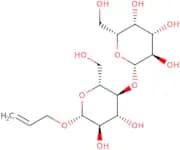
CAS:Allyl β-D-lactose is a disaccharide with an aliphatic alkene functional handle. This can be used as a functionalised monomer in the synthesis of glycopolymers.Formula:C15H26O11Purity:Min. 95 Area-%Color and Shape:PowderMolecular weight:382.36 g/mol2-C-Methyl-D-mannopyranose
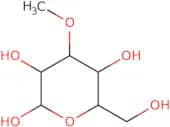
CAS:2-C-Methyl-D-mannopyranose is a low molecular weight sugar that is found in the cell walls of bacteria and some plants. It has been shown to have an immunostimulating effect when administered to mice with murine sarcoma. 2-C-Methyl-D-mannopyranose has also been shown to be cytotoxic against murine leukemia cells. This compound has a glycosidic structure and can be hydrolyzed by acid or alkali to form mannose. 2-C-Methyl-D-mannopyranose can be synthesized using ion exchange chromatography, which separates compounds according to their molecular weight. The molecular weights of this compound range from low to high, with a monomeric unit of 160 Da. The nmr spectra of this compound show peaks at 1.5 ppm corresponding to the C=O stretching vibration and at 7 ppm corresponding to the C=N stretchingFormula:C7H14O6Purity:Min. 95%Molecular weight:194.18 g/molGM3-Ganglioside ammonium
CAS:Ganglioside GM3 (ammonium salt) has a core disaccharide structure (Galβ1,4Glc) with sialic acid linked a2,3 to the galactose residue and ceramide linked β to position 1 on the reducing terminal glucose residue (Ledeen, 2009). Ganglioside GM3 is strongly associated with human tumors, such as, lung, brain and melanomas where it is over expressed. It is seen as a possible tumor-associated carbohydrate antigen for cancer immunotherapy (Changping, 2019). GM3 ganlioside is implicated in various other diseases involving chronic inflammation, such as, insulin resistance, leptin resistance, T-cell function and immune disorders (e.g. allergic asthma). GM3 ganglioside has also been shown to play an essential role in murine and human auditory systems, and a common pathological feature of GM3S deficiency is deafness (Inokuchi, 2018).Formula:C59H111N3O21xNH4Purity:Min. 95%Molecular weight:1,198.52 g/molL-a-Phosphatidyl-(1,2-dipalmitoyl)-D-myo-inositol
CAS:L-a-Phosphatidyl-(1,2-dipalmitoyl)-D-myo-inositol is a phospholipid that is a major component of the cell membrane. It is derived from myo-inositol and palmitic acid. L-a-Phosphatidyl-(1,2-dipalmitoyl)-D-myo-inositol has been shown to have anticoagulant properties. It binds to the thrombin receptor and inhibits the binding of thrombin to this receptor. This inhibitor does not affect the activity of other proteases such as trypsin or chymotrypsin. L-a-Phosphatidyl-(1,2-dipalmitoyl)-D-myo-inositol can also be used for industrial purposes as an emulsifier or polymer conjugate.Formula:C41H79O13PPurity:Min. 95%Molecular weight:811.03 g/molN-Acetyl-L-lyxosamine
N-Acetyl-L-lyxosamine is a glycosylation that is used in the synthesis of complex carbohydrates. It can be modified with methyl groups, fluorine atoms, and other substances to produce desired products. N-Acetyl-L-lyxosamine can be used in the synthesis of saccharides such as oligosaccharides and polysaccharides. It is also used in the modification of sugars and monosaccharides. This compound has been synthesized from various sources, including natural glycerol or plant oils. The purity of this chemical is greater than 99%.Formula:C7H13NO5Purity:Min. 95%Molecular weight:191.18 g/molMethyl 4-O-methyl-D-glucopyranosyluronate
<p>Methyl 4-O-methyl-D-glucopyranosyluronate is a fungal metabolite that is produced by the reaction of armillaria with methyl 4-O-methyl-D-glucopyranoside. Methyl 4-O-methylglucuronyluronate has been shown to have an esterase activity, which can hydrolyze esters and linkages in the cell wall of fungi. This enzyme has been shown to have kinetic parameters that are different for different substrates. The catalytic site of this enzyme has also been found to be glutamic acid, which plays a role in the synthesis and degradation of proteins. Methyl 4-O-methylglucuronyluronate has been found to be insoluble in water and is not active against bacteria.</p>Formula:C8H14O7Purity:Min. 95%Molecular weight:222.2 g/mol1,3,4,6-Tetra-O-acetyl-N-(4-methoxybenzylidene)-b-D-glucosamine
CAS:<p>1,3,4,6-Tetra-O-acetyl-N-(4-methoxybenzylidene)-b-D-glucosamine is a high purity custom synthesis sugar that has been fluorinated and glycosylated. It is synthesized from the methylation of 4-(1,3,4,6-tetra-O-acetyl)-N-(4-hydroxybenzylidene)-b-D-glucosamine and can be used for the modification of saccharides or oligosaccharides. This compound has CAS No. 7597-81-1 and is known as a carbohydrate.</p>Formula:C22H27NO10Purity:Min. 95%Molecular weight:465.45 g/mol2-Hydroxyestradiol-2-O-b-D-glucuronide
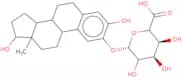
CAS:2-Hydroxyestradiol-2-O-b-D-glucuronide is a modified oligosaccharide that has been synthesized by custom synthesis. It can be used in the modification of other carbohydrates, and as a monosaccharide or methylated glycosylated saccharide. 2-Hydroxyestradiol-2-O-b-D-glucuronide is also an effective inhibitor for bacterial growth, which may be due to its ability to inhibit the synthesis of cellular constituents such as lipids and proteins.Formula:C24H32O9Purity:Min. 95%Molecular weight:464.51 g/mol(1R,3S,4R,8S)-3-Acetoxy-1-acetoxymethyl-8-benzloxy-2,6-dioxabicyclo[3,2,1]octane
CAS:(1R,3S,4R,8S)-3-Acetoxy-1-acetoxymethyl-8-benzloxy-2,6-dioxabicyclo[3,2,1]octane is a modification of a complex carbohydrate. It is synthesized by the methylation and glycosylation of the monosaccharide (1R,3S,4R,8S)-3-acetoxy-1-acetoxymethylcyclohexanecarboxylic acid. This product has a CAS number of 229469-37-8 and is available in high purity with 98% to 99% purity. This product can be used as an ingredient in pharmaceuticals or other chemical products.Formula:C18H22O7Purity:Min. 95%Molecular weight:350.36 g/molBenzyl 4,6-O-benzylidene-b-D-glucopyranoside
CAS:Benzyl 4,6-O-benzylidene-b-D-glucopyranoside is a synthetic monosaccharide. It is an oligosaccharide that has undergone glycosylation and polysaccharide modifications. Benzyl 4,6-O-benzylidene-b-D-glucopyranoside can be used for the preparation of various carbohydrates with customized structures. This product can be synthesized in high purity.Formula:C20H22O6Purity:Min. 95%Color and Shape:PowderMolecular weight:358.39 g/mol2,5-Anhydro-D-mannofuranose oxime
CAS:<p>2,5-Anhydro-D-mannofuranose oxime is a glycosylation inhibitor that prevents the formation of glycosidic bonds. It is used in the synthesis of complex carbohydrates, such as polysaccharides and oligosaccharides. This compound can be fluorinated or methylated to produce 2,5-anhydro-D-mannofuranose oxime derivatives that are useful for click chemistry. 2,5-Anhydro-D-mannofuranose oxime has been shown to inhibit the enzymatic conversion of mannitol to mannose and fructose by blocking the enzyme alpha mannosidase. The high purity of this compound makes it suitable for use in a variety of reactions, including glycobiology studies and carbohydrate modifications.</p>Formula:C6H11NO5Purity:Min. 95%Molecular weight:177.16 g/molGala1-3Galb1-4(6-deoxyGlcNAc)-HSA
<p>Gala1-3Galb1-4(6-deoxyGlcNAc)-HSA is a custom synthesis of a complex carbohydrate. It is an oligosaccharide with CAS No. and Polysaccharide that has been modified by Methylation, Glycosylation, and Click modification. Carbohydrate is one of the most important macronutrients for human health, as it provides energy and cell building blocks. Sugar (e.g., glucose) is the simplest form of carbohydrate, while saccharide refers to chains of sugar molecules. Gala1-3Galb1-4(6-deoxyGlcNAc)-HSA has been fluorinated and synthesized with high purity in order to be used as a drug delivery system. This drug can be used to treat various diseases such as diabetes mellitus type I or II, cancer, or HIV/AIDS.</p>Purity:Min. 95%Methyl 2-deoxy-2-sulfamino-a-D-glucopyranoside sodium salt
Methyl 2-deoxy-2-sulfamino-a-D-glucopyranoside sodium salt is a modification of an oligosaccharide. It is a carbohydrate that has not been found in nature, but it can be synthesized by the introduction of methyl groups to the sugar. Methyl 2-deoxy-2-sulfamino-a-D-glucopyranoside sodium salt is used as a synthetic precursor for saccharides.Purity:Min. 95%Alphadolone 21-b-D-glucuronide
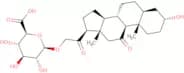
CAS:Alphadolone 21-b-D-glucuronide (ADG) is a synthetic compound that belongs to the group of carbohydrates. ADG is a sugar that has been modified with fluorination and methylation. It is also glycosylated and click modified. This product is custom synthesized for research purposes only.Formula:C27H40O10Purity:Min. 95%Molecular weight:524.6 g/mol1,2-O-Isopropylidene-5-O-pivaloyl-a-D-glucofuranosiduronoic acid-6,3-lactone
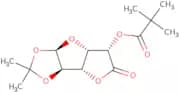
CAS:1,2-O-Isopropylidene-5-O-pivaloyl-a-D-glucofuranosiduronoic acid is a sugar molecule. It is a saccharide with the molecular formula C10H14O5. The CAS number for this product is 78748-89-7. This product is also known as 1,2:3,4:5',6'-O'pivaloyl β--glucopyranose or pivaloyl D--glucofuranoside 6,3'-lactone. It has a purity of 99% and can be custom synthesized to customer specifications. This product does not have an expiration date and can be methylated, glycosylated, and click modified.Formula:C14H20O7Purity:Min. 95%Molecular weight:300.3 g/molp-Tolyl 2,3,4-tri-O-acetyl-a-L-rhamnopyranoside
CAS:P-Tolyl 2,3,4-tri-O-acetyl-a-L-rhamnopyranoside is a glycosylation agent that is used in the synthesis of complex carbohydrates and polysaccharides. It has been shown to be useful in click chemistry reactions. P-Tolyl 2,3,4-tri-O-acetyl-a-L-rhamnopyranoside can be used to produce a variety of sugars including monosaccharides, oligosaccharides, and polysaccharides. This compound can also be fluorinated or saccharified with other chemical groups.Formula:C19H24O7SPurity:Min. 95%Molecular weight:396.46 g/molC-(2,3,4,6-Tetra-O-acetyl-1-bromo-1-deoxy-b-D-galactopyranosyl)formamide
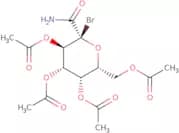
CAS:C-(2,3,4,6-Tetra-O-acetyl-1-bromo-1-deoxy-b-D-galactopyranosyl)formamide is a custom synthesis that is used as a building block for the synthesis of oligosaccharides, polysaccharides and other complex carbohydrates. It is also used for the modification of saccharide chains with methylation or glycosylation. This compound has CAS number 159895-07-5 and can be synthesized by click chemistry. It has high purity and fluoro in order to make it synthetically more stable.Formula:C15H20BrNO10Purity:Min. 95%Molecular weight:456.3 g/molNefopam glucuronide
<p>Nefopam is a compound that has been used as an analgesic and antipyretic. It is structurally related to the benzodiazepine class of drugs, but is not chemically equivalent to any other known drug. Nefopam has a low therapeutic index and can cause severe toxic effects in overdose. The most common adverse effects of nefopam are dizziness, drowsiness, headache, nausea and vomiting. An overdose can lead to death by respiratory paralysis or cardiac arrest.</p>Formula:C23H27NO7Purity:Min. 95%Molecular weight:429.46 g/mol2,3-Di-O-benzyl-5-O-tert-butyldimethylsilyl-D-xylofuranose
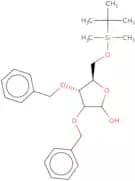
2,3-Di-O-benzyl-5-O-tert-butyldimethylsilyl-D-xylofuranose is a custom synthesis of an oligosaccharide. The modification of this product is fluorination. The product has a purity of 99% and the CAS number is 125548-81-1. This product is soluble in water and ethanol. It has a molecular weight of 600. The monosaccharides found in this product are xylose, glucose, and galactose in the ratio 2:2:1. This product can be used as a sugar substitute or as a reagent for the structural analysis of complex carbohydrates.Formula:C25H36O5SiPurity:Min. 95%Molecular weight:444.65 g/mol3-O-Benzyl-5,6-di-O-acetyl-1,2-O-isoproylidene-a-D-glucofuranose
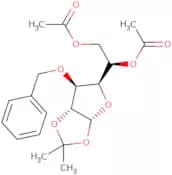
CAS:3-O-Benzyl-5,6-di-O-acetyl-1,2-O-isoproylidene-a-D-glucofuranose is a synthetic compound that can be used as a building block for the synthesis of saccharides and oligosaccharides. The molecule is an alpha D glucose derivative with an acetyl group at C3 and an isopropylidene group at C5. It has great potential in glycosylation reactions due to its high purity and low price.Formula:C20H26NO8Purity:Min. 95%Molecular weight:394.43 g/molCotinine N-(4-deoxy-4,5-didehydro)-b-D-glucuronide
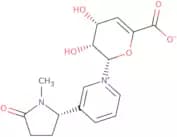
CAS:Cotinine N-(4-deoxy-4,5-didehydro)-b-D-glucuronide is a custom synthesis and modification of cotinine. Cotinine is an alkaloid found in tobacco plants and the primary metabolite of nicotine. It has been shown to inhibit glycosylation, methylation, and carbohydrate modification reactions. This product is offered in high purity and with a CAS number of 146275-15-2.Formula:C16H18N2O6Purity:Min. 95%Molecular weight:334.32 g/molMethyl 4,6-O-benzylidene-2-O-p-toluenesulfonyl-a-D-glucopyranoside
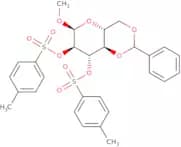
CAS:Methyl 4,6-O-benzylidene-2-O-p-toluenesulfonyl-a-D-glucopyranoside is a modification of the natural carbohydrate, alpha-D-(1→4)-glucose. It is an oligosaccharide that is synthesized by the methylation of a natural sugar and subsequent glycosylation with a saccharide. This compound has been shown to inhibit the activity of bacterial RNA polymerase and DNA gyrase enzymes. The synthesis of this compound has been described in detail in the literature. Methyl 4,6-O-benzylidene-2-O-(p-toluenesulfonyl)a D glucopyranoside This compound is a modification of the natural carbohydrate, alpha D (1 ->4) glucose. It is an oligosaccharide that is synthesized by methylation of a naturalFormula:C21H24O8SPurity:Min. 95%Molecular weight:436.48 g/mol1,2,3,4-Tetra-O-acetyl-b-L-fucopyranose
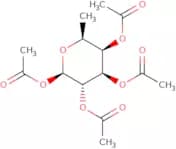
CAS:1,2,3,4-Tetra-O-acetyl-b-L-fucopyranose is a saccharide that can be synthesized from L-fucose. It is a complex carbohydrate and can be used for Methylation, Click modification, Polysaccharide, and Fluorination. 1,2,3,4-Tetra-O-acetyl-b-L-fucopyranose is an Oligosaccharide and it is custom synthesized. The CAS number for this compound is 50615-78-6 and it has a purity of high.Formula:C14H20O9Purity:Min. 95%Molecular weight:332.3 g/molLow calcium heparin
CAS:Low calcium heparin is a glycosaminoglycan, which occurs in many mammalian tissues and has important anticoagulant and thrombolytic properties. The chemical structure is composed mainly of two disaccharide repeating units A and B. A is L-iduronic acid 2-suplhate linked α-(1,4) to 2-deoxy-2-sulfamido-D-galactose 6-sulphate, while B is D-glucuronic acid β-(1,4) linked to 2-deoxy-2-sulfamido-D-glucose 6-sulphate.Purity:Min. 95%Man-6 N-Glycan
CAS:Man-6 N-Glycan is a custom synthesis of an oligosaccharide. It is also classified as a polysaccharide and carbohydrate. The glycosylation of this product involves the addition of a sugar to the glycan, which is then modified by methylation or fluorination. This product has been shown to be stable in a buffer solution at pH 7 and can be used for click chemistry. The purity is high with no detectable impurities.Formula:C52H88N2O41Purity:Min. 95%Color and Shape:PowderMolecular weight:1,397.24 g/mol2,3,4,6-Tetra-O-acetyl-b-D-galactopyranosyl-N-Fmoc-L-threonine pentafluorophenyl ester
CAS:<p>2,3,4,6-Tetra-O-acetyl-b-D-galactopyranosyl-N-Fmoc-L-threonine pentafluorophenyl ester (2,3,4,6TAP) is a sugar that has been modified by methylation and glycosylation. It is a custom synthesis with CAS No. 182369-92-2. 2,3,4,6TAP can be used for the preparation of oligosaccharides and polysaccharides with different structures. It has high purity and is fluorinated. This compound can be used in click chemistry reactions to modify carbohydrates on a peptide or protein.</p>Formula:C39F5H36NO14Purity:Min. 95%Molecular weight:837.71 g/mol1,2-Dideoxy-2'-dimethylamino-a-D-glucopyranoso-[2,1-d]-2'-thiazoline
CAS:1,2-Dideoxy-2'-dimethylamino-a-D-glucopyranoso-[2,1-d]-2'-thiazoline is a synthetic sugar that is used in the synthesis of complex carbohydrates. It can be used to modify polysaccharides and glycosyls with methyl groups. This product has high purity and custom synthesis.Formula:C9H16N2O4SPurity:Min. 95%Molecular weight:248.3 g/molErigeside C
CAS:Erigeside C is a flavonoid derivative that has been shown to be effective in treating allergic symptoms. Erigeside C inhibits the production of various pro-inflammatory cytokines, such as IL-6 and TNF-α, by inhibiting the activity of protein kinase C (PKC). The compound also inhibits the production of prostaglandin E2 by inhibiting cyclooxygenase-2. In addition, Erigeside C is able to inhibit the release of histamine from mast cells. This antihistamine effect is due to its ability to inhibit oxidation reactions in the cell membrane and block cellular calcium channels.Purity:Min. 95%2-C-(2,3,4,6-Tetra-O-benzyl-b-D-glucopyranosyl) ethyne
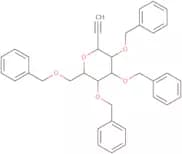
CAS:<p>2-C-(2,3,4,6-Tetra-O-benzyl-b-D-glucopyranosyl) ethyne is a synthetic monosaccharide. It has a molecular formula of C12H14O8 and a molecular weight of 302.24 g/mol. 2-C-(2,3,4,6-Tetra-O-benzyl-b-D-glucopyranosyl) ethyne is used to modify oligosaccharides and polysaccharides in the synthesis of complex carbohydrates. This chemical is also used as an intermediate in the fluorination reaction to produce polyfluorinated molecules with high purity.</p>Formula:C29H30O5Purity:Min. 95%Molecular weight:458.55 g/mol1,6:3,4-Dianhydro-2-O-p-toluenesulfonyl-β-D-galactopyranose
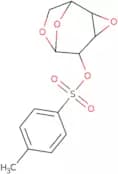
CAS:1,6:3,4-Dianhydro-2-O-p-toluenesulfonyl-b-D-galactopyranose is a fluorinated monosaccharide that can be used in glycosylation reactions. This compound can be custom synthesized and is not available commercially. It has CAS No. 6167-32-4 and its molecular weight is 489.1 g/mol.Formula:C13H14O6SPurity:Min. 95%Color and Shape:PowderMolecular weight:298.31 g/mol2,3,4,6-Tetra-O-acetyl-b-D-glucopyranosyl-(N2-Fmoc)-L-asparagine tert-butyl ester
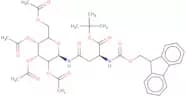
CAS:2,3,4,6-Tetra-O-acetyl-b-D-glucopyranosyl-(N2-Fmoc)-L-asparagine tert-butyl ester is a glycosylation reagent that contains a reactive primary amine. It is used in the synthesis of complex carbohydrates and oligosaccharides. This compound is also used as a fluorinating agent for saccharides and sugars. 2,3,4,6-Tetra-O-acetyl-b-D-glucopyranosyl-(N2-Fmoc)-L-asparagine tert butyl ester can be custom synthesized to meet your needs. This product has CAS number 16041617 1 and it is available in high purity.Formula:C37H44N2O14Purity:Min. 95%Molecular weight:740.75 g/mol1,2-o-Isopropylidene-beta-D-fructopyranose
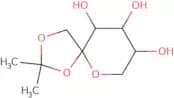
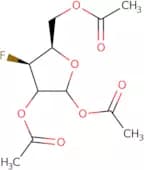
CAS:<p>1,2-O-Isopropylidene-β-D-fructopyranose is a synthetic monosaccharide. It is a fluorinated derivative of fructopyranose. This product is a modification of the alpha anomeric form of β-D-fructopyranose. It has been used as a substrate for various types of glycosylation reactions, such as methylation and click modification.</p>Formula:C9H16O6Purity:Min. 95%Molecular weight:220.22 g/mol1,2,5-Tri-O-acetyl-3-deoxy-3-fluoro-D-ribofuranose
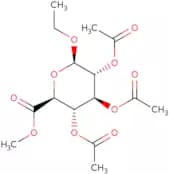
CAS:1,2,5-Tri-O-acetyl-3-deoxy-3-fluoro-D-ribofuranose is a custom synthesis. It is a complex carbohydrate that can be modified with methylation and glycosylation to produce an Oligosaccharide or Polysaccharide. This molecule has been used in click chemistry to modify the sugar moiety and fluorinate the ribose group. 1,2,5-Tri-O-acetyl-3-deoxy--D--ribofuranose has CAS number 1556020-32-6 and has a purity of 99%.Formula:C11H15FO7Purity:Min. 95%Molecular weight:278.23 g/molEthyl 2,3,4-tri-O-acetyl-b-D-glucuronide methyl ester
CAS:Ethyl 2,3,4-tri-O-acetyl-b-D-glucuronide methyl ester is a fluorinated monosaccharide. It can be used as a synthetic intermediate for the production of oligosaccharides and polysaccharides. This product is also used in the glycosylation of sugar molecules.Formula:C15H22O10Purity:Min. 95%Molecular weight:362.33 g/mol5-O-(t-Butyldiphenylsilyl)-1,2-O-isopropylidene-a-D-xylofuranose
CAS:5-O-(t-Butyldiphenylsilyl)-1,2-O-isopropylidene-a-D-xylofuranose is a modification of the sugar xylofuranose. This compound is synthesized from 1,2-O-isopropylidene erythrose using tetrabutyldiphenylsilyl chloride and triethylamine. It is a white solid that can be used as a monosaccharide or polysaccharide in glycosylation reactions. 5-O-(t-Butyldiphenylsilyl)-1,2-O-isopropylidene -a D -xylofuranose has been found to have high purity and can be used for methylation and fluorination reactions.Formula:C24H32O5SiPurity:Min. 95%Molecular weight:428.59 g/molMycophenolic acid acyl-b-D-glucuronide allyl ester
CAS:Mycophenolic acid acyl-b-D-glucuronide allyl ester is a modification of the natural product mycophenolic acid. It is an oligosaccharide made up of a complex carbohydrate that is synthesized from monosaccharides, methylated, and glycosylated. This compound has been shown to be useful in the synthesis of polysaccharides and saccharides. Mycophenolic acid acyl-b-D-glucuronide allyl ester can be fluorinated and saccharified to increase its stability.Formula:C26H32O12Purity:Min. 95%Molecular weight:536.53 g/molPhenyl 2,3,4,6-tetra-O-benzyl-b-D-thiogalactopyranoside
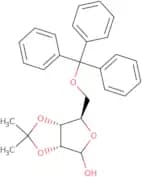
CAS:The chemical name for Phenyl 2,3,4,6-tetra-O-benzyl-b-D-thiogalactopyranoside is Phenyl 2,3,4,6-tetra-O-benzyl-b-D-thiogalactopyranoside. This chemical is a Carbohydrate that is Modification and saccharide. It has the molecular formula of C12H14O8S2. Phenyl 2,3,4,6-tetra-O-benzyl-b-D-thiogalactopyranoside is an Oligosaccharide with a sugar type of Monosaccharide. The Chemical Abstracts Service (CAS) registry number for this chemical is 577861 - 19 - 1. Phenyl 2,3,4,6 tetra O benzyl b D thiogalactopFormula:C40H40O5SPurity:Min. 95%Color and Shape:PowderMolecular weight:632.81 g/mol2,3-O-Isopropylidene-5-O-trityl-D-ribofuranose
CAS:<p>2,3-O-Isopropylidene-5-O-trityl-D-ribofuranose is a metal complex that can be used as an antitumor agent. It has been shown to have antimicrobial activity against Gram positive and Gram negative bacteria and fungi. 2,3-O-Isopropylidene-5-O-trityl-D-ribofuranose is also active against Gram negative bacteria such as Escherichia coli and Pseudomonas aeruginosa. This compound is easily synthesized from acetoacetic acid by the reaction with trifluoroacetic anhydride followed by ammonolysis or azide coupling. The product is then amidated or tosylated to give the desired product.<br>2,3-O-Isopropylidene - 5 - O - trityl - D - ribofuranose has also been shown to inhibit tumor growth in</p>Formula:C27H28O5Purity:Min. 95%Color and Shape:SolidMolecular weight:432.51 g/mol1,2,3,6,2',3',6'-Hepta-O-acetyl-4'-O-(2-acetamido-3,4,6-tri-O-acetyl-2-deoxy-a-D-galactopyranosyl)-b-D-lactopyranoside
This is an oligosaccharide that has been modified with a fluorinated saccharide. It is a complex carbohydrate that has been synthesized through custom synthesis and is high purity with a CAS No. This monosaccharide has been methylated and glycosylated, and it can be used in the synthesis of polysaccharides.Purity:Min. 95%Naphthofluorescein di-O-(b-D-galactopyranoside)
CAS:Naphthofluorescein di-O-(b-D-galactopyranoside) is a fluorescent dye that is used in the study of polysaccharides, saccharides, and carbohydrates. This dye is a methylated derivative of naphthofluorescein with an additional sugar molecule attached to the fluorescing part. The chemical formula for this compound is C12H14N2O7 b-D-Galactopyranoside. The molecular weight of this compound is 542.3 g/mol. Naphthofluorescein di-O-(b-D-galactopyranoside) has CAS No. 133551-98-1 and can be found on the website of Chemical Abstracts Service (CAS).Formula:C40H36O15Purity:Min. 95%Molecular weight:756.7 g/mol6-O-tert-Butyldiphenylsilyl-3,4-O-isopropylidene-D-galactal
CAS:<p>6-O-tert-Butyldiphenylsilyl-3,4-O-isopropylidene-D-galactal is a synthetic monosaccharide that is used as a building block for the synthesis of complex carbohydrates. This product is also used in glycosylation reactions and click modification. It is available in high purity and can be custom synthesized to meet customer needs.</p>Purity:Min. 95%







![(1R,3S,4R,8S)-3-Acetoxy-1-acetoxymethyl-8-benzloxy-2,6-dioxabicyclo[3,2,1]octane](/_next/image/?url=https%3A%2Fstatic.cymitquimica.com%2Fproducts%2F3D%2Fthumb-webp%2FMA10599.webp&w=3840&q=75)







![1,2-Dideoxy-2'-dimethylamino-a-D-glucopyranoso-[2,1-d]-2'-thiazoline](/_next/image/?url=https%3A%2Fstatic.cymitquimica.com%2Fproducts%2F3D%2Fthumb-webp%2FMD15731.webp&w=3840&q=75)