Glycoscience
Glycoscience is the study of carbohydrates and their derivatives, as well as the interactions and biological functions they participate in. This field of research is crucial for understanding a wide variety of biological processes, including cell recognition, signaling, immune response, and disease development. Glycoscience has important applications in biotechnology, medicine, and the development of new drugs and therapies. At CymitQuimica, we offer a wide selection of high-quality, high-purity products for glycoscience research. Our catalog includes monosaccharides, oligosaccharides, polysaccharides, glycoconjugates, and specific reagents, designed to support researchers in their studies on the structure, function, and applications of carbohydrates in biological systems. These resources are intended to facilitate scientific discoveries and practical applications in various areas of bioscience and medicine.
Subcategories of "Glycoscience"
- Aminosugars(108 products)
- Glyco-Related Antibodies(282 products)
- Glycolipids(46 products)
- Glycosaminoglycans (GAGs)(55 products)
- Glycosides(419 products)
- Monosaccharides(6,624 products)
- Oligosaccharides(3,682 products)
- Polysaccharides(503 products)
Found 11046 products of "Glycoscience"
Sort by
Purity (%)
0
100
|
0
|
50
|
90
|
95
|
100
k-Carratriose disulfate disodium salt
<p>k-carrageenan derived trisaccharide disulfate</p>Formula:C18H30O21S2•2NaPurity:Min. 95%Color and Shape:White PowderMolecular weight:692.51 g/mol6-O-Benzyl-2,3-di-O-acetyl-methyl-a-D-glucopyranoside
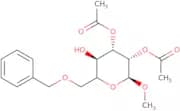
CAS:<p>6-O-Benzyl-2,3-di-O-acetyl-methyl-a-D-glucopyranoside is a high purity synthetic compound with a CAS number of 162284. It is a carbonyl sugar that has been modified with fluorination and methylation. The 6 position of the glucose monosaccharide has been acetylated to give an O6 benzyl group. This compound is used for glycosylation and click chemistry modifications.</p>Formula:C18H24O8Purity:Min. 95%Molecular weight:368.38 g/molHeparin derived dp14 saccharide ammonium salt
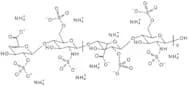
<p>Heparin derived dp14 saccharide ammonium salt is a synthetic glycosaminoglycan that is found in mammalian tissues and blood. This compound is synthesized from heparin, which is a Glycosylated, complex carbohydrate. The synthesis of this compound includes methylation, click modification (a type of chemical reaction), and fluorination. This product contains saccharides that are modified with sugar, oligosaccharides, or monosaccharides. It can be custom synthesized for your specific needs and is available in high purity.</p>Purity:Min. 95%Color and Shape:White to pale yellow solid.Molecular weight:~4100 (Average)1-Bromo-1-deoxyfructose
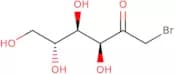
CAS:1-Bromo-1-deoxyfructose is a monosaccharide that is used in the synthesis of polysaccharides and oligosaccharides. It is also used for the click modification of proteins, which can be used to study protein function and activity. 1-Bromo-1-deoxyfructose can be synthesized from fructose by means of a fluorination reaction. This product is available with custom synthesis.Formula:C6H11BrO5Purity:Min. 95%Molecular weight:243.05 g/molMethyl 4,6-O-(4-nitrophenyl)methylene-a-D-galactopyranoside
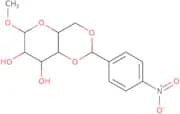
CAS:<p>Methyl 4,6-O-(4-nitrophenyl)methylene-a-D-galactopyranoside is a custom synthesis of a complex carbohydrate. This glycosylation can be modified by methylation and fluorination. The product is available in high purity and has CAS No. 849366-08-1.</p>Purity:Min. 95%D-Mannose-6-phosphate barium salt hydrate
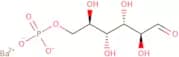
CAS:D-Mannose-6-phosphate barium salt hydrate is a glycosylation agent, which can be used in the synthesis of complex carbohydrates and other saccharides. It is also a methylation agent and can be used to modify polysaccharides. D-Mannose-6-phosphate barium salt hydrate is fluorinated with trifluoromethanesulfonic acid to introduce Fluorination groups, which can then be modified with other reagents. The compound has been shown to have Click modification activity. D-Mannose-6-phosphate barium salt hydrate is a synthetic sugar that can be custom synthesized according to the customer’s requirements. This compound has CAS number 104872-94-8 and is available in high purity, which makes it suitable for use in pharmaceutical applications.Formula:C6H11BaO9P·2H2OPurity:Min. 95%Color and Shape:SolidMolecular weight:395.45 g/mol1,6,6'-Tri-O-tritylsucrose pentaacetate
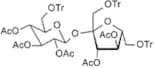
CAS:1,6,6'-Tri-O-tritylsucrose pentaacetate is a sugar that is synthesized by the process of fluorination and monosaccharide. It has a molecular formula of C12H18O9F. This compound can be used as a synthetic sugar in glycosylation reactions or as an Oligosaccharide for complex carbohydrate synthesis. The 1,6,6'-Tri-O-tritylsucrose pentaacetate can also be modified with methylation or click chemistry for high purity.Formula:C79H74O16Purity:Min. 95%Molecular weight:1,279.42 g/molC-(2,3,4,6-Tetra-O-acetyl-1-hydroxy-b-D-galactopyranosyl)formamide
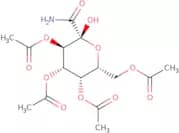
CAS:<p>C-(2,3,4,6-Tetra-O-acetyl-1-hydroxy-b-D-galactopyranosyl)formamide is a modified carbohydrate that has been synthesized and fluorinated. The chemical structure of this carbohydrate is composed of a monosaccharide and an oligosaccharide. This compound has been shown to have many different functions in the body. For example, it has been shown to inhibit the activity of the enzyme phospholipase A2 and to increase the production of prostaglandin E2. C-(2,3,4,6-Tetra-O-acetyl-1-hydroxy-b-D-galactopyranosyl)formamide has also been shown to be effective against methicillin resistant Staphylococcus aureus (MRSA).</p>Formula:C15H21NO11Purity:Min. 95%Molecular weight:391.33 g/mol2-(Acetylamino)-1-O-benzyl-2-deoxy-3,4-O-isopropylidene-6-O-(2,3,4,6-tetra-O-acetyl-b-D-galactopyranosyl)-D-galactopyranoside
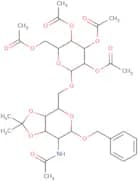
CAS:<p>The chemical name of this compound is 2-(Acetylamino)-1-O-benzyl-2-deoxy-3,4-O-isopropylidene-6-O-(2,3,4,6-tetra-O-acetylbDgalactopyranosyl)-Dgalactopyranoside. It is a synthetic compound and its molecular formula is C17H22N2O8. The molecular weight of this compound is 412.46 g/mol. CAS No. 352273-66-6</p>Formula:C32H43NO15Purity:Min. 95%Molecular weight:681.68 g/mol3'-O-(b-D-Glucopyranosyl)-L-DOPA
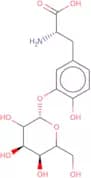
Controlled Product3'-O-(b-D-Glucopyranosyl)-L-DOPA is a modification of L-DOPA. It is an oligosaccharide that is a complex carbohydrate. 3'-O-(b-D-Glucopyranosyl)-L-DOPA has been synthesized and purified to high purity, with CAS No. 85825-69-7. This compound can be methylated and glycosylated, and it can form polysaccharides (sugar). 3'-O-(b-D-Glucopyranosyl)-L-DOPA can also be fluorinated, which may inhibit the enzyme bromelain that breaks down this compound in the gastrointestinal tract.Formula:C15H21NO9Purity:Min. 95%Molecular weight:359.33 g/molN-(Trifluoroacetyl)-1-desmethyl daunorubicin
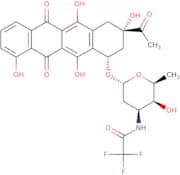
CAS:N-(trifluoroacetyl)-1-desmethyl daunorubicin is an analog of daunorubicin that is synthesized by the click chemistry and fluorination reactions. It contains a trifluoroacetyl group on the 1-position of the desmethyl group, which has been shown to increase its stability in vivo. N-(trifluoroacetyl)-1-desmethyl daunorubicin has been shown to be effective in the treatment of hematological malignancies such as leukemia and lymphoma. This compound is synthesized in high purity and with a purity of greater than 99%. It is also glycosylated and methylated.Formula:C28H26F3NO11Purity:Min. 95%Molecular weight:609.5 g/molLacto-N-neotetraosa-APD-HSA
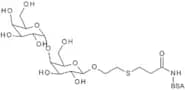
Lacto-N-neotetraosa-APD-HSA is a synthetic monosaccharide that is structurally similar to tetrasaccharide and pentasaccharide. It can be synthesized by click chemistry and has been modified by fluorination and acetylation. Lacto-N-neotetraosa-APD-HSA has a high purity and is an excellent candidate for applications in the food industry, such as sugar substitutes.Purity:Min. 95%Paricalcitol 25-b-D-glucuronide
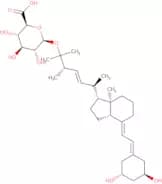
CAS:<p>Paricalcitol 25-b-D-glucuronide is a synthetic analogue of calcitriol, which is the active form of vitamin D. It is a high-purity glycosylate with an average molecular weight of 522.5 Da and a purity of >98%. Paricalcitol 25-b-D-glucuronide has been shown to be effective in prevention or treatment of secondary hyperparathyroidism in patients with chronic kidney disease (CKD). This compound has shown to inhibit calcium absorption in the gut and increase urinary excretion of calcium. It also increases serum phosphate levels, which may lead to increased calcium phosphate deposition in bone. Paricalcitol 25-b-D-glucuronide is methylated at the 25 position, which prevents it from being metabolized by the liver. This modification allows for higher concentrations to be administered without causing toxicity.</p>Formula:C33H52O9Purity:Min. 95%Molecular weight:592.76 g/molb-D-Lactosyltrichloroacetimidate heptaacetate
CAS:<p>b-D-Lactosyltrichloroacetimidate heptaacetate is a glycosylation product of the b-D-lactose and trichloroacetic anhydride. This compound is used in the synthesis of oligosaccharides and polysaccharides. It has been shown to be a fluorinated, methylated, or click modified monosaccharide or disaccharide which can be prepared through custom synthesis, or by modification of existing saccharides. This compound has been found to have high purity with a CAS number of 1142022-76-1.</p>Formula:C28H36Cl3NO18Purity:Min. 95%Molecular weight:780.94 g/mol4-O-(a-D-Galactopyranosyl)-b-D-galactopyranosyl-CETE-BSA Conjugate
This product is a complex carbohydrate that is used in the modification of oligosaccharides and polysaccharides. It is synthesized by reacting 4-O-(a-D-galactopyranosyl)-b-D-galactopyranosyl chloride with bovine serum albumin (BSA) under acidic conditions. The product has a purity of greater than 98% and a molecular weight of approximately 3,000 Daltons.Purity:Min. 95%Molecular weight:77,000 g/mol3-Deoxy-3-fluoro-1,2:5,6-di-O-isopropylidene-a-D-glucofuranose
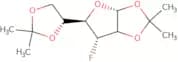
CAS:3-Deoxy-3-fluoro-1,2:5,6-di-O-isopropylidene-a-D-glucofuranose (3DF) is a fluorinated sugar that is synthesized by reacting 2,3:5,6-di-O-isopropylidene a D glucofuranose with methyl iodide and trifluoromethanesulfonic acid. 3DF has been used for the synthesis of oligosaccharides and polysaccharides. It is also possible to use this compound for the preparation of other sugars as well as more complex carbohydrates. The purity of 3DF is 98% or higher. 3DF can be modified with click chemistry reactions and then reacted with amines to form amide bonds. This modification allows for the synthesis of high purity monosaccharides and disaccharides.Formula:C12H19FO5Purity:Min. 95%Molecular weight:262.27 g/molBenzyl 2-acetamido-2-deoxy-D-glucopyranoside
CAS:Benzyl 2-acetamido-2-deoxy-D-glucopyranoside is a fluorinated glycosylation reagent that has been developed for the synthesis of complex carbohydrates, oligosaccharides, and saccharides. This compound is also useful in the modification of natural products and as a synthetic intermediate. Benzyl 2-acetamido-2-deoxy-D-glucopyranoside is an excellent substrate for Click chemistry, which can be used to modify saccharide units. The purity of this product is high, with no detectable impurities.Formula:C15H21NO6Purity:Min. 95%Molecular weight:311.33 g/mol1-Amino-1-deoxy-D-xylitol hydrochloride
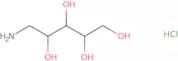
CAS:<p>1-Amino-1-deoxy-D-xylitol hydrochloride is a sugar that is used in the synthesis of complex carbohydrates and polysaccharides. It is also used to introduce fluorine atoms into saccharides or oligosaccharides, and can be custom synthesized to suit the needs of a customer. The chemical formula for 1-amino-1-deoxy-D-xylitol hydrochloride is C6H11NO4•HCl. Its CAS number is 22566-18-3. This product has a purity of ≥99%.</p>Purity:Min. 95%4-Methoxyphenyl 2,3-di-O-benzyl-b-D-galactopyranoside
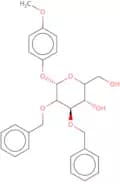
4-Methoxyphenyl 2,3-di-O-benzyl-b-D-galactopyranoside is a high purity synthetic compound that can be custom synthesized to your specifications. This product is a carbohydrate with the molecular formula C7H8O6 and molecular weight of 232.14. The CAS number for this compound is 51878-93-5.Formula:C27H30O7Purity:Min. 95%Molecular weight:466.52 g/mol2,3-Anhydro-4,6-O-benzylidene-N-Boc-1,5-deoxy-1,5-imino-D-glucitol
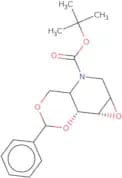
CAS:2,3-Anhydro-4,6-O-benzylidene-N-Boc-1,5-deoxy-1,5-imino-D-glucitol is a fluorinated monosaccharide that is synthesized by reacting 2,3-anhydro-4,6-(O)-benzylidene glucose with Boc anhydride in the presence of triethylamine. It is an oligosaccharide derived from D-(+)-glucose and consists of a 1,5 anhydro ring linked to a 1,5 imino sugar. 2,3 Anhydro 4,6 O benzylidene N Boc 1 5 deoxy 1 5 imino D glucitol has been used as a building block for glycosylation reactions and has been shown to be useful in click chemistry. This compound is also available in various purity levels.Formula:C18H23NO5Purity:Min. 95%Molecular weight:333.38 g/mol1,2-O-Isopropylidene-a-D-xylofuranuronic acid
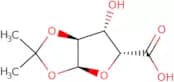
CAS:1,2-O-Isopropylidene-a-D-xylofuranuronic acid is a methylated form of the sugar xylofuranose. It is also known as 1,2-di-O-methylxylofuranuronic acid. The compound belongs to the class of oligosaccharides and polysaccharides. It has CAS number 35522-89-5 and molecular weight of 206.24 g/mol. It is soluble in water and ethanol but insoluble in ether. It can be used for chemical synthesis and modification of saccharide chains.Formula:C8H12O6Purity:Min. 95%Molecular weight:204.18 g/mol2-Cyclohexylethyl-4-O-(a-D-glucopyranosyl)-b-D-glucopyranoside
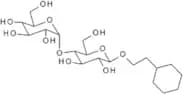
CAS:<p>Oroxylum indicum is a plant that belongs to the family Bignoniaceae. It has been used in traditional medicine for the treatment of cancer and has been shown to possess anti-inflammatory properties. The sequenced genome of Oroxylum indicum has provided a model system for understanding the molecular mechanisms underlying tumorigenesis. This plant contains a number of monoclonal antibodies, including one that is active against mouse monoclonal antibodies and inhibits tumor xenografts. The extract of this plant also inhibits influenza virus and polymerase chain reactions, which are important steps in protein synthesis. Oroxylum indicum may have therapeutic potential as an anti-cancer drug because it can inhibit solid tumours by interfering with protein synthesis.</p>Formula:C20H36O11Purity:Min. 95%Color and Shape:PowderMolecular weight:452.49 g/molParomamine trihydrochloride
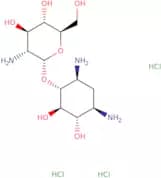
CAS:<p>Paromamine trihydrochloride is a Custom synthesis, Modification, Fluorination, Methylation, Monosaccharide, Synthetic, Click modification of the chemical compound. Paromamine trihydrochloride is an Oligosaccharide and saccharide that has been Glycosylated. The Carbohydrate complex is made up of a number of sugar units that are linked together to form a polysaccharide. This Polysaccharide can be found in many plants and animals.</p>Formula:C12H25N3O7•(HCl)3Purity:Min. 95%Color and Shape:PowderMolecular weight:432.72 g/molMethyl 3-O-benzyl-6-deoxy-2-O-methyl-a-D-galactopyranoside
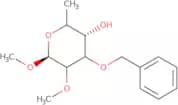
CAS:Methyl 3-O-benzyl-6-deoxy-2-O-methyl-a-D-galactopyranoside is a custom synthesis that has been modified by fluorination, methylation and click modification. This product is a monosaccharide that can be used in the synthesis of oligosaccharides and polysaccharides. It has been shown to have many applications including glycosylation, sugar, and carbohydrate.Formula:C15H22O5Purity:Min. 95%Molecular weight:282.34 g/molHeptadecyl 2-acetamido-2-deoxy-b-D-glucopyranoside
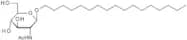
CAS:<p>Heptadecyl 2-acetamido-2-deoxy-b-D-glucopyranoside is a solubilized ion pair that can be catalysed by amines and immobilized lipase. It is also a hydrophobic fatty acid ester. Heptadecyl 2-acetamido-2-deoxy-b-D-glucopyranoside is catalyzed by an enzyme, lipase, to form the corresponding amide. This reaction yield is increased in the presence of hexane, which aids in hydrolysis of the ester linkage between heptadecyl and 2,2′-diacetylidenebis(3,4,6,-trimethylphenol). Heptadecyl 2-acetamido-2-deoxyglucopyranoside is used as a substrate for lipases to produce amides from amines. This product has been used in the production of</p>Formula:C25H49NO6Purity:Min. 95%Molecular weight:459.66 g/molDodecyl 2-acetamido-2-deoxy-b-D-glucopyranoside
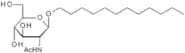
CAS:<p>Dodecyl 2-acetamido-2-deoxy-b-D-glucopyranoside is a synthetic glycosylate which has the potential to be used for the synthesis of various oligosaccharides and polysaccharides. It has a high purity and can be modified with various functional groups such as fluorination, methylation, acetylation, and click chemistry. Dodecyl 2-acetamido-2-deoxy-b-D-glucopyranoside is currently being researched as a treatment for cancer.</p>Formula:C20H39NO6Purity:Min. 95%Molecular weight:389.53 g/molCyclohexylpropanoyl-N-Hydroxyethylglucamide
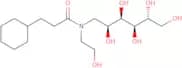
CAS:Cyclohexylpropanoyl-N-Hydroxyethylglucamide is a custom synthesis of a complex carbohydrate with high purity and high quality. This compound is an Oligosaccharide, Polysaccharide, and Modification. It is also a CAS No. 864434-14-0, Methylation, Glycosylation, Carbohydrate, Click modification, sugar and Fluorination. Cyclohexylpropanoyl-N-Hydroxyethylglucamide has been synthesized with Fluorination for use in the synthesis of new compounds.Formula:C17H33NO7Purity:Min. 95%Molecular weight:363.45 g/molDodecyl 2-acetamido-3,4,6-tri-O-acetyl-2-deoxy-b-D-glucopyranoside
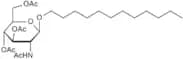
CAS:Dodecyl 2-acetamido-3,4,6-tri-O-acetyl-2-deoxy-b-D-glucopyranoside is a kinetic probe that can be used to measure the activity of cellular enzymes. The production of this probe is mediated by the enzyme profile and is influenced by kinetic parameters such as the substrate concentration, rate of reaction, and the concentrations of reactants. The profile can be determined by profiling experiments in which cells are grown with varying concentrations of substrate or varying rates of reaction. Dodecyl 2-acetamido-3,4,6-tri-O-acetyl-2-deoxyb -D -glucopyranoside can be used to study microorganisms such as bacteria and photosynthetic organisms that use polypeptides for catalysis. This probe can also be recycled to yield more probes for future experiments.Formula:C26H45NO9Purity:Min. 95%Molecular weight:515.64 g/molHexyl 2-acetamido-3,4,6-tri-O-acetyl-2-deoxy-b-D-glucopyranoside
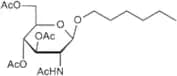
CAS:Hexyl 2-acetamido-3,4,6-tri-O-acetyl-2-deoxy-b-D-glucopyranoside is a compound that is used in the research of cellular biology. It was found to have a significant effect on gene expression levels. This compound has been shown to be able to alter the expression profile of cells and may be useful for understanding how different genes affect cell function. The high density microarray provides a highly sensitive and accurate way to measure changes in gene expression levels.Formula:C20H33NO9Purity:Min. 95%Molecular weight:431.48 g/molOctadecyl 2-acetamido-3,4,6-tri-O-acetyl-2-deoxy-b-D-glucopyranoside
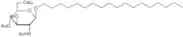
CAS:Octadecyl 2-acetamido-3,4,6-tri-O-acetyl-2-deoxy-b-D-glucopyranoside is a synthetic monosaccharide that has been modified with a click chemistry. It is also known as octadecyl 2-(N′,N′′-(diacetoxyacetyl)-2′,3′,4′,6′-triacetyl)alpha,alpha″-(1″→4″→1″)dideoxygalactopyranosiduronic acid. This compound is an oligosaccharide that consists of a chain of three sugar units and may have a glycosylation site at either position 1 or 4. Octadecyl 2-(N′,N′′-(diacetoxyacetyl)-2’,3’,4’,6’-triacetyl)alpha,alpha”-(Formula:C32H57NO9Purity:Min. 95%Molecular weight:599.8 g/molMethyl 2,3,4-tri-O-benzyl-L-rhamnopyranoside
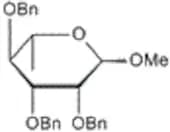
CAS:Methyl 2,3,4-tri-O-benzyl-L-rhamnopyranoside is a sugar that is used in the synthesis of oligosaccharides and saccharides. This compound has been shown to be an intermediate for the synthesis of benzylidene acetone phosphate, which can be used as a precursor for polymers that have potential use in biomedical applications.Formula:C28H32O5Purity:Min. 95%Molecular weight:448.55 g/molMethyl 3,5-di-O-(p-chlorobenzoyl)-2-keto-a-D-ribofuranoside
Methyl 3,5-di-O-(p-chlorobenzoyl)-2-keto-a-D-ribofuranoside is an organic compound that is a modification of an oligosaccharide. It is synthesized by the methylation and glycosylation of an aldose sugar. The modification occurs in the form of a fluorination and saccharide substitution on the original molecule. This compound has been shown to have complex carbohydrate properties, as well as being a monosaccharide and polysaccharide. It has been found to be useful in numerous applications such as drugs, industrial chemicals, and others.Purity:Min. 95%Octyl 2,3,4,6-tetra-O-acetyl-b-D-thioglucopyranoside
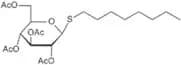
CAS:Octyl 2,3,4,6-tetra-O-acetyl-b-D-thioglucopyranoside is a chemical that is used to evaluate renal injury. It is typically detected in the urine of patients with renal injury and can be correlated with prognosis. Octyl 2,3,4,6-tetra-O-acetyl-b-D-thioglucopyranoside has been shown to be useful for the diagnosis of renal injury by detecting protein or body fluid in the reagents and assays. This substance is also used to detect protein in body fluids such as urine.Formula:C22H36O9SPurity:Min. 95%Color and Shape:White PowderMolecular weight:476.58 g/mol4-Methoxyphenyl 4-O-[6-O-(methyl 5-acetamido-4,7,8,9-tetra-O-acetyl-3,5-dideoxy-D-glycero-a-D-galacto-2-nonulopyranosylonate)-2,3-di -O-benzyl-b-D-galactopyranosyl]-2,3,6-tri-O-benzyl-b-D-glucopyranoside
<p>This is a custom synthesis of a polysaccharide.</p>Formula:C74H85NO24Purity:Min. 95%Molecular weight:1,372.46 g/mol4-Aminophenyl 2-acetamido-2-deoxy-b-D-glucopyranoside
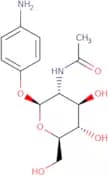
CAS:<p>4-Aminophenyl 2-acetamido-2-deoxy-b-D-glucopyranoside is a monosaccharide that belongs to the group of complex carbohydrates. It is a synthetic compound that has been modified by fluorination and methylation. 4-Aminophenyl 2-acetamido-2-deoxy-b-D-glucopyranoside has been used in the synthesis of polysaccharides and saccharides for various purposes, including as a fluorescence probe for carbohydrate binding proteins. It has also been used as an intermediate in the synthesis of oligosaccharides or polysaccharides.</p>Formula:C14H20N2O6Purity:Min. 95%Molecular weight:312.32 g/molMethyl 3-O-benzyl-4,6-O-benzylidene-2-deoxy-2-phthalimido-b-D-glucopyranose
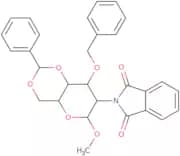
CAS:Methyl 3-O-benzyl-4,6-O-benzylidene-2-deoxy-2-phthalimido-b-D-glucopyranose is a synthetic chemical that is used in the modification of saccharides. It has been shown to be an efficient and economical way to introduce methyl groups into saccharide chains. This product is a white solid that is soluble in water, ethanol, and chloroform. Methyl 3-O-benzyl-4,6-O-benzylidene-2-deoxy -2 -phthalimido -b -D -glucopyranose has a molecular weight of 564.1 grams per mole and an empirical formula of C14H22N2O8P. It has CAS number 97276–96–5 and can be found under code XA0433.Formula:C29H27NO7Purity:Min. 95%Molecular weight:501.53 g/molD-Myo-inositol 1,4,5-triphosphate ammonium salt
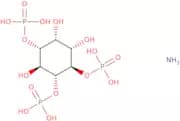
CAS:<p>D-Myo-inositol 1,4,5-triphosphate ammonium salt is a carbohydrate that can be synthesized from D-myo-inositol and phosphoric acid. D-Myo-inositol 1,4,5-triphosphate ammonium salt is a complex carbohydrate that has been fluorinated and glycosylated. It has been used as a synthetic intermediate in the synthesis of oligosaccharides and monosaccharides.</p>Purity:Min. 95%4-O-Acetyl-2,5-anhydro-1,3-O-isopropylidene-6-O-trityl-D-glucitol
CAS:4-O-Acetyl-2,5-anhydro-1,3-O-isopropylidene-6-O-trityl-D-glucitol is a custom synthesis of an oligosaccharide. It is a complex carbohydrate that has been modified by methylation and glycosylation. 4OATG has been fluorinated with 1,4 difluorobenzene and then reacted with Ac 2 O to make the glycosylate form. The compound was obtained in high purity and as a white solid.Formula:C30H32O6Purity:Min. 95%Molecular weight:488.57 g/mol2-Acetamido-1,3-di-O-acetyl-4,6-O-benzylidene-2-deoxy-D-glucopyranose
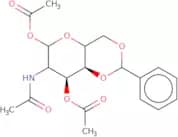
CAS:2-Acetamido-1,3-di-O-acetyl-4,6-O-benzylidene-2-deoxy-D-glucopyranose is a custom synthesized sugar with a high purity. It is used in glycosylation reactions and has been shown to be resistant to methylation reactions. This product can be modified by click chemistry, fluorination, and saccharide modification. It has been shown to be resistant to Methylation, Click Modification, Polysaccharide, Fluorination, and Saccharide Modification. This product is often used as an intermediate for the synthesis of complex carbohydrate oligosaccharides.Formula:C19H23NO8Purity:Min. 95%Color and Shape:White to off-white solid.Molecular weight:393.4 g/mol1,2,3,4,6-Penta-O-benzoyl-D-galactopyranoside
CAS:1,2,3,4,6-Penta-O-benzoyl-D-galactopyranoside is a custom synthesis of an oligosaccharide. It is a polysaccharide that is modified by methylation and glycosylation. This product has been fluorinated and has been modified with a click reaction. The final product is highly pure with a CAS number of 3006-48-2.Formula:C41H32O11Purity:Min. 95%Molecular weight:700.69 g/mol2,6-Di-O-Carboxymethyl-D-glucose
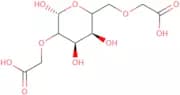
CAS:<p>2,6-di-O-carboxymethyl-D-glucose (2,6-CMG) is a modification of D-glucose. 2,6-CMG is a complex carbohydrate with CAS No. 95350-37-1 and has the molecular formula C8H14O9. It is an oligosaccharide that can be custom synthesized to meet customer specifications. 2,6-CMG has high purity and can be used as a sugar or polysaccharide. It also has been fluorinated to meet customer requirements. The glycosylation of 2,6-CMG is methylated and saccharides are then added to it in order to produce a monosaccharide or polysaccharide. This product can be used in the synthesis of glycoproteins and other biomolecules.</p>Formula:C10H16O10Purity:Min. 95%Color and Shape:Colourless LiquidMolecular weight:296.23 g/mol2,3,4,6-Tetra-O-acetyl-a-D-mannopyranosyl-(N2-Fmoc)-L-threonine pentafluorophenyl ester
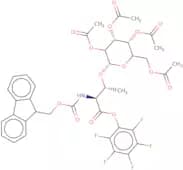
CAS:2,3,4,6-Tetra-O-acetyl-a-D-mannopyranosyl-(N2-Fmoc)-L-threonine pentafluorophenyl ester is a glycosylation reagent that can be used to synthesize oligosaccharides. This compound is the product of the reaction between 2,3,4,6-tetra-O-acetylmannose and L-(N2-Fmoc)-threonine. It has been modified with a fluorinated phenyl group at the C5 position as well as methylation at the C2 position. The purity of this compound is high (> 95%) and it is available for custom synthesis.Formula:C39F5H36NO14Purity:Min. 95%Molecular weight:837.71 g/mol2-Deoxy-1,3:4,5-di-O-isopropylidene-2-oxamoylamino-D-mannitol
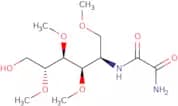
CAS:2-Deoxy-1,3:4,5-di-O-isopropylidene-2-oxamoylamino-D-mannitol is a synthetic glycosylation building block that has been fluorinated and custom synthesized. It is used for the synthesis of oligosaccharides and polysaccharides. This product is also used for click modification and complex carbohydrate modification. 2-Deoxy-1,3:4,5-di-O-isopropylidene-2-oxamoylamino D mannitol has a CAS number of 128741–75–3.Formula:C14H24N2O7Purity:Min. 95%Molecular weight:332.35 g/molMethyl 5-Acetamido-7,8,9-tri-O-acetyl-5-N,4-O-carbonyl-3,5-dideoxy-2-S-phenyl-2-thio-D-glycero-b-D-galacto-2-nonulopyranosylonate
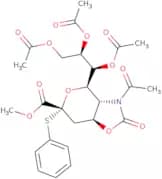
CAS:<p>Methyl 5-Acetamido-7,8,9-tri-O-acetyl-5-N,4-O-carbonyl-3,5-dideoxy-2-S-phenyl-2 -thio--D--glycero--b--D--galacto--2--nonulopyranosylonate is a methylated oligosaccharide that has been modified with the click reaction. This compound is a fluorinated saccharide and it is used for the synthesis of polysaccharides. The product has been custom synthesized and has a purity of >98%. It's an Oligosaccharide that is also a Carbohydrate. Methyl 5 Acetamido 7 8 9 Tri O Acetyl 5 N 4 O Carbonyl 3 5 Dideoxy 2 S Phenyl 2 Thio D Glycero B D Galacto 2 Nonulopyranosylonate can</p>Formula:C25H29NO12SPurity:Min. 95%Molecular weight:567.56 g/molFosinoprilat acyl-b-D-glucuronide
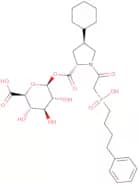
CAS:<p>Fosinoprilat acyl-b-D-glucuronide is a modified fosinoprilat which is an orally active, potent and long lasting inhibitor of angiotensin-converting enzyme (ACE) with a high degree of selectivity for ACE. It has been shown to be effective in the treatment of hypertension, congestive heart failure, and diabetic nephropathy. Fosinoprilat acyl-b-D-glucuronide has been synthesized by click modification from L-fosinoprilat. The carbohydrate moiety is attached to the methyl group of the amine group on the saccharide backbone. This drug exhibits low toxicity and good stability in vivo.</p>Formula:C29H42NO11PPurity:Min. 95%Molecular weight:611.62 g/mol4-Nitrophenyl 3,4,6-tri-O-acetyl-2-azido-2-deoxy-a-D-galactopyranoside
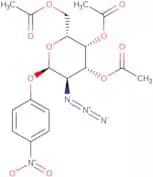
CAS:<p>4-Nitrophenyl 3,4,6-tri-O-acetyl-2-azido-2-deoxy-a-D-galactopyranoside is a synthetic compound that has been modified by glycosylation and fluorination. The modification of the sugar moiety with an acetyl group at position 4, 6 and 8 prevents the formation of disaccharides from the monosaccharides. This product is supplied as a white to off white powder for use in research applications. It has CAS number 1147438-51-4.</p>Formula:C18H20N4O10Purity:Min. 95%Molecular weight:452.37 g/molRhamnolipid
<p>Rhamnolipids are a class of biosurfactants which contain rhamnose as the sugar moiety linked to β-hydroxylated fatty acid chains. Rhamnolipids can be widely applied in many industries including; petroleum, food, agriculture and bioremediation etc.</p>Formula:C26H48O9Purity:(%) Min. 95%Color and Shape:Yellow PowderMolecular weight:504.65 g/mol1-O-(trans-3-Hydroxycotinine)-4-deoxy-4,5-didehydro-b-D-glucuronide methyl ester
CAS:1-O-(trans-3-Hydroxycotinine)-4-deoxy-4,5-didehydro-b-D-glucuronide methyl ester is a synthetic compound that is used as an intermediate in the synthesis of saccharides and oligosaccharides. It has been shown to be a potent inhibitor of glycosylation and can be used to modify complex carbohydrates. The chemical name for this compound is 1-[(trans)-3-hydroxycotinine]-4,5didehydrobis[deoxy]glucuronic acid methyl ester. This product should not be confused with 1-[(trans)-3 hydroxycotinine]-4,5 didehydro b D glucuronic acid methyl ester.Formula:C17H20N2O7Purity:Min. 95%Molecular weight:364.35 g/molMaltotetraose-APD-HSA
<p>Maltotetraose-APD-HSA is a complex carbohydrate with a high purity. Maltotetraose-APD-HSA is a synthetic oligosaccharide that has been modified by glycosylation, methylation, and fluorination. It is an alpha 1,4 linked maltotetraose that has been conjugated to HSA. Maltotetraose-APD-HSA has the CAS number 113789-04-8 and its molecular weight is 495.7 Da. Maltotetraose-APD-HSA can be found in the monosaccharides saccharide and carbohydrate categories.</p>Purity:Min. 95%N-(trans-3-Hydroxycotinine)-b-D-glucuronide methyl-D3
Controlled Product<p>N-(trans-3-Hydroxycotinine)-b-D-glucuronide methyl-D3 is a high purity synthetic oligosaccharide that can be used in the synthesis of complex carbohydrates. It is a glycosylation product of 3-hydroxycotinine, which is a fluorinated monosaccharide, and b-D-glucuronic acid, which is an Oligosaccharide. N-(trans-3-Hydroxycotinine)-b-D-glucuronide methyl-D3 has been shown to exhibit antibacterial activity against Gram positive bacteria such as Staphylococcus aureus and Clostridium perfringens.</p>Formula:C16H17D3N2O8Purity:Min. 95%Molecular weight:371.36 g/mol