Glycoscience
Glycoscience is the study of carbohydrates and their derivatives, as well as the interactions and biological functions they participate in. This field of research is crucial for understanding a wide variety of biological processes, including cell recognition, signaling, immune response, and disease development. Glycoscience has important applications in biotechnology, medicine, and the development of new drugs and therapies. At CymitQuimica, we offer a wide selection of high-quality, high-purity products for glycoscience research. Our catalog includes monosaccharides, oligosaccharides, polysaccharides, glycoconjugates, and specific reagents, designed to support researchers in their studies on the structure, function, and applications of carbohydrates in biological systems. These resources are intended to facilitate scientific discoveries and practical applications in various areas of bioscience and medicine.
Subcategories of "Glycoscience"
- Aminosugars(108 products)
- Glyco-Related Antibodies(282 products)
- Glycolipids(46 products)
- Glycosaminoglycans (GAGs)(55 products)
- Glycosides(419 products)
- Monosaccharides(6,624 products)
- Oligosaccharides(3,682 products)
- Polysaccharides(503 products)
Found 11046 products of "Glycoscience"
Sort by
Purity (%)
0
100
|
0
|
50
|
90
|
95
|
100
3,4,6-Tri-O-acetyl-a-D-glucopyranose 1,2-(methyl orthoacetate)
CAS:3,4,6-Tri-O-acetyl-a-D-glucopyranose 1,2-(methyl orthoacetate) is an iridoid glucoside. It has been shown to have a protective effect against eye disorders in rats and was found to have low toxicity in the eye. 3,4,6-Tri-O-acetyl-a-D-glucopyranose 1,2-(methyl orthoacetate) can be used for treatment of cardiac diseases such as heart disease. The compound may also be able to provide protection against neurologic impairment by inhibiting the production of free radicals due to its antioxidant properties.Formula:C15H22O10Purity:Min. 95%Color and Shape:PowderMolecular weight:362.33 g/molCyanomethyl-2,3,4,6-tetra-O-acetyl-a-D-thiomannopyranoside
CAS:Cyanomethyl-2,3,4,6-tetra-O-acetyl-a-D-thiomannopyranoside is a glycosylated thioglycoside that contains sulfur. It is used as an intermediate in the synthesis of 2′,3′,5′-trihydroxybenzaldehyde and 2′,3′,5′-trihydroxybenzoic acid.Purity:Min. 95%Phenyl 2,3,4,6-tetra-O-acetyl-a-D-glucopyranoside
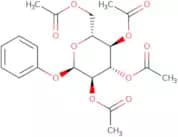
CAS:<p>Phenyl 2,3,4,6-tetra-O-acetyl-a-D-glucopyranoside is a custom synthesis of a monosaccharide. Phenyl 2,3,4,6-tetra-O-acetyl-a-D-glucopyranoside can be fluorinated and methylated to produce other compounds. It is also used in the modification of saccharides and oligosaccharides to produce polysaccharides. Phenyl 2,3,4,6-tetra-O-acetyl-a -D -glucopyranoside is soluble in water and has CAS No. 34274500.</p>Formula:C20H24O10Purity:Min. 95%Molecular weight:424.4 g/molD-Cellohexaose
CAS:<p>Substrate for β-glucosidase</p>Formula:C36H62O31Purity:Min. 95%Color and Shape:White Off-White PowderMolecular weight:990.86 g/molLewis Y tetrasaccharide-APE-HSA
<p>Lewis Y tetrasaccharide-APE-HSA is a synthetic, high purity glycosylated oligosaccharide. It is composed of a Lewis Y tetrasaccharide linked to an APE peptide and HSA. The Lewis Y tetrasaccharide has been custom synthesized with click modification and fluorination. The APE peptide has been modified with glycosylation and methylation. The HSA has been modified with glycosylation, methylation, and acetylation. The oligosaccharide was synthesized using the solid phase method on a CEM Liberty Star Column. This glycoconjugate is CAS No., which can be found at Pubchem CID: 10609300.</p>Purity:Min. 95%1,2,3-Tri-O-benzyl-4,6-O-(4-methoxybenzylidene)-b-D-glucopyranoside
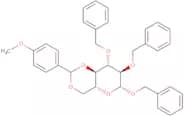
CAS:<p>1,2,3-Tri-O-benzyl-4,6-O-(4-methoxybenzylidene)-b-D-glucopyranoside is a synthetic compound that has been fluorinated and methylated. It is used as a glycosylation reagent for oligosaccharides, sugar and polysaccharides. The product is soluble in organic solvents such as acetone and chloroform. 1,2,3-Tri-O-benzyl-4,6-O-(4-methoxybenzylidene)-b-D-glucopyranoside is also a custom synthesis that can be modified to meet the specific needs of the customer.</p>Formula:C35H36O7Purity:Min. 95%Molecular weight:568.66 g/mol1,2,3-Tri-O-benzyl-b-D-galactopyranoside
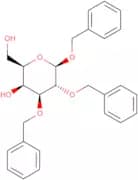
CAS:<p>1,2,3-Tri-O-benzyl-b-D-galactopyranoside is a benzoylated galactoside that is used as a chemical intermediate in the synthesis of other compounds. This compound reacts with benzoyl chloride to form benzoyl benzyl b-D-galactopyranoside. The reactivity of this compound can be seen in its reaction with dibutyltin, which leads to the formation of 1,2,3-tri-O-(benzyl)-b-D-(benzoyl)benzoin. This product has been shown to be effective in inhibiting enzyme activity and bacterial growth at equimolar concentrations.</p>Formula:C27H30O6Purity:Min. 95%Molecular weight:450.52 g/molBenzyl 2-acetamido-4,6-O-benzylidene-3-O-(carboxymethyl)-2-deoxy-a-D-glucopyranoside
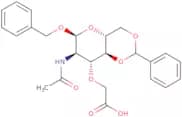
CAS:<p>Benzyl 2-acetamido-4,6-O-benzylidene-3-O-(carboxymethyl)-2-deoxy-a-D-glucopyranoside is a custom synthesized, complex carbohydrate. It is a polysaccharide that has been modified with methylation and glycosylation. This product can be used for research purposes only and cannot be used in diagnostic procedures.</p>Formula:C24H27NO8Purity:Min. 95%Molecular weight:457.47 g/mol3'-Sialyl Lewis x-HSA
3'-Sialyl Lewis x-HSA is a custom synthesis of a high purity, complex carbohydrate that has been modified to include fluorination. This product is synthesized from a monosaccharide and an oligosaccharide. It has been shown to have anti-inflammatory properties and is useful in the treatment of type II diabetes.Purity:Min. 95%Color and Shape:Powder1-O-tert-Butyldimethylsilyl-2-azido-2-deoxy-b-D-glucopyranoside
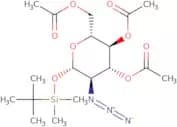
CAS:1-O-tert-Butyldimethylsilyl-2-azido-2-deoxy-b-D-glucopyranoside is a Carbohydrate, Modification, saccharide, Oligosaccharide, sugar that has been fluorinated and methylated. It is a custom synthesis. The CAS No. 99049-65-7 is 9904965.Formula:C12H25N3O5SiPurity:Min. 95%Molecular weight:319.43 g/molMetronidazole b-D-glucuronide
CAS:Metronidazole b-D-glucuronide is a glycosylated form of metronidazole that is rapidly hydrolyzed by esterases or glucuronidases to the parent drug. Metronidazole b-D-glucuronide has been shown to be an effective inhibitor of bacterial growth, which may be due to its inhibition of DNA synthesis. The drug also has anti-inflammatory and antiproliferative activity in vitro. Metronidazole b-D-glucuronide is a water soluble prodrug that is used as an antimicrobial agent for the treatment of infections caused by susceptible bacteria. It can be custom synthesized with high purity and good yield.Formula:C12H17N3O9Purity:Min. 95%Molecular weight:347.28 g/mol2-Isobutyramido guanosine 2',3',5'-tris(isobutanoate)
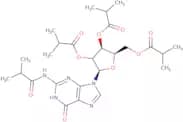
CAS:2-Isobutyramido guanosine 2',3',5'-tris(isobutanoate) is an oligosaccharide, which is a type of carbohydrate. The structure of this compound is composed of a sugar, the monosaccharide saccharide and the complex carbohydrate. This compound is synthesized by a click modification and fluorination reaction using 2-amino-2-deoxy-D-ribose as the starting material. The product contains glycosylation and methylation modifications.Formula:C26H37N5O9Purity:Min. 95%Molecular weight:563.6 g/mol3-Deoxy-D-ribose
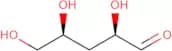
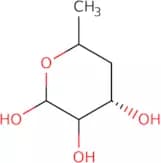
CAS:3-Deoxy-D-ribose is a monosaccharide with a molecular formula of CH(OH)CO. It is the 3-deoxy form of ribose and its pyranose ring has an oxygen atom at the 3 position. 3-Deoxy-D-ribose can be synthesized by periodate treatment of glyceric acid in the presence of hydrochloric acid, followed by hydrolysis to produce sorbose and then reaction with glycolaldehyde to produce D-glycero-D-galactopyranosyl bromide. The final step is conversion to 3-deoxyribose by reaction with aqueous ammonia. 3-Deoxyribose inhibits ribulose synthesis, which prevents the formation of an intermediate molecule required for the synthesis of fatty acids and phospholipids.Purity:Min. 95%4-Deoxy-L-fucose
CAS:<p>4-Deoxy-l-fucose is a molecule that has been found to inhibit the synthesis of gangliosides. It is an acetylated derivative of l-fucose and can be synthesized from ethyl 4-deoxy-D-glucuronate with the help of a multivorans enzyme. This molecule is metabolically unstable and reacts with oxygen to form a divalent alcohol that can be identified by magnetic resonance spectroscopy. 4-Deoxy-l-fucose inhibits the biosynthesis of gangliosides, which are important molecules in cell signaling, through its ability to inhibit enzymes such as acetyltransferase.</p>Formula:C6H12O4Purity:Min. 95%Color and Shape:White To Off-White SolidMolecular weight:148.16 g/mol4-Hydroxyestradiol 17-O-b-D-glucuronide
CAS:4-Hydroxyestradiol 17-O-b-D-glucuronide is a fluorinated methyl ether of estradiol, which is a polyketide natural product. It is used as an intermediate in the synthesis of complex carbohydrates. 4-Hydroxyestradiol 17-O-b-D-glucuronide is also known for its modification of saccharides and polysaccharides, including oligosaccharides and polysaccharides.Formula:C24H32O9Purity:Min. 95%Molecular weight:464.51 g/molMethyl a-L-arabinopyranoside
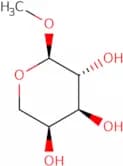
CAS:Methyl a-L-arabinopyranoside is an organic compound that has resonance configurations and can exist in two different stereoisomers. It can be synthesized by reacting 1,2-dichloroethane with glycerol and aqueous sodium hydroxide. The ethers of methyl a-L-arabinopyranoside are catalytic oxidation epoxides. Magnetic resonance analysis of the molecule has been done using nuclear magnetic resonance (NMR). Methylation of the compound will yield methyl ethers, which are obtained by reacting methyl a-L-arabinopyranoside with methanol and sodium methoxide in methanol.Purity:Min. 95%Methyl 2-deoxy-2-fluoro-D-arabinofuranoside
CAS:<p>Methyl 2-deoxy-2-fluoro-D-arabinofuranoside is a fluorinated sugar that is used as a building block for the synthesis of oligosaccharides and polysaccharides. It is also used in click chemistry to modify saccharides. This product has been purified to > 98% purity, and is available with custom synthesis.</p>Formula:C6H11FO4Purity:Min. 95%Molecular weight:166.15 g/molMethyl 2-deoxy-b-D-ribofuranoside
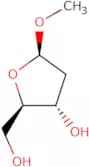
CAS:<p>Methyl 2-deoxy-b-D-ribofuranoside is a methylglucoside that is used in the synthesis of thiourea. Methyl 2-deoxy-b-D-ribofuranoside inhibits the production of an atypical nucleotide, 5'-methylthioadenosine, which is used to synthesize thymine. It has been shown to be catalytic and may play a role in the biosynthesis of methionine and histidine. The chloride ion causes the reaction to proceed via an S N 2 mechanism. Methyl 2-deoxy-b-D-ribofuranoside can also be used in the synthesis of chloroacetic acid, azide, dimethylformamide, fluoride, anomeric alcohols, hydantoins and thionyl chloride. Methyl 2-deoxy-b-D-ribofuranoside can be chromatographically separated using silica</p>Formula:C6H12O4Purity:Min. 95%Molecular weight:148.16 g/molD-Myo-inositol-1,3,5-triphosphate
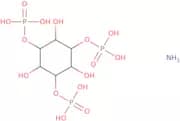
CAS:<p>D-myo-inositol-1,3,5-triphosphate is a carbohydrate that is modified with fluorine. It is a custom synthesis and can be synthesized in high purity. D-myo-inositol-1,3,5-triphosphate has several glycosylations and methylations. The modification of this compound includes click chemistry for the synthesis of oligosaccharides and saccharides. D-myo-inositol-1,3,5-triphosphate can be used as a sugar or an oligosaccharide in the modification of proteins or carbohydrates.</p>Purity:Min. 95%3-Deoxy-3-fluoro-D-myo-inositol
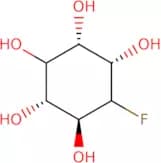
CAS:<p>3-Deoxy-3-fluoro-D-myo-inositol, also known as myo-inositol 3-O-(2'-deoxy) (dFMI), is a natural product found in the brain that has been shown to selectively inhibit the growth of trophozoites. It can bind to nonselective cations and block intracellular Ca2+ channels. This causes an increase in cytosolic Ca2+ concentration, which activates a cytosolic Ca2+ signal cascade. These effects show that dFMI is capable of inhibiting the growth of trophozoites by blocking the function of Ca2+ channels and increasing cytosolic Ca2+.</p>Formula:C6H11FO5Purity:Min. 95%Molecular weight:182.15 g/molL-Fucal
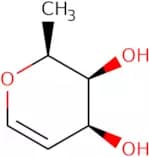
CAS:<p>L-Fucal is a chemical that belongs to the group of glycosidic bonds. It is synthesized by reacting ethyl diazoacetate with an activated hydroxyl group. L-Fucal has been shown to inhibit the growth of cancer cells and lymphocytic leukemia cells. It binds to the receptors on the surface of cancer cells and inhibits their growth by interfering with cellular metabolism and DNA synthesis.</p>Purity:Min. 95%1-O-tert-Butyldiphenysilyl-2-azido-4,6-O-benzylidene-2-deoxy-b-D-galactopyranoside
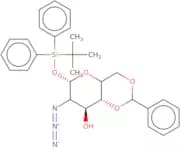
CAS:1-O-tert-Butyldiphenysilyl-2-azido-4,6-O-benzylidene-2-deoxy-b-D-galactopyranoside is a custom synthesis of an oligosaccharide. It is a modification of the original compound by fluorination, methylation and glycosylation. The molecular weight of 1BPSA is 522.08 g/mol and its CAS number is 132183-16-5. This product is soluble in water and can be used for the synthesis of complex carbohydrates.Formula:C29H33N3O5SiPurity:Min. 95%Molecular weight:531.68 g/molN-b-D-Glucopyranosyl-L-Asn
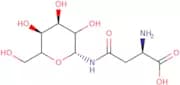
CAS:N-b-D-Glucopyranosyl-L-Asn is a complex carbohydrate that is modified by glycosylation and methylation. It is an Oligosaccharide, Polysaccharide, Modification, saccharide that can be synthesized from D-Glucose or D-Mannose. N-b-D-Glucopyranosyl-L-Asn has high purity and can be fluorinated for modification. This product can be used as a sugar and is also used in Click chemistry for modification.Formula:C10H18N2O8Purity:Min. 95%Molecular weight:294.26 g/molHydroxyterbinafine b-D-glucuronide
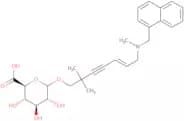
CAS:<p>Hydroxyterbinafine b-D-glucuronide is a synthetic monosaccharide that has been modified by the addition of a fluorine atom. Hydroxyterbinafine b-D-glucuronide is an oligosaccharide or polysaccharide, which is composed of at least two saccharides. It is obtained from the hydrolysis of methylated hydroxyterbinafine. This compound has been shown to have antiviral, antifungal and anticancer activities.</p>Formula:C27H33NO7Purity:Min. 95%Molecular weight:483.57 g/mol6,6'-Di-O-tert-butyldimethylsilyl-lactal
CAS:6,6'-Di-O-tert-butyldimethylsilyl-lactal is a synthetic glycosylation reagent that has been used in the synthesis of oligosaccharides and sugar derivatives. This compound is known to have a high purity and can be custom synthesized to meet your specifications. The fluorination reaction of this compound yields 6,6'-di-O-tert-butyldimethylsilyl-lactal, which can be methylated to yield 6,6'-di-O-methyl-lactal. The methylation reaction can be used to introduce a click modification onto the molecule. A complex carbohydrate is formed by the reaction of 6,6'-di-O-methyl lactal with other monosaccharide or polysaccharide. The saccharide group can also be modified with a click modification.Purity:Min. 95%2,3,4-Tri-O-acetyl-6-O-(2,3,4,6-tetra-O-acetyl-b-D-glucopyranosyl)-D-glucopyranose
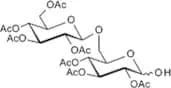
CAS:2,3,4-Tri-O-acetyl-6-O-(2,3,4,6-tetra-O-acetyl-b-D-glucopyranosyl)-D-glucopyranose is a synthetic sugar. It is a monosaccharide that is synthesized from 2,3,4,6 tetraacetyl b D glucopyranosyl b D glucose and triethylene glycol. This compound can be used in the synthesis of polysaccharides or complex carbohydrates.Formula:C26H36O18Purity:Min. 95%Molecular weight:636.55 g/mol1,2,3-Tri-O-benzoyl-4-deoxy-a-L-fucopyranose
CAS:<p>1,2,3-Tri-O-benzoyl-4-deoxy-a-L-fucopyranose is a carbohydrate that belongs to the group of oligosaccharides. It is a sugar that contains three benzoyl groups and one deoxyhexopyranose. This product can be custom synthesized and has high purity with no detectable impurities. 1,2,3-Tri-O-benzoyl-4-deoxy-a-L-fucopyranose can be used in the synthesis of glycoproteins and other complex carbohydrates by methylation and glycosylation methods. The product also has click modification capability.</p>Formula:C27H24O7Purity:Min. 95%Molecular weight:460.48 g/molL-Rhamnose bis(ethylsulfone)
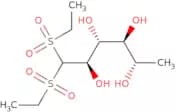
CAS:L-Rhamnose bis(ethylsulfone) is a custom synthesis that belongs to the class of saccharides. L-Rhamnose bis(ethylsulfone) is often used in the production of complex carbohydrates, such as polysaccharides and glycosylation. It has been modified with fluorination, methylation, and click modification. L-Rhamnose bis(ethylsulfone) can be used for the synthesis of oligosaccharides or saccharides by glycosylation.Formula:C10H22O8S2Purity:Min. 95%Molecular weight:334.41 g/mol3,5-Di-O-benzyl-2-deoxy-2-fluoro-D-ribono-1,4-lactone
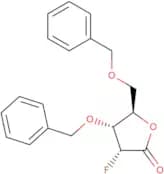
CAS:<p>Synthetic building block</p>Formula:C19H19FO4Purity:Min. 95%Color and Shape:PowderMolecular weight:330.35 g/mol1,2,3,4-Tetra-O-acetyl-β-D-ribopyranose
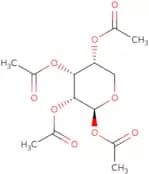
CAS:1,2,3,4-Tetra-O-acetyl-b-D-ribopyranose is a lipase inhibitor that belongs to the class of lipolytic enzymes. It has been shown to be an effective inhibitor of lipases and has demonstrated enantiopure selectivity for the hydrolysis of racemic mixtures. This substance is used in industrial processes as a surrogate for other more expensive substances. The 1,2,3,4-Tetra-O-acetyl-b-D-ribopyranose has been used as a screening tool to identify potential inhibitors of human pancreatic lipase. The results have shown that this compound inhibits the activity of this enzyme with high specificity and sensitivity.Formula:C13H18O9Purity:Min. 95%Color and Shape:PowderMolecular weight:318.28 g/molMethyl (methyl 3-deoxy-D-arabino-hept-2-ulopyranosid)onate
CAS:Methyl 3-deoxy-D-arabino-hept-2-ulopyranosid)onate is a custom synthesis of methylation, click modification, and oligosaccharide. It is an oligosaccharide that contains a saccharide linked to a monosaccharide. Methyl 3-deoxy-D-arabino-hept-2-ulopyranosid)onate is used in the synthesis of polysaccharides and complex carbohydrates. This product is characterized by high purity and low cost, making it ideal for research purposes.Formula:C9H16O7Purity:Min. 95%Molecular weight:236.22 g/molXylosyl-cellobiose
CAS:Xylosyl-cellobiose is a monosaccharide that was synthesized and modified by methylation, click modification, and fluorination. The compound has been shown to be complex carbohydrate and an oligosaccharide with a polysaccharide. It is a high-purity substance that can be used for the synthesis of saccharides, carbohydrates, or sugars. CAS No. 129865-02-7Purity:Min. 95%Molecular weight:476.43 g/molb-Core-APE-HSA
<p>b-Core-APE-HSA is a custom synthesis of an oligosaccharide. This product is a complex carbohydrate with a CAS number and the molecular weight range of 500 to 10,000 Daltons. It is a polysaccharide that has been modified by methylation or glycosylation. The saccharide in this product is either glucose or mannose and it can be modified using click chemistry, fluorination, or other modifications. This product has high purity and can be synthesized using synthetic techniques such as glycosylation or Methylation.</p>Purity:Min. 95%3,5-O-Benzylidene-L-lyxono-1,4-lactone
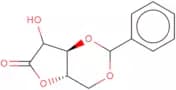
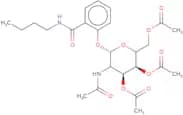
3,5-O-Benzylidene-L-lyxono-1,4-lactone is a custom synthesis that has been modified with fluorination, methylation and monosaccharide. This product is also synthesized from a saccharide and may be modified with glycosylation. These modifications will create an oligosaccharide or complex carbohydrate. 3,5-O-Benzylidene-L-lyxono-1,4-lactone can be found in the CAS registry number 177538-08-3.Formula:C11H10O5Purity:Min. 95%Molecular weight:222.2 g/mol2'-(N-Butylcarboamido)phenyl-2-acetamido-3,4,6-tri-O-acetyl-2-deoxy-b-D-glucopyranoside
<p>2'-(N-Butylcarboamido)phenyl-2-acetamido-3,4,6-tri-O-acetyl-2-deoxy-b-D-glucopyranoside is a glycosylation product that is custom synthesized for use in fluoroquinolone drug development. It is an acetamido derivative of 2'-phenylglycosides that undergoes fluorination and methylation to produce the desired compound. This product has been shown to be a potent inhibitor of bacterial cell wall synthesis by glycosylation of the peptidoglycan strands.</p>Formula:C25H34N2O10Purity:Min. 95%Molecular weight:522.54 g/molp -Coumaroyl L-arabinofuranoside
Coumaroyl L-arabinofuranoside is a glycosylation agent that has been used in the synthesis of complex carbohydrates, polysaccharides, and oligosaccharides. The compound can be fluorinated to give p-coumaroylfluoride. It is also possible to methylate the compound with methanol and methyl iodide. The compound can be modified by Click chemistry reactions to form a reactive ester or an amine. Coumaroyl L-arabinofuranoside is available as a CAS number and can be custom synthesized. It is available at high purity. !--Purity:Min. 95%6-O-tert-Butyldiphenylsilyl-3,4-O-isopropylidene-D-galactal
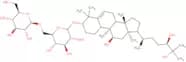
CAS:<p>6-O-tert-Butyldiphenylsilyl-3,4-O-isopropylidene-D-galactal is a synthetic monosaccharide that is used as a building block for the synthesis of complex carbohydrates. This product is also used in glycosylation reactions and click modification. It is available in high purity and can be custom synthesized to meet customer needs.</p>Purity:Min. 95%Mogroside II A2
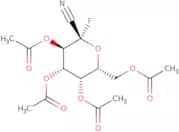
CAS:<p>Mogroside II A2 is a fructan that is found in the fruit of the plant Glycosmis erythrorhiza, which is a member of the family Rutaceae. This compound has been shown to have immune-modulating properties and is used as an ingredient in some pharmaceutical drugs. Mogroside II A2 has also been demonstrated to have antiviral activity and may be helpful for cancer treatment. The effects of this compound on kidney fibrosis are unclear; however, it does have anti-inflammatory properties.</p>Formula:C42H72O14Purity:Min. 95%Color and Shape:PowderMolecular weight:801.01 g/mol2,3,4,6-Tetra-O-acetyl-1-deoxy-1-fluoro-a-D-galactopyranosyl cyanide
CAS:2,3,4,6-Tetra-O-acetyl-1-deoxy-1-fluoro-a-D-galactopyranosyl cyanide is a glycosylation product that is used in synthetic chemistry research. It has been shown to be useful for the Click modification of proteins and polysaccharides. The sugar is obtained by custom synthesis and can be modified with fluorination or saccharide modificaitons. 2,3,4,6-Tetra-O-acetyl-1-deoxy-1-fluoro galactopyranosyl cyanide is also a complex carbohydrate that can be synthesized using monosaccharides or oligosaccharides. This compound can be purified to high purity and is available in different sizes.Formula:C15H18FNO9Purity:Min. 95%Molecular weight:375.3 g/molNaphthofluorescein di-O-(b-D-galactopyranoside)
CAS:Naphthofluorescein di-O-(b-D-galactopyranoside) is a fluorescent dye that is used in the study of polysaccharides, saccharides, and carbohydrates. This dye is a methylated derivative of naphthofluorescein with an additional sugar molecule attached to the fluorescing part. The chemical formula for this compound is C12H14N2O7 b-D-Galactopyranoside. The molecular weight of this compound is 542.3 g/mol. Naphthofluorescein di-O-(b-D-galactopyranoside) has CAS No. 133551-98-1 and can be found on the website of Chemical Abstracts Service (CAS).Formula:C40H36O15Purity:Min. 95%Molecular weight:756.7 g/mol2-Deoxy-3,4-O-isopropylidene-D-arabinopyranose
<p>2-Deoxy-3,4-O-isopropylidene-D-arabinopyranose is a synthetic sugar that has a high purity and can be custom synthesized. It is an oligosaccharide with a methylation and fluorination modification. This sugar can be used in glycosylation reactions to produce polysaccharides or complex carbohydrates. 2-Deoxy-3,4-O-isopropylidene-D-arabinopyranose is also used in click modifications. The CAS number for this compound is 5263038-92-2.</p>Purity:Min. 95%1,2,3,6,2',3',6'-Hepta-O-acetyl-4'-O-(2-acetamido-3,4,6-tri-O-acetyl-2-deoxy-a-D-galactopyranosyl)-b-D-lactopyranoside
This is an oligosaccharide that has been modified with a fluorinated saccharide. It is a complex carbohydrate that has been synthesized through custom synthesis and is high purity with a CAS No. This monosaccharide has been methylated and glycosylated, and it can be used in the synthesis of polysaccharides.Purity:Min. 95%Methyl 6-deoxy-2-O-methyl-a-D-galactopyranoside
CAS:<p>Methyl 6-deoxy-2-O-methyl-a-D-galactopyranoside is a custom synthesis that has been modified with fluorination, methylation and click chemistry. The product is a monosaccharide or oligosaccharide that is synthetic and can be used as a sugar or carbohydrate. It has CAS No. 59981-27-0 and can be found in Polysaccharides, Glycosylations, Carbohydrates, Complex Carbohydrates.</p>Formula:C8H16O5Purity:Min. 95%Molecular weight:192.21 g/mol2,3-O-Isopropylidene-5-O-trityl-D-ribofuranose
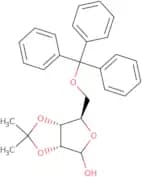
CAS:<p>2,3-O-Isopropylidene-5-O-trityl-D-ribofuranose is a metal complex that can be used as an antitumor agent. It has been shown to have antimicrobial activity against Gram positive and Gram negative bacteria and fungi. 2,3-O-Isopropylidene-5-O-trityl-D-ribofuranose is also active against Gram negative bacteria such as Escherichia coli and Pseudomonas aeruginosa. This compound is easily synthesized from acetoacetic acid by the reaction with trifluoroacetic anhydride followed by ammonolysis or azide coupling. The product is then amidated or tosylated to give the desired product.<br>2,3-O-Isopropylidene - 5 - O - trityl - D - ribofuranose has also been shown to inhibit tumor growth in</p>Formula:C27H28O5Purity:Min. 95%Color and Shape:SolidMolecular weight:432.51 g/molN-Acetyl-D-[UL-13C6]glucosamine
CAS:<p>N-Acetyl-D-[UL-13C6]glucosamine is a complex carbohydrate that contains a sugar at the end of a glycosidic bond. This product is modified with methylation, glycosylation, and fluorination. It has CAS No. 127959-06-2, High purity, and is custom synthesized for your specific needs.</p>Formula:C6C2H15NO6Purity:Min. 95%Molecular weight:227.21 g/mol1,2,3,4,6-Penta-O-acetyl-b-D-thioglucopyranose
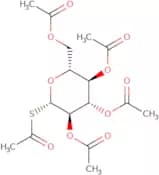
CAS:<p>1,2,3,4,6-Penta-O-acetyl-b-D-thioglucopyranose is a custom synthesis that is a complex carbohydrate. It is an Oligosaccharide which is a polysaccharide. The modification of saccharide with the CAS No. 13639-50-4 has been done by glycosylation and carbamylation. The glycogen molecule contains three glucoses and one galactose molecule that are linked by alpha 1,4 linkages. The first two glucose molecules are connected to each other by an alpha 1,4 linkage and the third glucose molecule is connected to the fourth glucose molecule through an alpha 1,6 linkage. The first two glucoses are also linked together by a beta 1,4 linkage. There are many ways in which this glycogen can be modified or synthesized including methylation and fluorination. This product has high purity and can be used in Click</p>Purity:Min. 95%6-O-Triisopropylsilyl-3,4-O-carbonyl-D-galactal
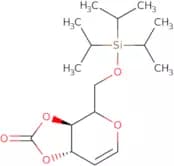
CAS:<p>6-O-Triisopropylsilyl-3,4-O-carbonyl-D-galactal is a synthetic sugar modification that can be obtained by the Click reaction of a glycosylation or methylation. It is used as an intermediate for the synthesis of oligosaccharides and monosaccharides. 6-O-Triisopropylsilyl-3,4-O-carbonyl-D-galactal has also been shown to be useful for the preparation of complex carbohydrates such as glycoconjugates and glycolipids.</p>Formula:C16H28O5SiPurity:Min. 95%Molecular weight:328.48 g/molMethyl 2,3-O-carbonyl-4,6-O-isopropylidene-a-D-mannopyranoside
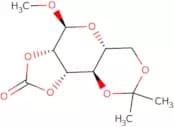
CAS:Methyl 2,3-O-carbonyl-4,6-O-isopropylidene-a-D-mannopyranoside is a custom synthesis of an oligosaccharide. It has a CAS No. 74948-73-5 and is a polysaccharide. The modification of the saccharide is methylation and glycosylation. Carbohydrate is the sugar in this compound. Click modification and fluorination are two synthetic modifications that have been done on the sugar molecule. This high purity product has a purity of 98% with a molecular weight of 587.Formula:C11H16O7Purity:Min. 95%Molecular weight:260.25 g/molN-Acetyl-glucosaminyl thiazoline triaacetate
CAS:<p>N-Acetyl-glucosaminyl thiazoline triaacetate is a custom synthesis that is fluorinated. It has been modified for methylation and Click chemistry. This chemical is an oligosaccharide, polysaccharide, saccharide, carbohydrate, or sugar. It is purified with high purity and has a monosaccharide modification. N-Acetyl-glucosaminyl thiazoline triaacetate is used in the modification of complex carbohydrates and can be synthesized from methylated glucosamine and acetamidomethylthiazoline.</p>Purity:Min. 95%k-Carratriose disulfate disodium salt
<p>k-carrageenan derived trisaccharide disulfate</p>Formula:C18H30O21S2•2NaPurity:Min. 95%Color and Shape:White PowderMolecular weight:692.51 g/mol













![N-Acetyl-D-[UL-13C6]glucosamine](/_next/image/?url=https%3A%2Fstatic.cymitquimica.com%2Fproducts%2F3D%2Fthumb-webp%2FMA44797.webp&w=3840&q=75)