Glycoscience
Glycoscience is the study of carbohydrates and their derivatives, as well as the interactions and biological functions they participate in. This field of research is crucial for understanding a wide variety of biological processes, including cell recognition, signaling, immune response, and disease development. Glycoscience has important applications in biotechnology, medicine, and the development of new drugs and therapies. At CymitQuimica, we offer a wide selection of high-quality, high-purity products for glycoscience research. Our catalog includes monosaccharides, oligosaccharides, polysaccharides, glycoconjugates, and specific reagents, designed to support researchers in their studies on the structure, function, and applications of carbohydrates in biological systems. These resources are intended to facilitate scientific discoveries and practical applications in various areas of bioscience and medicine.
Subcategories of "Glycoscience"
- Aminosugars(108 products)
- Glyco-Related Antibodies(282 products)
- Glycolipids(46 products)
- Glycosaminoglycans (GAGs)(55 products)
- Glycosides(419 products)
- Monosaccharides(6,624 products)
- Oligosaccharides(3,682 products)
- Polysaccharides(503 products)
Found 11046 products of "Glycoscience"
Sort by
Purity (%)
0
100
|
0
|
50
|
90
|
95
|
100
Neocarrahexadecaose-41,3,5,7,9,11,13,15-octa-O-sulfate sodium salt
CAS:<p>Neocarrahexadecaose-41,3,5,7,9,11,13,15-octa-O-sulfate sodium salt is a carbohydrate that belongs to the group of modified saccharides. It is synthesized by modifying a sugar with fluorine and methylation. Neocarrahexadecaose-41,3,5,7,9,11,13,15-octa-O-sulfate sodium salt is an oligosaccharide with a high purity and custom synthesis. It is a synthetic compound that has been modified in order to create methylated and glycosylated sugars as well as a click modification. This carbohydrate has not yet been tested for toxicity or side effects in humans.</p>Formula:C96H138Na8O97S8Purity:Min. 95%Molecular weight:3,284.51 g/molBenzyl 4-O-(2,3,4,6-tetra-O-benzyl-a-D-galactopyranosyl)-2,3-di-O-benzyl-b-D-galactopyranoside
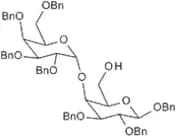
<p>Benzyl 4-O-(2,3,4,6-tetra-O-benzyl-a-D-galactopyranosyl)-2,3-di-O-benzylb -D-galactopyranoside is a Fluorination and Glycosylation product. It is a Custom Synthesis of Monosaccharide and Oligosaccharide. The CAS number for this product is 106835-99-8.</p>Formula:C61H64O11Purity:Min. 95%Molecular weight:973.15 g/molC-(2,3,4-Tri-O-acetyl-1-hydroxy-b-D-galactopyranosyl)formamide
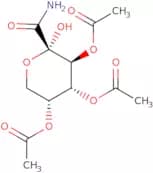
CAS:<p>C-(2,3,4-Tri-O-acetyl-1-hydroxy-b-D-galactopyranosyl)formamide (TRIGAL) is a methylated saccharide that is used to modify polysaccharides. It has been shown to be an effective sugar donor for glycosylation reactions and can be used for the synthesis of complex carbohydrates. TRIGAL is also fluorinated and provides a convenient way to modify oligosaccharides. This product has a high degree of purity and can be custom synthesized with any desired modification.</p>Formula:C12H17NO9Purity:Min. 95%Molecular weight:319.3 g/mol3,5-Bis-O-(2,4-Dichlorobenzyl)-2-C-methyl-a-D-ribofuranose
3,5-Bis-O-(2,4-Dichlorobenzyl)-2-C-methyl-a-D-ribofuranose is a custom synthesis that can be modified by fluorination, methylation, and monosaccharide or oligosaccharide addition. This sugar has a molecular weight of 476.28 g/mol and CAS No. 94629-04-0. It is a polysaccharide that is glycosylated with sugar at carbons 1 and 2. 3,5-Bis-O-(2,4-Dichlorobenzyl)-2-C-methyl-a-D-ribofuranose is used as an intermediate in the synthesis of complex carbohydrates such as Glycogenin A (CAS No. 94629 04 0), which has been shown to have antihyperglycemic effects.Purity:Min. 95%N-[(e-N-Benzyloxycarbonylamino)caproyl]-b-D-galactopyranosylamine
CAS:<p>N-[(e-N-Benzyloxycarbonylamino)caproyl]-b-D-galactopyranosylamine is a synthetic glycosaminoglycan. It is an oligosaccharide, which consists of sugar molecules linked together by glycosidic bonds. This product is custom synthesized and the purity is high. It can be used for various purposes, including research, medicine, and food production.</p>Formula:C20H31N3O7Purity:Min. 95%Molecular weight:425.48 g/molMethyl 1-thiolincosaminide
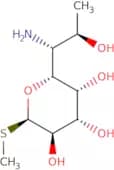
CAS:<p>Intermediate in the production of biosynthetic antibiotics</p>Formula:C9H19NO5SPurity:Min. 95%Molecular weight:253.32 g/molD-Myo-inositol 1,4,5-triphosphate ammonium salt
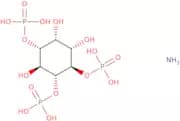
CAS:<p>D-Myo-inositol 1,4,5-triphosphate ammonium salt is a carbohydrate that can be synthesized from D-myo-inositol and phosphoric acid. D-Myo-inositol 1,4,5-triphosphate ammonium salt is a complex carbohydrate that has been fluorinated and glycosylated. It has been used as a synthetic intermediate in the synthesis of oligosaccharides and monosaccharides.</p>Purity:Min. 95%Agar
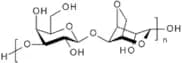
CAS:<p>The major gel forming component in agar, agarose, consists of a linear chain of sequences of 1,3 linked β-D-galactopyranosyl units and 1,4 linkages to 3,6-anhydro-α-L-galactopyranosyl units. Gelation is done via the formation of double helices (Arnott, 1974). Agar's properties are similar to gelatin as it is primarily used as a plating gel for microbial cultures (Lahaye, 1991). However, agar is a good substitute for animal-based gelatin in vegetarian foods and is easy to use in food gels in a similar way to the carrageenans. Common food applications of agar include: puddings, custards, and soft candies. Agar improves the texture of processed cheese and frozen desserts, and is also added to baked goods to inhibit staling. A creative food application uses agar-based gel cubes that are infused with fruit extract or wine to make a vegetable-based aspic (Armisén, 2009).<br>Agar contains two polysaccharides Agarobiose and Agaropectin. Both Gelidium latifolium and Gelidium amansii are sources of both Agar and Agarose. The images were kindly provided by Prof Mike Guiry from Cork who runs ‘The Seaweed Site’.<br>Agaropectin<br>Agaropectin is a sulphated non-gelling galactan comprising about 30% of Agar. Half ester sulphate is present in varying amounts plus D-glucuronic acid and small amounts of pyruvic acid. As with Agarose the main chain has alternating residues of D-galactose and L-galactose heavily modified with acidic side-groups which are usually sulfate, glucuronate, and pyruvate. Pyruvic acid is possibly attached in an acetal form to the D-galactose residues of the agarobiose skeleton. No formal structure of Agaropectin appears to have been published.<br>Agarose<br>Agarose is a linear gelling polysaccharide of (1-3) linked β-D-galactopyranose residues linked to 3,6-anhydro-α-L-galactopyranose via 1-4 bonds. Agar contains about 60% Agarose.</p>Purity:Min. 95%Color and Shape:PowderBenzyl 2,3-di-O-acetyl-4-deoxy-4-C-nitromethylene-b-D-arabinopyranoside
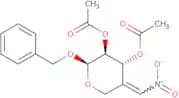
CAS:<p>Benzyl 2,3-di-O-acetyl-4-deoxy-4-C-nitromethylene-b-D-arabinopyranoside is a synthetic sugar. It is a complex carbohydrate with two saccharides and one monosaccharide. The saccharides are glucose and galactose, and the monosaccharide is arabinose. Benzyl 2,3-di-O-acetyl-4-deoxy-4C nitromethylene bD arabinopyranoside has been modified by fluorination, methylation, glycosylation and click chemistry to create a high purity product.</p>Formula:C17H19NO8Purity:Min. 95%Molecular weight:365.33 g/mol(R)-Ketoprofen b-D-glucuronide
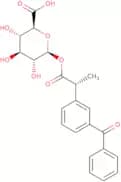
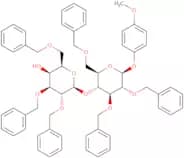
CAS:<p>(R)-Ketoprofen b-D-glucuronide is a synthetic modified sugar that is produced by the glucuronidation of ketoprofen, a nonsteroidal anti-inflammatory drug. The modification of ketoprofen with glucuronic acid can be achieved through an enzymatic process, which is catalyzed by UDP-glucuronyltransferase. This modification increases the solubility of ketoprofen and its ability to penetrate cells. (R)-Ketoprofen b-D-glucuronide has been shown to have antibacterial properties against Gram positive bacteria such as Staphylococcus aureus and Streptococcus pyogenes. It has also shown antiviral activity against HIV-1 due to its inhibition of reverse transcriptase, which is an enzyme important for viral replication.</p>Formula:C22H22O9Purity:Min. 95%Color and Shape:White to off-white solid.Molecular weight:430.4 g/mol4-Methoxyphenyl 4-O-(2,3,6-tri-O-benzyl-b-D-galactopyranosyl)-2,3,6-tri-O-benzyl-b-D-glucopyranoside
CAS:<p>4-Methoxyphenyl 4-O-(2,3,6-tri-O-benzyl-b-D-galactopyranosyl)-2,3,6-tri-O-benzyl-b-D-glucopyranoside is a sugar that is custom synthesized. It is fluorinated and modified with saccharides. The molecular weight of this compound is 582.06 g/mol and the CAS number for it is 15041281.</p>Formula:C61H64O12Purity:Min. 95%Molecular weight:989.15 g/molAbacavir 5'-β-D-glucuronide
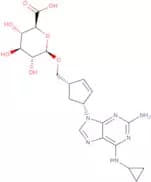
CAS:<p>Main metabolite of antiretroviral drug Abacavir with potent activity against human immunodeficiency virus type 1 (HIV-1). Abacavir is eliminated by hepatic metabolism to two major metabolites: 5’-glucuronide formed by uridine diphosphate glucuronyl transferase and 5’-carboxylate formed by cytosolic alcohol dehydrogenase.</p>Formula:C20H26N6O7Purity:Min. 95%Color and Shape:PowderMolecular weight:462.46 g/mol2,6-Di-O-acetyl-3,4-di-O-benzyl-a-D-mannopyranosyl trichloroactimidate
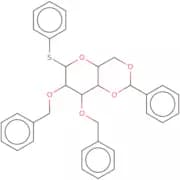
CAS:2,6-Di-O-acetyl-3,4-di-O-benzyl-a-D-mannopyranosyl trichloroactimidate is a synthetic, glycosylate sugar that can be used in the synthesis of oligosaccharides and polysaccharides. This molecule has been fluorinated to increase its lipophilicity and stability. It has been modified with methyl groups to improve its reactivity with other molecules. The purity of 2,6-Di-O-acetyl-3,4-di-O-benzyl-a-D-mannopyranosyl trichloroactimidate is greater than 98%.Formula:C26H28Cl3NO8Purity:Min. 95%Molecular weight:588.86 g/molPhenyl 2,3-di-O-benzyl-4,6-O-benzylidene-a-D-thiomannopyranoside
CAS:<p>Phenyl 2,3-di-O-benzyl-4,6-O-benzylidene-a-D-thiomannopyranoside is a complex carbohydrate that is synthesized by methylation and glycosylation of thiomannose. This product has been modified to contain a fluorinated substituent on the phenyl ring. Phenyl 2,3-di-O-benzyl-4,6-O-benzylidenea D thiomannopyranoside is soluble in water and has an HPLC purity of >99%.</p>Formula:C33H32O5SPurity:Min. 95%Molecular weight:540.67 g/molPhosphoric acid mono-((2R,3R,4S,5R)-2,3,4,5,7-pentahydroxy-6-hydroxyimino-heptyl) ester disodium salt (compound H)
Phosphoric acid mono-((2R,3R,4S,5R)-2,3,4,5,7-pentahydroxy-6-hydroxyimino-heptyl) ester disodium salt (compound H) is a high purity compound that can be custom synthesized to suit the customer's needs. It is a synthetically modified sugar with Click modification. This product has been fluorinated and glycosylated. Modification and methylation are also available on request.Formula:C7H14O10NPNa2Purity:Min. 95%Molecular weight:349.14 g/mol(2S- trans) -4- Hydroxy- N- methyl 2- pyrrolidinecarboxami de
CAS:<p>(2S- trans)-4-Hydroxy-N-methyl 2-pyrrolidinecarboxamide is a modification of the sugar molecule. It is a complex carbohydrate that belongs to the group of oligosaccharides. It has CAS number 143035-54-5 and can be synthesized in high purity with a glycosylation process. This chemical can also be fluorinated and saccharide substituted to create a wide range of products with different properties.</p>Purity:Min. 95%4-Methoxyphenyl 4-O-[3-O-(methyl 5-acetamido-4,7,8,9-tetra-O-acetyl-3,5-dideoxy-D-glycero-a-D-galacto-2-nonulopyranosylonate)-2,6-di -O-benzyl-b-D-galactopyranosyl]-2,3,6-tri-O-benzyl-b-D-glucopyranoside
<p>4-Methoxyphenyl 4-O-[3-O-(methyl 5-acetamido-4,7,8,9-tetra-O-acetyl-3,5-dideoxy-D-glycero-a-D-galacto--2--nonulopyranosylonate)-2,6--di -O--benzyl b D galactopyranosyl]-2,3,6--tri -O benzyl b D glucopyranoside is a glycosylation product of the monosaccharide 4 methoxyphenol and 4 O-[3 O methyl 5 acetamido 4 7 8 9 tetra O acetyl 3 5 dideoxy D glycero 2 a D galacto 2 nonulopyranosylonate] 2 6 di O benzyl b D galactopyranoside. It has been modified by fluorination at the C1</p>Formula:C74H85NO24Purity:Min. 95%Molecular weight:1,372.46 g/molBenzyl 2-acetamido-2-deoxy-4-O-(b-D-galactopyranosyl)-a-D-glucopyranoside
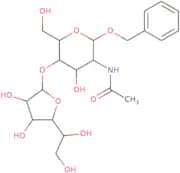
CAS:<p>Benzyl 2-acetamido-2-deoxy-4-O-(b-D-galactopyranosyl)-a-D-glucopyranoside is a custom synthesis, complex carbohydrate. It is an Oligosaccharide, Polysaccharide that has been modified and glycosylated. It has a CAS number of 81243-70-1. This product's purity is high and it is fluorinated. The product is synthetic and contains sugar.</p>Formula:C21H31NO11Purity:Min. 95%Molecular weight:473.47 g/molBlood group A type I tetrasaccharide
GalNAca1-3(Fuca1-2)Galb1-3GlcNAcFormula:C28H48N2O20Purity:Min. 95%Molecular weight:732.68 g/molD-Digitalose
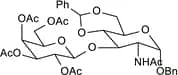
CAS:D-Digitalose is a cardenolide glycoside that was first isolated from the plant genus Digitalis. It is a molecule with two epoxide groups, which are chemical transformations of the original steroid glycosides. It has been shown to have cardiac activity and can be used as an ethanol extract in chemotherapy drug treatments. D-Digitalose has also shown to be effective against acuminatum, which is a type of fungus.Formula:C7H14O5Purity:Min. 95%Molecular weight:178.18 g/molBenzyl 2-acetamido-3-O-(2,3,4,6-tetra-O-acetyl-b-D-galactopyranosyl)-4,6-O-benzylidene-2-deoxy-a-D-glucopyranoside
<p>3-O-Benzyl-2,6-dideoxy-a-D-galactopyranosyl b benzylidene 4,6-O-(2,3,4,6-tetraacetyl)-a D glucopyranoside is a complex carbohydrate with a molecular weight of 1.097 grams per mole. It has been synthesized by the modification of the sugar unit with methylation and glycosylation to yield 3-O-(2,3,4,6 tetraacetyl)-b benzylidene 4,6 O-(2,3,4 6 tetra acetyl) a D glucopyranoside. The carbohydrate is then modified with fluorination to yield 3-O-(2 3 4 6 tetraacetyl)-b benzylidene 4 6 O-(2 3 4 6 tetra acetyl) a D glucopyranoside. This product is offered at high purity and custom synthesis</p>Formula:C36H43NO15Purity:Min. 95%Molecular weight:729.72 g/mol6-Azido-6-deoxy-D-mannose
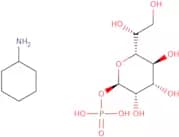
CAS:6-Azido-6-deoxy-D-mannose is a hexose sugar that has been implicated in the binding of lectins to glycoclusters. Lectins are carbohydrate binding proteins found on the surface of cells and some viruses, which bind to specific carbohydrates via their sugar moieties. This process is called lectinosis and it is sometimes used as a form of immune evasion by pathogens. 6-Azido-6-deoxy-D-mannose can be used as a linker to attach affinity ligands or affinity tags to glycoclusters, which are clusters of glycoconjugates that have an important biological function. 6AoDM also has anti-microbial properties, making it an opportunistic pathogen.Formula:C6H11N3O5Purity:Min. 95%Molecular weight:205.17 g/mol(D-Glycero-a-D-manno-heptopyranosyl)-dihydrogenphosphate cyclohexylammonium salt
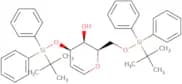
CAS:<p>The D-Glycero-a-D-manno-heptopyranosyl)-dihydrogenphosphate cyclohexylammonium salt, also known as Glyceroheptaose, is a complex carbohydrate. It is a white powder that can be used in the modification of polysaccharides, oligosaccharides, and saccharides. The CAS number for this substance is 359435-45-3.</p>Formula:C7H15O10P·C6H13NPurity:Min. 95%Molecular weight:389.34 g/mol3,6-Di-O-tert-butyldiphenylsilyl-D-galactal
CAS:3,6-Di-O-tert-butyldiphenylsilyl-D-galactal is an oligosaccharide that is a methylated and fluorinated derivative of the natural product D-galactal. The chemical structure of 3,6-di-O-tert-butyldiphenylsilyl-D-galactal is based on a beta-(1->4) linkage of two glucose residues with a terminal alpha-(1->3) linkage to form an alpha-(1->6) linkage. The compound is readily available in high purity, and can be custom synthesized to meet specific customer requirements for glycosylation, modification, or other special requests. 3,6-Di-O-tert-butyldiphenylsilyl--D--galactal has been shown in vitro to inhibit the growth of Mycobacterium tuberculosis and Mycobacterium avPurity:Min. 95%Promethazine N-b-D-glucuronide
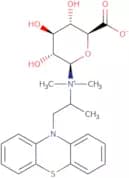
CAS:<p>Promethazine is a phenothiazine derivative that has antihistaminic, anticholinergic, and sedative properties. It is used as an antiemetic and to relieve allergy symptoms. Promethazine N-b-D-glucuronide is a custom synthesis of promethazine with methylation at the nitrogen atom on the side chain, click modification of the methyl group on the side chain, oligosaccharides attached to the nitrogen atom on the side chain, polysaccharide attached to the nitrogen atom on the side chain, saccharide attached to the nitrogen atom on the side chain, carbonyl group attached to the nitrogen atom on the side chain, fluorination at C5 position of sugar ring in promethazine N-b-D-glucuronide molecule, complex carbohydrate (sugar) in promethazine N-b-D-glucuronide molecule. Promethazine N-b-D-glucuron</p>Formula:C23H28N2O6SPurity:Min. 95%Molecular weight:460.54 g/mol1,3,4,6-Tetra-O-acetyl-2-O-nonafluorobutane-sulfonyl-b-D-mannopyranose
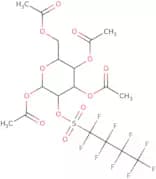
CAS:<p>1,3,4,6-Tetra-O-acetyl-2-O-nonafluorobutane-sulfonyl-b-D-mannopyranose is a fluorinated saccharide that can be custom synthesized. It is a glycosylated carbohydrate with a 1,3,4,6 tetra acetyl substitution at the 2 position of the b D mannopyranose moiety. The chemical formula for this compound is C12H28O8FS2. It has been shown to have potential as an antihyperglycemic agent and has been found to be active in tumor models.</p>Formula:C18H19O12SF9Purity:Min. 95%Molecular weight:630.39 g/mol1,4-Di-O-butanoyl-2,3:5,6-di-O-isopropylidene-D-myo-inositol
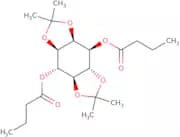
CAS:1,4-Di-O-butanoyl-2,3:5,6-di-O-isopropylidene-D-myo-inositol is a synthetic glycosylation product. It has no known biological activity and is not metabolized by the body. This product is used for complex carbohydrate synthesis, fluorination reactions, methylation reactions, and click modifications.Formula:C20H32O8Purity:Min. 95%Molecular weight:400.46 g/mola-D-Galactopyranosyl-(1-1)-a-D-galactopyranoside
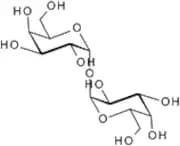
CAS:<p>a-D-Galactopyranosyl-(1-1)-a-D-galactopyranoside is a complex carbohydrate that belongs to the saccharides. It is an oligosaccharide that contains both a monosaccharide and a disaccharide. This compound is synthesized from sugar, which is obtained from sucrose. The sugar molecule has been modified with fluorination, methylation, glycosylation, and click chemistry. This product has high purity and can be custom synthesized for any specific requirements.</p>Formula:C12H22O11Purity:Min. 95%Molecular weight:342.3 g/mol[12-C13]-Lactose monohydrate
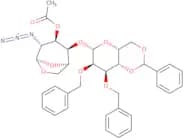
<p>Tool for studying carbohydrate metabolism</p>Formula:C12H22O11·H2OPurity:Min. 98 Area-%Color and Shape:White PowderMolecular weight:372.22 g/mol3-O-Acetyl-1,6-anhydro-2-azido-2',3'-di-O-benzyl-4',6'-O-benzylidene-2-deoxy-b-D-cellobiose
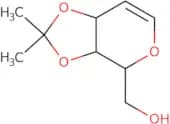
CAS:<p>3-O-Acetyl-1,6-anhydro-2-azido-2',3'-di-O-benzyl-4',6'-O-benzylidene-2-deoxy-b,D cellobiose is a fluorinated oligosaccharide that can be customized for a variety of applications. The sugar unit contains an acetyl group on the C1 position and an azido group at the C2 position. This compound has been subjected to click chemistry in order to form a covalent bond with 4,6'-O-benzylidene 2,3'-dideoxy b,D cellobiose.</p>Formula:C35H37N3O10Purity:Min. 95%Molecular weight:659.68 g/mol3,4-O-Isopropylidene-D-galactal
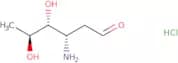
CAS:<p>3,4-O-Isopropylidene-D-galactal is a modified form of galactal. This compound is a methylated derivative of D-galactal that has been synthesized by the click reaction. It can be used in the synthesis of oligosaccharides and polysaccharides. 3,4-O-Isopropylidene-D-galactal is a high purity compound with a CAS number of 124477-12-9.</p>Purity:Min. 95%3-Amino-2,3,6-trideoxy-L-arabino-hexose hydrochloride
CAS:<p>3-Amino-2,3,6-trideoxy-L-arabino-hexose hydrochloride is a fluorinated sugar. It is synthesized by the fluorination of arabinose. This compound has a high degree of substitution and can be used for glycosylation reactions or modification reactions. 3-Amino-2,3,6-trideoxy-L-arabino-hexose hydrochloride has CAS number 56501-70-3 and is soluble in water.</p>Formula:C6H14ClNO3Purity:Min. 95%Color and Shape:SolidMolecular weight:183.63 g/molEthyl 2-O-benzoyl-4,6-O-benzylidene-D-thiomannopyranoside
CAS:<p>Ethyl 2-O-benzoyl-4,6-O-benzylidene-D-thiomannopyranoside is a glycosylation reagent that is used in the synthesis of oligosaccharides. This product has been fluorinated and methylated to provide high purity. The chemical name for this product is ethyl 2-O-benzoyl-4,6-O-(1,1'-biphenyl)-2,3,4,5,6 tetrahydroxy thiomannopyranoside. The CAS number for this compound is 153062-23-8.</p>Formula:C22H24O6SPurity:Min. 95%Color and Shape:PowderMolecular weight:416.49 g/molMethyl-O-b-D-glucopyranosyl-(1-3)-S-b-D-glucopyranosyl-(1-4)-O-4-thio-b-D-glucopyranosyl-(1-4)-b-D-glucopyranoside
CAS:<p>Methyl-O-b-D-glucopyranosyl-(1-3)-S-b-D-glucopyranosyl-(1-4)-O-4-thio-b-D-glucopyranosyl-(1,4)-b-D-[2] glucopyranoside is a synthetic saccharide with a single modification of 4'-fluoro substitution on the O6 position. This modification provides an increased stability to acid hydrolysis. Methylation and saccharide synthesis is performed in our lab and custom modifications are available upon request.</p>Formula:C25H44O20SPurity:Min. 95%Molecular weight:696.67 g/mol6,1',6'-Tri-O-tertbutyldiphenylsilyl-sucrose
CAS:<p>6,1',6'-Tri-O-tertbutyldiphenylsilyl-sucrose is a high purity, custom synthesis chemical. It is an oligosaccharide and complex carbohydrate that is a Click modification of sucrose. This chemical has been fluorinated, glycosylated, and methylated.</p>Purity:Min. 95%1,2,3,4,6-Penta-O-benzoyl-α-D-galactopyranose
CAS:<p>1,2,3,4,6-Penta-O-benzoyl-a-D-galactopyranose is a custom synthesis of an oligosaccharide with a glycosylation site that can be modified by the addition of other sugars. It has been fluorinated and methylated at the 6 position. The CAS number for this compound is 41545-55-5.</p>Formula:C41H32O11Purity:Min. 95%Color and Shape:PowderMolecular weight:700.69 g/molTolmetin acyl-b-D-glucuronide
CAS:Tolmetin acyl-b-D-glucuronide is a nonsteroidal anti-inflammatory drug that is metabolized to the active form, tolmetin, in the liver. The major route of elimination is through the kidneys as an inactive conjugate with glucuronic acid and excreted in urine. Tolmetin acyl-b-D-glucuronide has been shown to react with lysines on proteins in biological fluids by forming covalent adducts. This reaction can lead to allergic reactions and other problems.Formula:C21H23NO9Purity:Min. 95%Color and Shape:White to pale yellow solid.Molecular weight:433.41 g/mol4-Methoxyphenyl 3-O-allyl-2-O-benzyl-4,6-O-benzylidene-2-deoxy-b-D-galactopyranoside
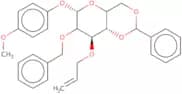
CAS:<p>4-Methoxyphenyl 3-O-allyl-2-O-benzyl-4,6-O-benzylidene-2-deoxy-b-D galactopyranoside is a fluorinated monosaccharide that is synthesized from allose. It has been modified with click chemistry to introduce a benzyl group at the C2 position and an allyl group at the C4 position. This compound has been glycosylated with glucose and methylated with methanol to produce a complex carbohydrate that can be used as a control for glycosylation reactions. The compound was purified to high purity using column chromatography.</p>Formula:C30H32O7Purity:Min. 95%Molecular weight:504.59 g/molα-D-Maltotetraose
CAS:<p>α-D-Maltotetraose is a natural carbohydrate that has been shown to have potential as an anticancer agent. It is an inhibitor of tumor-associated kinases and has been found to induce apoptosis in cancer cells. α-D-Maltotetraose has also been shown to inhibit streptokinase, an enzyme involved in the breakdown of blood clots. This carbohydrate analog has been detected in human urine and may play a role in regulating gastrin secretion. Studies have shown that α-D-Maltotetraose can inhibit the growth of Chinese hamster ovary cells, suggesting its potential as a novel anticancer therapy.</p>Formula:C24H42O21Purity:Min. 95%Molecular weight:666.6 g/mol2,3-Anhydro-4,6-O-benzylidene-N-(tert-butoxycarbonyl)-1,5-deoxy-1,5-imino-D-glucitol
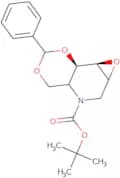
CAS:<p>2,3-Anhydro-4,6-O-benzylidene-N-(tert-butoxycarbonyl)-1,5-deoxy-1,5-imino-D-glucitol (NTB) is a synthetic glycoside that can be modified with a variety of functional groups for use in bioactive molecules. NTB is a high purity product with an estimated purity of >99%. It is synthesized from glucose by click modification with tertiary butyl bromoacetate followed by fluorination and glycosylation. The product has been shown to be useful in the synthesis of oligosaccharides and complex carbohydrates.</p>Formula:C18H23NO5Purity:Min. 95%Molecular weight:333.38 g/mol2,3,4-Tri-O-benzoyl-L-fucopyranosyl bromide
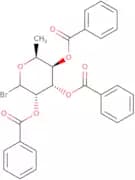
CAS:2,3,4-Tri-O-benzoyl-L-fucopyranosyl bromide is a synthetic compound that is used as a reagent in the synthesis of complex carbohydrates. It is also an intermediate in the synthesis of oligosaccharides and polysaccharides. This product can be modified by methylation, glycosylation and fluorination to generate desired products. The CAS number for this product is 855662-12-3.Formula:C27H23BrO7Purity:Min. 95%Molecular weight:539.37 g/molBenzyl 2-acetamido-4,6-di-O-acetyl-3-O-(2,3,4,6-tetra-O-acetyl-b-D-galactosyl)-2-deoxy-a-D-galactopyranoside
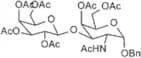
CAS:<p>This product is a custom synthesis. It is an acetamido-galactoside with a benzyl 2-acetamido-4,6-di-O-acetyl-3-O-(2,3,4,6-tetra-O-acetyl)-b-D-galactopyranoside moiety. This compound has been modified with fluorination and methylation. The molecular weight of this compound is 328.27 g/mol and the CAS number is 3809-10-7.</p>Formula:C33H43NO17Purity:Min. 95%Molecular weight:725.69 g/mol(2R,3S,4R)-3,4-Dihydroxypyrrolidine-2-carboxylic acid
CAS:<p>(2R,3S,4R)-3,4-Dihydroxypyrrolidine-2-carboxylic acid is a methylated compound that has been synthesized by the click modification of an oligosaccharide. It is used as an intermediate in the synthesis of saccharides and polysaccharides. This product can be used for the fluorination of complex carbohydrates and for the modification of monosaccharides or sugars. The purity level of this product is high and it has been modified to have a desirable property.</p>Formula:C5H9NO4Purity:Min. 95%Molecular weight:147.13 g/mol2-(L-Arabino-tetrahydroxybutyl)-4(R)-1,3-thiazolidine-4-carboxylic acid
CAS:2-(L-Arabino-tetrahydroxybutyl)-4(R)-1,3-thiazolidine-4-carboxylic acid is a synthetic compound that has been modified to include sugar groups. It can be used for the synthesis of oligosaccharides and monosaccharides. The carbohydrate group has been modified with fluorination, glycosylation, and methylation. This modification can be useful in the production of complex carbohydrates.Formula:C8H15NO6SPurity:Min. 95%Molecular weight:253.27 g/molPhenyl 2,4,6-tri-O-acetyl-3-O-benzyl-b-D-thioglucopyranoside
CAS:Phenyl 2,4,6-tri-O-acetyl-3-O-benzyl-b-D-thioglucopyranoside is a synthetic sugar that has been modified with three fluorine atoms. It is an intermediate in the synthesis of the Methylated Polysaccharides and Click Modifications. This product is a high purity, custom synthesis and can be used for glycosylation or to synthesize other carbohydrates.Formula:C25H28O8SPurity:Min. 95%Color and Shape:PowderMolecular weight:488.55 g/molBenzyl 4-O-a-D-glucosaminyl-b-D-xylopyranoside
Benzyl 4-O-a-D-glucosaminyl-b-D-xylopyranoside is a methylated saccharide. It is a product of the Click modification of an oligosaccharide with benzyl alcohol. Benzyl 4-O-a-D-glucosaminyl-b-D-xylopyranoside is produced by glycosylation of D-(+)-glucose with glucuronic acid and galactose. The product can be used as a synthetic building block for complex carbohydrate synthesis, fluorination, or click modification.Purity:Min. 95%4-Acetylphenyl 2,3,4,6-tetra-O-acetyl-b-D-glucopyranoside
CAS:<p>4-Acetylphenyl 2,3,4,6-tetra-O-acetyl-b-D-glucopyranoside is a diagnostic marker for cancer. It is an exosome biomarker that can be used to diagnose and measure the progression of cancer. The measurement of this substance provides a new way to detect and diagnose cancers. This compound has been found in diagnostics samples from patients with lung cancer, colorectal cancer, prostate cancer and breast cancer. 4-Acetylphenyl 2,3,4,6-tetra-O-acetyl-b-D-glucopyranoside is an example of a type of molecule called mirnas that regulate gene expression by binding to messenger RNA (mRNA). Mirnas are used as biomarkers in the diagnosis of cancers because they are over expressed or under expressed in cancers compared to normal cells.</p>Formula:C22H26O11Purity:Min. 95%Molecular weight:466.45 g/molMethyl 4,6-di-O-acetyl-2,3-carbonyl-b-D-mannopyranoside
CAS:Methyl 4,6-di-O-acetyl-2,3-carbonyl-b-D-mannopyranoside is a saccharide that is modified by the Click reaction with osmium tetroxide and methyl iodide. It can be used in glycosylation reactions to produce complex carbohydrates. This product is made of high purity and has a CAS No. 53958-22-8.Formula:C12H16O9Purity:Min. 95%Molecular weight:304.25 g/molNBD-Fructose
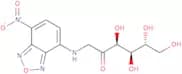
CAS:<p>Fluorescent substrate used to monitor fructose uptake</p>Formula:C12H14N4O8Purity:Min. 95%Molecular weight:342.26 g/mol2,3,4,6-Tetra-O-acetyl-b-D-galactopyranosyl-(N2-Fmoc)-L-threonine
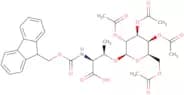
CAS:<p>Mecamylamine is a drug that binds to the active site of the acetylcholine esterase enzyme and prevents the breakdown of acetylcholine, which causes muscle contractions. Mecamylamine is used for the treatment of bowel disorders, such as diarrhoea. Randomised placebo-controlled trials have shown that mecamylamine is an effective treatment for chronic idiopathic constipation. The optimal dose and duration of treatment remain unclear, but it has been suggested that a cycle of 4 weeks on and 4 weeks off may be appropriate. Mecamylamine can cause adverse reactions, such as dizziness and blurred vision. It should not be used by people with asthma or other respiratory problems or by pregnant women.</p>Formula:C33H37NO14Purity:Min. 95%Molecular weight:671.65 g/mol


![N-[(e-N-Benzyloxycarbonylamino)caproyl]-b-D-galactopyranosylamine](/_next/image/?url=https%3A%2Fstatic.cymitquimica.com%2Fproducts%2F3D%2Fthumb-webp%2FMB04505.webp&w=3840&q=75)





![[12-C13]-Lactose monohydrate](/_next/image/?url=https%3A%2Fstatic.cymitquimica.com%2Fproducts%2F3D%2Fthumb-webp%2FOL57713.webp&w=3840&q=75)