Glycoscience
Glycoscience is the study of carbohydrates and their derivatives, as well as the interactions and biological functions they participate in. This field of research is crucial for understanding a wide variety of biological processes, including cell recognition, signaling, immune response, and disease development. Glycoscience has important applications in biotechnology, medicine, and the development of new drugs and therapies. At CymitQuimica, we offer a wide selection of high-quality, high-purity products for glycoscience research. Our catalog includes monosaccharides, oligosaccharides, polysaccharides, glycoconjugates, and specific reagents, designed to support researchers in their studies on the structure, function, and applications of carbohydrates in biological systems. These resources are intended to facilitate scientific discoveries and practical applications in various areas of bioscience and medicine.
Subcategories of "Glycoscience"
- Aminosugars(108 products)
- Glyco-Related Antibodies(282 products)
- Glycolipids(46 products)
- Glycosaminoglycans (GAGs)(55 products)
- Glycosides(419 products)
- Monosaccharides(6,624 products)
- Oligosaccharides(3,682 products)
- Polysaccharides(503 products)
Found 11046 products of "Glycoscience"
Sort by
Purity (%)
0
100
|
0
|
50
|
90
|
95
|
100
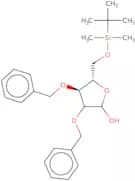
2,3-Di-O-benzyl-5-O-tert-butyldimethylsilyl-L-arabinofuranose
2,3-Di-O-benzyl-5-O-tert-butyldimethylsilyl-L-arabinofuranose is a silyl ether of an arabinofuranose. It is a glycosylation that can be used in the synthesis of complex carbohydrates. This product has been modified with methylation and click chemistry to introduce fluorine atoms on the sugar ring. This compound can also be used for the synthesis of oligosaccharides or saccharides. The CAS number for this product is 104085-96-2.Formula:C25H36O5SiPurity:Min. 95%Molecular weight:444.65 g/mol2-Acetamido-2-deoxy-a-D-galactopyranosyl-(N-Fmoc)-L-serine tert-butyl ester
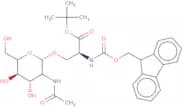
CAS:2-Acetamido-2-deoxy-a-D-galactopyranosyl-(N-Fmoc)-L-serine tert-butyl ester is an oligosaccharide that is used in the synthesis of complex carbohydrates. It can be modified at different positions with methyl or fluorine to produce a range of complex carbohydrate derivatives. The 2DG monosaccharide can be glycosylated at the 2 position with glucose, galactose, mannose, fucose, and sialic acid to form polysaccharides. The polymerization reaction produces polymers such as chitin and cellulose. 2DG is also known as DGlcNAc, which is a sugar that is found in glycosphingolipids such as gangliosides and cerebrosides. This modification protects cells from damage by reactive oxygen species and has anti-inflammatory properties.Formula:C30H38N2O10Purity:Min. 95%Molecular weight:586.63 g/molPhenyl 2-O-benzyl-a-L-thiorhamnopyranoside
CAS:<p>Phenyl 2-O-benzyl-a-L-thiorhamnopyranoside (PTBP) is a synthetic glycosylation product. It is used as a monosaccharide building block for oligosaccharides and polysaccharides. PTBP exhibits high purity, custom synthesis capability, and is available in bulk quantities.</p>Formula:C19H22O4SPurity:Min. 95%Molecular weight:346.44 g/mol2N-Boc-4N-(2-acetamido-2-deoxy-3,4,6-tri-O-acetyl-b-D-glucopyranosyl)-L-asparagine-O-benzyl ester
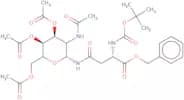
<p>Glycosylation is the process of adding glycosyl groups to a molecule. This process is essential for the synthesis of complex carbohydrates, which are essential in cell membranes and other biological structures. Methylation is the addition of one or more CH3 groups to a compound. Click chemistry is a type of chemical reaction that is used when an orthogonal protection strategy is required. Polysaccharides are long chains of sugar molecules linked together by glycosidic bonds. Fluorination is the introduction of fluorine into organic molecules to modify their properties. Saccharide refers to any sugar, especially monosaccharides and oligosaccharides. Modification refers to the altering of a molecule by adding or removing functional groups, such as methyl groups or glycosyl groups. Sugar refers to any carbohydrate that contains two hydroxyl (OH) groups on adjacent carbons and includes monosaccharides and oligosaccharides. Synthetic means artificially made by humans</p>Formula:C30H41N3O13Purity:Min. 95%Molecular weight:651.67 g/molCurcumin b-D-glucuronide
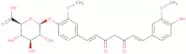
CAS:<p>Curcumin b-D-glucuronide is a glucuronide conjugate of the curcumin molecule. It has been shown to have anticancer activity in mouse tumor models and human metastatic colorectal cancer cell lines by inducing apoptosis. Curcumin b-D-glucuronide is metabolized by the liver microsomes of rats, and thus may be useful for the prevention of colon cancer. Curcumin b-D-glucuronide also has anti-inflammatory properties that are due to its inhibition of prostaglandin E2 (PGE2) levels in humans.</p>Formula:C27H28O12Purity:85%MinMolecular weight:544.158082-Acetamido-1,3-di-O-benzyl-4,6-O-benzylidene-2-deoxy-b-D-glucopyranoside
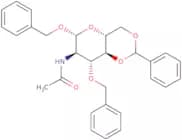
CAS:2-Acetamido-1,3-di-O-benzyl-4,6-O-benzylidene-2-deoxy-b-D-glucopyranoside is a modification of a carbohydrate. It is a complex carbohydrate that has been synthesized by custom synthesis. It is an oligosaccharide with high purity and monosaccharides methylated at the hydroxyl group. The glycosylation and polysaccharide have been synthesized with fluorination and saccharides.Formula:C29H31NO6Purity:Min. 95%Molecular weight:489.56 g/molStigmasterol glucoside
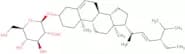
CAS:<p>Stigmasterol glucoside is a phenolic compound that has been isolated from the aerial parts of the plant Stachytarpheta jamaicensis. It has inhibitory properties against Gram-positive and Gram-negative bacteria, including methicillin-resistant Staphylococcus aureus. In addition, it has shown to have significant cytotoxicity against human colon cancer cells.<br>Stigmasterol glucoside is soluble in water and shows phase transition at about 60 °C. The chemical structure of stigmasterol glucoside contains a hydroxybenzoic acid group, which can form an ester with an organic acid such as acetic acid or benzoic acid. The hydroxyl group present in this compound can also react with an amine to form an amide bond. This reactivity may be responsible for its biological activities.</p>Formula:C35H58O6Purity:Min. 95%Molecular weight:574.83 g/mol2,3,4,6-Tetra-O-acetyl-b-D-galactopyranosyl-(N2-Fmoc)-L-Asparagine tert-butyl ester
CAS:2,3,4,6-Tetra-O-acetyl-b-D-galactopyranosyl-(N2-Fmoc)-L-Asparagine tert-butyl ester is an oligosaccharide with a high purity. It has shown to be stable in the presence of acid and basic conditions. This product can be used in Click chemistry and glycosylation reactions. The molecular weight is 581.5 Da and the CAS number is 467465-72-1.Formula:C37H44N2O14Purity:Min. 95%Molecular weight:740.75 g/mol1,2-Dideoxy-2'-pyrrolidin-1-yl-a-D-glucopyranoso-[2,1-d]-2'-thiazoline
<p>1,2-Dideoxy-2'-pyrrolidin-1-yl-a-D-glucopyranoso-[2,1-d]-2'-thiazoline is a custom synthesis. It is an organic compound with the molecular formula C8H8F4N4O3S. The compound contains a chiral center and consists of four stereoisomers.<br>The 1,2-Dideoxy-2'-pyrrolidin-1-yl glycosides are methylated at the 3' position of the sugar moiety by a methyl group from S-(+)-mandelic acid in order to form the corresponding methyl ester. This reaction takes place in presence of sodium methoxide (NaOMe) as a base and potassium carbonate (KCO3) as a catalyst. This process is known as Click modification and it proceeds under mild conditions without any hazardous reagents or solvents. The resulting product</p>Purity:Min. 95%1,2,3,4,6-Penta-O-benzoyl-b-D-galactopyranose
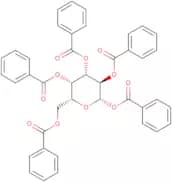
CAS:Penta-O-benzoyl-b-D-galactopyranose is a pentasaccharide that has been shown to have an inhibitory effect on the growth of corynebacterium, which may be due to its ability to modulate fatty acid synthesis. Penta-O-benzoyl-b-D-galactopyranose is a disaccharide that is used as a diagnostic agent for corynebacteria. It is also used as a growth factor in the production of Corynebacterium glutamicum. The safety profile of this drug has not been evaluated in humans.Formula:C41H32O11Purity:Min. 95%Molecular weight:700.71 g/mol2,3,4-Tri-O-acetyl-a-D-arabinopyranosyl cyanide
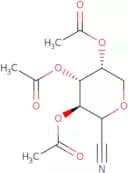
2,3,4-Tri-O-acetyl-a-D-arabinopyranosyl cyanide is a synthetic compound that is used to synthesize complex carbohydrates. This product can be customized for customers' needs and has high purity.Purity:Min. 95%1-Deoxy-1-vinylsulfonamido-b-D-glucuronide
1-Deoxy-1-vinylsulfonamido-b-D-glucuronide is a synthetic sugar. It is a member of the group of compounds called sulfonamides. This drug has high purity, and can be custom synthesized to meet specific requirements. 1-Deoxy-1-vinylsulfonamido-b-D-glucuronide is used in the synthesis of oligosaccharides, monosaccharides, and saccharides.Purity:Min. 95%2-Acetamido-4-O-(2-acetamido-3,6-di-O-acetyl-2,4-dideoxy-b-D-glucopyranosyl)-1,3,6-tri-O-benzyl-2-deoxy-b-D-glucopyranoside
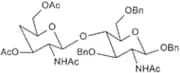
<p>2-Acetamido-4-O-(2-acetamido-3,6-di-O-acetyl-2,4-dideoxy-b-D-glucopyranosyl)-1,3,6-tri-O-benzyl-2-deoxy -bDglucopyranoside is a methylated oligosaccharide. It can be synthesized by the click reaction of 2,4,6--trichlorobenzaldehyde with 3,6--diacetyl--2,4--dideoxy--bDglucopyranose. This compound has an acetamido group on C3 and a benzoyl group on C6. The molecular weight of this compound is 1076 g/mol.</p>Formula:C41H50N2O12Purity:Min. 95%Molecular weight:762.84 g/molEthyl 2,3,4-tri-O-benzoyl-b-D-thioglucopyranosiduronic acid methyl ester
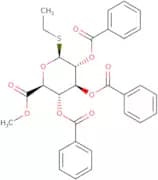
CAS:<p>Ethyl 2,3,4-tri-O-benzoyl-b-D-thioglucopyranosiduronic acid methyl ester is a modification to the sugar molecule. It is an oligosaccharide that has been synthesized and modified by methylation, glycosylation, and fluorination. The CAS number for this compound is 302965-09-9. This compound has a high purity and can be used in various types of research including the synthesis of complex carbohydrates.</p>Formula:C30H28O9SPurity:Min. 95%Molecular weight:564.6 g/molMirabegron O-glucuronide
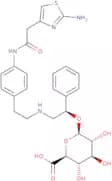
CAS:<p>Mirabegron is a drug that has been used to treat overactive bladder and urinary incontinence. Mirabegron is an agonist of the beta-3 adrenergic receptor and increases the levels of cAMP in cells by binding to this receptor. This leads to relaxation of smooth muscle tissue, which decreases resistance in the bladder and urethra and promotes urine storage. Mirabegron O-glucuronide is a metabolite of mirabegron that can be detected in urine using mass spectrometry methods. Mirabegron O-glucuronide has been found in human liver samples following oral administration, as well as in human blood samples after intravenous administration.</p>Purity:Min. 95%Benzyl 2-acetamido-3,4,6-tri-O-acetyl-2-deoxy-a-D-galactopyranoside
CAS:<p>Benzyl 2-acetamido-3,4,6-tri-O-acetyl-2-deoxy-a-D-galactopyranoside is a custom synthesis of a complex carbohydrate. It reacts with the terminal hydroxyl group of an oligosaccharide to form an ether bond and also has fluorescent properties.</p>Formula:C21H27NO9Purity:Min. 95%Molecular weight:437.44 g/molN6-Isopentenyladenine-7-glucoside
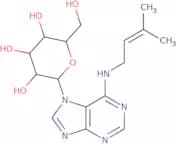
CAS:N6-Isopentenyladenine-7-glucuronide is a synthetic monosaccharide that is used in the synthesis of complex carbohydrates. It is also a fluorinated compound that has been modified to form a glucuronide, which is an organic compound with a sugar and an alcohol group. N6-Isopentenyladenine-7-glucuronide can be used as a raw material for the production of oligosaccharides and polysaccharides, which are complex carbohydrates. This product can be custom synthesized to meet different requirements. It is available in high purity and the CAS number for this product is 59384-58-6.Formula:C16H23N5O5Purity:Min. 95%Molecular weight:365.38 g/mol5-Deoxy-D-xylose
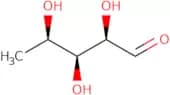
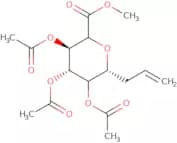
CAS:<p>5-Deoxy-D-xylose is a metabolite that is produced as a byproduct of the metabolism of l-arabinose. It can be found in urine, saliva, and cerebrospinal fluid. 5-Deoxy-D-xylose has been shown to have a role in mediating the effects of nitroacetate and hydrogen fluoride on nitric oxide synthase. This compound also has an anti-inflammatory effect, which may be due to its ability to inhibit the production of neopterin. The isomers form from 5-deoxy-D-xylose are tautomeric with each other and their optical isomers are chemically different from one another. 5-Deoxy-D-xylose can exist as a cyclic form or as an open chain form.</p>Formula:C5H10O4Purity:Min. 95%Molecular weight:134.13 g/molMethyl 3,4,5-tri-O-acetyl-2,6-anhydro-7,8,9-trideoxy-D-glycero-L-galacto-non-8-enonate
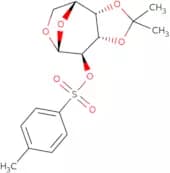
<p>Methyl 3,4,5-tri-O-acetyl-2,6-anhydro-7,8,9-trideoxy-D-glycero-L-galacto-non-8-enonate is a modification of an oligosaccharide. It is a complex carbohydrate with a custom synthesis. Methyl 3,4,5-tri-O-acetyl-2,6,-anhydro-,7,8,9-,trideoxy-,D-,glycero L galacto non 8 enonate is an Oligosaccharide with high purity and CAS No. It is a monosaccharide that has been methylated and glycosylated. Methyl 3,4,5,-tri O acetyl 2 6 anhydro 7 8 9 trideoxy D glycero L galacto non 8 enonate is Polysaccharide made up of sugar and</p>Formula:C16H22O9Purity:Min. 95%Molecular weight:358.35 g/mol1,6-Anhydro-3,4-O-isopropylidene-2-O-p-toluenesulfonyl-b-D-galactopyranose
CAS:<p>1,6-Anhydro-3,4-O-isopropylidene-2-O-p-toluenesulfonyl-b-D-galactopyranose is a custom synthesis, complex carbohydrate that has been modified by methylation and glycosylation. It is an Oligosaccharide with CAS No. 81028-98-0. This compound is also a Polysaccharide with Modification and saccharide, which can be found in Methylation and Glycosylation. The compound is a Carbohydrate with Click modification, sugar, High purity and Fluorination.</p>Formula:C16H20O7SPurity:Min. 95%Color and Shape:Off-White SolidMolecular weight:356.39 g/mol10,11-Dihydro-10-hydroxycarbamazepine O-b-D-glucuronide
CAS:<p>10,11-Dihydro-10-hydroxycarbamazepine O-b-D-glucuronide is a sugar that is synthesized by the modification of 10,11-dihydrocarbamazepine. It has been shown to inhibit the growth of Mycobacterium tuberculosis in a dose dependent manner. This compound has also been shown to inhibit the synthesis of DNA and RNA in bacterial cells, which may be due to its ability to inhibit glycosylation and methylation reactions.</p>Formula:C21H22N2O8Purity:Min. 95%Molecular weight:430.41 g/mol31-β-D-Cellobiosyl-glucose
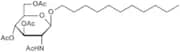
CAS:31-β-D-cellobiosyl-glucose is a Modification product that is an oligosaccharide. It has a CAS number of 32581-36-5 and can be custom synthesized. This product has a purity of high and is an oligosaccharide. 31-β-D-cellobiosyl-glucose is a complex carbohydrate that belongs to the group of carbohydrates, sugars, and saccharides. It has been fluorinated and glycosylated. 31-β-D-cellobiosyl-glucose is methylated and polysaccharide. This product can be made in our lab with a high degree of purity and it comes in the form of monosaccharide which can also be custom synthesized by our team.Formula:C18H32O16Purity:Min. 95%Molecular weight:504.4 g/molUndecyl 2-acetamido-3,4,6-tri-O-acetyl-2-deoxy-b-D-glucopyranose
CAS:Undecyl 2-acetamido-3,4,6-tri-O-acetyl-2-deoxy-b-D-glucopyranose is a custom synthesis and modification of a carbohydrate that is used as a saccharide. It can be found in polysaccharides and oligosaccharides. This product has been modified with fluorination, methylation, glycosylation, and carbonylation. Undecyl 2-acetamido-3,4,6-tri-O-acetyl-2-deoxyb -D -glucopyranose is not currently CAS No. 1737252401 but is available for purchase on request.Formula:C25H43NO9Purity:Min. 95%Molecular weight:501.61 g/mol5-O-Benzyl-1-deoxy-D-xylulose
CAS:<p>5-O-Benzyl-1-deoxy-D-xylulose is a sugar which is obtained by the catalytic hydrogenolysis of 5-o-benzyl-1,5-pentanediol. It is an intermediate in the synthesis of xylitol from sorbitol and can be used in the production of benzaldehyde. The reaction mechanism involves aldol condensation with elimination of water to form hydroxyacetone, followed by chemoenzymatic dehydration to give 1,5 pentanediol. This compound is also used as an intermediate for the synthesis of D-xylulose.</p>Formula:C12H16O4Purity:Min. 95%Molecular weight:224.25 g/molCyanidin-3-O-coumaroyl sambubioside-5-glucoside
<p>This is a custom synthesis of Cyanidin-3-O-coumaroyl sambubioside-5-glucoside. The synthesis is based on the modification of an existing sugar in order to produce a fluorinated, methylated, and monosaccharide. The sugar is then modified with a click chemistry modification to produce the desired oligosaccharide.</p>Formula:C43H45O24F3Purity:Min. 95%Color and Shape:PowderMolecular weight:1,002.8 g/mol2,3,4,6-Tetra-O-acetyl-D-gluconolactone
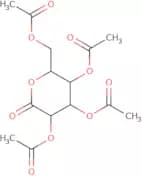
CAS:2,3,4,6-Tetra-O-acetyl-D-gluconolactone is a carbohydrate that is used as an antioxidant. It is an ester of butanol and 2,3,4,6-tetra-O-acetyl-D-gluconic acid and has been shown to have chain transfer properties. This compound is also soluble in organic solvents such as methylene chloride and ethylzinc. 2,3,4,6-Tetra-O-acetyl-D-gluconolactone can be used in the synthesis of a number of different compounds including polyesters and polyamides.Formula:C14H18O10Purity:Min. 95%Color and Shape:White To Off-White SolidMolecular weight:346.29 g/mol2,3,4-Tri-O-benzoyl-L-fucopyranose
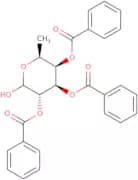
CAS:<p>2,3,4-Tri-O-benzoyl-L-fucopyranose is a sugar that belongs to the class of carbohydrates. It is a glycosylation product that has been modified by Click chemistry. This sugar has also been fluorinated and methylated. 2,3,4-Tri-O-benzoyl-L-fucopyranose can be used in the synthesis of oligosaccharides and monosaccharides.</p>Formula:C27H24O8Purity:Min. 95%Molecular weight:476.47 g/mol2,3,4-Tri-O-acetyl-b-D-arabinopyranosyl cyanide
CAS:<p>2,3,4-Tri-O-acetyl-b-D-arabinopyranosyl cyanide is a synthetic sugar used in the synthesis of complex carbohydrates. It is a white to light yellow powder that is soluble in water and alcohol. This compound can be used to modify saccharides, such as monosaccharides and oligosaccharides. It has been shown that 2,3,4-tri-O-acetyl-b-D-arabinopyranosyl cyanide can be used for the fluorination of saccharides with high purity and modification.</p>Formula:C11H15N3O7Purity:Min. 95%Molecular weight:301.3 g/molBenzyl 2-acetamido-2,4-dideoxy-4-fluoro-a-D-glucopyranose
CAS:<p>This high-purity custom synthesis is a sugar that is modified with Click chemistry. It is fluorinated, glycosylated, and has been synthesized using methylation and polysaccharide modification. In addition to being an oligosaccharide and monosaccharide, this carbohydrate is also a complex carbohydrate.</p>Formula:C15H20FNO5Purity:Min. 95%Molecular weight:313.32 g/molPhenyl 4,7,8,9-tetra-O-acetyl-2-thio-N-glycolyl-D-neuraminic acid methyl ester
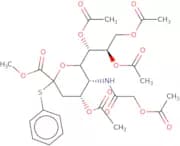
Phenyl 4,7,8,9-tetra-O-acetyl-2-thio-N-glycolyl-D-neuraminic acid methyl ester is a monosaccharide with a four carbon chain. It is an analog of the natural product neuraminic acid. Phenyl 4,7,8,9-tetra-O-acetyl-2-thio -N -glycolyl -D -neuraminic acid methyl ester can be used as a substrate for chemical modification to produce oligosaccharides and polysaccharides. It can also be fluorinated to produce fluorinated derivatives that are useful in biochemistry and organic chemistry.Formula:C28H35NO14SPurity:Min. 95%Molecular weight:641.64 g/molAllyl 2-deoxy-4,6-O-isopropylidene-2-(trifluoroacetamido)-a-D-glucopyranoside
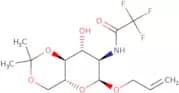
CAS:Allyl 2-deoxy-4,6-O-isopropylidene-2-(trifluoroacetamido)-a-D-glucopyranoside is a custom synthesis of methylated oligosaccharides. It is a complex carbohydrate that contains a saccharide and monosaccharide. This compound can be used as an intermediate for the production of other drugs or pharmaceuticals. Allyl 2-deoxy-4,6-O-isopropylidene-2-(trifluoroacetamido)-a-D-glucopyranoside has CAS No. 139629-59-7 and a purity of >98%.Formula:C14H20F3NO6Purity:Min. 95%Molecular weight:355.31 g/mol2-Acetamido-1,3,6-tri-O-benzyl-2-deoxy-a-D-glucopyranoside
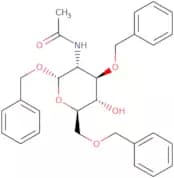
CAS:<p>2-Acetamido-1,3,6-tri-O-benzyl-2-deoxy-a-D-glucopyranoside is a carbohydrate that is composed of four sugar units. It is an antigenic determinant found on the surface of human erythrocytes. The chemical synthesis of this substance begins with the condensation reaction between D-glucose and 2,4,6,-trinitrophenylacetic acid followed by benzylation and acetylation. This compound belongs to the group of substances known as carbohydrates which are chains of monosaccharides that form glycosidic bonds with other sugars. These chains are classified according to their length and the number of sugar units they contain: trioses (three sugar units), tetroses (four sugar units), pentoses (five sugar units), hexoses (six sugar units) or heptoses (seven sugar).</p>Formula:C29H33NO6Purity:Min. 95%Molecular weight:491.58 g/mol1,2,3-Tri-O-acetyl-4,6-O-(4-methoxybenzylidene)-a-D-mannopyranose
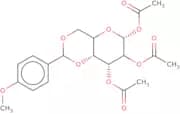
<p>1,2,3-Tri-O-acetyl-4,6-O-(4-methoxybenzylidene)-a-D-mannopyranose is a modification of the naturally occurring carbohydrate 1,2,3,4,6-pentaacetyl-aDmannopyranose. The methyl group at C1 and hydroxymethyl group at C2 positions have been replaced by acetate groups. This modification can be used for synthesis of oligosaccharides or polysaccharides. It has high purity and is available in custom synthesis quantities.</p>Formula:C20H24O10Purity:Min. 95%Molecular weight:424.4 g/molMethyl 2,3,4,6-tetra-O-benzyl-b-D-glucopyranoside
<p>Methyl 2,3,4,6-tetra-O-benzyl-b-D-glucopyranoside (MBG) is a custom synthesis of a saccharide. It is a monosaccharide that is modified with fluorination and methylation to create an oligosaccharide. MBG has a CAS number of 68766-34-7. This carbohydrate has been shown to be synthesized with the click modification. Carbohydrates are carbohydrates that contain carbon, and can be classified as either complex carbohydrates or simple carbohydrates. Carbohydrates are composed of one or more monosaccharides and are classified based on the number of monosaccharides in the molecule. Complex carbohydrates include polysaccharides, which have many monosaccharides attached to each other by glycosidic bonds, and oligosaccharides, which have two to ten monosaccharides attached to each other by</p>Purity:Min. 95%Trifluoroacetamidopropyl b-D-galactopyranoside
Trifluoroacetamidopropyl b-D-galactopyranoside is a custom synthesis that is an Oligosaccharide. It is a complex carbohydrate with CAS No., and can be modified with methylation, glycosylation, and click modification. Trifluoroacetamidopropyl b-D-galactopyranoside has high purity and fluoride, which makes it a Synthetic.Purity:Min. 95%Lewis X trisaccharide methyl glycoside
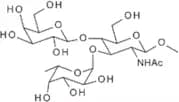
CAS:<p>Lewis X is a glycoprotein found on the surface of red blood cells and is composed of a trisaccharide that is covalently attached to the protein. It is expressed in the cells of all individuals, but at different levels depending on their blood group. Lewis X is an antigen for monoclonal antibody, which recognizes it by binding to its sugar residues. The antibody can be used to detect Lewis X-expressing cells in the blood and for cancer diagnosis. Antibodies against Lewis X can also be used to inhibit tumor growth by enhancing natural killer cell activity and killing tumor cells.</p>Formula:C21H37NO15Purity:Min. 95%Color and Shape:PowderMolecular weight:543.52 g/mol6-O-tert-Butyldiphenylsilyl-D-galactal
CAS:<p>6-O-tert-Butyldiphenylsilyl-D-galactal is a glycosylated compound that is used as a starting material for the synthesis of various natural products. It is prepared by glycosylation of 6-bromo-1,2,3,4,5,6-hexahydroxydiphenylsulfide with D-galactose in the presence of potassium carbonate and triethylamine. The product was purified by recrystallization from ethyl acetate and n-butanol.</p>Purity:Min. 95%1-O-Methyl-β-D-galactopyranoside
CAS:1-O-Methyl-beta-D-galactopyranoside is a monosaccharide sugar, which is a natural product of the degradation of plant cell walls. It is found in the blood of humans and other animals. 1-O-Methyl-beta-D-galactopyranoside has been shown to be an important reactive oxygen species (ROS) scavenger, which can protect cells from oxidative damage by reacting with ROS and converting them into less harmful molecules. 1-O-Methyl-beta-D-galactopyranoside binds to lectins and oligosaccharides, which are carbohydrate structures on the surface of cells that are involved in cellular recognition. This binding process may lead to uptake of 1OmBG by cells, which may be due to its ability to form hydrogen bonds with the hydroxyl group on polysaccharides such as polysaccharides in the plasma membrane or glycoproteinsFormula:C7H14O6Purity:Min. 98.0 Area-%Molecular weight:194.19 g/molRef: 3D-M-3591
1kgTo inquire100gTo inquire250gTo inquire500gTo inquire2500gTo inquire-Unit-kgkgTo inquireGQ1b-Ganglioside ammonium
CAS:<p>GQ1b ganglioside (ammonium salt) has a core tetrasaccharide structure (Galβ1,3GalNAcβ1,4Galβ1,4Glc) with two sialic acids (NeuAc) linked α2,3/α2,8 to the inner galactose residue, two sialic acids (NeuAc) linked α2,3/α2,8 to the terminal galactose residue, and ceramide linked β to position 1 on the reducing terminal glucose residue (Ledeen, 2009). Anti-GQ1b ganglioside antibody is associated with Miller Fisher syndrome and is also found in patients with related conditions that may share the same pathogenic mechanism, such as, Bickerstaff brainstem encephalitis. Thus, the measurement of anti-GQ1b antibody in suspected cases of Miller Fisher syndrome is a useful diagnostic marker (Paparounas, 2004). It has been found that GQ1b ganglioside contributes to synaptic transmissions and synapse formation. Low concentrations of GQ1b ganglioside, evoked dopamine (DA) release from laboratory tissues (Chen, 2018).</p>Formula:C106H182N6O56·xNH4Purity:Min. 95%6,6'-Di-O-tert-butyldiphenylsilyl-lactal
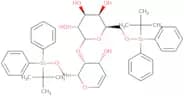
CAS:<p>6,6'-Di-O-tert-butyldiphenylsilyl-lactal is an oligosaccharide that has been modified with a click modification. This chemical is synthesized from lactal and contains three monosaccharides. The monosaccharides are 6,6'-di-O-tert-butyldiphenylsilyl-lactal and two different sugars. It is a white to off white solid that is soluble in water. The chemical can be used for glycosylation reactions or for other modifications of carbohydrates.</p>Purity:Min. 95%1,2:5,6-Di-O-isopropylidene-D-glucofuranosulose enolacetate
1,2:5,6-Di-O-isopropylidene-D-glucofuranosulose enolacetate is a synthetic sugar that is used as a click modification to carbohydrates. It has been shown to have activity against methicillin resistant Staphylococcus aureus (MRSA) and Mycobacterium tuberculosis. This compound has been synthesized for the first time in 2018 by using a new approach of glycosylation. In this process, 1,2:5,6-Di-O-isopropylidene-D-glucofuranosulose enolacetate is modified with methyl groups at the C1 position and then fluorinated. The final product was obtained by reacting this sugar with glycine ethyl ester hydrochloride in the presence of sodium azide in refluxing ethanol.Purity:Min. 95%Allyl 2,3,4,6-tetra-O-benzyl-a-D-glucopyranoside
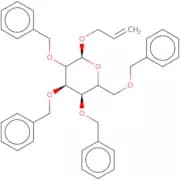
CAS:<p>Allyl 2,3,4,6-tetra-O-benzyl-a-D-glucopyranoside is a synthetic monosaccharide. It can be used in the synthesis of complex carbohydrates by glycosylation and polysaccharide modification. It can also be used for click chemistry modification, methylation, and sugar modifications. Allyl 2,3,4,6-tetra-O-benzyl-a-D-glucopyranoside is of high purity and is available for custom synthesis.</p>Formula:C37H40O6Purity:Min. 95%Molecular weight:580.71 g/mol2-O-Methyl-b-D-N-acetylneuraminic acid methyl ester
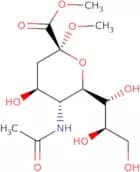
CAS:<p>2-O-Methyl-b-D-N-acetylneuraminic acid methyl ester is a synthetic sugar with the chemical formula C7H11NO5. It is a monosaccharide and an important intermediate in the synthesis of glycosides and other saccharides. 2-O-Methyl-b-D-N-acetylneuraminic acid methyl ester can be used for the modification of complex carbohydrates, such as oligosaccharides and polysaccharides. This product also has many applications in the food industry and biotechnology.</p>Formula:C13H23NO9Purity:Min. 95%Molecular weight:337.32 g/mola-L-Rhamnopyranosyl bromide tribenzoate
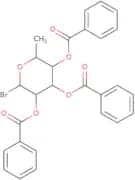
CAS:<p>a-L-Rhamnopyranosyl bromide tribenzoate is a methylated saccharide that can be used in the synthesis of oligosaccharides and polysaccharides. It is a fluorinated compound, which can be used in click chemistry and has been shown to have anti-inflammatory properties. a-L-Rhamnopyranosyl bromide tribenzoate has been shown to inhibit the growth of cancer cells by inhibiting protein synthesis. This methylation product is water soluble and is available as a white powder at high purity. It can also be used in glycosylation reactions as well as custom syntheses.</p>Purity:Min. 95%2,5-Anhydro-1-azido-1-deoxy-D-glucitol
CAS:2,5-Anhydro-1-azido-1-deoxy-D-glucitol is a white to off-white crystalline powder with a molecular weight of 416.2 g/mol and an empirical formula of C6H14O7. The chemical structure is O-(2,5-anhydro-D-glucitol)N3. 2,5-Anhydro-1-azido-1-deoxy--D--glucitol can be modified with various functional groups to create different derivatives for specific applications. It is soluble in water, methanol and ethanol but not in ether or acetone. It also has the ability to form stable complexes with many metal ions due to its high charge density. 2,5--Anhydro--1--azido--1--deoxy--D--glucitol is used as a sugar donor when making glycosides by glycosylation reactions. It canFormula:C6H11N3O4Purity:Min. 95%Molecular weight:189.17 g/mol4,6-Di-O-acetyl-2,3-O-carbonyl-a-D-mannopyranosyl bromide
CAS:4,6-Di-O-acetyl-2,3-O-carbonyl-a-D-mannopyranosyl bromide is a structural analog of the endotoxin lipid A. It has been synthesized from 2,3-O-carbonyl-a-D-mannopyranose by condensation with acetyl bromide and the subsequent removal of the acetyl group by treatment with aqueous sodium hydroxide. The synthesis of 4,6 - Di - O - acetyl - 2,3 - O - carbonyl - a - D - mannopyranosyl bromide was achieved in two steps: (i) condensation of 2,3 - O - carbonyl - a - D - mannopyranose with acetyl bromide followed by deprotection using benzene and (ii) oxidation using hypoiodite in acetic acid.Formula:C11H13BrO8Purity:Min. 95%Molecular weight:353.12 g/molMaltosyl-ascorbic acid
<p>Maltosyl-ascorbic acid is a glycosylated form of ascorbic acid that has been shown to have synergistic effects with thiobarbituric acid and ethanal. Maltosyl-ascorbic acid also exhibits antioxidative activity and is able to inhibit the formation of thiobarbituric acid-reactive substances and α-tocopherol in lipids. Maltosyl-ascorbic acid has been shown to have antioxidant effects in stearothermophilus, which may be due to its ability to reduce lipid peroxidation. Maltosyl-ascorbic acid is also able to inhibit the transfer of alpha-tocopherol from lipoproteins into cells, which may be due to its antioxidative effect.</p>Purity:Min. 95%1,4:3,6-Dianhydro-2,5-di-O-methyl-L-mannitol
<p>1,4:3,6-Dianhydro-2,5-di-O-methyl-L-mannitol is a carbohydrate that belongs to the group of polysaccharides. It is a methylated saccharide that can be modified with Click chemistry or glycosylsation. This product has high purity and can be custom synthesized for specific applications. It is also available in fluorinated form and as a complex carbohydrate.</p>Formula:C8H14O4Purity:Min. 95%Molecular weight:174.19 g/molMethyl (methyl 5-acetamido-4,7,8,9-tetra-O-acetyl-3,5-dideoxy-2-thio-D-glycero-D-galacto-2-nonulopyranosid)onate
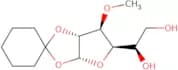
CAS:<p>Methyl (methyl 5-acetamido-4,7,8,9-tetra-O-acetyl-3,5-dideoxy-2-thio-D-glycero-D-galacto-2-nonulopyranosid)onate is a sugar that is used in the synthesis of complex carbohydrates. It can be synthesized by modification of the glycosylation of monosaccharides or oligosaccharides. Methyl (methyl 5-acetamido-4,7,8,9--tetra--O--acetyl--3,5--dideoxy--2--thio--D---glycero---D---galacto---2--nonulopyranosid)onate has CAS No. 1442403688 and molecular weight of 486.</p>Formula:C23H31NO12SPurity:Min. 95%Molecular weight:545.56 g/mol1,2-O-Cyclohexylidene-3-O-methyl-a-D-glucofuranose
CAS:<p>1,2-O-Cyclohexylidene-3-O-methyl-a-D-glucofuranose is a synthetic cyclic oligosaccharide that can be modified with methyl groups or fluorine atoms. It is a monosaccharide that has been shown to have potential for use as a drug delivery system.</p>Formula:C13H22O6Purity:Min. 95%Molecular weight:274.31 g/mol



![1,2-Dideoxy-2'-pyrrolidin-1-yl-a-D-glucopyranoso-[2,1-d]-2'-thiazoline](/_next/image/?url=https%3A%2Fstatic.cymitquimica.com%2Fproducts%2F3D%2Fthumb-webp%2FMD15733.webp&w=3840&q=75)