Glycoscience
Glycoscience is the study of carbohydrates and their derivatives, as well as the interactions and biological functions they participate in. This field of research is crucial for understanding a wide variety of biological processes, including cell recognition, signaling, immune response, and disease development. Glycoscience has important applications in biotechnology, medicine, and the development of new drugs and therapies. At CymitQuimica, we offer a wide selection of high-quality, high-purity products for glycoscience research. Our catalog includes monosaccharides, oligosaccharides, polysaccharides, glycoconjugates, and specific reagents, designed to support researchers in their studies on the structure, function, and applications of carbohydrates in biological systems. These resources are intended to facilitate scientific discoveries and practical applications in various areas of bioscience and medicine.
Subcategories of "Glycoscience"
- Aminosugars(108 products)
- Glyco-Related Antibodies(282 products)
- Glycolipids(46 products)
- Glycosaminoglycans (GAGs)(55 products)
- Glycosides(419 products)
- Monosaccharides(6,624 products)
- Oligosaccharides(3,682 products)
- Polysaccharides(503 products)
Found 11046 products of "Glycoscience"
Sort by
Purity (%)
0
100
|
0
|
50
|
90
|
95
|
100
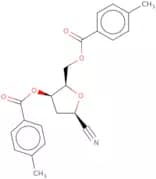
2-Deoxy-3,5-di-O-toluoyl-b-D-ribofuranosyl cyanide
<p>2-Deoxy-3,5-di-O-toluoyl-b-D-ribofuranosyl cyanide is a fluorinated sugar that is synthesized from 2,6-dichloro-1,4,5,8,-tetraoxybenzene and 3,5-di-O-toluoyl bromide. It is a carbohydrate that belongs to the family of oligosaccharides.</p>Formula:C22H21NO5Purity:Min. 95%Molecular weight:379.41 g/mol1,3,4,6-Tetra-O-acetyl-2-deoxy-2-(tetrachlorophthalamido)-D-glucopyranose
CAS:<p>1,3,4,6-Tetra-O-acetyl-2-deoxy-2-(tetrachlorophthalamido)-D-glucopyranose is a custom synthesis of methylated oligosaccharide. It is a complex carbohydrate that has been modified with fluorination and acetylation. This saccharide is a monosaccharide with a sugar group at the end of its carbon chain. It has high purity and is synthesized from natural sugars such as glucose or sucrose. The CAS number for this product is 174356-26-4.</p>Formula:C22H19Cl4NO11Purity:Min. 95%Molecular weight:615.2 g/molN-Benzyl-2,3,4,6-tetra-O-benzyl-1,5-dideoxy-imino-L-iditol
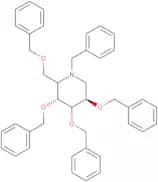
CAS:<p>N-Benzyl-2,3,4,6-tetra-O-benzyl-1,5-dideoxy-imino-L-iditol is a synthetic oligosaccharide with the formula CH(CH)COH. It can be used in the synthesis of glycosides and polysaccharides. This compound has been shown to have antihypertensive activity.</p>Formula:C41H42NO4Purity:Min. 95%Molecular weight:613.8 g/mol3'-Sialyllacto-N-biose
3'-Sialyllacto-N-biose is a regiospecific, biochemically defined carbohydrate. It is a component of the glycan chains that are present on the surface of cell membranes. Lacto-n-biose has been shown to have inhibitory activity against the growth of Mycobacterium tuberculosis and Mycobacterium avium complex bacteria.Purity:Min. 95%Color and Shape:PowderTri-b-GalNAc-C12-alkyne
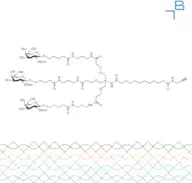
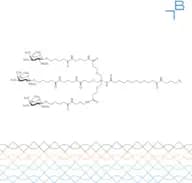
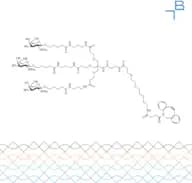
Tri-b-GalNAc-C12-alkyne, also known as trebler GalNAc alkyne, is a multivalent N-acetylgalactosamine (GalNAc) compound with high-affinity to bind to the asialoglycoprotein receptor (ASGPR) found on the surface of hepatocytes in the liver. This trivalent GalNAc derivative contains a C12 alkyne linker and has been extensively studied for its potential in targeted delivery of siRNA conjugates to liver tissue. The multivalent presentation of GalNAc moieties significantly enhances the binding avidity to ASGPR making it an attractive ligand for liver-specific targeting. Researchers have reported successful conjugation of tri-b-GalNAc-C12-alkyne to various therapeutic payloads, such as small interfering RNAs (siRNAs), to facilitate their selective uptake by hepatocytes and enable targeted gene silencing in the liver.Formula:C76H13N11O29Purity:Min. 95%Molecular weight:1,664.92 g/molDecyl glucose neopentyl glycol
CAS:<p>Decyl glucose neopentyl glycol is a molecule that is commonly used in cell-based assays to measure the hydrogen peroxide release by cells. It is also used to transport hydrogen peroxide, which is a reactive oxidative species, intracellularly and extracellularly. Decyl glucose neopentyl glycol has been shown to have a range of different isoforms in cellular systems. This allows it to be used as an effective fluorescent marker for the detection of hydrogen peroxide mediated events.</p>Formula:C35H68O12Purity:Min. 95%Molecular weight:680.91 g/molHyaluronate biotin - Molecular Weight - 20kDa
<p>Hyaluronate biotin is a high purity, complex carbohydrate that has been modified with methylation and glycosylation. It has a molecular weight of 20kDa and is supplied as a powder. It is a white to off-white solid that can be dissolved in water or buffer solutions. This product can be used as an excipient in the manufacture of biologics such as vaccines, antibodies, enzymes, or other therapeutic proteins.</p>Purity:Min. 95%Methyl 3,5-di-O-pivaloyl-D-xylofuranoside
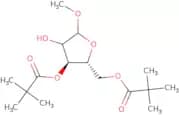
<p>Methyl 3,5-di-O-pivaloyl-D-xylofuranoside is a monosaccharide and an important building block in the synthesis of complex carbohydrates. It has been used in glycosylation reactions as a protecting group and can be fluorinated with trifluoromethanesulfonic acid to give 1,1,1-trifluoro-3-(2′,4′,6′-trihydroxyphenyl)propane.</p>Formula:C16H28O7Purity:Min. 95%Molecular weight:332.39 g/molMethyl 2-deoxy-b-L-ribofuranoside
CAS:<p>Methyl 2-deoxy-β-L-ribofuranoside is a custom synthesis, modification, fluorination and methylation of the monosaccharide ribose. This product has been modified with the addition of a methyl group on the hydroxyl group at position 2. Methyl 2-deoxy-β-L-ribofuranoside can be used as an oligosaccharide or polysaccharide in glycosylation reactions. The CAS number for this product is 144301-85-9.</p>Formula:C6H12O4Purity:Min. 95%Molecular weight:148.16 g/mol2,3,4-Tri-O-benzyl-D-xylopyranose
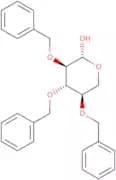
CAS:<p>Calystegine is a benzyl ester of D-xylose. It is the reaction product of D-xylose with benzaldehyde and hydrochloric acid. The condensation product of calystegine with chondroitin sulfate is calystegine B2, which has been shown to be an inhibitor of protein glycosylation in human erythrocytes. This compound inhibits the oxygenated form of D-xylose, which may be useful in inhibiting the growth of certain cancer cells. Calystegine also has anti-inflammatory properties that may be due to its ability to inhibit prostaglandin synthesis.</p>Purity:Min. 95%Pregnanetriol 3a-O-b-D-glucuronide
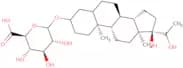
CAS:Pregnanetriol 3a-O-b-D-glucuronide (PG3G) is a metabolite of progesterone that is excreted in the urine during the luteal phase. It is used as a marker for ovulation in women, and can be measured using immunoanalytical techniques. A multicentre study was conducted to measure PG3G levels and found that it is higher during ovulation than at other times of the menstrual cycle. This steroid hormone has been shown to inhibit follicular growth in rats, but its role in humans is less clear.Formula:C27H44O9Purity:Min. 95%Molecular weight:512.63 g/mol3'-Sialyl Lewis X-BSA
<p>3'-Sialyl Lewis X-BSA is a custom synthesis that is a complex carbohydrate. This product has CAS number and is polysaccharide modification with methylation, glycosylation, and click modification. The 3'-Sialyl Lewis X-BSA is fluorinated for high purity and synthetic.</p>Purity:Min. 95%Color and Shape:White Powder2-Acetamido-4-O-(2-acetamido-2-deoxy-a-D-galactopyranosyl)-2-deoxy-D-galactopyranose
CAS:<p>2-Acetamido-4-O-(2-acetamido-2-deoxy-a-D-galactopyranosyl)-2-deoxy-D-galactopyranose is a complex carbohydrate that has been modified by fluorination, saccharide modification, and methylation. This product is synthetically produced and can be custom synthesized to meet your specifications. It has a high purity level of 99% with a monosaccharide content of 97%.</p>Formula:C16H28N2O11Purity:Min. 95%Molecular weight:424.4 g/mol3'-Sialyl-N-acetyllactosamine-BSA
<p>3'-Sialyl-N-acetyllactosamine-BSA is an oligosaccharide that is a component of the glycosylation pathway. It is synthesized from 3'-sialyllactose and N-acetylglucosamine. This compound can be modified with fluorine, methylation, or click chemistry to yield novel derivatives for use in research.</p>Purity:Min. 95%Color and Shape:Powder3-O-Acetyl-1,2-O-isopropylidine-6-O-trityl-a-D-galactofuranose
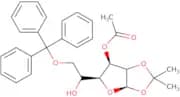
CAS:<p>3-O-Acetyl-1,2-O-isopropylidine-6-O-trityl-a-D-galactofuranose is a synthetic compound with a molecular weight of 514.5. It is an oligosaccharide with a glycosylation modification and fluorination. The compound can be used as a research tool in the study of glycosylation, methylation, click modification, polysaccharide synthesis, fluorination, saccharide modifications and sugar modifications. 3-O-Acetyl-1,2-O-isopropylidine-6-[trityl]-a-[D]galactofuranose can also be used for custom synthesis; this product is available in high purity.</p>Formula:C30H32O7Purity:Min. 95%Molecular weight:504.57 g/molConiferin
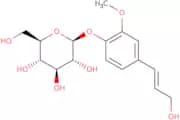
CAS:<p>Coniferin is a phenolic compound found in plants. It is a 4-hydroxycinnamic acid ester of p-hydroxybenzoic acid. Coniferin can be used as an additive for food and animal feed, as well as a preservative for cellulose. Coniferin has been shown to inhibit the growth of cancer cells, such as K562 cells, by affecting energy metabolism and polymerase chain reaction activities. The physiological effects of coniferin have not been extensively studied but it has been shown to inhibit enzyme activities in plant tissues. Coniferin has also been shown to act synergistically with crystalline cellulose and dihydroconiferyl alcohol to produce HPC powder, which is used for the preparation of HPC-cellulose membranes for protein separation.</p>Formula:C16H22O8Purity:Min. 95%Molecular weight:342.34 g/molLipid A (E. Coli) triethylammonium salt
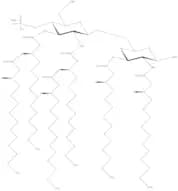
CAS:The Lipid A moiety of lipopolysaccharide forms the outer monolayer of the outer membrane in most Gram-negative bacteria. Escherichia coli lipid A is synthesized on the cytoplasmic side of the inner membrane by a conserved pathway of nine constitutive enzymes. Following attachment of the core oligosaccharide, nascent core-lipid A is flipped to the outer surface of the inner membrane by the ABC transporter MsbA, where the O-antigen polymer is attached. These complex glycoforms protect bacteria from antibiotics and complement-mediated lysis. The core and O-antigen domains are required for virulence and consequently are present in most clinical and environmental isolates (Raetz, 2007).Formula:C94H178N2O25P2Purity:Min. 95%Molecular weight:1,798.37 g/molTri-b-GalNAc-PEG3-azide
CAS:Tri-GalNAc-PEG3-azide is an ASGPR-targeted ligand. This molecule contains three beta-GalNAc sugar units (trivalent) linked by a discrete and uniform PEG3 spacer. The spacer terminates with a reactive azide group for conjugation to other molecules. Upon binding to ASGPR, tri-GalNAc-PEG3-azide conjugates are efficiently taken up by cells (endocytosis) due to the trivalent GalNAc recognition. This property allows researchers to deliver various cargo, like RNA or Cas9 complexes, specifically to liver cells (hepatocytes) and permits using tri-GalNAc-PEG3-Azide to create targeted drug delivery systems (LYTACs) or labeled with dyes for imaging tissues.Formula:C70H125N13O31Purity:Min. 95%Molecular weight:1,644.8 g/molTri-b-GalNAc-b-alanine-PEG3-azide
<p>This molecule leverages three terminal beta-GalNAc (N-acetylgalactosamine) sugars for efficient binding to asialoglycoprotein receptors (ASGPR) expressed on liver cells (hepatocytes). The presence of the linker (beta-alanine) and the spacer (PEG3) influences the pharmacokinetics of the conjugate. The key functional group is the terminal azide, which allows for conjugation to various payloads containing alkyne groups and facilitates the development of targeted conjugates for hepatocyte delivery. Upon binding to ASGPR, tri-b-GalNAc-b-alanine-PEG3-azide conjugates are rapidly taken up by hepatocytes via endocytosis, enabling researchers to deliver therapeutic cargo (drugs, siRNA) specifically to the liver.</p>Formula:C73H130N14O32Purity:Min. 95%Molecular weight:1,715.9 g/molMethyl 3,5-di-O-(p-chlorobenzoyl)-2-deoxy-D-ribofuranoside
CAS:<p>Methyl 3,5-di-O-(p-chlorobenzoyl)-2-deoxy-D-ribofuranoside is a custom synthesis. It is a complex carbohydrate that is an oligosaccharide or polysaccharide. It has been modified by methylation and glycosylation with saccharides. This product has high purity and can be used in the preparation of other compounds that require glycosylation or carbonylation reactions. The CAS number for this product is 99886-53-0.</p>Formula:C20H18Cl2O6Purity:Min. 95%Molecular weight:425.26 g/molb-L-Xylose-1-phosphate
<p>b-L-Xylose-1-phosphate is a methylated, fluorinated, and custom synthesized monosaccharide that can be modified to produce an oligosaccharide or polysaccharide. This monomer is a sugar that is found in complex carbohydrates and has a purity of greater than 99%. It can be used for the synthesis of saccharides or as a fluorination agent.</p>Purity:Min. 95%Metronidazole b-D-glucuronide
CAS:<p>Metronidazole b-D-glucuronide is a glycosylated form of metronidazole that is rapidly hydrolyzed by esterases or glucuronidases to the parent drug. Metronidazole b-D-glucuronide has been shown to be an effective inhibitor of bacterial growth, which may be due to its inhibition of DNA synthesis. The drug also has anti-inflammatory and antiproliferative activity in vitro. Metronidazole b-D-glucuronide is a water soluble prodrug that is used as an antimicrobial agent for the treatment of infections caused by susceptible bacteria. It can be custom synthesized with high purity and good yield.</p>Formula:C12H17N3O9Purity:Min. 95%Molecular weight:347.28 g/mol1,2,6-Tri-O-galloylglucose
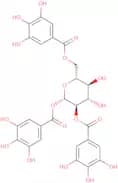
CAS:<p>1,2,6-Tri-O-galloylglucose is a natural compound that has been shown to have inhibitory effects on the human immunodeficiency virus (HIV) enzyme serine protease. This inhibits the viral replication process by preventing the protease from cleaving viral polyproteins. The compound also inhibits complement activation and has antioxidant properties. 1,2,6-Tri-O-galloylglucose is active against leukemia cells and has been shown to be more effective at lower pH levels. It also has an inhibitory effect on ellagitannins and anticomplement activity.</p>Formula:C27H24O18Purity:Min. 95%Molecular weight:636.47 g/mol1-a-Methylaminotrityl-2-deoxy-3,5-di-O-toluoyl-D-ribose
<p>1-a-Methylaminotrityl-2-deoxy-3,5-di-O-toluoyl-D-ribose is a custom synthesis of an oligosaccharide. The compound has a CAS number and is a polysaccharide with glycosylation and methylation. It is fluorinated at the 1 position on the ribose ring and modified with a click chemistry reaction to link two sugars together. This modification allows for high purity of this compound.</p>Purity:Min. 95%Tri-b-GalNAc-b-alanine-PEG4-DBCO
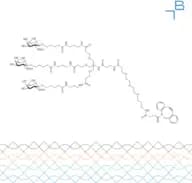
This ASGPR-targeting ligand, containing three GalNAc arms, a beta-alanine linker, a PEG spacer, and a DBCO group enables an effective conjugation to biomolecules containing azide groups via bioorthogonal CuAAC click chemistry. This strategy offers efficient and specific conjugation under mild conditions for researchers developing targeted therapeutics or probes.Formula:C94H149N13O35Purity:Min. 95%Molecular weight:2,021.25 g/molNA2FB N-Glycan
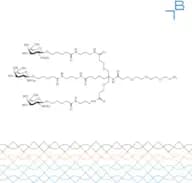
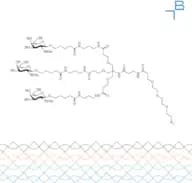
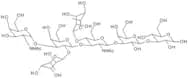
CAS:<p>NA2FB N-Glycan is a custom synthesis that is prepared on a glycosylation scale. The monosaccharide units are linked by alpha-1,6 or alpha-1,3 glycosidic bonds to form a linear chain. The saccharides are attached to each other via the formation of beta-1,4 glycosidic bonds. NA2FB N-Glycan has a high purity and modification. It is available in various forms such as oligosaccharide, polysaccharide, saccharide and carbohydrate. This product can be used for research purposes or as raw material in the production of medicine.</p>Formula:C76H127N5O55Purity:Min. 95%Molecular weight:1,990.82 g/molTri-b-GalNAcAc3-C12-amido-C3-azide
This is the peracetylated equivalent of tri-b-GalNAc-C12-amido-C3-azide. This unique bifunctional ligand for ASGPR-targeted applications contains three terminal GalNAc sugars that bind to ASGPR receptors and permit hepatocyte uptake, the C12-amide linker offers a stable spacer and the C3-azide moiety enables tailored bioconjugation via CuAAC click chemistry. This design has the potential for targeted delivery of therapeutic cargo (drugs, siRNA, nanoparticles) to hepatocytes, development of LYTACs for selective protein degradation, and creation of in vivo ASGPR imaging probes.Formula:C94H154N14O38Purity:Min. 95%Molecular weight:2,088.3 g/molLasofoxifene b-D-glucuronide
CAS:<p>Lasofoxifene b-D-glucuronide is a synthetic, nonsteroidal estrogen that was developed to avoid the side effects of other estrogens. It is a prodrug that is hydrolyzed in vivo to lasofoxifene and then undergoes methylation and glucuronidation. Lasofoxifene b-D-glucuronide has been shown to inhibit tumor growth in animals by reducing the number of cancer cells and blocking their spread. This drug also prevents bone loss by inhibiting the production of osteoclasts, which are cells that break down bone tissue.</p>Formula:C34H39NO8Purity:Min. 95%Molecular weight:589.68 g/molTri-b-GalNAc-b-alanine-PEG3-DBCO
Very similar to tri-b-GalNAc-b-alanine-PEG4-DBCO (which contains a PEG4 instead of PEG3 as a spacer), this cluster, tri-b-galnac-b-alanine-peg3-DBCO, contains also three terminal beta-N-acetylgalactosamine (GalNAc) sugars for efficient ASGPR binding. The beta-alanine linker separates the GalNAc unit from a PEG3 spacer, improving water solubility and potentially influencing pharmacokinetics. The terminal amine group serves as a reactive handle for conjugation to various biomolecules via amide bond formation. This multifunctional combination makes tri-b-GalNAc-b-alanine-PEG3-amine a versatile tool for researchers developing targeted therapies and diagnostics exploiting the ASGPR pathway.Formula:C92H145N13O34Purity:Min. 95%Molecular weight:1,977.2 g/molD-Desosamine
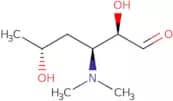
CAS:D-Desosamine is a chemical compound that has been isolated from human serum. It is an enzyme inhibitor that inhibits the activity of enzymes such as phosphatases, kinases, and proteases. D-Desosamine also has a matrix effect, which can be used to modify the properties of polymer matrices in order to improve their biocompatibility and mechanical properties. The molecular docking analysis indicated that desosamine can bind to bacterial serine/threonine protein kinase Streptococcus pyogenes phage T4 (SpyPK) and inhibit its activity. This inhibition may be due to the transfer reactions caused by desosamine binding to the enzyme's active site and blocking it. Structural analysis showed that D-desosamine forms hydrogen bonds with amino acids in SpyPK's active site, forming a covalent bond with cysteine residue Cys240. D-Desosamine has been shown to have anti-bacterial properties againstPurity:Min. 95%3,2'-Di-O-acetyl-3',4'-O-carbonyl-6,6'-di-O-tert-butyldiphenylsilyl lactal
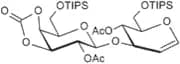
CAS:3,2'-Di-O-acetyl-3',4'-O-carbonyl-6,6'-di-O-tert-butyldiphenylsilyl lactal is a custom synthesis of a fluorinated carbohydrate. It is a modification of an oligosaccharide and can be used in the synthesis of saccharides and polysaccharides. The CAS number for this compound is 163228-35-1. This compound has been modified with click chemistry to add methyl groups to the hydroxyl group on the sugar ring. This compound has been used as a monosaccharide or as a part of complex carbohydrates.Formula:C35H62O12Si2Purity:Min. 95%Molecular weight:731.03 g/molCellulose - Particle Size approx 50 um
CAS:<p>Cellulose is a linear polysaccharide of β 1-4 linked glucose residues. The polysaccharide chains are bundled as microfibrils in cell walls and provide the essential structural components within growing plants. Each microfibril exhibits a high degree of three-dimensional internal bonding resulting in a crystalline structure that is insoluble in water, resistant to reagents and very strong.</p>Purity:Min. 95%Color and Shape:Powder4-Nitrophenyl 3-O-benzoyl-4,6-cyclohexylidene-b-D-mannopyranoside
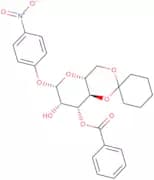
CAS:<p>4-Nitrophenyl 3-O-benzoyl-4,6-cyclohexylidene-b-D-mannopyranoside is a Custom synthesis. It is an Oligosaccharide that consists of a Polysaccharide with Modification. The CAS No. 102717-17-9 is Methylation and Glycosylation and Carbohydrate. Click modification and saccharide are sugar and High purity. Fluorination is Synthetic.</p>Formula:C25H27NO9Purity:Min. 95%Molecular weight:485.48 g/molD-Fuculose
CAS:<p>D-Fuculose is a sugar that is used as a sweetener. It is produced by microbial fermentation of l-arabinose, which is an intermediate in the pentose phosphate pathway. D-Fuculose can be synthesized from glucose and fucose using enzymes such as sucrose isomerase or mutarotase. The conversion of glucose to D-fuculose proceeds at temperatures between 50 and 70 degrees Celsius, with optimal activity occurring at 60 degrees Celsius. D-Fuculose has been shown to have high catalytic activity and stability under acidic conditions, making it ideal for use as a food additive in acidic drinks or foods. It also has the highest sweetness intensity of all sugars tested to date.</p>Formula:C6H12O5Purity:Min. 95%Molecular weight:164.16 g/molNicotinic acid acyl-b-D-glucuronide
CAS:<p>Nicotinic acid acyl-b-D-glucuronide is a carbohydrate that is synthesized by the condensation of nicotinic acid with b-D-glucuronic acid. It can be modified by fluorination, methylation, glycosylation, or click modification. The CAS Number for this product is 24719-73-1 and it has a purity of >98%. It has been custom synthesized at our lab and it is available in high purity.</p>Formula:C12H13NO8Purity:Min. 95%Molecular weight:299.23 g/molMethyl 2,3,6-tri-O-acetyl-a-D-glucopyranoside
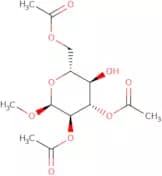
CAS:<p>Methyl 2,3,6-tri-O-acetyl-a-D-glucopyranoside is a fluorinated monosaccharide that can be used in the synthesis of oligosaccharides, polysaccharides and complex carbohydrates. This product is custom synthesized for customers with specific needs. The modification of Methyl 2,3,6-tri-O-acetyl-a-D-glucopyranoside can also be done to provide desired properties. The purity of this product is high and suitable for various applications.</p>Formula:C13H20O9Purity:Min. 95%Molecular weight:320.29 g/mola-D-Xylopyranosyl azide
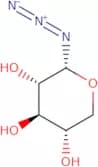
CAS:<p>a-D-Xylopyranosyl azide is a sugar that can be synthesized from the reaction of 1,2-dichloroethane with 2,3,4,6-tetra-O-acetyl-a-D-xylopyranose. This compound has a high purity and can be custom synthesized to order. It is used in glycosylation reactions to modify saccharides and oligosaccharides. It has been shown to be useful for click modification and fluorination reactions.</p>Purity:Min. 95%Methyl 3,4-O-isopropylidene-a-D-galactopyranoside
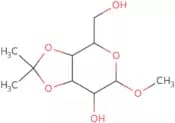
CAS:<p>Methyl 3,4-O-isopropylidene-a-D-galactopyranoside is a white crystalline powder that is soluble in water. This product is used in the synthesis of complex carbohydrate and glycosylation. It has CAS No. 40269-01-0 and can be custom synthesized to meet your requirements. The purity of this product is over 99%.</p>Formula:C10H18O6Purity:Min. 95%Molecular weight:234.25 g/molT-antigen-HSA
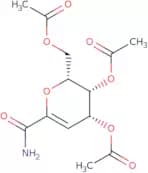
T-antigen-HSA is a synthetic, high-purity, custom synthesis glycoprotein with click modification. It is a complex carbohydrate that contains an oligosaccharide and a saccharide, which are attached to the protein backbone through an amide linkage. T-antigen-HSA is synthesized using recombinant DNA technology and can be modified by fluorination, methylation, or other modifications. This product has CAS No.Purity:Min. 95%Color and Shape:White Powder4,5,7-Tri-O-acetyl-2,6-anhydro-3-deoxy-D-lyxo-hept-2-enonamide
CAS:<p>4,5,7-Tri-O-acetyl-2,6-anhydro-3-deoxy-D-lyxo-hept-2-enonamide is a carbohydrate that belongs to the group of oligosaccharides. It is a synthetic compound that has been modified with fluorination and methylation. This compound has been synthesized with high purity and custom synthesis. The modification process includes glycosylation and click chemistry.</p>Formula:C13H17NO8Purity:Min. 95%Molecular weight:315.28 g/molD-Mannose- 4- 13C
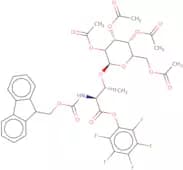
CAS:D-Mannose is a sugar that is found in many plants and animals. It can be extracted from natural sources or synthesized with the use of Click modification, fluorination, glycosylation, and methylation. D-Mannose has been shown to inhibit bacterial adhesion and prevent the formation of biofilms. In addition, it has been shown to have anti-inflammatory activities. D-Mannose is a complex carbohydrate that is composed of saccharides joined together in chains and rings.Purity:Min. 95%Molecular weight:181.15 g/mol2,3,4,6-Tetra-O-acetyl-b-D-glucopyranosyl-N-Fmoc-L-threonine pentafluorophenyl ester
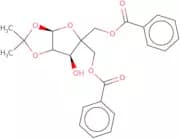
<p>2,3,4,6-Tetra-O-acetyl-b-D-glucopyranosyl-N-Fmoc-L-threonine pentafluorophenyl ester is a custom synthesis. This product is a complex carbohydrate that belongs to the group of polysaccharides. It has been modified by methylation and glycosylation. 2,3,4,6-Tetra-O-acetyl-b-D-glucopyranosyl-N-Fmoc-L--threonine pentafluorophenyl ester has a CAS number and is available in high purity. This product can be used as an additive for food products or as a starting material for the synthesis of other saccharides.</p>Formula:C39F5H36NO14Purity:Min. 95%Molecular weight:837.71 g/mol5-O-Benzoyl-4-benzoyloxymethyl-1,2-O-isopropylidene-a-D-xylofuranose
<p>5-O-Benzoyl-4-benzoyloxymethyl-1,2-O-isopropylidene-a-D-xylofuranose is a synthetic monosaccharide that has been modified by fluorination and glycosylation. The chemical formula is C14H10F6O8. It can be custom synthesized to order, and it is available in high purity.</p>Formula:C23H24O8Purity:Min. 95%Molecular weight:428.44 g/mol6'-Sialyllactosyl azide
<p>6'-Sialyllactosyl azide is a modified carbohydrate that can be synthesized from sialic acid and azide. The synthesis of 6'-sialyllactosyl azide is a modification of the glycosylation reaction. It is a monosaccharide, methylated at the hydroxyl group, and has one glycosylation site with a glycose molecule attached to it. This product has high purity and CAS number. It is also synthesized using synthetic methods and has a molecular weight of 232.6 g/mol.</p>Purity:Min. 95%a-Heptasaccharide
CAS:a-Heptasaccharide is a complex carbohydrate that is synthesized from glycerol and seven monosaccharides. It is used in the synthesis of other carbohydrates and as a fluorination reagent.Formula:C46H78N2O34Purity:Min. 95 Area-%Color and Shape:PowderMolecular weight:1,203.13 g/mol2-Azido-3,4,6-tri-O-benzyl-2-deoxy-D-glucopyranose
<p>Silver trifluoromethanesulfonate is an ionic silver reagent that is used to modify polysaccharides. It has been shown that the triethylamine can be substituted with other strong bases, such as potassium t-butoxide. This reagent reacts with chlorides to produce 2-azido-3,4,6-tri-O-benzyl-2-deoxy-D-glucopyranose. The modification of this compound is important for the study of glycosylation reactions and for understanding the structure of polysaccharides.</p>Purity:Min. 95%4-O-(a-D-Galactopyranosyl)-b-D-fucopyranosyl propylamine
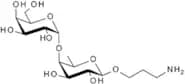
4-O-(a-D-Galactopyranosyl)-b-D-fucopyranosyl propylamine is a methylated, custom synthesized monosaccharide with an Oligosaccharide and Polysaccharide. It is a Carbohydrate with Fluorination and complex carbohydrate. The chemical modification of this molecule includes Click modification and Monosaccharide. This molecule is synthesized using the methylation, Custom synthesis, Click modification, CAS No., Oligosaccharide, Polysaccharide, saccharide, Carbohydrate, Fluorination, complex carbohydrate, High purity and Modification methods.Formula:C15H29NO10Purity:Min. 95%Molecular weight:383.39 g/mol3-Deoxy-D-[UL-13C6]fructose
3-Deoxy-D-[UL-13C6]fructose is a high purity, custom synthesis, modification, and fluorination of a methylated oligosaccharide. It is a synthetic molecule that can be used to study the methylation of complex carbohydrates. 3-Deoxy-D-[UL-13C6]fructose can be used as an intermediate in the synthesis of other sugar molecules. The structure is shown below:Purity:Min. 95%3-Deoxy-D-ribose
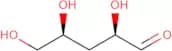
CAS:3-Deoxy-D-ribose is a monosaccharide with a molecular formula of CH(OH)CO. It is the 3-deoxy form of ribose and its pyranose ring has an oxygen atom at the 3 position. 3-Deoxy-D-ribose can be synthesized by periodate treatment of glyceric acid in the presence of hydrochloric acid, followed by hydrolysis to produce sorbose and then reaction with glycolaldehyde to produce D-glycero-D-galactopyranosyl bromide. The final step is conversion to 3-deoxyribose by reaction with aqueous ammonia. 3-Deoxyribose inhibits ribulose synthesis, which prevents the formation of an intermediate molecule required for the synthesis of fatty acids and phospholipids.Purity:Min. 95%2,3,4-Tri-O-acetyl-1,6-anhydro-b-D-glucopyranose
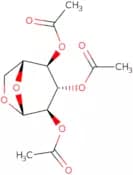
CAS:<p>2,3,4-Tri-O-acetyl-1,6-anhydro-b-D-glucopyranose is a high purity monosaccharide that is custom synthesized to meet your needs. This product is a sugar with a click modification, fluorination, glycosylation and methylation. It can be used as a synthetic oligosaccharide or monosaccharide in the synthesis of complex carbohydrates. It has CAS No. 13242-55-2 and can be used in saccharides.</p>Formula:C12H16O8Purity:Min. 95%Color and Shape:White PowderMolecular weight:288.25 g/mol











![3-Deoxy-D-[UL-13C6]fructose](/_next/image/?url=https%3A%2Fstatic.cymitquimica.com%2Fproducts%2F3D%2Fthumb-webp%2FMD14754.webp&w=3840&q=75)