


Glycoscience
Glycoscience is the study of carbohydrates and their derivatives, as well as the interactions and biological functions they participate in. This field of research is crucial for understanding a wide variety of biological processes, including cell recognition, signaling, immune response, and disease development. Glycoscience has important applications in biotechnology, medicine, and the development of new drugs and therapies. At CymitQuimica, we offer a wide selection of high-quality, high-purity products for glycoscience research. Our catalog includes monosaccharides, oligosaccharides, polysaccharides, glycoconjugates, and specific reagents, designed to support researchers in their studies on the structure, function, and applications of carbohydrates in biological systems. These resources are intended to facilitate scientific discoveries and practical applications in various areas of bioscience and medicine.
Subcategories of "Glycoscience"
- Aminosugars(108 products)
- Glyco-Related Antibodies(282 products)
- Glycolipids(46 products)
- Glycosaminoglycans (GAGs)(55 products)
- Glycosides(419 products)
- Monosaccharides(6,624 products)
- Oligosaccharides(3,682 products)
- Polysaccharides(503 products)
Found 11046 products of "Glycoscience"
Sort by
Purity (%)
0
100
|
0
|
50
|
90
|
95
|
100
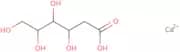
2-Deoxy-D- arabino- hexonic acid calcium
CAS:2-Deoxy-D-arabino-hexonic acid calcium is a fluorinated monosaccharide with a molecular weight of 348.09 g/mol. It can be used for the synthesis of oligosaccharides, glycosylations, and polysaccharides. Click modification, methylation, sugar modification are all possible modifications for this compound. This product has been custom synthesized by our company and is available in high purity.Formula:C6H12O6·xCaPurity:Min. 95%3,4,6-Tri-O-acetyl-2-azido-2-deoxy-D-galactose - non-animal origin
CAS:<p>3,4,6-Tri-O-acetyl-2-azido-2-deoxy-D-galactose (TADA) is a non-animal origin sugar that can be custom synthesized to meet your needs. TADA is modified with fluorination, glycosylation, and methylation to increase its stability and improve its properties. It also has an acetate group at the 3 position of the glucose molecule for easy conjugation with proteins. TADA is used in glycosylations to produce oligosaccharides and monosaccharides.</p>Formula:C12H17N3O8Purity:Min. 98 Area-%Molecular weight:331.28 g/molMethyl 6-O-(a-D-mannopyranosyl)-a-D-mannopyranoside
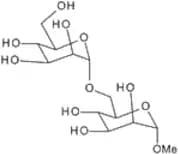
CAS:<p>Methyl 6-O-(a-D-mannopyranosyl)-a-D-mannopyranoside is a complex carbohydrate that belongs to the group of carbohydrates. Methyl 6-O-(a-D-mannopyranosyl)-a-D-mannopyranoside is a modification of the monosaccharides, which are vital for cellular metabolism. Methyl 6-O-(a-D-mannopyranosyl)-a-D-mannopyranoside is used in the synthesis of oligosaccharides, polysaccharides and glycolipids. This product has been shown to be an effective inhibitor of bacterial growth in vitro and has also been shown to have antiinflammatory properties.<br>Methyl 6-O-(a-D-mannopyranosyl)-a-D-mannopyranoside is a white crystalline powder with a melting point range from 120°C to 130°C. It</p>Formula:C13H24O11Purity:Min. 95%Color and Shape:SolidMolecular weight:356.32 g/mol6-Deoxy-3-C-methyl-D-gulose
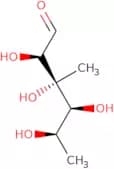
CAS:<p>6-Deoxy-3-C-methyl-D-gulose is an enantiomer of 3,6-dideoxy-D-gluconic acid. This compound has been shown to be a virulent factor in mastitis caused by the mutant strain of Escherichia coli (MT1) and to be expressed at a higher level in mastitic milk than in normal milk. 6DMG has also been shown to induce monoclonal antibody production and stimulate specific immune responses. It is thought that 6DMG damages cells, which leads to the release of intracellular components that trigger an antibody response. The biological function of 6DMG is not known, but it may play a role in the infection process by stimulating an antibody response against infectious agents.</p>Purity:Min. 95%Sialyl-dimeric Lex-nona-APD-HSA
<p>Sialyl-dimeric Lex-nona-APD-HSA is a monosaccharide that belongs to the group of complex carbohydrates. It is a custom synthesis product, which has been synthesized by the methylation and glycosylation of a high purity oligosaccharide. The structural formula for this product is C14H30FNO6S2. This product is highly purified and has been fluorinated at one hydroxyl group. Sialyl-dimeric Lex-nona-APD-HSA has CAS No. 569078-29-4 and molecular weight of 432.5 g/mol.br><br>br><br>This product can be used as a synthetic sugar in various applications such as food, pharmaceuticals, cosmetics, and agrochemicals industries.br><br>br><br>The following are some properties of this compound: <br>1) Nonvolatile solids content: 98%</p>Purity:Min. 95%CMP-Pseudaminic acid
<p>CMP-Pseudaminic acid is a chemical compound that belongs to the group of thuringiensis. It is biosynthesized by the action of enzymes, which catalyze the conversion of sialic acid to CMP-pseudaminic acid. This process is carried out in two steps. The first step involves a reaction between sialic acid and ATP and the second step entails an enzymatic reaction between CMP-pseudaminic acid and UDP-glucose. X-ray crystal structures have been obtained for both steps of this process, with the second step being more complex than the first. Chemical diversity has been observed in pseudaminics, with some being glycosylated while others are not. Analysis with spectrometry has shown that pseudaminics are highly o-glycosylated at their hydroxy groups and have high levels of carbon atoms as well as hydroxyl groups. Structural analysis has revealed that pseudaminics</p>Formula:C22H32N5O15PPurity:Min. 95%Molecular weight:637.49 g/molD-Galactose-3-O-sulphate sodium salt
<p>A sulfated galactose analogue</p>Formula:C6H11NaO9SPurity:Min. 95%Molecular weight:282.19 g/molGNA2 N-Glycan
<p>GNA2 N-glycan is a custom-synthesized modified oligosaccharide that is a complex carbohydrate. It is a high purity, methylated and glycosylated polysaccharide sugar with fluorination. GNA2 N-glycan has CAS No. 1295-70-1 and is monosaccharide. It has a molecular weight of 266.</p>Purity:Min. 95%[UL-13C18]Maltotriose hydrate
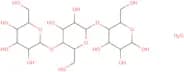
<p>Maltotriose hydrate is a synthetic glycosylation product that is synthesized by the fluorination of maltotriose. Maltotriose hydrate is a sugar with a 3-D structure that is similar to maltodextrin, but with one less glucose residue. Maltotriose hydrate can be used in the synthesis of oligosaccharides and polysaccharides and has been shown to have high purity. Maltotriose hydrate can be modified by a variety of reactions, such as methylation, monosaccharide modification, or click chemistry. It has an CAS number and can be custom synthesized for clients' needs.</p>Formula:C18H32O16·xH2OPurity:Min. 95%Color and Shape:White SolidMolecular weight:522.3 g/mol3,5-O-Isopropylidene-L-arabinofuranose
<p>3,5-O-Isopropylidene-L-arabinofuranose is a sugar that is used in the synthesis of saccharides. It is a monosaccharide that can be modified by fluorination, methylation, and custom synthesis. This product has been shown to be an excellent substrate for click chemistry and can be used as an intermediate in the production of oligosaccharides and polysaccharides. 3,5-O-Isopropylidene-L-arabinofuranose has a high purity level and can be used as a replacement for other sugars in complex carbohydrate synthesis.</p>Purity:Min. 95%Ethyl 2,3,4,6-tetra-O-(4-methoxybenzyl)-b-D-thiogalactopyranoside S-oxide
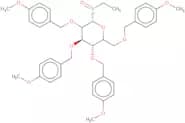
<p>Ethyl 2,3,4,6-tetra-O-(4-methoxybenzyl)-b-D-thiogalactopyranoside S-oxide is a custom synthesis product. It is an oligosaccharide with a saccharide structure that has been modified to include fluorine atoms. This modification makes the molecule more stable and resistant to degradation by enzymes. Ethyl 2,3,4,6-tetra-O-(4-methoxybenzyl)-b-D-thiogalactopyranoside S-oxide is a complex carbohydrate that can be used as an ingredient in food products or as a pharmaceutical agent for the treatment of cancer and other diseases.</p>Formula:C40H48O10SPurity:Min. 95%Molecular weight:720.87 g/molSinapaldehyde glucoside
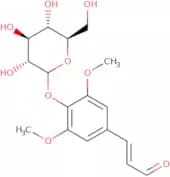
CAS:Sinapaldehyde glucoside is a phenolic compound found in the leaves of Sinapis alba. This compound has been shown to have antiviral and antibacterial properties. It has been shown to inhibit staphylococcal growth, with the most effective concentration being 0.5-2% w/v. The chemical structure of sinapaldehyde glucoside is similar to that of pomolic acid, which was also found to have anti-staphylococcal effects. Syringaresinol, a constituent of S. alba, may be responsible for the anti-staphylococcal activity due to its ability to inhibit bacterial protein synthesis. Sinapaldehyde glucoside can also be extracted from S. alba using ethanol or water as solvents and is soluble in both water and alcohols. Sinapaldehyde glucoside can also be extracted from eleutherococcus (Eleutherococcus senticosus) usingPurity:Min. 95%Palbociclib N-glucuronide
<p>Palbociclib N-glucuronide is a synthetic, modified sugar that is used in the synthesis of carbohydrates. It has a molecular weight of 542.34 and was originally synthesized by glycosylation and methylation of palbociclib. The chemical formula for Palbociclib N-glucuronide is C10H18N4O5•C6H7O6•2HCOOH.</p>Formula:C30H37N7O8Purity:Min. 95%Molecular weight:623.66 g/mola-D-Galactose-PAA-biotin
<p>a-D-Galactose-PAA-biotin is a carbohydrate compound that has been modified by the addition of a PAA group and biotin. This compound can be synthesized with high purity and is available for custom synthesis. It is an oligosaccharide, a sugar, and a saccharide. The CAS number for this compound is 97320-93-4.</p>Purity:Min. 95%Color and Shape:SolidAllyl 4,6-O-benzylidene-a-D-glucopyranoside
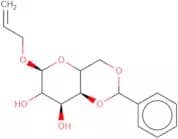
CAS:<p>Allyl 4,6-O-benzylidene-a-D-glucopyranoside is a custom synthesis of an oligosaccharide. It is a complex carbohydrate that belongs to the group of saccharides. This product is methylated and glycosylated, and contains a hexose sugar (glucose) at its reducing end. Allyl 4,6-O-benzylidene-a-D-glucopyranoside has been fluorinated with hydrogen fluoride gas in order to increase its purity. This product is synthesized by click chemistry and has CAS number 65987-12-4.</p>Formula:C16H20O6Purity:Min. 95%Molecular weight:308.33 g/molNeocarrabiose (b anomer, crystalline)
CAS:<p>Neocarrabiose is a complex carbohydrate that is synthesized by the methylation of carrageenan. It has a molecular weight of about 1,000 Daltons and consists of a linear chain of alternating units of D-galactose and D-glucuronic acid. Neocarrabiose is used in the production of polysaccharides such as heparin, glycosaminoglycans, and polysulfated glycosaminoglycans. The enzyme modification process converts the anomeric configuration to L-arabinofuranose in order to produce polysaccharides with high purity.</p>Formula:C12H20O10Purity:Min. 95%Molecular weight:324.28 g/mol5-Deoxy-3,4-di-O-methyl-D-arabinose
<p>5-Deoxy-3,4-di-O-methyl-D-arabinose is a custom synthesis that is a complex carbohydrate. It has been modified by methylation and glycosylation. This product is soluble in water and can be used as a saccharide or sugar. The product has been fluorinated and modified with click chemistry to provide high purity.</p>Purity:Min. 95%Rhein D-Glucuronide (mixture of 1 & 8 Isomers)
<p>Rhein D-Glucuronide is a mixture of 1 and 8 isomers. It is a natural product that has been modified by methylation and saccharide modification. The CAS number for Rhein D-Glucuronide is 7062-00-2. This product can be custom synthesized to meet your needs. Rhein D-Glucuronide has the following properties: Polysaccharides, Click modification, Modification, Oligosaccharides, Custom synthesis, Glycosylation, High purity, Carbohydrate sugar, Synthetic and Fluorination. Rhein D-Glucuronide is a complex carbohydrate with high purity.</p>Purity:Min. 95%7-Hydroxy coumarin b-D-glucuronide methyl ester
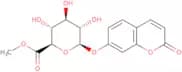
CAS:7-Hydroxy coumarin b-D-glucuronide methyl ester is a custom synthesis used in the modification of saccharides. This compound can be used to modify monosaccharides, oligosaccharides, and polysaccharides. It has been shown to fluorinate, methylate, and click-modify saccharides. 7-Hydroxy coumarin b-D-glucuronide methyl ester is also known as CAS No. 1176514-11-6.Formula:C16H16O9Purity:Min. 95%Molecular weight:352.29 g/molCYMAL-5 neopentyl glycol
CAS:<p>CyMAL-5 neopentyl glycol is a membrane protein that is n-glycosylated. Its deglycosylation has been shown to be inhibited by light exposure, which may lead to an increase in the population of this protein. CyMAL-5 neopentyl glycol is a ligand for the G protein coupled receptor and can be used as a fluorescent probe for labeling and staining. It has been shown that the binding of this ligand to the receptor alters its conformation, causing it to activate downstream signaling pathways. The crystal structure of CyMAL-5 neopentyl glycol has also been determined, revealing its large size and shape.</p>Formula:C45H80O22Purity:Min. 95%Molecular weight:973.1 g/molGemfibrozil b-D-glucuronide-D6
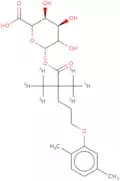
Controlled ProductGemfibrozil b-D-glucuronide-D6 is a methylated, saccharide, Polysaccharide. It is a custom synthesis of the synthetic and fluorinated gemfibrozil b-D-glucuronide. The product is purified by HPLC to >98% purity and supplied as a white powder.Formula:C21H24D6O9Purity:Min. 95%Color and Shape:White to off-white solid.Molecular weight:432.49 g/molHeptadecyl 2-acetamido-2-deoxy-b-D-glucopyranoside
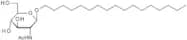
CAS:<p>Heptadecyl 2-acetamido-2-deoxy-b-D-glucopyranoside is a solubilized ion pair that can be catalysed by amines and immobilized lipase. It is also a hydrophobic fatty acid ester. Heptadecyl 2-acetamido-2-deoxy-b-D-glucopyranoside is catalyzed by an enzyme, lipase, to form the corresponding amide. This reaction yield is increased in the presence of hexane, which aids in hydrolysis of the ester linkage between heptadecyl and 2,2′-diacetylidenebis(3,4,6,-trimethylphenol). Heptadecyl 2-acetamido-2-deoxyglucopyranoside is used as a substrate for lipases to produce amides from amines. This product has been used in the production of</p>Formula:C25H49NO6Purity:Min. 95%Molecular weight:459.66 g/mol(R)-Propranolol glucuronide
CAS:<p>Propranolol is a racemic mixture of two optical isomers, which are (R)-propranolol and (S)-propranolol. The (-) form of propranolol metabolizes to the (+) form, and vice versa. The (+) form is more potent than the (-) form as an anti-hypertensive agent. It has been shown that the metabolism of propranolol in microsomes from rat liver differs from that in human liver microsomes. Both forms of propranolol can be metabolized by cytochrome P450 enzymes, but the (-) form can also be metabolized by esterases and glucuronidases.</p>Formula:C22H29NO8Purity:Min. 95%Molecular weight:435.47 g/mol1,4-b-D-Cellopentaitol
CAS:<p>1,4-B-D-Cellopentaitol is a high purity and custom synthesis sugar. It can be modified with fluorination, glycosylation, methylation, or modification. It has CAS No. 61473-65-2 and is an oligosaccharide with a saccharide backbone consisting of 1,4-linked D-glucopyranosyl units joined by alpha-(1,4) linkages and containing one or more monosaccharides (e.g., glucose) or disaccharides (e.g., cellobiose). The carbohydrate may be in the form of a complex carbohydrate.</p>Formula:C30H54O26Purity:Min. 95%Molecular weight:830.73 g/molDextran sulfate sodium - MW 3000-6000
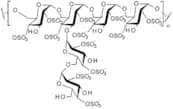
CAS:<p>Dextran sulfate sodium is a complex carbohydrate that consists of a linear chain of many glucose molecules. It is often used as a gel to protect the bowel during radiation therapy and in the treatment of severe burns. Dextran sulfate sodium can be modified with methylation, click modification, fluorination, saccharide, or glycosylation. Dextran sulfate sodium also has many applications in biochemistry and medicine such as being used as an osmotic agent in cell culture media, after being glycosylated it can be used to treat inflammatory bowel disease. This product is custom synthesized by our company and is available in various sizes from MW 3000-6000.</p>Purity:Min. 95%Color and Shape:PowderEntecavir 3''-O-b-D-glucuronide
<p>Entecavir 3''-O-b-D-glucuronide is a synthetic compound that is a methylated, fluorinated, and modified oligosaccharide. It has CAS number 68655-87-8 and it is a high purity, complex carbohydrate with a saccharide unit. Entecavir 3''-O-b-D-glucuronide can be used in the synthesis of monosaccharides and polysaccharides.</p>Formula:C18H23N5O9Purity:Min. 95%Color and Shape:SolidMolecular weight:453.4 g/mol1,4-Dideoxy-1,4-imino-D-xylitol HCl
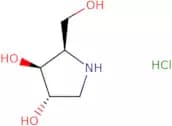
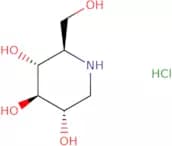
CAS:<p>1,4-Dideoxy-1,4-imino-D-xylitol HCl (DDX) is a potent inhibitor of the enzyme carboxypeptidase A2. DDX has been shown to inhibit the growth of HIV in vitro and in vivo. DDX also inhibits the production of proinflammatory cytokines and neurotrophic factors from HL60 cells. It has been shown to be a potential drug target for the treatment of infectious diseases such as alphaviruses, which produce a severe neuroinvasive disease in humans. DDX binds to dna with high affinity and specificity, but does not bind to RNA or proteins. DDX inhibits mitochondrial membrane potential by binding to ATP synthase and blocking the synthesis of ATP. DDX has also been shown to have an anti-oxidative injury effect on mitochondria, which may contribute to its inhibition of viral replication.</p>Formula:C5H11NO3·HClPurity:Min. 95%Molecular weight:169.61 g/molMethyl 2-deoxy-a-D-ribofuranoside
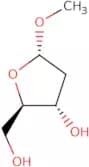
CAS:<p>Methyl 2-deoxy-a-D-ribofuranoside is an atypical nucleoside, which is a component of the thiourea cofactors. It can be synthesized from chloroacetic acid and hydantoin, which are used as starting materials for the production of this compound. The methyl group in this compound is obtained from the methylation of glucose. Methyl 2-deoxy-a-D-ribofuranoside can be identified by its chromatographic properties, such as dimethylformamide (DMF) and chloride. It also contains anomeric substituents that are necessary for nucleosidation reactions. This nucleoside has been shown to have antiinflammatory activity against carrageenan in mice and rats.</p>Formula:C6H12O4Purity:Min. 95%Molecular weight:148.16 g/molN1-a-L-Arabinopyranosylamino-guanidine HNO3
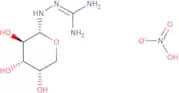
CAS:<p>This compound is a custom synthesis with a complex carbohydrate. It has CAS No. 109853-80-7 and is a polysaccharide that is modified, methylated, glycosylated, and fluorinated. This compound is a sugar with high purity and a click modification. It can be used as an intermediate in the synthesis of other compounds or saccharides.</p>Formula:C6H14N4O4·HNO3Purity:Min. 95%Molecular weight:269.21 g/molGlycyl-3'-fucosyllactose
<p>Glycyl-3'-fucosyllactose is a synthetic, fluorinated polysaccharide that can be modified with glycosylation and methylation. It has the CAS No. of 12078-02-9 and is a high purity product.</p>Formula:C20H36N2O15Purity:Min. 95%Molecular weight:544.5 g/molDodecyl 2-acetamido-2-deoxy-b-D-glucopyranoside
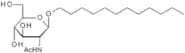
CAS:<p>Dodecyl 2-acetamido-2-deoxy-b-D-glucopyranoside is a synthetic glycosylate which has the potential to be used for the synthesis of various oligosaccharides and polysaccharides. It has a high purity and can be modified with various functional groups such as fluorination, methylation, acetylation, and click chemistry. Dodecyl 2-acetamido-2-deoxy-b-D-glucopyranoside is currently being researched as a treatment for cancer.</p>Formula:C20H39NO6Purity:Min. 95%Molecular weight:389.53 g/molLacto-N-fucopentaose II-BSA
<p>Lacto-N-fucopentaose II-BSA is a glycosylation agent that is derived from the natural substrate N-acetylgalactosamine. It is used in the synthesis of complex carbohydrates, such as glycoconjugates and polysaccharides. Lacto-N-fucopentaose II-BSA can be modified with methyl groups or fluorine atoms to generate derivatives, which are useful for studying glycosylation reactions. The CAS number for this product is 46645-96-8. This product is synthesized using custom methods and has been purified to high purity levels.</p>Purity:Min. 95%D-Glucose hydrazon
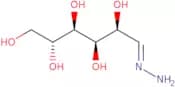
CAS:D-Glucose hydrazon is a custom synthesis of complex carbohydrate. It is made by the reaction of Methylation, Click modification, and Fluorination with saccharide and sugar. The product is a white crystalline solid that is soluble in water.Purity:Min. 95%cis-Resveratrol 4'-O-b-D-glucuronide
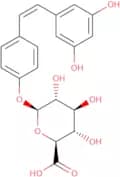
CAS:<p>cis-Resveratrol 4'-O-b-D-glucuronide is a synthetic compound that is a sugar, with a molecular weight of 598. It is an oligosaccharide and has been modified with fluorination on the C2 position. cis-Resveratrol 4'-O-b-D-glucuronide is the methylated form of resveratrol. It has been shown to have anti-inflammatory properties and can be used for the treatment of inflammation associated with arthritis, psoriasis, or septic shock. cis-Resveratrol 4'-O-b-D-glucuronide binds to polysaccharides in the body and inhibits their ability to bind to glycoproteins on cell surfaces. This results in a decrease in inflammation and other inflammatory responses that are mediated by these cells.</p>Formula:C20H20O9Purity:Min. 95%Molecular weight:404.37 g/molmyo-Inositol 2,3,4,5,6-pentakisphosphate decasodium salt
CAS:Myo-inositol 2,3,4,5,6-pentakisphosphate decasodium salt is an analog of inositol. It has been shown to have physiological functions in the human body. Myo-inositol 2,3,4,5,6-pentakisphosphate decasodium salt is a significant interaction with camp levels that may be due to its uptake by cells and plasma mass spectrometry. It also interacts with cellular organelles such as the mitochondria and endoplasmic reticulum. This compound can bind to myo-inositol and inhibit phosphoinositide 3-kinase activity. It has been shown to have a biological effect in vivo through structural analysis and vivomodel studies.Formula:C6H7Na10O21P5Purity:Min. 95%Molecular weight:799.87 g/mol1-Deoxy-L-ribose
CAS:<p>1-Deoxy-L-ribose is a metabolite of acetone. It is a monosaccharide that contains one less oxygen atom than its parent compound. 1-Deoxy-L-ribose is found in the urine and blood of humans and animals. In animals, it can be synthesized from glucose by the enzyme ribose 1-phosphate reductase. This reaction requires an energy source such as ATP or NADH to reduce ribose 1,5-bisphosphate to 1,4-dihydroxyacetone phosphate, which then undergoes spontaneous dehydration to form 1-deoxy-D-ribose.</p>Formula:C5H10O4Purity:Min. 95%Molecular weight:134.13 g/mol6-O-Benzoyl-3-O-triisopropylsilyl-D-glucal
6-O-Benzoyl-3-O-triisopropylsilyl-D-glucal is a saccharide that contains an O-benzoyl group and a triisopropylsilyl protecting group. It is also referred to as benzoylglucal. 6-O-Benzoyl-3-O-triisopropylsilyl-D-glucal can be used as a Click modification, which is the addition of a carbon atom in the form of a methylene bridge using copper catalysis in the presence of azide or acetate. In this synthesis, an O6 ether from the glycosylation reaction reacts with an activated carbon atom from the Click modification. This product may be used for glycosylation, which is the process by which sugars are added to proteins or other molecules. 6-O-Benzoylglycosides can be synthesized to modify carbohydratesFormula:C22H34O5SiPurity:Min. 95%Molecular weight:406.59 g/mol1-Deoxy-L-altronojirimycin hydrochloride
CAS:<p>L-altronojirimycin is a diterpene glycoside that belongs to the group of natural products that have inhibitory properties against lipid peroxidation. It has been shown to decrease the concentration of 1,2-dipalmitoylglycerophosphocholine (DPPC) in primary cells and reduce the rate of lipid peroxidation in a concentration-dependent manner. L-altronojirimycin inhibits the activity of enzymes such as acetylcholinesterase and phospholipase A2, which are involved in inflammation. This drug has also been shown to have cardioprotective effects and inhibit mutations in cardiac muscle cells. L-altronojirimycin has been tested for its long-term efficacy and shown to be effective against both bowel disease and cardiac effects.</p>Formula:C6H13NO4•HClPurity:Min. 95%Color and Shape:PowderMolecular weight:199.63 g/molo-(A-D-Galactopyranosyl)-D-galactose
CAS:<p>O-(A-D-Galactopyranosyl)-D-galactose is a sugar that is used in the synthesis of complex carbohydrates. O-(A-D-Galactopyranosyl)-D-galactose can be fluorinated and methylated to produce o-(A-D-Galactopyranosyl)-2,6-dideoxy--glucose. This sugar has been shown to inhibit the growth of bacteria such as Mycobacterium tuberculosis and Mycobacterium avium complex. Synthesis of this sugar is done through a custom synthesis process with high purity and quality.</p>Formula:C12H22O11Purity:Min. 95%Molecular weight:342.3 g/molCyclohexylpropanoyl-N-Hydroxyethylglucamide
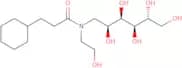
CAS:<p>Cyclohexylpropanoyl-N-Hydroxyethylglucamide is a custom synthesis of a complex carbohydrate with high purity and high quality. This compound is an Oligosaccharide, Polysaccharide, and Modification. It is also a CAS No. 864434-14-0, Methylation, Glycosylation, Carbohydrate, Click modification, sugar and Fluorination. Cyclohexylpropanoyl-N-Hydroxyethylglucamide has been synthesized with Fluorination for use in the synthesis of new compounds.</p>Formula:C17H33NO7Purity:Min. 95%Molecular weight:363.45 g/mol2,3,4,6-Tetra-O-acetyl-b-D-thioglucopyranose sodium salt
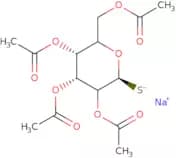
CAS:2,3,4,6-Tetra-O-acetyl-b-D-thioglucopyranose sodium salt is a synthetic monosaccharide that can be used for glycosylation. This product is synthesized by the addition of acetyl groups to the 2-, 3-, 4-, and 6-positions on the glucose moiety. The resulting product has been shown to have a high degree of purity as well as a low content of impurities.Formula:C14H19O9SNaPurity:Min. 95%Molecular weight:386.35 g/molDextran sulfate sodium salt - MW 150,000
CAS:Induces ulceration; used to model inflammatory bowel diseasePurity:Min. 95%Color and Shape:Powder4,6-O-(2-Naphthylidene)-D-glucal
4,6-O-(2-Naphthylidene)-D-glucal is a complex carbohydrate that is synthesized by the modification of a polysaccharide. It has been modified by a methylation reaction, glycosylation, and click chemistry. It is an Oligosaccharide with CAS No., and has a high purity. 4,6-O-(2-Naphthylidene)-D-glucal has been fluorinated to increase its stability in the presence of water as well as to prevent it from reacting with other molecules.Purity:Min. 95%Valienamine HCl
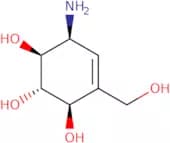
CAS:<p>Glucosidase Inhibitor</p>Formula:C7H13NO4Purity:Min. 95%Color and Shape:White to off-white solid.Molecular weight:175.18 g/molMaltotriose hydrate
CAS:Maltotriose hydrate is a Chinese-made inhibitor analog that has shown promising anticancer properties. It has been shown to inhibit kinases, which are proteins involved in cell signaling pathways that regulate cell growth and division. This inhibition leads to apoptosis, or programmed cell death, in cancer cells. Maltotriose hydrate has been found in human urine and may have potential as a medicinal agent for the treatment of various types of tumors and cancers. Its ability to target cancer cells specifically makes it a promising candidate for further research into cancer treatments.Formula:C18H34O17Purity:Min. 95%Molecular weight:522.5 g/molHyaluronate biotin - Molecular Weight - 750kDa
<p>Hyaluronate biotin is a custom synthesis of 750kDa. It has been modified with fluorination, methylation and click modification. This product is a glycosylation of saccharide, which is a carbohydrate that can be found in many foods and is used as a sweetener. The saccharides are complex carbohydrates that consist of long chains of monosaccharides or simple sugars. Click modification is the process by which a small molecule, usually an azide group or nitrenium ion, reacts with an electron-deficient alkyne group to produce a new covalent bond without breaking either existing bond.</p>Purity:Min. 95%D-Desosamine
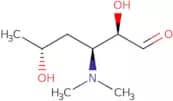
CAS:D-Desosamine is a chemical compound that has been isolated from human serum. It is an enzyme inhibitor that inhibits the activity of enzymes such as phosphatases, kinases, and proteases. D-Desosamine also has a matrix effect, which can be used to modify the properties of polymer matrices in order to improve their biocompatibility and mechanical properties. The molecular docking analysis indicated that desosamine can bind to bacterial serine/threonine protein kinase Streptococcus pyogenes phage T4 (SpyPK) and inhibit its activity. This inhibition may be due to the transfer reactions caused by desosamine binding to the enzyme's active site and blocking it. Structural analysis showed that D-desosamine forms hydrogen bonds with amino acids in SpyPK's active site, forming a covalent bond with cysteine residue Cys240. D-Desosamine has been shown to have anti-bacterial properties againstPurity:Min. 95%Lacto-N-tetraose-BSA
<p>Lacto-N-tetraose-BSA is a carbohydrate that contains four monosaccharides. It has been shown to be an autoantibody in patients with myasthenia gravis and can cause muscle weakness by binding to the muscle protein, actin. Lacto-N-tetraose-BSA has also been found to bind with nerve tissue and may be involved in the development of sclerosis. This carbohydrate is also negatively charged and agglutinates red blood cells. When used for immunofluorescence, it shows a strong reaction against glycoconjugates on the surface of neurons and nerve tissue. Lacto-N-tetraose-BSA binds specifically to bovine serum albumin (BSA) containing antibodies, which are produced by immune cells called B cells. The binding sites are located on the outer part of the molecule, near the sugar residues.</p>Purity:Min. 95%Color and Shape:PowderGal[2346Ac]b(1-3)GalN3[46Bzd]-b-MP
<p>Gal[2346Ac]b(1-3)GalN3[46Bzd]-b-MP is a modified oligosaccharide with a carbohydrate backbone of 3 mannose and 1 galactose residues. The saccharide is synthesized from the monosaccharides methylated, glycosylated, and then fluorinated. Gal[2346Ac]b(1-3)GalN3[46Bzd]-b-MP has a CAS number of 71769-77-5.</p>Formula:C34H39N3O15Purity:Min. 95%Molecular weight:729.68 g/molMethyl 2,3,4-tri-O-acetyl-b-D-glucuronide methyl ester
CAS:<p>Methyl 2,3,4-tri-O-acetyl-b-D-glucuronide methyl ester is a custom synthesis chemical. It has a molecular weight of 342.13 g/mol and the abbreviation CAS No. 34213-34-8. Methyl 2,3,4-tri-O-acetyl-b-D-glucuronide methyl ester is used as a Modification chemical in Fluorination reactions and can be used to synthesize Oligosaccharides and Polysaccharides. This chemical reacts with Glycosylation reactions to form complex carbohydrates such as saccharides and sugar.</p>Formula:C14H20O10Purity:Min. 95%Molecular weight:348.31 g/mol




![[UL-13C18]Maltotriose hydrate](/_next/image/?url=https%3A%2Fstatic.cymitquimica.com%2Fproducts%2F3D%2Fthumb-webp%2FOM45239.webp&w=3840&q=75)



![Gal[2346Ac]b(1-3)GalN3[46Bzd]-b-MP](/_next/image/?url=https%3A%2Fstatic.cymitquimica.com%2Fproducts%2F3D%2Fthumb-webp%2FOG60597.webp&w=3840&q=75)
