Glycoscience
Glycoscience is the study of carbohydrates and their derivatives, as well as the interactions and biological functions they participate in. This field of research is crucial for understanding a wide variety of biological processes, including cell recognition, signaling, immune response, and disease development. Glycoscience has important applications in biotechnology, medicine, and the development of new drugs and therapies. At CymitQuimica, we offer a wide selection of high-quality, high-purity products for glycoscience research. Our catalog includes monosaccharides, oligosaccharides, polysaccharides, glycoconjugates, and specific reagents, designed to support researchers in their studies on the structure, function, and applications of carbohydrates in biological systems. These resources are intended to facilitate scientific discoveries and practical applications in various areas of bioscience and medicine.
Subcategories of "Glycoscience"
- Aminosugars(108 products)
- Glyco-Related Antibodies(282 products)
- Glycolipids(46 products)
- Glycosaminoglycans (GAGs)(55 products)
- Glycosides(419 products)
- Monosaccharides(6,624 products)
- Oligosaccharides(3,682 products)
- Polysaccharides(503 products)
Found 11046 products of "Glycoscience"
Sort by
Purity (%)
0
100
|
0
|
50
|
90
|
95
|
100
a-Spinasterol glucoside
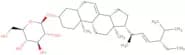
CAS:<p>a-Spinasterol glucoside is a glucopyranoside that belongs to the group of triterpenoid. It has a bitter taste, and its chemical structure was first isolated from the seeds of Trichosanthes bracteata. This compound can be found in other plants such as cucurbitacin and cucumeroides. These two compounds are bitter and are used in Chinese traditional medicine for treating inflammation, pain, or even cancer. The chemical structure of a-spinasterol glucoside is related to vanillic acid, glyceryl palmitate, and vanillic acid.</p>Purity:Min. 95%Pent-4-enyl-D-glucopyranoside
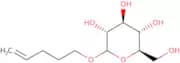
CAS:<p>Pent-4-enyl-D-glucopyranoside is a kind of compound that reacts with acetonitrile to form sodium methoxide. The reaction of the sodium methoxide with the acetonitrile will produce 2-chlorobenzoic acid and conformation. The result of this reaction is the stereospecifically, which is a pyranose ring.</p>Formula:C11H20O6Purity:Min. 95%Molecular weight:248.27 g/mol1,3-Di-O-acetyl-2-deoxy-5-O-benzoyl-L-erythro-pentofuranose
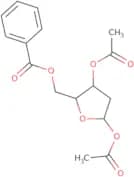
CAS:<p>1,3-Di-O-acetyl-2-deoxy-5-O-benzoyl-L-erythro-pentofuranose is a sugar with a complex carbohydrate structure. It is synthesized by the reaction of 1,3:2,4:5,6:7,8:9,10:11,12:13,14:15,16:17,18:19,20:21 and 22 O acetyl groups with 2 deoxyribose moieties. This product can be used in Click chemistry and glycosylization reactions. The CAS number for this product is 327027-21-4.</p>Formula:C16H18O7Purity:Min. 95%Molecular weight:322.31 g/mol1,2,3,6-Tetra-O-pivaloyl-a-D-galactofuranoside
CAS:<p>Tetra-O-pivaloyl-a-D-galactofuranoside is a carbohydrate that belongs to the group of saccharides and oligosaccharides. It is a synthetic sugar that can be custom synthesized and modified through fluorination, methylation, glycosylation, or click chemistry. Tetra-O-pivaloyl-a-D-galactofuranoside has been shown to inhibit the growth of bacteria in vitro.</p>Formula:C26H44O10Purity:Min. 95%Molecular weight:516.62 g/mol1,2,4,6-Tetra-O-acetyl-3-chloro-3-deoxy-D-glucopyranose
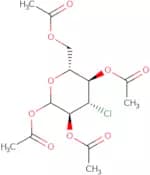
CAS:<p>1,2,4,6-Tetra-O-acetyl-3-chloro-3-deoxy-D-glucopyranose (1) is a synthetic oligosaccharide that has been modified with a fluorine atom at the 6 position of the glucose moiety. This modification has been shown to have increased stability in acidic environments. Glycosylation can be achieved by reacting 1 with an appropriate glycosylant such as bromoacetyl bromide or chloroacetyl chloride. The saccharide unit may also be methylated at the 2 and 4 positions of the glucose moiety to confer protection against enzymatic degradation. Click modification can be used to attach other molecules such as proteins or peptides to 1,2,4,6-tetra-O-acetyl-3-chloro-3-deoxy--D--glucopyranose via a covalent bond between</p>Formula:C14H19ClO9Purity:Min. 95%Molecular weight:366.75 g/molMethyl b-L-daunosaminide HCl
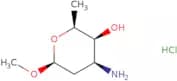
CAS:<p>Methyl b-L-daunosaminide HCl is a glycoconjugate that has been custom synthesized by our team. It is a complex carbohydrate that has been modified with glycosylation and methylation groups. Methyl b-L-daunosaminide HCl is an oligosaccharide that contains multiple saccharides linked together in a specific order. It is also fluorinated at the C4 position, which makes it more stable in water. Methyl b-L-daunosaminide HCl has high purity, making it suitable for use in the modification of other compounds or as a research tool for studying glycosylations.</p>Formula:C7H15NO3·HClPurity:Min. 95%Molecular weight:197.66 g/mol6-O-Tosyl-D-mannose
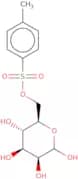
CAS:<p>6-O-Tosyl-D-mannose is a Carbohydrate, Modification, saccharide, Oligosaccharide with CAS No. 105265-64-3. It is fluorinated on the 6th carbon atom and methylated on the 3rd carbon atom. It can be used in custom synthesis and also has high purity and a custom synthesis. It can be synthesized by glycosylation or click modification.</p>Formula:C13H18O8SPurity:Min. 95%Color and Shape:PowderMolecular weight:334.34 g/molMaltoundecaose
CAS:<p>Maltoundecaose is a glycogen storage molecule found in barley and other plants. Maltoundecaose is synthesized from maltotetraose by the enzyme isoamylase, which cleaves the alpha-1,4 glycosidic linkage between two glucose molecules. Maltoundecaose can be hydrolyzed by the enzyme maltodextrin phosphorylase to form maltotriose and glucose. Maltotetraose is synthesized from sucrose by UDP-glucose pyrophosphorylase. The enzyme has been shown to have a mutation that leads to an increase in activity, which may be due to its autocatalytic nature. Maltotetraose also has three glucosidic linkages, which are formed between two glucose molecules and one of four different residues: dodecyl, hydroxymethylpentadecyl, octadecyl or hexadecyl. Maltotetraose can be hydrolyzed by</p>Formula:C66H112O56Purity:Min. 95%Color and Shape:PowderMolecular weight:1,801.56 g/molPhenyl 2,3-di-O-benzoyl-b-D-thiogalactopyranoside
CAS:<p>Phenyl 2,3-di-O-benzoyl-b-D-thiogalactopyranoside is a custom synthesis that is an Oligosaccharide, Polysaccharide and Modification of saccharide. It has been modified with Methylation and Glycosylation, Click modification and Carbohydrate. This product is offered in high purity and is Fluorinated, Synthetic.</p>Purity:Min. 95%6-O-Acetyl-2-azido-3,4-di-O-benzyl-2-deoxy-D-glucopyranose
CAS:<p>Glucosamine is a hexose sugar that is an amino sugar and a precursor in the biosynthesis of glycoproteins. It also acts as an intermediate for the synthesis of other non-carbohydrate natural products. 6-O-Acetyl-2-azido-3,4-di-O-benzyl-2-deoxyglucopyranose is a glucosamine derivative that has been synthesized from trifluoroacetic acid and piperidine. The acetyl group on this compound makes it soluble in water, which allows for its use in pharmaceuticals and other applications.</p>Purity:Min. 95%D-Glucose 6-phosphate, disodium salt
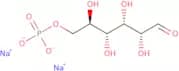
CAS:<p>D-Glucose 6-phosphate, disodium salt is an antibiotic that is used to treat gram-negative bacterial infections. It binds to the bacterial ribosome and inhibits protein synthesis, which leads to cell death by inhibiting the production of proteins vital for cell division. This drug has been shown to be active against a wide range of bacteria, including resistant strains such as Escherichia coli and Salmonella typhimurium. D-Glucose 6-phosphate, disodium salt also has anti-inflammatory properties and can be used as an anti-bacterial agent in the treatment of typhoid fever.</p>Formula:C6H11O9Na2PMolecular weight:304.10 g/mol2,3,5-Tri-O-p-chlorobenzyl-L-fucopyranoside
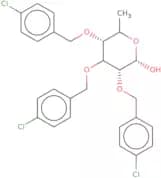
CAS:<p>2,3,5-Tri-O-p-chlorobenzyl-L-fucopyranoside is a modified sugar and an effective inhibitor of the glycosidase enzymes. It has been shown to inhibit the synthesis of glycogen in vitro. 2,3,5-Tri-O-p-chlorobenzyl-L-fucopyranoside is a major component of commercially available agarose gel electrophoresis buffers and is also used for modification of proteins by click chemistry. The compound can be custom synthesised with a high degree of purity and can be fluorinated for use in mass spectrometry.</p>Formula:C27H27Cl3O5Purity:Min. 95%Molecular weight:537.86 g/molα,β-D-Glucose pentaacetate
CAS:<p>Glucose pentaacetate is a form of glucose that reacts with boron trifluoride etherate to produce anomers. This process can be used to synthesize the anomeric form of glucose, which is important for the biosynthesis of glycosides. Glucose pentaacetate has been shown to react with nitrate and trifluoride, forming conjugates with aluminum and chloride. The catalytic stereocontrol of this reaction allows for the production of disaccharides without hydrogen chloride or formylation.</p>Formula:C16H22O11Molecular weight:390.35 g/mol6-Bromo-6-deoxy-b-cyclodextrin
CAS:<p>This beta-cyclodextrin (β-CD) derivative is a functionalized cyclic oligosaccharide composed of seven glucose units, characterized by a hydrophilic exterior and a lipophilic cavity (bigger than α-CD and smaller than γ-CDs), which allows it to encapsulate various guest molecules. This structural feature facilitates its use in multiple applications, including pharmaceuticals, food enhancement, and cosmetics. In the pharmaceutical industry, it enhances the solubility and stability of poorly water-soluble drugs, improving their bioavailability and efficacy while also masking unpleasant tastes. The food sector utilizes it as a stabilizer for flavors, colors, and nutrients, extending shelf life by protecting sensitive ingredients from degradation. In cosmetics, it serves as a complexing agent for fragrances and active components, ensuring their stability and controlled release. Its use expands to many other fields, including nanotechnology for drug delivery systems, environmental remediation for extracting organic pollutants, textiles for slow-release fragrances, and analytical chemistry for chiral separation.</p>Formula:C42H63Br7O28Purity:Min. 95%Color and Shape:White PowderMolecular weight:1,575.26 g/molMethyl 4-chloro-4-deoxy-a-D-galactopyranoside
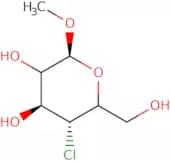
<p>Methyl 4-chloro-4-deoxy-a-D-galactopyranoside is a synthetic monosaccharide that has been modified with fluorination and methylation. The modification of this sugar provides it with the ability to be used in glycosylation reactions, click chemistry, and other modification reactions. This product is offered as a custom synthesis and can be synthesized for any desired specification. It is also available in high purity form.</p>Formula:C7H13ClO5Purity:Min. 95%Molecular weight:212.63 g/molRaltegravir b-D-glucuronide methyl ester
<p>Raltegravir is an HIV protease inhibitor that belongs to the class of glycosylated polymers. This compound is synthesized by a click modification of d-glucose with a methyl group and then fluorinated. The sugar moiety is attached to the backbone through a glycosyl linkage, which results in the formation of a complex carbohydrate. Raltegravir b-D-glucuronide methyl ester is soluble in water, alcohols, and organic solvents. It has been shown to be active against HIV type 1 strains resistant to other drugs. The synthesis of this compound was custom designed for high purity and high yield.</p>Formula:C27H31FN6O11Purity:Min. 95%Molecular weight:634.57 g/mol2,4-O-Ethylidene-D-erythrose
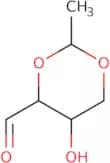
CAS:<p>2,4-O-Ethylidene-D-erythrose is a trimerization product of glyoxal and acetaldehyde. It is an aldehyde that can be used as a precursor to other compounds. The hydrated form of 2,4-O-ethylidene-D-erythrose has been rationalized by the mesoxalic acid and water molecules to form the trimer. This compound can be produced from the glycolaldehyde and sulfoxide in an oxidation reaction with hydrogen peroxide. The acetylation of 2,4-O-ethylidene-D-erythrose produces isoxazolidines which are stereoselective.</p>Formula:C6H10O4Purity:Min. 95%Molecular weight:146.14 g/molBenzyl 4-O-(2,3,4,6-tetra-O-benzyl-a-D-galactopyranosyl)-2,3-di-O-benzyl-6-O-benzoyl-b-D-galactopyranoside
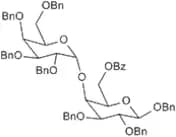
<p>Benzyl 4-O-(2,3,4,6-tetra-O-benzyl-a-D-galactopyranosyl)-2,3-di-0benzyl 6-O-benzoyl-b-D-galactopyranoside is a synthetic carbohydrate that belongs to the class of oligosaccharides. It has been modified by fluorination and methylation. This compound is also glycosylated and click modified.</p>Formula:C68H68O12Purity:Min. 95%Molecular weight:1,077.26 g/molD-[6-13C]Galacturonic acid potassium salt
<p>D-[6-13C]Galacturonic acid potassium salt is a synthetic, water-soluble complex carbohydrate with a molecular weight of 744.2. It is used as a fluorescence probe in magnetic resonance imaging (MRI) and also has applications in the synthesis of oligosaccharides and polysaccharides. D-[6-13C]Galacturonic acid potassium salt is soluble in water and has an average pH of 5.0. This compound is available for custom synthesis with high purity and can be found under CAS number 144561-27-4.</p>Purity:Min. 95%1'-Epi 2',2'-difluoro-2'-deoxyuridine 3',5'-dibenzoate
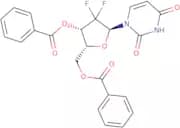
CAS:<p>1'-Epi 2',2'-difluoro-2'-deoxyuridine 3',5'-dibenzoate is a synthetic compound that has been designed for use in the synthesis of oligosaccharides and polysaccharides. The compound is a monosaccharide, which can be modified by fluorination or click chemistry to provide a variety of different side chains and properties. 1'-Epi 2',2'-difluoro-2'-deoxyuridine 3',5'-dibenzoate is a high purity product with no detectable impurities.</p>Formula:C23H18F2N2O7Purity:Min. 95%Molecular weight:472.4 g/molPhenyl 2,3,4-tri-O-benzyl-a-L-thiorhamnopyranose
<p>Phenyl 2,3,4-tri-O-benzyl-a-L-thiorhamnopyranose is a modified carbohydrate that is synthesized from the saccharide thiorhamnopyranose. The carbonyl group of the saccharide is substituted with phenyl group and then benzylated. Phenyl 2,3,4-tri-O-benzyl-a-L-thiorhamnopyranose is a white powder that has a CAS number, can be custom synthesized to order, and has high purity. It can be used in glycosylation reactions as well as click modification reactions, which are modifications to the molecule that increase its stability and allow it to react more readily with other molecules.</p>Formula:C33H34O4SPurity:Min. 95%Molecular weight:526.69 g/molCotinine N-(4-deoxy-4,5-didehydro)-b-D-glucuronide
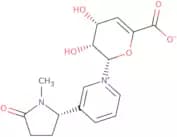
CAS:<p>Cotinine N-(4-deoxy-4,5-didehydro)-b-D-glucuronide is a custom synthesis and modification of cotinine. Cotinine is an alkaloid found in tobacco plants and the primary metabolite of nicotine. It has been shown to inhibit glycosylation, methylation, and carbohydrate modification reactions. This product is offered in high purity and with a CAS number of 146275-15-2.</p>Formula:C16H18N2O6Purity:Min. 95%Molecular weight:334.32 g/molCarboxymethyl-dextran sodium salt 10-20% COOH - Average molecular weight 70000
CAS:<p>Drug carrier for cancer therapy & imaging, biocompatible, soluble, biodegradable</p>Purity:Min. 95%Color and Shape:White Powder1-O-Oleoyl-2-O-acetyl-3-O-(b-D-galactopyranosyl) syn-glycerol
<p>1-O-Oleoyl-2-O-acetyl-3-O-(b-D-galactopyranosyl) syn-glycerol is a complex carbohydrate that is custom synthesized for use in modification reactions. It has been shown to be compatible with a variety of other saccharides and can be methylated, glycosylated, or fluorinated. This product is available in high purity and can be ordered as either a monosaccharide or a polysaccharide.</p>Formula:C29H52O10Purity:Min. 95%Molecular weight:560.72 g/molD-Galactose-2-D
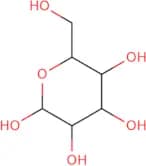
CAS:<p>D-Galactose-2-D is an anticancer agent that has been shown to inhibit the activity of kinases, which are enzymes involved in cell signaling pathways. It is a derivative of D-galactose and has been found in human urine. D-Galactose-2-D has demonstrated potent antitumor effects against various cancer cell lines, including Chinese hamster ovary cells and human colon carcinoma cells. This compound induces apoptosis, or programmed cell death, in cancer cells by inhibiting the activity of key proteins involved in cell survival. Additionally, D-Galactose-2-D has been found to be a potent inhibitor of capsaicin-induced activation of kinase, suggesting its potential as a therapeutic agent for inflammatory conditions.</p>Formula:C6H12O6Purity:Min. 95%Molecular weight:181.16 g/molb-Cyclodextrin dihydrogen phosphate, sodium salt
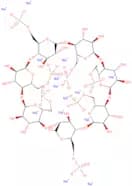
CAS:<p>This beta-cyclodextrin (β-CD) derivative is a functionalized cyclic oligosaccharide composed of seven glucose units, characterized by a hydrophilic exterior and a lipophilic cavity (bigger than α-CD and smaller than γ-CDs), which allows it to encapsulate various guest molecules. This structural feature facilitates its use in multiple applications, including pharmaceuticals, food enhancement, and cosmetics. In the pharmaceutical industry, it enhances the solubility and stability of poorly water-soluble drugs, improving their bioavailability and efficacy while also masking unpleasant tastes. The food sector utilizes it as a stabilizer for flavors, colors, and nutrients, extending shelf life by protecting sensitive ingredients from degradation. In cosmetics, it serves as a complexing agent for fragrances and active components, ensuring their stability and controlled release. Its use expands to many other fields, including nanotechnology for drug delivery systems, environmental remediation for extracting organic pollutants, textiles for slow-release fragrances, and analytical chemistry for chiral separation.</p>Formula:C42H70O35Purity:Min. 95%Molecular weight:1,134.98 g/mol4-O-Acetyl-3,6-di-O-(2,3,4,6-tetra-O-acetyl-a-D-mannopyranosyl)-1,2-ethyledine-b-D-mannopyranose
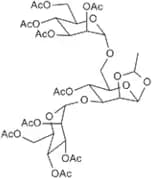
CAS:<p>4-O-Acetyl-3,6-di-O-(2,3,4,6-tetra-O-acetyl-a-D-mannopyranosyl)-1,2-ethyledine (CAS No. 230953-17) is a carbohydrate that has been modified with acetyl groups at the 3 and 6 positions of the monosaccharide unit. This modification is a complex carbohydrate that is made up of oligosaccharides and polysaccharides. The modification causes changes in the chemical properties of the carbohydrate compared to natural saccharides. 4-O-(2,3,4,6) tetra O acetyl a D mannopyranosyl 1 2 ethyledine b D mannopyranose has been used in synthesis of custom sugars for medical applications. It has also shown anti inflammatory activities against Mycobacterium tuberculosis and Mycobacterium avium complex</p>Formula:C38H52O25Purity:Min. 95%Molecular weight:908.8 g/molDihydroartemisinin glucuronide
CAS:<p>Dihydroartemisinin glucuronide is an antimalarial drug that belongs to the class of artemisinins, which are natural products derived from a plant extract. It is used in the treatment of malaria and related diseases. Dihydroartemisinin glucuronide has been detected in plasma samples by LC-MS/MS using a gold electrode. The compound has been shown to be effective in treating malaria and related diseases, including biliary tract infections. The systematic calibration was performed with a binder and agilent technologies.</p>Formula:C21H32O11Purity:Min. 95%Color and Shape:White To Off-White SolidMolecular weight:460.47 g/molBlood Group B type I tetrasaccharide
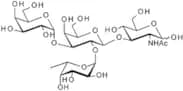
CAS:<p>Gala1-3(Fuca1-2)Galb1-3GlcNAc</p>Formula:C26H45NO20Purity:Min. 95%Color and Shape:White/Off-White SolidMolecular weight:691.63 g/moltert-Butyl 2-acetamido-2-deoxy-b-D-glucopyranoside
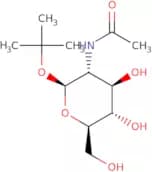
CAS:Tert-Butyl 2-acetamido-2-deoxy-b-D-glucopyranoside is a synthetic glycoside with a molecular weight of 379.5 Da. It has been used as a raw material for the synthesis of complex carbohydrate, such as oligosaccharides and polysaccharides. Tert-Butyl 2-acetamido-2-deoxy-b-D-glucopyranoside is also used in the modification of sugars, such as methylation and click modification.Formula:C12H23NO6Purity:Min. 95%Molecular weight:277.31 g/molD-Glucofuranuronic acid,gamma-lactone,1,6-13C2
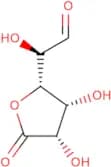
CAS:<p>D-Glucofuranuronic acid,gamma-lactone,1,6-13C2 is an organic compound that is a glycosidic acid with a uronic acid group. It is composed of a hydrocarbon group and an acetylated d-xylose. This compound has been shown to have inhibitory activities against glycosidases and glycoside hydrolases. D-Glucofuranuronic acid,gamma-lactone,1,6-13C2 is synthesized by the reaction of trifluoroacetic acid with glyceraldehyde in the presence of water and an acid catalyst. It can be used as medicine for treating blood sugar levels but should not be taken in conjunction with other medicines because it inhibits their absorption.</p>Formula:C2C4H8O6Purity:Min. 95%Molecular weight:178.12 g/molMethyl 4,6-O-benzylidene-2-O-p-toluenesulfonyl-a-D-glucopyranoside
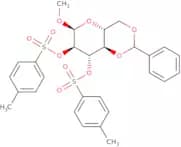
CAS:<p>Methyl 4,6-O-benzylidene-2-O-p-toluenesulfonyl-a-D-glucopyranoside is a modification of the natural carbohydrate, alpha-D-(1→4)-glucose. It is an oligosaccharide that is synthesized by the methylation of a natural sugar and subsequent glycosylation with a saccharide. This compound has been shown to inhibit the activity of bacterial RNA polymerase and DNA gyrase enzymes. The synthesis of this compound has been described in detail in the literature.<br>Methyl 4,6-O-benzylidene-2-O-(p-toluenesulfonyl)a D glucopyranoside <br>This compound is a modification of the natural carbohydrate, alpha D (1 ->4) glucose. It is an oligosaccharide that is synthesized by methylation of a natural</p>Formula:C21H24O8SPurity:Min. 95%Molecular weight:436.48 g/molMethyl 2-acetamido-3-O-(2,3,4,6-tetra-O-acetyl-b-D-galactopyranosyl)-2-deoxy-4,6-O-(4-methoxybenzylidene)-a-D-galactopyranoside
CAS:Methyl 2-acetamido-3-O-(2,3,4,6-tetra-O-acetyl-b-D-galactopyranosyl)-2-deoxy-4,6-O-(4-methoxybenzylidene)-a-D-galactopyranoside is a custom synthesis of an oligosaccharide with a polysaccharide. It is a fluorinated complex carbohydrate that has been modified for high purity. Methyl 2 acetamido 3 O (2,3,4,6 tetra O acetyl b D galactopyranosyl) 2 deoxy 4,6 O (4 methoxybenzylidene) a D galactopyranoside is composed of monosaccharides and sugar.Formula:C31H41NO16Purity:Min. 95%Molecular weight:683.65 g/molBenzyl b-D-glucopyranosiduronic acid methyl ester triacetate
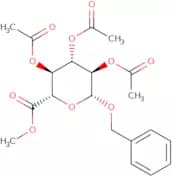
CAS:<p>Benzyl b-D-glucopyranosiduronic acid methyl ester triacetate is a synthetic sugar that can be modified to produce a wide range of oligosaccharides. It is suitable for glycosylation reactions, such as the synthesis of complex carbohydrates. This compound has high purity and is custom synthesized according to customer specifications. Benzyl b-D-glucopyranosiduronic acid methyl ester triacetate has been fluorinated, methylated, and monosaccharide modifications. These modifications provide this compound with many potential uses in the food industry, medicine, and other industries.</p>Formula:C20H24O10Purity:Min. 95%Molecular weight:424.4 g/mol6,7,8-Trihydroxy-1-(hydroxymethyl)-3-oxo-2-oxa-4-azabicyclo[3.3.1]nonane
CAS:<p>Valiolamine is a hydroxymethyl-derivative of jinggangmycin. It is a competitive inhibitor of the enzyme dihydroorotate dehydrogenase. Valiolamine has been shown to inhibit the production of amines, such as histamine, and has been used in the treatment of allergies.</p>Formula:C8H13NO6Purity:Min. 95%Molecular weight:219.19 g/molBlood Group B type II linear trisaccharide-HSA
<p>Blood group antigen conjugated to human serum albumin</p>Purity:Min. 95%Color and Shape:White PowderEthyl 2,3,6-tri-O-benzyl-1-thio-β-D-galactopyranoside
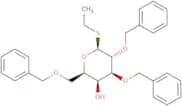
CAS:Ethyl 2,3,6-tri-O-benzyl-1-thio-β-D-galactopyranoside is a synthetic monosaccharide that has been used in the synthesis of oligosaccharides and polysaccharides. It has also been used in glycosylation reactions to produce high purity sugar derivatives. It is a fluorinated sugar molecule that can be custom synthesized to order with a high degree of purity. The CAS number for this compound is 152964-77-7.Formula:C29H34O5SPurity:Min. 95%Molecular weight:494.64 g/mol1,6-Di-O-benzyl-a-D-glucopyranoside
<p>1,6-Di-O-benzyl-a-D-glucopyranoside is an oligosaccharide that has been synthesized by the Click chemistry method. It is a polysaccharide with a high purity and an excellent yield. The product contains a single monosaccharide unit of D-glucose with a 1,6 glycosylation pattern. The product has undergone methylation and fluorination to produce the desired structure. 1,6-Di-O-benzyl-a-D-glucopyranoside has been shown to have antihypertensive effects in rats and is thought to be due to its ability to inhibit angiotensin II receptor activity.</p>Purity:Min. 95%Sennoside D
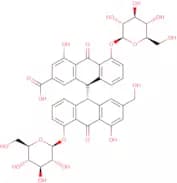
CAS:<p>Sennoside D is a fatty acid that can be isolated from the sennosides found in the leaves of the plant Senna alata. It has been shown to have anti-tumor properties and may play a role in treating colon cancer, breast cancer, and skin cancer. Sennoside D has also been shown to be effective against autoimmune diseases such as arthritis, ulcerative colitis, and Crohn's disease. The low energy of this compound may be due to its formation rate. The hydroxide solution (NaOH) is used in the synthesis of this molecule because it binds with carbon dioxide molecules to form sodium bicarbonate and carbon dioxide gas which can then be captured by water. This process produces a high yield of sennoside D. In addition, the bound form of this molecule is soluble in organic solvents and insoluble in water, which makes it suitable for skin conditions as well as colon cancer treatments.</p>Purity:Min. 95%Color and Shape:Solid2-Acetamido-2-deoxy-D-galactono-1,4-lactone
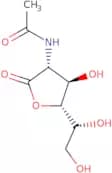
CAS:<p>2-Acetamido-2-deoxy-D-galactono-1,4-lactone is a trifluoroacetate analogue of 2-acetamido-2,3,4,5,6-pentafluorobenzonitrile. It has been shown to be an inhibitor of the synthesis of pyrimidine nucleotides in calf thymus DNA. The lactone ring structure is responsible for the antimicrobial activity of this compound. Sodium borohydride converts the compound into a phenylhydrazone derivative and formazans are formed during this process. This reaction is indicative of the presence of pentavalent nitrogen atoms in the molecule. The shift in position of the formazan band on paper chromatography indicates that this compound has two different forms: one with a double bond and one with a triple bond between carbons 3 and 4. The five membered ring structure is stabilized by two carbon atoms (C</p>Formula:C8H13NO6Purity:Min. 95%Color and Shape:SolidMolecular weight:219.19 g/mol2,3-Di-O-Carboxymethyl-D-glucose
CAS:<p>2,3-Di-O-Carboxymethyl-D-glucose (DCM) is a carboxymethyl derivative of glucose. DCM is used as a chromatographic and solvent system additive in the purification of ethers. It has also been used to produce carboxymethylcellulose and hydrolysis products such as 2,3-di-O-carboxypropyl glucopyranoside. DCM is an off white solid at room temperature with a melting point of 71°C.</p>Formula:C10H16O10Purity:Min. 95%Color and Shape:White Off-White PowderMolecular weight:296.23 g/mol1-Hydroxypyrene-d9
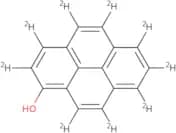
CAS:Controlled Product<p>1-Hydroxypyrene-d9 is a genotoxic aromatic hydrocarbon that can be found in the environment as a byproduct of combustion and cigarette smoke. It has been shown to cause DNA damage through oxidative stress and genotoxicity. This compound can be used for the detection of naphthalene in bile samples and urine samples. 1-Hydroxypyrene-d9 also has potential use in cancer research as it can be used to detect oxidative damage to DNA in cells. It has been shown to have synchronous fluorescence with DNA, which makes it useful for quantification of DNA. 1-Hydroxypyrene-d9 is analysed using analytical methods such as fluorescence spectrometry, synchronous fluorescence, and sample preparation.</p>Formula:C16HD9OPurity:Min. 95%Color and Shape:PowderMolecular weight:227.3 g/molLacto-N-fucopentaose III-GEL
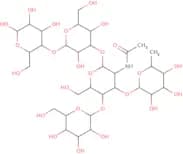
CAS:<p>Lacto-N-fucopentaose III-GEL is a synthetic monosaccharide that is used as a building block for the synthesis of complex carbohydrates. Lacto-N-fucopentaose III-GEL is synthesized from fructose, which is methylated with chloromethylated N,N'-diacetylchitobiose as the methylating agent and sodium methoxide as the catalyst. The resulting glycoconjugate is then treated with hydrofluoric acid to introduce fluorine atoms into the carbohydrate backbone.</p>Purity:Min. 95%4-O-Acetyl-3,6-di-O-(3,4,6-tri-O-acetyl-1,2-ethylidene-b-D-mannopyranosyl)-1,2-ethylidene-b-D-mannopyranose
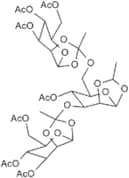
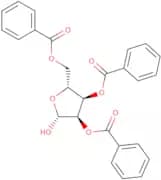
CAS:<p>Methylation of 4-O-acetyl-3,6-di-O-(3,4,6-tri-O-acetyl-1,2-ethylidene bDmannopyranosyl)-1,2-ethylidene bDmannopyranose with methyl iodide and potassium carbonate in the presence of sodium hydroxide leads to the formation of 4-O-acetyl 3,6 di O-(3,4,6 tri O acetyl 1 , 2 ethylene b D mannopyranosyl)-1 , 2 ethylene b D mannopyranose. This compound is a polysaccharide that is similar to cellulose. It is used in the synthesis of complex carbohydrates.</p>Formula:C38H52O25Purity:Min. 95%Molecular weight:908.8 g/mol2,3,5-Tri-O-benzoyl-b-D-ribofuranose
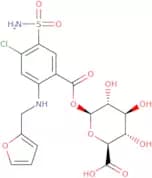
CAS:<p>2,3,5-Tri-O-benzoyl-b-D-ribofuranose is a custom synthesis of an oligosaccharide. It has been modified with fluorination and methylation. This is a synthetic carbohydrate that belongs to the class of saccharides. It has been synthesized from a monosaccharide and has glycosylation. The chemical formula for 2,3,5-Tri-O-benzoyl-b-D-ribofuranose is C10H14O7.</p>Formula:C26H22O8Purity:Min. 95%Molecular weight:462.45 g/molFurosemide acyl-b-D-glucuronide
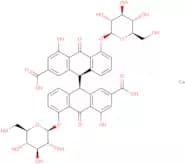
CAS:<p>Furosemide acyl-b-D-glucuronide is a derivative of Furosemide. It is a potent diuretic that has been used in the treatment of hypertension and congestive heart failure. The drug is excreted by the kidney, and its clearance is dependent on urine flow rate. Furosemide acyl-b-D-glucuronide can be detected in human serum and urine samples following oral administration, but its detection in urine may be delayed due to its low solubility. This active form of the drug may also cause drug reactions, such as nausea and vomiting, which are most likely due to the acidic nature of this form. Hydrochloric acid increases the absorption of Furosemide acyl-b-D-glucuronide, so it is recommended to take this medication with an acidic beverage containing hydrochloric acid or food high in pyridinium content. The elimination half life for this active</p>Formula:C18H19ClN2O11SPurity:Min. 95%Color and Shape:Yellow PowderMolecular weight:506.87 g/molSennoside b calciumsalt
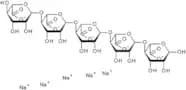
CAS:<p>Sennoside b is a natural compound found in the plant Senna obtusifolia and has been shown to have an effect on myeloma cells, as well as on enzyme activities and energy metabolism. Sennoside b has also been shown to inhibit phospholipase A2 (PLA2) activity and prostaglandin E2 (PGE2) levels in a mouse myeloma cell line. The pathogenic mechanism of sennoside b is unclear, but it may be due to its locomotor activity-reducing effects or due to its effect on gut motility. The optimum extraction process for sennoside b is not clear, but it should be carried out with care due to its chemical stability. Sennoside b has also been shown to have beneficial effects on hepatic steatosis and bowel disease, thus making it a potential treatment for these conditions. Multivariate logistic regression analysis was used to identify factors that may predict</p>Formula:C42H36CaO20Purity:Min. 95%Molecular weight:900.8 g/molPenta-guluronic acid sodium
CAS:<p>Penta-guluronic acid sodium salt (1,4-linked α-L-sodium guluronopentaose) is one of a number of oligosaccharides obtained from alginate which is a polysaccharide in brown seaweeds containing: blocks of repeating mannuronic acid sequences (M-M-M-M etc), repeating guluronic acid sequences (G-G-G-G etc), and alternating M-G-M-G sequences. This oligosaccharide can be released by acid hydrolysis (Shimokawa, 1996) and a number of biological activities have been discussed in a recent review (Xing, 2020).</p>Formula:C30H37O31Na5Purity:Min. 95%Color and Shape:Off-White PowderMolecular weight:1,008.55 g/molPhenylephrine-D-glucuronide
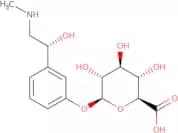
CAS:<p>Phenylephrine-D-glucuronide is a modified form of phenylephrine that is synthesized from the natural product glycosylate. It has been shown to have a high degree of purity and is custom synthesized for customers. This compound can be modified in many ways, including fluorination, glycosylation, methylation, and saccharide modification. Phenylephrine-D-glucuronide has the ability to bind to sugar molecules and form complex carbohydrates. Phenylephrine-D-glucuronide is also an oligosaccharide or monosaccharide with a saccharide backbone.</p>Formula:C15H21NO8Purity:Min. 95%Molecular weight:343.33 g/mol2-Deoxy-3,5-di-O-toluoyl-b-D-ribofuranosyl cyanide
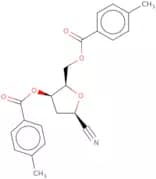
<p>2-Deoxy-3,5-di-O-toluoyl-b-D-ribofuranosyl cyanide is a fluorinated sugar that is synthesized from 2,6-dichloro-1,4,5,8,-tetraoxybenzene and 3,5-di-O-toluoyl bromide. It is a carbohydrate that belongs to the family of oligosaccharides.</p>Formula:C22H21NO5Purity:Min. 95%Molecular weight:379.41 g/mol





![D-[6-13C]Galacturonic acid potassium salt](/_next/image/?url=https%3A%2Fstatic.cymitquimica.com%2Fproducts%2F3D%2Fthumb-webp%2FMG170938.webp&w=3840&q=75)



![6,7,8-Trihydroxy-1-(hydroxymethyl)-3-oxo-2-oxa-4-azabicyclo[3.3.1]nonane](/_next/image/?url=https%3A%2Fstatic.cymitquimica.com%2Fproducts%2F3D%2Fthumb-webp%2FMT15196.webp&w=3840&q=75)