Glycoscience
Glycoscience is the study of carbohydrates and their derivatives, as well as the interactions and biological functions they participate in. This field of research is crucial for understanding a wide variety of biological processes, including cell recognition, signaling, immune response, and disease development. Glycoscience has important applications in biotechnology, medicine, and the development of new drugs and therapies. At CymitQuimica, we offer a wide selection of high-quality, high-purity products for glycoscience research. Our catalog includes monosaccharides, oligosaccharides, polysaccharides, glycoconjugates, and specific reagents, designed to support researchers in their studies on the structure, function, and applications of carbohydrates in biological systems. These resources are intended to facilitate scientific discoveries and practical applications in various areas of bioscience and medicine.
Subcategories of "Glycoscience"
- Aminosugars(108 products)
- Glyco-Related Antibodies(282 products)
- Glycolipids(46 products)
- Glycosaminoglycans (GAGs)(55 products)
- Glycosides(419 products)
- Monosaccharides(6,622 products)
- Oligosaccharides(3,682 products)
- Polysaccharides(503 products)
Found 11041 products of "Glycoscience"
Sort by
Purity (%)
0
100
|
0
|
50
|
90
|
95
|
100
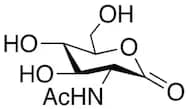
2-Acetamido-2-deoxy-D-glucono-1,5-lactone (>80%)
CAS:Controlled Product<p>Applications Used to inhibit breakdown of products by beta-hexosaminidase(s) when the culture medium is used as an enzyme source.<br>References Sasaki, K., et al.: Proc. Natl. Acad. Sci. USA, 94, 14294 (1997)<br></p>Formula:C8H13NO6Purity:>80%Color and Shape:Off-WhiteMolecular weight:219.19(+)-Arabinogalactan (Technical Grade)
CAS:Controlled Product<p>Applications (+)-Arabinogalactan is an excellent dietary fiber. Also maintains an immunomodulatory effect in humans.<br>References Shiga, T. et al.: Carb. Polym., 164, 31 (2017),<br></p>Formula:C11H12N2Color and Shape:NeatXylobiose
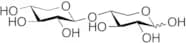
CAS:Controlled Product<p>Applications Xylobiose is a disaccharide that can reduce the blood sugar and blood fat and inhibit the fat accumulation of diet-induced obese rats.<br>References Chen, H., et al.: Shipin Kexue, 35, 255 (2014)<br></p>Formula:C10H18O9Color and Shape:NeatMolecular weight:282.243-C-Methyl-1-deoxy-psicose
<p>3-C-Methyl-1-deoxy-psicose is a sugar that is used in the synthesis of complex carbohydrates. This synthetic sugar is synthesized by the click modification of 3,4-dihydroxybenzaldehyde with 1,2,3,4-tetraacetylated benzyl chloride. The compound has a molecular weight of 228.22 and an empirical formula of C6H8O6F2. It's CAS number is 52714-32-0 and it's Oligosaccharide number is 976.</p>Purity:Min. 95%(2R, 4S) - 3- Fluoro- 2,4- azetidinedimethanol
<p>(2R, 4S) - 3- Fluoro- 2,4- azetidinedimethanol is a fluorinated monosaccharide. It is a synthetic compound that has been modified by methylation and Click chemistry. The fluorination of the sugar allows for high purity and modification of the carbohydrate. This compound is used in the synthesis of oligosaccharides and polysaccharides.</p>Purity:Min. 95%N- [(3S, 4R, 5S, 6R) - 4, 5- Dihydroxy- 6- (hydroxymethyl) - 3- piperidinyl] -acetamide
<p>N- [(3S, 4R, 5S, 6R) - 4, 5- Dihydroxy- 6- (hydroxymethyl) - 3- piperidinyl] -acetamide is a fluorinated monosaccharide that has been synthesized in the laboratory. The compound is a synthetic oligosaccharide with an acetamide group at position 2. N- [(3S, 4R, 5S, 6R) - 4, 5- Dihydroxy- 6- (hydroxymethyl) - 3- piperidinyl] -acetamide is also a glycosylated polysaccharide that has been modified by methylation and click chemistry.</p>Purity:Min. 95%(2R, 3S, 4R) -4-Acetamido- 3 benzhydryloxybis(trimethylsilyloxy)silyloxy - 2- [( benzhydryloxybis(trimethylsilyloxy)silyloxy) methyl ] - 1- benzyl- pyrrolidine
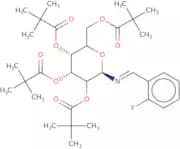
<p>(2R, 3S, 4R) -4-Acetamido- 3 benzhydryloxybis(trimethylsilyloxy)silyloxy - 2- [( benzhydryloxybis(trimethylsilyloxy)silyloxy) methyl ] - 1- benzyl- pyrrolidine is a modification of an oligosaccharide. It is a high purity, custom synthesis and synthetic. This compound has CAS No., Monosaccharide, Methylation, Glycosylation, Polysaccharide, sugar and Fluorination.</p>Purity:Min. 95%N-(2-Fluorobenzyliden)imino-2,3,4,6-tetra-O-pivaloyl-b-D-glucopyranoside
<p>N-(2-Fluorobenzyliden)imino-2,3,4,6-tetra-O-pivaloyl-b-D-glucopyranoside is a custom synthesis of a high purity glycosylated oligosaccharide. It is modified with fluorine and has a methyl group on the 2' position of the sugar. The CAS number for this product is 1093457-52-1.</p>Formula:C33H48FNO9Purity:Min. 95%Molecular weight:621.73 g/molVoglibose
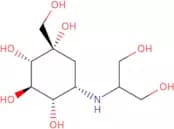
CAS:<p>Voglibose is a competitive inhibitor of α-glucosidase used for the control of blood sugar levels in patients with type 2 diabetes mellitus. The compound binds reversibly to intestinal carbohydrate-active digestive enzymes with α-glucosidase activity, inhibits breakdown of complex sugars and consequently delays the absorption of glucose into blood.</p>Formula:C10H21NO7Color and Shape:White PowderMolecular weight:267.28 g/molEthyl 3-O-allyl-4,6-O-benzylidene-b-D-thiogalactopyranoside
<p>Ethyl 3-O-allyl-4,6-O-benzylidene-b-D-thiogalactopyranoside is an oligosaccharide that has been synthesized by a modified Click reaction. It is a white powder with a melting point of 116°C and a molecular weight of 554. The purity of this compound is greater than 98%. Ethyl 3-O-allyl-4,6-O-benzylidene-b-D-thiogalactopyranoside can be used for glycosylation reactions. This product can be custom synthesized to meet your specific needs.</p>Purity:Min. 95%N-Fmoc-O-a-(2-acetamido-2-deoxy-3,4,6-tri-O-acetyl-b-D-glucopyranosyl-b-1-4-2,3,6-tri-O-acetyl-a-D-mannopyranosyl)-L-threonine
<p>N-Fmoc-O-a-(2-acetamido-2-deoxy-3,4,6-tri-O-acetyl-b-D-glucopyranosyl)-L-threonine is a synthetic sugar. It is an oligosaccharide that is used in the preparation of glycoproteins. It can be modified with fluorine and methyl groups for use in click chemistry reactions. NFAODTGLT has CAS number 539073–78–8 and molecular weight of 676.35. This product is available for custom synthesis with various modifications.</p>Purity:Min. 95%Lactosyl fluoride
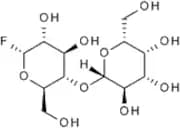
CAS:<p>Lactosyl fluoride is a kinetic inhibitor of glycosidase enzymes. It has been shown to be an effective inhibitor of the enzyme β-galactosidase in both the presence and absence of calcium. Lactosyl fluoride has also been shown to inhibit other glycosidases, including α-galactosidase and α-mannosidase. The lactose derivative is activated by hydrogen fluoride, which allows it to react with the enzyme and block its activity. This product can be used as a chemical biology tool for studying glycoconjugates or as a medicine for treating diseases caused by the accumulation of oligosaccharides, such as Gaucher's disease or Tay-Sachs disease.</p>Formula:C12H21FO10Purity:Min. 95%Color and Shape:White PowderMolecular weight:344.29 g/mol5-Azido-5-deoxy-1-C-butyl-2,3-O-isopropylidene-D-ribofuranose
<p>5-Azido-5-deoxy-1-C-butyl-2,3-O-isopropylidene-D-ribofuranose is a custom synthesis of an oligosaccharide that is modified by methylation and glycosylation. It has a CAS number of 533881-00-6.</p>Purity:Min. 95%(2S, 3S, 4R, 5R) - 3, 4-Dihydroxy- 2- methyl-1- oxa- 6, 9- diazaspiro[4.5] decane- 7, 10- dione
CAS:<p>(2S, 3S, 4R, 5R) - 3, 4-Dihydroxy-2-methyl-1-oxa-6,9-diazaspiro[4.5] decane-7,10-dione is a synthetic sugar that can be used in the synthesis of oligosaccharides and monosaccharides. This sugar has been fluorinated and glycosylated with saccharide moieties to produce a high purity product. The chemical name for this sugar is (2S,3S,4R,5R)-3-(3',4'-dihydroxyphenyl)-2-[(1E)-1-(hydroxymethyl)ethoxy]propanoate. CAS No. 915275-45-5.</p>Purity:Min. 95%2-C-Methyl- 2, 3- O- benzylidene- D- ribonic acid g- lactone
<p>2-C-Methyl- 2, 3- O- benzylidene- D- ribonic acid g- lactone is a synthetic carbohydrate that is used in the synthesis of oligosaccharides. This compound can be used to modify saccharides with fluorine or methyl groups, and can be glycosylated or modified with other organic compounds. 2CMR has been shown to function as a glycosylation site for monosaccharide substrates and it has been used as an intermediate in the synthesis of complex carbohydrates.</p>Purity:Min. 95%2,5:3,4-Dianhydro-D-altritol
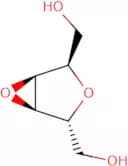
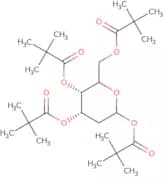
CAS:<p>2,5:3,4-Dianhydro-D-altritol is a hydrogenated form of the sugar D-altritol. It can be prepared by hydrogenolysis of D-mannitol or D-sorbitol with palladium on charcoal at 200°C. The 2,5:3,4-dianhydro form can be converted to the 3,4-dianhydro form by hydrolysis with sodium hydroxide. Hydrogenation of the 3,4 form produces 2,5:3,4-dianhydro-D-altritol. This compound has been used in high energy density fuels and as a trackable marker for hydrogenolysis experiments.<br>2,5:3,4-Dianhydro-D-altritol is soluble in alcohols and extracted with ether in organic solvents such as acetone or chloroform. It oxidizes readily to the corresponding d</p>Purity:Min. 95%2-Deoxy-1,3,4,6-tetra-O-pivaloyl-D-glucopyranose
<p>2-Deoxy-1,3,4,6-tetra-O-pivaloyl-D-glucopyranose is a glycosylation sugar that belongs to the category of complex carbohydrates. It is a methylated sugar that can be fluorinated or modified with other saccharides. This product can be custom synthesized and has high purity.</p>Formula:C26H44O9Purity:Min. 95%Molecular weight:500.64 g/molSucrose-6-acetic ester
CAS:<p>Sucrose-6-acetic ester is a product of the reaction between sucrose and acetic anhydride. It is a white crystalline compound that reacts with chlorinating agents to form sulfoxide compounds. Sucrose-6-acetic ester can be converted to acetylsalicylic acid, which is used to synthesize aspirin. The reaction selectivity of this process relies on the enzyme catalysis of acetylation and triphosgene as well as an acidic or basic catalyst. Acetylation is carried out in organic solvents and requires a crystallization process for purification. This product also has fatty acid properties, which are insoluble in water and other polar solvents.</p>Formula:C14H24O12Purity:Min. 95%Color and Shape:White PowderMolecular weight:384.33 g/molLichenan - from Cetraria islandica
CAS:<p>Lichenin, the poly β-D-Glucan of Cetraria islandica (Iceland moss), is found by enzymic degradation to differ in fine structure from the poly β-D-glucans of cereal grains. Thus, the basic structure of lichenin is a tetrameric unit in which two adjacent 1,4 linkages alternate with an isolated 1,3 linkage; occasionally four consecutive monomers are linked by 1,4 bonds. The immunomodulatory activity of isolichenan was tested in in vitro phagocytosis and anti-complementary assays, and proved to be active in both cases.<br>The image was kindly provided by Prof Mike Guiry from Cork who runs ‘The Seaweed Site’.</p>Formula:C6H10O5Purity:(Β-Linked Polysaccharide. 1H-Nmr) Min. 85%Color and Shape:White PowderMolecular weight:162.14D-Galacturonic acid benzyl ester
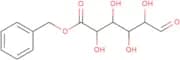
CAS:<p>D-Galacturonic acid benzyl ester is a donor of d-galacturonic acid that is used to regulate the growth of bacterial cells. It has been shown to be an acceptor for oligosaccharides, which are substrates for glycosidases. D-Galacturonic acid benzyl ester has been shown to have anti-inflammatory effects in animal models and may be useful in the treatment of heart diseases, such as cardiac hypertrophy.</p>Formula:C13H16O7Purity:Min. 95%Color and Shape:White PowderMolecular weight:284.26 g/mol2-Amino-2,4-dideoxy-4-C-methyl- D-arabinaric acid 1-methyl ester
<p>2-Amino-2,4-dideoxy-4-C-methyl-D-arabinaric acid 1-methyl ester is a fluorinated carbohydrate that belongs to the group of modified saccharides. It is a synthetic compound that is custom synthesized and can be used as a chemical intermediate. 2-Amino-2,4-dideoxy-4-C-methyl--D--arabinaric acid 1 methyl ester has been shown to have high purity and can be used in glycosylation reactions. This product also has strong methylation properties and can be used for click chemistry modifications.</p>Purity:Min. 95%N-Acetyl-D-galactosamine-6-O-sulphate sodium salt - 95%
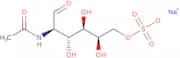
CAS:<p>N-Acetyl-D-galactosamine-6-O-sulphate sodium salt is a glycosylation product that can be used in the synthesis of oligosaccharides and saccharides. It is also used for the modification of proteins, polysaccharides, fluorination reactions, and click reactions. This compound has been synthesized from D-galactose and acetylated with sulfuric acid to form an ester. N-Acetyl-D-galactosamine-6-O-sulphate sodium salt has a molecular weight of 584.12 g/mol and a melting point of 236°C.</p>Formula:C8H14NO9SNaPurity:Min. 95 Area-%Color and Shape:PowderMolecular weight:323.25 g/mol(Neu5Ac a(2-3)-Gal-b(1-3)-GalNAc)SL-OH
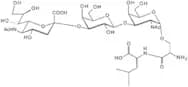
<p>Neu5Ac a(2-3)-Gal-b(1-3)-GalNAc)SL-OH is an Oligosaccharide that is a complex carbohydrate with a Methylation modification. It is the product of Click chemistry and has been Fluorinated and saccharide, Modification, sugar, Oligosaccharide, Synthetic, CAS No., Monosaccharide, Custom synthesis, High purity.</p>Purity:Min. 95%Metrizamide
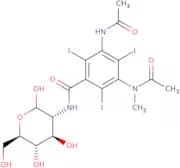
CAS:<p>Radiopaque contrast agent; diagnostic aid for myelography</p>Formula:C18H22I3N3O8Purity:(%) Min. 95%Color and Shape:White PowderMolecular weight:789.1 g/molDi-Lex-APE-BSA
<p>Di-Lex-APE-BSA is a synthetic oligosaccharide with a high purity. It is synthesized from glycosylation and has been modified by fluorination, methylation, and click chemistry. This product has CAS No. 56837-19-4 and can be custom synthesized to order.</p>Purity:Min. 95%N-[2-(4'-Methoxyphenylacetonitrile)]-2,3,4,6-tetra-O-pivaloyl-D-glucopyranoside
<p>N-[2-(4'-Methoxyphenylacetonitrile)]-2,3,4,6-tetra-O-pivaloyl-D-glucopyranoside is a custom synthesis of a carbohydrate. It is a synthetic saccharide that is modified by fluorination and methylation. This compound has high purity and can be custom synthesized to order.</p>Formula:C35H52N2O10Purity:Min. 95%Molecular weight:660.79 g/mol4-Aminophenyl 6-O-(a-D-mannopyranosyl)-a-D-mannopyranoside
<p>4-Aminophenyl 6-O-(a-D-mannopyranosyl)-a-D-mannopyranoside is a custom synthesized carbohydrate that belongs to the group of oligosaccharides. It is a saccharide with a mannose, glucose, and mannose backbone structure. This compound has been modified by methylation at the C4 position, glycosylation at the C3 position, and fluorination at the C6 position. The 4-aminophenyl 6-O-(a-D-mannopyranosyl)-a-D-mannopyranoside is available in high purity and can be used for research purposes.</p>Purity:Min. 95%Ethyl 2-amino-2-deoxy-b-D-glucopyranoside HCl
CAS:<p>Ethyl 2-amino-2-deoxy-b-D-glucopyranoside HCl is a synthetic monosaccharide that has a molecular weight of 174.14 g/mol. It is soluble in water and acidic solvents, and it can be used as a reactant for click chemistry and glycosylation reactions. Ethyl 2-amino-2-deoxy-b-D-glucopyranoside HCl is an intermediate in the synthesis of oligosaccharides, polysaccharides, and complex carbohydrates. This compound can be fluorinated with trifluoromethanesulfonic acid to produce ethyl 2-(trifluoromethanesulfonyl)amino-2-(trifluoromethanesulfonyl)deoxy-b-(trifluoromethanesulfonyl)glucopyranoside HCl. Ethyl 2 am</p>Purity:Min. 95%3-O-(α-D-Galactopyranosyl)-D-galactopyranose
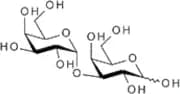
CAS:<p>A carbohydrate, commonly known as alpha gal, found in most mammalian cell membranes. It is not found in primates, including humans, whose immune systems recognize it as a foreign body and produce xenoreactive immunoglobulin M antibodies, leading to organ rejection after transplantation. Anti-α gal immunoglobulin G antibodies are some of the most common in humans. Regular stimulation from gut flora, typically initiated within the first six months of life, leads to an exceptionally high titre of around 1% of all circulating IgG. Recent studies are showing increasing evidence that this allergy may be induced by the bite of the lone star tick (Amblyomma americanum) in North America and the castor bean tick (Ixodes ricincus) in Sweden.</p>Formula:C12H22O11Purity:Min. 95 Area-%Color and Shape:PowderMolecular weight:342.3 g/molBenzyl 2,3,5-tri-O-benzyl-1,4 dithio-D-ribofuranoside
CAS:<p>Benzyl 2,3,5-tri-O-benzyl-1,4 dithio-D-ribofuranoside is a glycosylation agent that is used to modify the structure of polysaccharides. It reacts with a saccharide in a stepwise manner to form an oligosaccharide or a custom synthesis. This modification can be achieved through methylation, click modification and fluorination. Benzyl 2,3,5-tri-O-benzyl-1,4 dithio-D-ribofuranoside has been shown to be effective for modifying complex carbohydrates such as saccharides and oligosaccharides. The chemical is also used in the production of sugar alcohols such as maltitol and sorbitol.</p>Purity:Min. 95%1,2,4-Tri-O-acetyl-3-O-benzyl-D-xylopyranoside
<p>1,2,4-Tri-O-acetyl-3-O-benzyl-D-xylopyranoside is a carbohydrate that has been modified with fluorine. The chemical formula is C12H21FO5. It has CAS number: 90693-24-9 and molecular weight of 356.35 g/mol. There are many uses for this compound, including being a synthetic sugar for use in pharmaceuticals, being a custom synthesis for research purposes, or as an intermediate in the production of other compounds. 1,2,4-Tri-O-acetyl-3-O-benzyl--D--xylopyranoside is also used as a fluorescence probe to detect saccharides and oligosaccharides because it emits light when bound to these compounds due to its high purity.<br>1,2,4 Tri O acetyl 3 O benzyl D xylopyranoside can be used to</p>Purity:Min. 95%1-Deoxy-1-(hydroxyethylamino)-D-glucitol
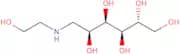
CAS:<p>1-Deoxy-1-(hydroxyethylamino)-D-glucitol (DEG) is a sugar alcohol that has been used as a transport inhibitor for the efflux of galactitol. It competitively inhibits the uptake of galactitol in the cell, resulting in a decrease in intracellular levels of this sugar. The uptake of other sugars is not affected by DEG, which makes it an effective tool for studying the transport mechanisms for these sugars. DEG is also chiral and has been used to study the uptake of chiral molecules. This research was done by using Drosophila melanogaster as an animal model, showing that DEG can be used to investigate how cells take up different molecules. These studies have led to insights into how cells metabolize different sugars and fats.</p>Formula:C8H19NO6Purity:Min. 95%Color and Shape:PowderMolecular weight:225.24 g/mola-Maltotetraosyl-a,a-trehalose
CAS:<p>a-Maltotetraosyl-a,a-trehalose is a carbohydrate that is modified with fluorine. It is a complex carbohydrate with four maltotriose units linked by alpha,alpha-trehalose units. This compound can be custom synthesized and has high purity. It can also be methylated and glycosylated. Click modification can be done to the sugar in order to modify its properties.</p>Formula:C36H62O31Purity:Min. 95%Molecular weight:990.86 g/molPhenyl 4-deoxy-4-fluoro-α-D-glucopyranoside
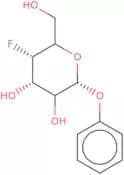
<p>Phenyl 4-deoxy-4-fluoro-a-D-glucopyranoside is a custom synthesis that can be modified with fluorination, methylation, monosaccharide and oligosaccharide. It has CAS No. and is a polysaccharide. Phenyl 4-deoxy-4-fluoro-a-D-glucopyranoside is a sugar that is glycosylated and complexed with carbohydrates.</p>Formula:C12H15FO5Purity:Min. 95%Color and Shape:White to off-white solid.Molecular weight:258.24 g/mol3,4,6-Tri-O-acetyl-N-azidoacetylmannosamine
<p>3,4,6-Tri-O-acetyl-N-azidoacetylmannosamine is a custom synthesis, modification and fluorination of mannose. It is an oligosaccharide composed of 3,4,6-tri-O-acetyl-N-azidoacetylmannosamine which is linked to a glycosylated saccharide. The carbohydrate backbone is composed of two glucose molecules with the modified mannose attached at the 1 position on each. This compound can be used in research as a model for N3'-linked sugar modifications and has been shown to have antiviral properties.</p>Purity:Min. 95%1,2,3,4-Tetra-O-benzoyl-6-O-tert-butyldiphenylsilyl-a-D-mannopyranose
CAS:<p>1,2,3,4-Tetra-O-benzoyl-6-O-tert-butyldiphenylsilyl-a-D-mannopyranose is a custom synthesis. It is a fluorinated monosaccharide that can be used as a glycosylation or polysaccharide modification reagent. This product has been modified with methyl groups at the 2 and 3 positions of the phenolic ring and tetra-(1,2,3,4)-benzoate groups at the 4 position. The purity of this product is >98%.</p>Formula:C40H42O10SiPurity:Min. 95%Molecular weight:710.86 g/mol3,4-Di-O-acetyl-L-rhamnal
CAS:<p>3,4-Di-O-acetyl-L-rhamnal is a synthetic sugar with the molecular formula C9H11F2N3O8. It can be used as a monomer for the synthesis of oligosaccharides or polysaccharides. 3,4-Di-O-acetyl-L-rhamnal is fluorinated and methylated to produce the desired product. This sugar can be synthesized in custom quantities and has a high purity level.</p>Formula:C10H14O5Molecular weight:214.22 g/mol1,4-Anhydro-2,O:5,6-di-O-isopropylidene-2-C-(hydroxymethyl)-D-galactitol
<p>1,4-Anhydro-2,O:5,6-di-O-isopropylidene-2-C-(hydroxymethyl)-D-galactitol is a custom synthesis. It is commonly used in the modification of saccharides and oligosaccharides to produce fluorinated derivatives with various functional groups. The preparation of this compound has been described by Click chemistry.</p>Purity:Min. 95%D-myo-Inositol-1,3,4-triphosphate
CAS:<p>D-myo-Inositol-1,3,4-triphosphate is a custom synthesis that has been modified with a methyl group at the 1 position and fluorinated at the 3 and 4 positions. This compound is an oligosaccharide that contains three monosaccharides linked by glycosidic bonds. It is a complex carbohydrate with a molecular weight of 576.06 g/mol and CAS No. 140385-74-6. D-myo-Inositol-1,3,4-triphosphate is used in glycobiology as a substrate for glycosylation reactions. The polymerization of this compound leads to the formation of polysaccharides such as cellulose, which can be used in tissue engineering applications.</p>Formula:C6H12O15P3Purity:Min. 95%Molecular weight:417.07 g/mol2-Azidoethyl b-D-fructopyranoside
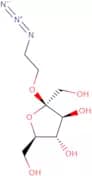
CAS:<p>2-Azidoethyl b-D-fructopyranoside is a custom synthesis of glycogen, which is a complex carbohydrate. This product can be fluorinated or methylated at the 2’ position of the sugar moiety. It also has been modified with Click chemistry and polysaccharides. The CAS number for this product is 99042-58-7 and it has a purity of >99%.</p>Formula:C8H15N3O6Purity:Min. 95%Color and Shape:PowderMolecular weight:249.3 g/molN-(4-Methoxybenzylidene)-b-D-glucosamine
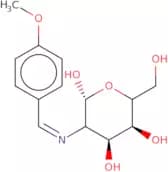
CAS:<p>N-(4-Methoxybenzylidene)-b-D-glucosamine is a fluorinated synthetic monosaccharide. It is used in the synthesis of oligosaccharides and polysaccharides. N-(4-Methoxybenzylidene)-b-D-glucosamine can be modified with methyl groups, which are important for glycosylation, or click modification (a reaction in which a carbon atom and an oxygen atom are covalently bonded through a single bond). The sugar also has high purity and can be used as an analytical reference standard.</p>Formula:C14H19NO6Purity:Min. 95%Molecular weight:297.3 g/mol(1R) -1- [(2S, 3S) - 3- Hydroxy- 1- azetidinyl] -1, 2- ethanediol
<p>(1R) -1- [(2S, 3S) - 3- Hydroxy- 1- azetidinyl] -1, 2- ethanediol is a glycoside that can be used as a fluorination agent. It reacts with the hydroxyl group of carbohydrates to form a covalent bond between the oxygen atom and fluorine atom. This product is custom synthesized and has high purity. The CAS number for this product is 53872-68-9.</p>Purity:Min. 95%2,3-O-Isopropylidene -D- ribonic acid γ-lactone
<p>2,3-O-Isopropylidene -D- ribonic acid gamma-lactone is a Custom synthesis, Modification, Fluorination, Methylation, Monosaccharide, Synthetic, Click modification, Oligosaccharide, saccharide, CAS No., Polysaccharide. It has the following properties: CAS No., Polysaccharide.<br>2,3-O-Isopropylidene -D- ribonic acid gamma-lactone is a Custom synthesis.</p>Purity:Min. 95%Lacto-N-triose II
CAS:<p>Human milk oligosaccharide; glycan moiety on glycoproteins</p>Formula:C20H35NO16Purity:Min. 90%Color and Shape:White PowderMolecular weight:545.49 g/molCalcium D-saccharate tetrahydrate
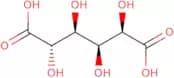
CAS:<p>Calcium D-saccharate is the calcium salt of saccharic acid, also known as glucaric acid. Calcium D-saccharate has been evaluated for chemopreventive activity in a rat tracheal epithelial cell following exposure to the carcinogen benzo[a]pyrene. Addition of calcium D-saccharate to sugarcane juice during liming enhanced clarification as high molecular weight components were removed by filtration.</p>Formula:C6H8O8·Ca·(H2O)4Color and Shape:PowderMolecular weight:320.26 g/molGlycol chitosan
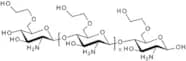
CAS:<p>Non-cytotoxic; biocompatible; used for targeted drug deliveryDegree of polymerisation is greater then 400.Water solubility approx 1mg/ml</p>Formula:C24H47N3O16Purity:Min 60%Color and Shape:PowderMolecular weight:633.64 g/mol2,3:4,5-Di-O-isopropylidene-D-talitol (altritol)
<p>2,3:4,5-Di-O-isopropylidene-D-talitol (altritol) is a complex carbohydrate that can be used as a monosaccharide. It is a glycosylation product of D-talitol and it has been shown to have Methylation, Click modification and Polysaccharide modification. 2,3:4,5-Di-O-isopropylidene-D-talitol (altritol) is fluorinated at the C2 position and is soluble in water. It has CAS number 51617-94-7 and can be synthesized with high purity.</p>Purity:Min. 95%2-Amino-2-deoxy-D-altrose
CAS:<p>2-Amino-2-deoxy-D-altrose (2AD) is a molecule with the chemical formula C6H14N2O4. It belongs to the class of compounds known as uronic acids. 2AD is an acetylated molecule that has been structurally studied by X-ray crystallography and NMR spectroscopy. The molecule contains a ring of six carbon atoms, two of which are epoxide groups. The nature of this compound is glycosidic, with focus on hexamethylphosphoramide and diamino oligosaccharides. 2AD has been shown to have anti-inflammatory activities in animals, but its exact mechanism of action remains unknown. This compound may act through a ring-opening reaction or by inhibiting prostaglandin synthesis.</p>Formula:C6H13NO5Purity:Min. 95%Molecular weight:179.17 g/molD-myo-Inositol-1,2,6-triphosphate sodium salt
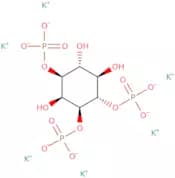
<p>D-myo-Inositol-1,2,6-triphosphate sodium salt is a modification of the sugar inositol. It is an oligosaccharide that is composed of three components: D-myo-inositol, 1,2,6-triphosphate and sodium. This compound can be used as a complex carbohydrate with anticancer properties.</p>Formula:C6H12O15P3·xNaPurity:Min. 95%Molecular weight:417.07 g/mol5-Thio-D-lactose
<p>5-Thio-D-lactose is a monosaccharide that has been synthesized and modified to contain fluorine atoms. This synthetic sugar is used in the glycosylation of polysaccharides in the synthesis of complex carbohydrates. 5-Thio-D-lactose is also used for click modification and methylation reactions. 5-Thio-D-lactose can be used as a reference standard for carbohydrate analysis by gas chromatography, mass spectrometry, nuclear magnetic resonance, or infrared spectroscopy.<br>5-Thio-D-lactose is available at high purity (99%+) and with custom synthesis upon request.</p>Purity:Min. 95%



![N- [(3S, 4R, 5S, 6R) - 4, 5- Dihydroxy- 6- (hydroxymethyl) - 3- piperidinyl] -acetamide](/_next/image/?url=https%3A%2Fstatic.cymitquimica.com%2Fproducts%2F3D%2Fthumb-webp%2FMD163935.webp&w=3840&q=75)

![(2S, 3S, 4R, 5R) - 3, 4-Dihydroxy- 2- methyl-1- oxa- 6, 9- diazaspiro[4.5] decane- 7, 10- dione](/_next/image/?url=https%3A%2Fstatic.cymitquimica.com%2Fproducts%2F3D%2Fthumb-webp%2FMD163949.webp&w=3840&q=75)




![N-[2-(4'-Methoxyphenylacetonitrile)]-2,3,4,6-tetra-O-pivaloyl-D-glucopyranoside](/_next/image/?url=https%3A%2Fstatic.cymitquimica.com%2Fproducts%2F3D%2Fthumb-webp%2FMM08496.webp&w=3840&q=75)


![(1R) -1- [(2S, 3S) - 3- Hydroxy- 1- azetidinyl] -1, 2- ethanediol](/_next/image/?url=https%3A%2Fstatic.cymitquimica.com%2Fproducts%2F3D%2Fthumb-webp%2FMH163405.webp&w=3840&q=75)