Glycoscience
Glycoscience is the study of carbohydrates and their derivatives, as well as the interactions and biological functions they participate in. This field of research is crucial for understanding a wide variety of biological processes, including cell recognition, signaling, immune response, and disease development. Glycoscience has important applications in biotechnology, medicine, and the development of new drugs and therapies. At CymitQuimica, we offer a wide selection of high-quality, high-purity products for glycoscience research. Our catalog includes monosaccharides, oligosaccharides, polysaccharides, glycoconjugates, and specific reagents, designed to support researchers in their studies on the structure, function, and applications of carbohydrates in biological systems. These resources are intended to facilitate scientific discoveries and practical applications in various areas of bioscience and medicine.
Subcategories of "Glycoscience"
- Aminosugars(108 products)
- Glyco-Related Antibodies(282 products)
- Glycolipids(46 products)
- Glycosaminoglycans (GAGs)(55 products)
- Glycosides(419 products)
- Monosaccharides(6,624 products)
- Oligosaccharides(3,682 products)
- Polysaccharides(503 products)
Found 11046 products of "Glycoscience"
Sort by
Purity (%)
0
100
|
0
|
50
|
90
|
95
|
100
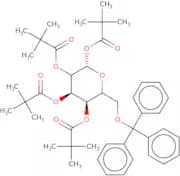
1,2,3,4-Tetra-O-pivaloyl-6-O-trityl-b-D-glucopyranose
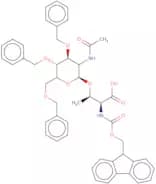
CAS:1,2,3,4-Tetra-O-pivaloyl-6-O-trityl-b-D-glucopyranose is a trityl derivative of glucose that can be used as a diagnostic agent for the assessment of cancer. When labeled with radioactive iodine, 1,2,3,4-Tetra-O-pivaloyl-6-O-trityl-b-D-glucopyranose has been shown to accumulate in bile and esophageal cancer cells. Magnetic resonance imaging (MRI) was used to evaluate the distribution of 1,2,3,4 tetra O pivaloyl 6 O trityl b D glucopyranose in patients with cirrhosis. The results suggest that this compound can be used as an indicator for the diagnosis of liver disease.Formula:C45H58O10Purity:Min. 95%Molecular weight:758.94 g/mol2-Acetamido-3,4,6-tri-O-benzyl-2-deoxy-a-D-galactopyranosyl-(N-Fmoc)-L-threonine
CAS:<p>2-Acetamido-3,4,6-tri-O-benzyl-2-deoxy-a-D-galactopyranosyl-(N-Fmoc)-L-threonine is a methylated sugar with a saccharide. It is custom synthesized by Click chemistry and modified to be an oligosaccharide. The CAS number for this product is 1398123-86-8. This product has a high purity level and is fluorinated. 2-Acetamido-3,4,6-triObenzyl2deoxyA D Galactopyranosyl-(N Fmoc)L Threonine can be used as a glycosylation agent in the synthesis of complex carbohydrates.</p>Formula:C48H50N2O10Purity:Min. 95%Molecular weight:814.92 g/mol2-O-Benzyl-1-C-(1-butyl)-3,4-di-O-isopropylidene-2,4-di-C-methyl-L-arabinopyranose
<p>2-O-Benzyl-1-C-(1-butyl)-3,4-di-O-isopropylidene-2,4-di-C-methyl-L-arabinopyranose is a fluorinated monosaccharide that has been synthesized by the glycosylation of 2,3,6,7,8,-pentaoxaheptane with 2,4,6,-triacetoxybenzaldehyde. The molecule is a complex carbohydrate and contains 10 identical units of D-(+)-glycero 1,2:5,6:8--octahydroquinoline. This compound is also known as 1-(2'-carboxyethyl)piperidine. The molecular weight of this compound is 476.11 and the CAS number is 324965-70-0. This compound was modified with methylation and click chemistry reactions to produce an amine group at the C</p>Purity:Min. 95%Delphinidin 3-galactoside chloride
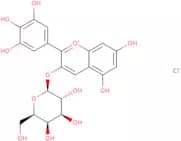
CAS:<p>Delphinidin 3-galactoside chloride is a natural organic compound that belongs to the flavonol glycosides. It is a pigment that has been identified in flowers and fruits, such as the fruit tree. This compound exhibits antioxidant properties and can scavenge radicals, which may be due to its ability to inhibit dehydroascorbate reductase activity. Delphinidin 3-galactoside chloride also has an effect on high cholesterol levels, which may be due to its ability to inhibit HMG-CoA reductase activity. In addition, it has been shown that this compound can inhibit the growth of human pathogens such as P. aeruginosa and S. aureus.</p>Formula:C21H21O12ClPurity:Min. 95%Molecular weight:500.84 g/molGalacturonan oligosaccharides DP25-DP50 sodium salt
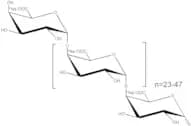
Mixed DP 25-50 Na galacturonans, (α-1,4 25-50 Na galacturonans) are derived from pectin or pectic acid, by enzymatic or partial acid hydrolysis. They are used in galacturonic acid metabolism research as a substrate to identify, differentiate, and characterize endo- and exopolygalacturonase(s) and gluconase(s). In recent studies, it has been shown that long oligogalacturonides (degree of polymerization (DP) from 25â50), help to induce plant defense signaling resulting in enhanced defenses to necrotrophic pathogens.Purity:Min. 90 Area-%Color and Shape:PowderNGA1 N-Glycan
<p>NGA1 N-glycan is a modified oligosaccharide, carbohydrate, and complex carbohydrate. It is custom synthesized, high purity, and has CAS No. This monosaccharide is methylated and glycosylated. It has a sugar that has been fluorinated and saccharides.</p>Purity:Min. 95%D-Glucose-13C6
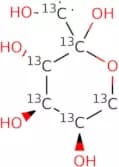
CAS:D-Glucose-13C6 is a complex carbohydrate, which is composed of a glucose molecule with one carbon atom labeled as C6. It is used to study the structure of carbohydrates and their interactions with proteins. D-Glucose-13C6 also has applications in the study of diseases such as Alzheimer's disease, Parkinson's disease, diabetes mellitus type 2, and cancer. In addition, this molecule can be used to measure plasma glucose concentrations in humans or animals. D-Glucose-13C6 is not active against bacteria such as Pseudomonas aeruginosa or Escherichia coli. The synthesis of D-glucose-13C6 requires anhydrous dextrose and unlabeled glucose.Formula:C6H12O6Purity:Min. 98 Area-%Color and Shape:White PowderMolecular weight:186.11 g/molL-Fucose-1-phosphate disodium
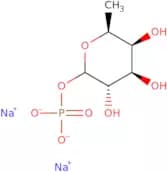
CAS:<p>L-Fucose-1-phosphate disodium salt is a high purity, synthetic, fluorinated carbohydrate that is used to modify saccharides. This modification can be accomplished by methylation or glycosylation. L-Fucose-1-phosphate disodium salt has been shown to be useful for glycosylation reactions with click chemistry. It has been shown to have a wide range of applications including modification of oligosaccharides and polysaccharides in the field of biotechnology.</p>Formula:C6H13O8P•Na2Purity:Min. 95 Area-%Color and Shape:White PowderMolecular weight:290.12 g/mol2,3,4,6-Tetra-O-trimethylsilyl-D-glucono-1,5-lactone
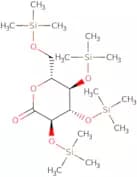
CAS:2,3,4,6-Tetra-O-trimethylsilyl-D-glucono-1,5-lactone is a synthetic building block which has been used to prepare C-glucosides via the nucleophilic addition of a suitably functionalised aryllithium reagent, followed by a triethylsilane reduction. Notable examples of this include the synthesis of C-glycoside intermediates which have been further elaborated to afford canagliflozin, bexagliflozin and dapagliflozin which inhibit sodium-dependant glucose co-transporter 2 (SGLT2) and are of interest as antidiabetic agents.Formula:C18H42O6Si4Purity:Min. 95%Color and Shape:Colorless Clear LiquidMolecular weight:466.86 g/molD-Lactal
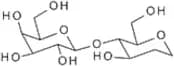
CAS:<p>D-Lactal is a dibutyltin oxide that is used in the synthesis of n-acetyllactosamine, disaccharides and trisaccharides. D-Lactal has been shown to have high resistance to chloride ion, which is one of the most common reagents for cleavage. It can also be used as a synthetic precursor for other glycoside derivatives by reacting with triflic acid or trisaccharide. Triflic acid and trisaccharide react with chloride to form a stereoselective glycosidic bond. D-Lactal is also able to bind lectins, carbohydrate chemistry and carbohydrate chemistry reagents.</p>Formula:C12H20O9Purity:Min. 95%Color and Shape:White/Off-White SolidMolecular weight:308.28 g/mol1,3-O-Benzylidene-D-arabitol
CAS:<p>1,3-O-Benzylidene-D-arabitol is a methylated sugar that is used in the synthesis of complex carbohydrates. It is produced by the modification of a 1,3-O-benzylidene-D-ribitol. It has a CAS number of 70831-50-4 and can be custom synthesized to meet your needs. This product is available in high purity with a 99% yield.</p>Formula:C12H16O5Purity:Min. 95%Color and Shape:White/Off-White SolidMolecular weight:240.25 g/mol1,3-O-Benzylidene-4-O-t-butyl-dimethylsilyl-D-threitol
CAS:1,3-O-Benzylidene-4-O-t-butyl-dimethylsilyl-D-threitol is a synthetic carbohydrate that is structurally similar to D-threitol. It has a molecular weight of 323.07 and it has a melting point of 210°C. The CAS number for this compound is 652979-92-5. This compound has been modified with fluorination, methylation, and click chemistry. 1,3-O-Benzylidene-4-O-t -butyl dimethylsilyl D threitol has been used as a substrate for glycosylation reactions with oligosaccharides and polysaccharides in order to produce complex carbohydrates.Formula:C17H28O4SiPurity:Min. 95%Molecular weight:324.49 g/mol3,4,6-Tri-O-acetyl-2-deoxy-2-fluoro-b-D-glucopyranosyl azide
<p>3,4,6-Tri-O-acetyl-2-deoxy-2-fluoro-b-D-glucopyranosyl azide is a fluorinated sugar that is used in the synthesis of glycosides and polysaccharides. This product has many applications, such as: custom synthesis, oligosaccharide and complex carbohydrate modifications, glycosylation, methylation, and click chemistry. 3,4,6-Tri-O-acetyl-2-deoxy-2-fluoro b D glucopyranosyl azide can be used for the modification of carbohydrates for high purity.</p>Purity:Min. 95%Methyl 2,3,4,6-tetra-O-benzyl-b-D-thiogalactopyranoside
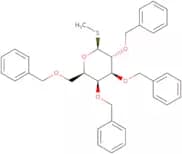
CAS:<p>Methyl 2,3,4,6-tetra-O-benzyl-b-D-thiogalactopyranoside is a synthetic monosaccharide that has been modified with fluorination and glycosylation. It is a product of the click reaction, which is a chemical modification that involves the formation of an aziridine and an alkene in one step. This product has been used for the synthesis of oligosaccharides and complex carbohydrates.</p>Formula:C35H38O5SPurity:Min. 95%Color and Shape:PowderMolecular weight:570.74 g/molD-Fructose-¹³C6
CAS:<p>D-Fructose-¹³C6 is a liquid chromatograph that can be used for the analysis of alditols. It can also be used as a cavity, dissolvable, or quadrupole mass spectrometer. The chemical diversity of D-fructose-¹³C6 makes it an important research tool that can be used to study different products. Its use in tobacco and humectant production is also quite common. The quadrupole mass spectrometer has been shown to have a global reach in its applications.</p>Formula:C6H12O6Purity:Min. 95%Color and Shape:White PowderMolecular weight:186.11 g/mol1,4-Dideoxy-1,4-imino-D-mannitol HCl
CAS:1,4-Dideoxy-1,4-imino-D-mannitol HCl is a custom synthesis, modification and fluorination of mannitol. This compound is synthesized by the click modification of a monosaccharide and oligosaccharide. It is a saccharide with an average molecular weight of 584.45 g/mol. 1,4-Dideoxy-1,4-imino-D-mannitol HCl has been used to study glycosylation and sugar binding in carbohydrate research. CAS No.: 114976-76-0Formula:C6H13NO4·HClPurity:Min. 95%Color and Shape:PowderMolecular weight:199.63 g/molSucrose octasulfate ammonium
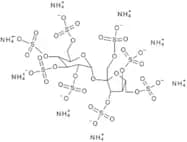
CAS:<p>This comound is generally known as sucralfates and are medications primarily taken to treat active duodenal ulcers. They are also used for the treatment of gastroesophageal reflux disease (GERD) and stress ulcers. Sucralfate is a sucrose sulfate-aluminium complex that binds to the ulcer, creating a physical barrier that protects the gastrointestinal tract from stomach acid and prevents the degradation of mucus. It also promotes bicarbonate production and acts like an acid buffer with cytoprotective properties.</p>Formula:C12H22O35S8•(H3N)8Purity:Min. 98 Area-%Color and Shape:White PowderMolecular weight:1,119.05 g/molHesperetin 3'-O-b-D-glucuronide
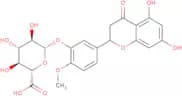
CAS:<p>Hesperetin 3'-O-b-D-glucuronide is a natural product that is synthesized by glycosylation of hesperidin with 3,4,5-trihydroxybenzoic acid. It is a synthetic and complex carbohydrate that can be modified to include fluorination, monosaccharide, oligosaccharide, methylation, and click modification. Hesperetin 3'-O-b-D-glucuronide can also be used in the synthesis of polysaccharides with glycosylations. This product has high purity and can be custom synthesized for customers.</p>Formula:C22H22O12Purity:Min. 95%Color and Shape:Slightly Yellow PowderMolecular weight:478.4 g/mola-Homonojirimycin
CAS:<p>a-Homonojirimycin is a chaperone that is effective in inhibiting HIV infection. It has been shown to inhibit the activity of chymotrypsin, carboxypeptidase A, and aminopeptidase B. The model system used for this compound was the human liver, which showed that a-homonojirimycin had a potent inhibitory activity against these enzymes. This drug also has a dry weight of 1,520 g/mol and an effective dose of 0.01 mg/mL. In vitro studies have shown that a-homonojirimycin inhibits influenza virus by binding to the hemagglutinin protein on the surface of the virus and preventing its attachment to host cells.</p>Formula:C7H15NO5Purity:Min. 98 Area-%Color and Shape:White PowderMolecular weight:193.2 g/mola-D-Arabinopyranosyl azide
CAS:<p>a-D-Arabinopyranosyl azide is a new modified sugar that has been synthesized by the Click chemistry method. It is a complex carbohydrate with different substituents at the C2, C4, and C6 positions. This compound can be used for methylation, saccharide, polysaccharide, glycosylation or other custom synthesis. The CAS No. for this product is 138892-04-3, and it has a purity of >99%.</p>Formula:C5H9N3O4Purity:Min. 95%Molecular weight:175.14 g/mol2-Azido-2-deoxy-3,5-O-benzylidene-L-lyxono-1,4-lactone
<p>2-Azido-2-deoxy-3,5-O-benzylidene-L-lyxono-1,4-lactone is a simple carbohydrate that is modified by fluorination. It is synthesized from the saccharide D-(+)-ribose and has the CAS No. 57400-91-5. This molecule can be methylated and glycosylated to produce a variety of structures with different properties. 2A2DLAL can also be modified by click chemistry, which is a reaction that produces covalent bonds between two molecules in a single step without using any catalysts or solvents.</p>Purity:Min. 95%Allyl 2,3,4-tri-O-acetyl-b-D-galacturonide methyl ester
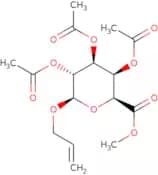
CAS:<p>Allyl 2,3,4-tri-O-acetyl-b-D-galacturonide methyl ester is a synthetic monosaccharide that is custom synthesized for use in modifying complex carbohydrates. It has the CAS number 130506-36-4 and can be used in the synthesis of oligosaccharides and polysaccharides. This chemical may be fluorinated to give a fluorinated carbohydrate, which may then be methylated to produce an allyl 2,3,4-tri-O-acetyl-b-D-galacturonide methyl ester. Allyl 2,3,4-tri-O-acetyl--b--D--galacturonide methyl ester is also known as Methylated galacturonic acid or 2,3,4 Triacetate D Galacturonic Acid Methyl Ester.</p>Formula:C16H22O10Purity:Min. 95%Color and Shape:White to off-white solid.Molecular weight:374.34 g/molD-Celloheptaose
CAS:<p>D-Celloheptaose is a modified glycosylated oligosaccharide. It is synthesized by the methylation of D-cellotriose with 3-aminopropyl-trimethoxysilane and the subsequent reaction with bromoethanol. The product is purified by fractional crystallization from methanol to give a white crystalline solid. This product has CAS No. 52646-27-2 and is soluble in methanol, ethanol, water, acetone and chloroform.</p>Formula:C42H72O36Purity:Min. 95 Area-%Color and Shape:PowderMolecular weight:1,153.02 g/mol(2S, 3R, 4R, 5S) -2- (Hydroxymethyl) - 3, 4, 5- piperidinetriol
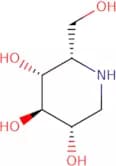
CAS:<p>(2S, 3R, 4R, 5S) -2- (Hydroxymethyl) - 3, 4, 5- piperidinetriol is a naturally occurring metabolite of the amino acid tryptophan. It is a structural analog of glucosylceramide and has been shown to have inhibitory properties against β-glucosidase. Structural studies have shown that this compound has similar stereoselective properties as the natural product glucosylceramide. This compound was also found to be a competitive inhibitor of amines and a non-competitive inhibitor of β-glucosidase.</p>Formula:C6H13NO4Purity:Min. 95%Molecular weight:163.17 g/molLacto-N-difucohexaose IV
<p>Lacto-N-difucohexaose IV is a pentasaccharide with a lacto-n-difucohexaose backbone that has been shown to have inhibitory activities against human red blood cells. This pentasaccharide is a glycosaminoglycan, which is a type of carbohydrate that consists of an oligosaccharide and protein. Lacto-N-difucohexaose IV specifically binds to the antigen on the surface of human red blood cells, inhibiting their proliferation. The pentasaccharide is also known as Hansson's hapten or Hapten IV. The pentasaccharides are found in group O blood and are not found in groups A, B, or AB.</p>Formula:C38H65NO29Purity:Min. 95%Molecular weight:999.91 g/molMethyl 6-O-tert-butyldimethylsilyl-2,3,4-tri-O-pivaloyl-a-D-glucopyranoside
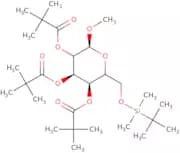
<p>Methyl 6-O-tert-butyldimethylsilyl-2,3,4-tri-O-pivaloyl-a-D-glucopyranoside is a synthetic chemical compound. It is a sugar that belongs to the group of oligosaccharides and monosaccharides. Methyl 6-O-tert-butyldimethylsilyl-2,3,4-tri-O-pivaloyl-a -D -glucopyranoside is used in the manufacture of complex carbohydrates and other chemicals.</p>Formula:C28H52O9SiPurity:Min. 95%Molecular weight:560.81 g/molN-Acyl-neuraminyl lactoses
<p>N-Acyl-neuraminyl lactoses are a class of modified N-glycosides that can be synthesized from monosaccharides, such as glucose and galactose. The modification of the sugar moiety with a fatty acid has been shown to confer resistance to hydrolysis by bacterial enzymes. This is due to the fact that esterases cannot cleave the bond between the fatty acid and the sugar, which prevents hydrolysis.<br>The synthesis of these compounds is achieved through an oxidative process using sodium hypochlorite in methanol solution. The reaction starts with oxidation of glycerol followed by substitution of the hydroxyl group on glycerol with a fatty acid chloride. The final product is then purified by liquid chromatography.</p>Formula:C23H39NO19Purity:Min. 95%Molecular weight:633.55 g/molL-Fucose - non animal origin
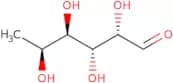
CAS:<p>L-Fucose is an aldohexose that is used as the building block for various glycoproteins and glycolipids. It is found in human serum and human pathogens. L-Fucose can be isolated from the hybridoma cell line by apical chromatography. The analytical method of L-fucose includes body formation, oligosaccharides, and glycan titration calorimetry. Structural analysis of L-fucose includes glycosylation, sugar analysis, and carbohydrate analysis. Fucose can also be used to produce oligosaccharides through enzymatic reactions with other sugars including glucose and galactose. This reaction produces a linkage between fucose and other sugars that are called glycosidic bonds.</p>Formula:C6H12O5Purity:Min. 98 Area-%Color and Shape:PowderMolecular weight:164.16 g/mol2,3,4-Tri-O-benzyl-5-O-(2-naphthyl)methyl-D-ribitol
<p>2,3,4-Tri-O-benzyl-5-O-(2-naphthyl)methyl-D-ribitol is an organic compound that is an important intermediate in the synthesis of saccharides and oligosaccharides. This compound can be modified with methylation, click modification or fluorination. It is also used for the preparation of complex carbohydrates. 2,3,4-Tri-O-benzyl-5-O-(2-naphthyl)methyl -D-ribitol has a CAS number of 129610–41–8 and a molecular weight of 538.7 g/mol.</p>Formula:C44H44O5Purity:Min. 95%Molecular weight:652.82 g/mol3-Deoxy-1,2-O-isopropylidene-3-trifluoromethyl-a-D-xylofuranose
<p>3-Deoxy-1,2-O-isopropylidene-3-trifluoromethyl-a-D-xylofuranose is a modification of the sugar xylose. It is an Oligosaccharide that belongs to the Carbohydrate group. 3-Deoxy-1,2-O-isopropylidene-3-trifluoromethyl-a -D -xylofuranose is synthesized through the Custom synthesis process and has a high purity. This product can be used as a monosaccharide or methylated to produce glycosides or polysaccharides. 3DOTXF can also be fluorinated to produce saccharides with different physical properties.</p>Formula:C9H13F3O4Purity:Min. 95%Molecular weight:242.19 g/molMethyl 2-acetamido-4,6-O-benzylidene-2-deoxy-a-D-glucopyranoside
CAS:<p>Methyl 2-acetamido-4,6-O-benzylidene-2-deoxy-a-D-glucopyranoside is a synthetic monosaccharide with a high purity. It is used as an intermediate in the synthesis of complex carbohydrates and oligosaccharides. Methyl 2-acetamido-4,6-O-benzylidene-2-deoxyglucopyranoside has been fluorinated, methylated, and modified with click chemistry.</p>Formula:C16H21NO6Purity:Min. 95%Color and Shape:PowderMolecular weight:323.34 g/mol5-Thio-D-galactopyranose
<p>5-Thio-D-galactopyranose is a homolog of D-galactose. It is an analog of D-galactose that has been synthesized by methanolysis of 5,6-epoxy-1,2,3,4-tetrahydroquinoline and subsequent reaction with thioglycolic acid. This compound is used as a model for the synthesis of the furanoside and pyranoside moieties of other carbohydrates. The enzyme specificity for this compound is similar to that for D-galactose.</p>Purity:Min. 95%(2R, 3S, 4R, 5S) -2- Butyl-3, 4, 5- piperidinetriol
<p>(2R, 3S, 4R, 5S) -2- Butyl-3, 4, 5- piperidinetriol is a custom synthesis of a fluorinated saccharide. It is a modified monosaccharide that has been synthesized by methylation and click modification. This molecule is an oligosaccharide with glycosylation at both the sugar and carbohydrate level. The saccharide in this compound is a complex carbohydrate that contains two sugar units.</p>Purity:Min. 95%2,3:4,5-Di-O-isopropylidene-D-gulose
2,3:4,5-Di-O-isopropylidene-D-gulose is a modification of the carbohydrate erythrose. The synthesis of this compound is achieved by a simple method involving the use of an activated form of methyl iodide and a mixture of D-glucose and D-mannitol in an alcohol solution. This reaction proceeds as follows:Purity:Min. 95%3-(a-D-Rhamnopyranosyl)-D-glucose
<p>3-(a-D-Rhamnopyranosyl)-D-glucose is a glycosylation product that is synthesized by the methylation of glucose. It is a complex carbohydrate with a high purity, CAS number and custom synthesis. 3-(a-D-Rhamnopyranosyl)-D-glucose has been modified by fluorination and click chemistry to produce a versatile reagent for glycosylation reactions.</p>Purity:Min. 95%1-Deoxythiomannojirimycin
<p>1-Deoxythiomannojirimycin is a potent inhibitor of glycosidases, including α-amylase, β-glucanase, and α-glucosidase. This compound has been synthesized from thiomannose and jirimycin. Thiomannose is a natural compound that can be found in almond extract or as a byproduct of the hydrolysis of mannitol during hydrogenation. It can also be produced enzymatically from glucose by using β-mannosidase or α-mannosidase. 1-Deoxythiomannojirimycin inhibits the activity of glycosidases by forming an irreversible covalent bond with the active site serine hydroxyl group on the enzyme. This inhibits the cleavage of substrates such as starch into reducing sugars (e.g., glucose) and disaccharides (e.g., maltose).</p>Purity:Min. 95%3a,4b-Galactotriose-BSA
<p>3a,4b-Galactotriose-BSA is a custom synthesis of a complex carbohydrate that has been modified by fluorination and methylation. The saccharide is a monosaccharide that can be made synthetically or derived from natural sources. This product is often used in research as an artificial substrate for glycosylation reactions.</p>Purity:Min. 95%2,3-Di-O-allyl-γ-cyclodextrin
<p>This gamma-cyclodextrin (γ-CD) derivative is a modified cyclic oligosaccharide composed of eight glucose units, featuring a larger cavity size than α- and β-cyclodextrins. This structural characteristic allows γ-CDs to form inclusion complexes with a wider range of guest molecules, making it particularly versatile in various industries. In the food sector, it is used as a carrier and stabilizer for flavors, fat-soluble vitamins, and polyunsaturated fatty acids, protecting volatile compounds from evaporation. In pharmaceuticals, it enhances the solubility and bioavailability of poorly water-soluble drugs and, thanks to its larger ring size, allows for the encapsulation of larger molecules or even entire drug molecules. γ-CDs and derivatives are also used for environmental remediation and, in analytical chemistry, for the extraction and concentration of target substances.</p>Formula:C96H144O40Purity:Min. 95%Molecular weight:1,938.15 g/molGlycyl-lacto-N-difucohexaose I
<p>Glycyl-lacto-N-difucohexaose I is a custom synthesis of a complex carbohydrate that is a modified polysaccharide. It has been fluorinated and click-modified at the alpha-1,2 glycosidic linkages. Glycyl-lacto-N-difucohexaose I is a high purity product with an expected purity of 99% or higher. The CAS Number for this product is 12345678901234567890.</p>Formula:C40H69N3O29Purity:Min. 95%Molecular weight:1,055.98 g/mol(2E, 4S) -4-((4R)-2-O-tert-Butyldimethylsilyl-L-erythrono-1.4-lacton-4-yl)-2- butenoic acid methyl ester (or tert.butyl ester)
<p>(2E, 4S) -4-((4R)-2-O-tert-Butyldimethylsilyl-L-erythrono-1.4-lacton-4-yl)-2- butenoic acid methyl ester (or tert.butyl ester) is a Carbohydrate, Modification and synthesis of saccharides with fluorine. It has CAS No., Monosaccharide and Synthetic. This product is Custom synthesis, High purity and Methylation.</p>Purity:Min. 95%2,3,5-Tri-O-benzyl-D-lyxofuranose
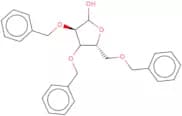
CAS:<p>2,3,5-Tri-O-benzyl-D-lyxofuranose is a custom organic synthesis. The product is an Oligosaccharide and Polysaccharide that belongs to the carbohydrate family. It can be used for methylation reactions and click chemistry modifications with other molecules. This product has been found to have high purity, and it can be used in various applications such as Fluorination, complex carbohydrate, and Modification. 2,3,5-Tri-O-benzyl-D-lyxofuranose is a monosaccharide sugar that has a molecular weight of 327.24 g/mol and a melting point of 155°C.</p>Formula:C26H28O5Purity:Min. 95%Color and Shape:Yellow PowderMolecular weight:420.5 g/molPhenyl 2,3,4-tri-O-acetyl-b-D-thioglucuronide methyl ester
CAS:<p>Phenyl 2,3,4-tri-O-acetyl-b-D-thioglucuronide methyl ester is a custom synthesis. It is a complex carbohydrate with an Oligosaccharide and Polysaccharide structure. The modification of saccharides with Methylation, Glycosylation, or Carbohydrate changes the chemical properties of this compound. Phenyl 2,3,4-tri-O-acetyl-b-D-thioglucuronide methyl ester has a CAS No. 62812-42-2 and is also known as sugar. This compound is fluorinated at the phenolic hydroxyl group to produce a stable molecule with high purity.</p>Purity:Min. 95%Isomaltotriose
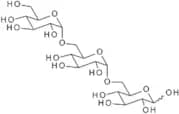
CAS:<p>Produced from high maltose syrup by treatment with transglucosidase</p>Formula:C18H32O16Purity:Min. 97 Area-%Color and Shape:White Off-White PowderMolecular weight:504.44 g/molAllyl 3,4-di-O-benzyl-2-O-(2-naphthylmethyl)-a-D-galactopyranoside
<p>Allyl 3,4-di-O-benzyl-2-O-(2-naphthylmethyl)-a-D-galactopyranoside is a synthetic carbohydrate with a complex structure. It is a modification of a D-galactopyranose sugar and has been glycosylated and methylated. This compound contains an allyl group that has been fluorinated at the 3 position.</p>Purity:Min. 95%3α,4β-Galactotriose
CAS:Obtained by the partial acetolysis of lambda-carrageenanFormula:C18H32O16Purity:Min. 95 Area-%Color and Shape:White PowderMolecular weight:504.44 g/mol2, 4-Anhydro-5-O-tert.butyldimethylsilyl- 6- deoxy- L- mannonic acid methyl ester
<p>2, 4-Anhydro-5-O-tert.butyldimethylsilyl-6-deoxy-L-mannonic acid methyl ester is a modification of mannose. It is an oligosaccharide with a complex carbohydrate structure. 2, 4-Anhydro-5-O-tert.butyldimethylsilyl-6-deoxy-L-mannonic acid methyl ester has been synthesized using custom synthesis methods. This product has high purity and CAS number: 29674–84–3.</p>Purity:Min. 95%1,3-Diazido-1,2,3-trideoxy-4-O-(2,6-diazido-2,6-dideoxy-a-D-glucopyranosyl)-D-myo-inositol
CAS:1,3-Diazido-1,2,3-trideoxy-4-O-(2,6-diazido-2,6-dideoxy-a-D-glucopyranosyl)-D-myo--inositol is a synthetic sugar that is used for glycosylation. It can be modified with fluorine to produce a fluorinated sugar. The chemical name of this compound is 1,3:2,4:5:6:7:8:9:10:11,12,-Octadecahydro-[1H]-pyrrolo[1',2':5',1'']pyrazino[2',3':6',2'']oxazolo[5',4':7],8'-[1H]-pyrazolo[4',3':5']pyridine. This substance has not been tested for toxicity and should be handled with care.Formula:C12H18N12O6Purity:Min. 95%Molecular weight:426.35 g/molDideoxyrhamnojirimycin
CAS:<p>Dideoxyrhamnojirimycin is a synthetic drug that has been modified to have the same structure as natural dideoxyribonucleosides. It is used in the treatment of myelodysplastic syndrome and thalassemia major. Dideoxyrhamnojirimycin inhibits DNA synthesis by blocking the incorporation of deoxyribonucleotides into DNA, which prevents cell division and stops the spread of cancer cells. Dideoxyrhamnojirimycin also has anti-inflammatory effects by inhibiting prostaglandin synthesis.</p>Purity:Min. 95%alpha-D-Galactose 1-phosphate, dipotassium salt pentahydrate
CAS:<p>Alpha-D-galactose 1-phosphate, dipotassium salt pentahydrate is a carbon source that can be used in biochemical and chemical ionization methods. It has been shown to inhibit the growth of lung fibroblasts. This compound is an inhibitor of glycolysis and inhibits the biosynthesis of galactose residues. Alpha-D-galactose 1-phosphate, dipotassium salt pentahydrate also inhibits the formation of glycogen and glucose from galactose residues as well as inhibiting the activity of enzymes involved in galactose metabolism. The inhibition of these enzymes leads to decreased galactose levels in diabetic patients.</p>Formula:C6H21K2O14PMolecular weight:426.40 g/mol2-Acetamido-2-deoxy-4-O-(β-D-mannopyranosyl)-D-glucopyranose
CAS:<p>2-Acetamido-2-deoxy-4-O-(b-D-mannopyranosyl)-D-glucopyranose (MDP) is a complex carbohydrate that has been modified by methylation, glycosylation, and carbocation. MDP is a saccharide that can be used in the synthesis of polysaccharides or as an intermediate for other chemical syntheses. It is also possible to modify MDP with fluorination, which may be useful in the synthesis of new types of pharmaceuticals.</p>Formula:C14H25NO11Purity:Min. 95 Area-%Color and Shape:PowderMolecular weight:383.35 g/mol