Glycoscience
Glycoscience is the study of carbohydrates and their derivatives, as well as the interactions and biological functions they participate in. This field of research is crucial for understanding a wide variety of biological processes, including cell recognition, signaling, immune response, and disease development. Glycoscience has important applications in biotechnology, medicine, and the development of new drugs and therapies. At CymitQuimica, we offer a wide selection of high-quality, high-purity products for glycoscience research. Our catalog includes monosaccharides, oligosaccharides, polysaccharides, glycoconjugates, and specific reagents, designed to support researchers in their studies on the structure, function, and applications of carbohydrates in biological systems. These resources are intended to facilitate scientific discoveries and practical applications in various areas of bioscience and medicine.
Subcategories of "Glycoscience"
- Aminosugars(108 products)
- Glyco-Related Antibodies(282 products)
- Glycolipids(46 products)
- Glycosaminoglycans (GAGs)(55 products)
- Glycosides(419 products)
- Monosaccharides(6,622 products)
- Oligosaccharides(3,682 products)
- Polysaccharides(503 products)
Found 11041 products of "Glycoscience"
Sort by
Purity (%)
0
100
|
0
|
50
|
90
|
95
|
100
Tri-b-GalNAc-triazolyl-C5-amine
CAS:<p>Tri-b-GalNAc-triazolyl-C5-amine is used for ASGPR-targeted delivery research. This molecule features three ASGPR-binding groups connected by a five-carbon alkyl (C5-alkyl) linker and a reactive amine group for attaching other molecules. When tri-b-GalNAc-triazolyl-C5-amine binds to ASGPR on cells, the entire complex is efficiently taken up into the cell and allows easy conjugation to various cargos such as RNA or Cas9 complexes, specifically to liver cells (hepatocytes). Additionally, tri-GalNAc-C5-amine can be used to create targeted chimeric molecules (LYTACs) or be attached to dyes for cellular imaging.</p>Formula:C67H118N14O31Purity:Min. 95%Molecular weight:1,615.73 g/molTri-b-GalNAc-b-alanine-PEG3-FITC
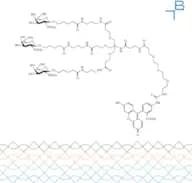
<p>Tri-b-GalNAc-b-alanine-PEG3-FITC is a synthetic probe consisting of three GalNAc ( N-acetylgalactosamine) residues linked to a beta-alanine spacer, followed by a PEG3 linker and a fluorescein isothiocyanate (FITC) fluorophore. This probe is designed to mimic the natural glycosylation patterns found in mucins and other glycoproteins, allowing for the investigation of carbohydrate-protein interactions, particularly those involving the asialoglycoprotein receptor (ASGPR) expressed on hepatocytes. The PEG3 linker provides flexibility and spacing between the glycan and the fluorescent tag, while the FITC moiety enables the detection and tracking of the probe using fluorescence-based techniques such as flow cytometry, fluorescence microscopy, and high-throughput screening assays. This versatile tool is valuable for researchers studying glycobiology, cell-cell interactions, and the development of targeted drug delivery systems.</p>Formula:C94H143N13O37SPurity:Min. 95%Molecular weight:2,079.3 g/molMethyl 4,6-di-O-acetyl-2,3-didehydro-2,3-dideoxy-a-D-galactopyranoside
CAS:<p>Methyl 4,6-di-O-acetyl-2,3-didehydro-2,3-dideoxy-a-D-galactopyranoside is a carbohydrate that is synthesized by glycosylation with methyl 4,6-di-O-acetyl-2,3-didehydrohexahydropyranose. It is used as a synthetic intermediate in the production of saccharides and oligosaccharides. This product has high purity and custom synthesis can be requested.</p>Formula:C11H16O6Purity:Min. 95%Molecular weight:244.24 g/mol1,4-b-Xylobiose hexaacetate
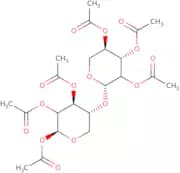
CAS:<p>1,4-b-Xylobiose hexaacetate is a sugar that is used in the glycosylation of complex carbohydrates. It can be synthesized from xylose and acetaldehyde by Methylation and Click modification. 1,4-b-Xylobiose hexaacetate has been fluorinated to give a stable product. This product is soluble in water, ethanol, acetone, DMF, DMSO and other organic solvents. It can also be used for methylation or polysaccharide synthesis. The CAS number for this compound is 58024-20-7.</p>Formula:C22H30O15Purity:Min. 95%Color and Shape:White PowderMolecular weight:534.46 g/molHydroxypropyl cellulose - Average MW 1,000,000
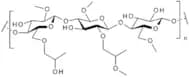
CAS:<p>Binder in tablets; food additive; has several pharmaceutical applications</p>Purity:Min. 95%Maltosyl trehalose
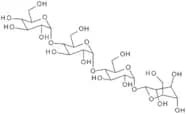
CAS:<p>Maltosyltransferase, involved in the biosynthesis of α-glucans, has been genetically validated as a potential therapeutic target against Mycobacterium tuberculosis. Trehalose derivatives are potential tools for the targeting of trehalose pathways in the cell wall of Mycobacterium tuberculosis.</p>Formula:C24H42O21Purity:Min. 95%Color and Shape:PowderMolecular weight:666.58 g/mol1,4:3,6-Dianhydro-5-nitro-D-glucitol
CAS:<p>Isosorbide is a naturally occurring sugar alcohol (polyol) that is found in small quantities in many plants and fruits. It is used as a pharmaceutical drug to treat angina pectoris, congestive heart failure, and high blood pressure. Isosorbide has been shown to inhibit the activity of matrix metalloproteinases (MMPs), which are enzymes that degrade extracellular matrix proteins. This effect may be beneficial for patients with disorders such as arthritis. Isosorbide also increases nitric oxide production, leading to vasodilation and improved blood flow. The therapeutic effect of isosorbide has been demonstrated in experimental models using mice with congestive heart failure due to myocardial infarction or chronic heart disease. Pharmacological treatment of these animals with isosorbide resulted in an improvement of left ventricular function, reduction of myocardial fibrosis, and reduced levels of cardiac markers.</p>Formula:C6H9NO6Purity:Min. 95%Molecular weight:191.14 g/molC-(1-Bromo-1-deoxy-2,3,4,6-tetra-O-benzoyl-b-D-glucopyranosyl)formamide
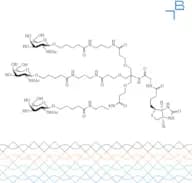
CAS:<p>C-(1-Bromo-1-deoxy-2,3,4,6-tetra-O-benzoyl-b-D-glucopyranosyl)formamide is a synthetic derivative of glucose. It is a glycosylating agent that can be used in the synthesis of oligosaccharides and polysaccharides. This compound can also be used as an intermediate in the synthesis of other glycosylating agents. C-(1-Bromo-1-deoxy-2,3,4,6-tetra-O-benzoyl)-bDglucopyranosyl)formamide has a CAS number of 262849–68–3 and can be synthesized in high purity.</p>Formula:C35H28BrNO10Purity:Min. 95%Molecular weight:702.5 g/molTri-b-GalNAc-gly-biotin
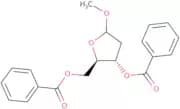
<p>Tri-b-GalNAc-Gly-biotin is used for studying ASGPR-mediated processes. This molecule combines three terminal beta-N-acetylgalactosamine (GalNAc) sugars for efficient ASGPR binding with a glycine (Gly) spacer and a biotin moiety. The GalNAc moiety facilitates specific targeting to hepatocytes, while the glycine spacer provides flexibility. The terminal biotin group serves a dual purpose: it allows for straightforward purification of ASGPR-interacting molecules via affinity chromatography and enables further bioconjugation via established streptavidin-biotin conjugation strategies. This combination makes tri-b-GalNAc-Gly-biotin valuable for isolating ASGPR-binding ligands from complex mixtures, studying ASGPR-ligand interactions, and potentially developing targeted probes for in vitro and in vivo applications.</p>Formula:C73H127N13O30SPurity:Min. 95%Molecular weight:1,698.93 g/molMethyl 2-deoxy-3,5-di-O-benzoyl-D-ribofuranoside
CAS:<p>Methyl 2-deoxy-3,5-di-O-benzoyl-D-ribofuranoside is a custom synthesis that is a complex carbohydrate. It is an Oligosaccharide, Polysaccharide and Modification of saccharides. Methyl 2-deoxy-3,5-di-O-benzoyl-D-ribofuranoside can be used in the modification of sugars and carbohydrates. This product is also fluorinated to increase its purity.</p>Formula:C20H20O6Purity:Min. 95%Molecular weight:356.37 g/mol2-Acetamido-6-azido-2,6-dideoxy-D-galactopyranose
CAS:<p>2-Acetamido-6-azido-2,6-dideoxy-D-galactopyranose is a synthetic, unnatural monosaccharide bearing an azido biorthogonal reaction group. This compound can enter the cell and is processed by biosynthetic enzymes, in a manner similar to the natural O-linked N-acetyl-β-D-glucosamine. The glycans produced bear the azido functional group which can be chemically tagged with fluorescent dyes or biotin for visualisation or affinity.</p>Formula:C8H14N4O5Purity:Min. 95%Molecular weight:246.22 g/molPhenyl 3,6-diazido-2,4-di-O-benzyl-3,6-dideoxy-b-D-thioglucopyranoside
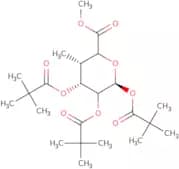
CAS:<p>Phenyl 3,6-diazido-2,4-di-O-benzyl-3,6-dideoxy-b-D-thioglucopyranoside is a custom synthesis. It is a fluorinated sugar that is modified by methylation and monosaccharides. Phenyl 3,6-diazido-2,4-di-O-benzyl-3,6-dideoxy -bD thioglucopyranoside is an oligosaccharide that can be used as a carbohydrate or polysaccharide. It has an CAS number of 68874461 8.</p>Formula:C26H32N6O3SPurity:Min. 95%Molecular weight:508.64 g/mol1,2,3,4-Tetra-O-pivaloyl-b-D-glucuronide methyl ester
CAS:<p>Protected glucuronide</p>Formula:C27H44O11Purity:Min. 95%Molecular weight:544.63 g/molMan6GlcNAc (I)
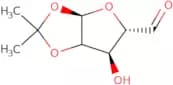
CAS:<p>Man6GlcNAc (I) is a synthetic, fluorinated, monosaccharide that can be modified to produce a wide range of products. This product has been shown to have high purity and can be customized for specific applications. It is used in the production of complex carbohydrates with click modification and methylation. Man6GlcNAc (I) is often used as an intermediate in the synthesis of oligosaccharides such as glycosylated proteins or glycans.</p>Formula:C44H75NO36Purity:Min. 95%Color and Shape:PowderMolecular weight:1,194.05 g/molBis-(5-aldo-1,2-O-isopropylidene-D-xylo-pentofuranose) 5,5':3',5-Cyclic acetal
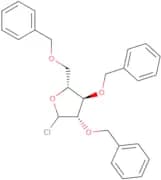
CAS:<p>Bis-(5-aldo-1,2-O-isopropylidene-D-xylo-pentofuranose) 5,5':3',5-Cyclic acetal is a synthetic saccharide that is used in the synthesis of complex carbohydrates. The compound is composed of an aldohexose and five cyclic acetal groups. It has a molecular weight of 618.11 g/mol and chemical formula C12H24O6. Bis-(5-aldo-1,2-O-isopropylidene-D-xylo-pentofuranose) 5,5':3',5 -cyclic acetal can be synthesized via the click chemistry reaction between 2′,3′,4′,6′,8′,9′ -octahydrobenzoin (1) and 4'-hydroxybutyric acid (2).</p>Purity:Min. 95%2,3,5-Tri-O-benzyl-D-arabinofuranosyl chloride
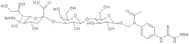
CAS:<p>2,3,5-Tri-O-benzyl-D-arabinofuranosyl chloride is an antitumour drug that is a purine nucleoside analogue. It is a synthetic compound and has been shown to have chemotherapeutic and antitumor activities. This drug binds to the enzyme RNA polymerase II, leading to inhibition of DNA synthesis and cell death. 2,3,5-Tri-O-benzyl-D-arabinofuranosyl chloride has potential as an antitumor agent.</p>Formula:C26H27ClO4Purity:Min. 95%Molecular weight:438.94 g/mol3'-Sialyllactose-APD-HSA
<p>3'-Sialyllactose-APD-HSA is a complex carbohydrate with Oligosaccharide and Polysaccharide. It is a modification of saccharides, which are composed of monosaccharides or simple sugars. 3'-Sialyllactose-APD-HSA is a synthetic compound that has been modified by the addition of fluorine atoms to the sugar molecule. This modification prevents the sugar from being broken down by enzymes in the body and ensures that it remains intact until it reaches its target site. 3'-Sialyllactose-APD-HSA is used as a drug delivery system for cancer drugs, such as doxorubicin and paclitaxel.</p>Purity:Min. 95%NA3 N-Glycan
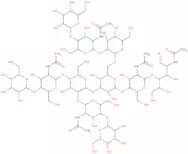
CAS:<p>NA3 N-glycan is a base that forms glycosidic bonds with other molecules. It has been shown to be pharmacologically active in tissues and has a safety profile. NA3 N-glycan is metabolized by the serine protease, which cleaves it from its glycosylated protein. The resulting molecule lacks a reactive group, which prevents it from forming toxic reactions with other molecules. NA3 N-glycan has been used for pharmacokinetic modeling and for mass spectrometric measurements of proteins in human serum and plasma.</p>Formula:C76H127N5O56Purity:Min. 95%Color and Shape:Solid.Molecular weight:2,006.82 g/mol1,2-Di-O-acetyl-4-O-allyl-3-O-benzyl-a-L-rhamnpyranose
<p>1,2-Di-O-acetyl-4-O-allyl-3-O-benzyl-a-L-rhamnpyranose is a synthetic monosaccharide that contains an O,O'-diacetyl group on the 2' position. This product is a complex carbohydrate that has been modified with fluorination and methylation. It can be used as a custom synthesis or as a glycosylation or polysaccharide modification. 1,2-Di-O-acetyl-4-O-allyl-3,6'-di(benzoyloxy)-a,a'-dimethyl rhamnopyranose is soluble in water and is of high purity.</p>Formula:C20H26O7Purity:Min. 95%Molecular weight:378.42 g/mol2,6-Di-O-Carboxymethyl-D-glucose
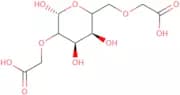
CAS:<p>2,6-di-O-carboxymethyl-D-glucose (2,6-CMG) is a modification of D-glucose. 2,6-CMG is a complex carbohydrate with CAS No. 95350-37-1 and has the molecular formula C8H14O9. It is an oligosaccharide that can be custom synthesized to meet customer specifications. 2,6-CMG has high purity and can be used as a sugar or polysaccharide. It also has been fluorinated to meet customer requirements. The glycosylation of 2,6-CMG is methylated and saccharides are then added to it in order to produce a monosaccharide or polysaccharide. This product can be used in the synthesis of glycoproteins and other biomolecules.</p>Formula:C10H16O10Purity:Min. 95%Color and Shape:Colourless LiquidMolecular weight:296.23 g/mol