Glycoscience
Glycoscience is the study of carbohydrates and their derivatives, as well as the interactions and biological functions they participate in. This field of research is crucial for understanding a wide variety of biological processes, including cell recognition, signaling, immune response, and disease development. Glycoscience has important applications in biotechnology, medicine, and the development of new drugs and therapies. At CymitQuimica, we offer a wide selection of high-quality, high-purity products for glycoscience research. Our catalog includes monosaccharides, oligosaccharides, polysaccharides, glycoconjugates, and specific reagents, designed to support researchers in their studies on the structure, function, and applications of carbohydrates in biological systems. These resources are intended to facilitate scientific discoveries and practical applications in various areas of bioscience and medicine.
Subcategories of "Glycoscience"
- Aminosugars(108 products)
- Glyco-Related Antibodies(282 products)
- Glycolipids(46 products)
- Glycosaminoglycans (GAGs)(55 products)
- Glycosides(419 products)
- Monosaccharides(6,624 products)
- Oligosaccharides(3,682 products)
- Polysaccharides(503 products)
Found 11046 products of "Glycoscience"
Sort by
Purity (%)
0
100
|
0
|
50
|
90
|
95
|
100
2,3,5-Tri-O-benzyl-1-O-(4-nitrobenzoyl)-L-arabinofuranose
<p>2,3,5-Tri-O-benzyl-1-O-(4-nitrobenzoyl)-L-arabinofuranose is a custom synthesis that is modified with fluorination, methylation, and monosaccharide. It is synthesized to be a carbohydrate molecule. This product has CAS No. and can be used in the modification of other molecules that are carbohydrates. This product can be found in oligosaccharides and saccharides as well as complex carbohydrates.</p>Purity:Min. 95%Dodecyl a-D-glucopyranoside
CAS:<p>Dodecyl a-D-glucopyranoside is a fatty acid that is found in the form of dodecyl glucoside. It has been shown to be effective against infectious diseases, such as pneumococcal infections and influenza. Dodecyl a-D-glucopyranoside inhibits bacterial growth by preventing the synthesis of lipopolysaccharides, which are important for the cell wall structure of Gram-negative bacteria. Dodecyl a-D-glucopyranoside also inhibits monoclonal antibody production, which may be due to its ability to inhibit protein synthesis. In addition, dodecyl a-D-glucopyranoside is used as an adjuvant in vaccines against autoimmune diseases.</p>Formula:C18H36O6Purity:Min. 95%Color and Shape:PowderMolecular weight:348.47 g/mol4-C-Acetoxymethyl-1,2-di-O-acetyl-3,5-di-O-benzyl-a-D-ribofuranose
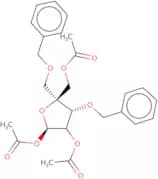
<p>4-C-Acetoxymethyl-1,2-di-O-acetyl-3,5-di-O-benzyl-a-D-ribofuranose is a custom synthesis that belongs to the class of complex carbohydrates. It is an oligosaccharide with a CAS number. This product is a modification of saccharides and has been methylated and glycosylated. This product has been fluorinated using the click chemistry reaction, which has made it more stable. 4CAMDBF is high purity and synthetic.</p>Formula:C26H30O9Purity:Min. 95%Color and Shape:Colourless syrup.Molecular weight:486.51 g/molAnhydro-4-azido-5,6,8-tri-O-benzyl-1,2,4-trideoxy-D-glycero-D-gulo-oct-1-ynitol
CAS:<p>Anhydro-4-azido-5,6,8-tri-O-benzyl-1,2,4-trideoxy -D-glycero-D-gulo-oct 1 -ynitol is a methylated saccharide. It is a fluorinated sugar that can be used as an intermediate in the synthesis of oligosaccharides and polysaccharides. This compound has been modified by click chemistry to allow for the incorporation of azide groups at the 3′ position of the sugar moiety. The modification allows for the synthesis of complex carbohydrates with high purity and high yield. The product is a white powder that is soluble in water.</p>Formula:C29H29N3O4Purity:Min. 95%Color and Shape:Colourless syrupMolecular weight:483.56 g/molPhenyl 2,3-di-O-benzyl-b-D-thioglucopyranoside
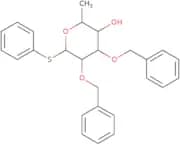
CAS:<p>Phenyl 2,3-di-O-benzyl-b-D-thioglucopyranoside is a Glycosylation product that belongs to the category of complex carbohydrates. Phenyl 2,3-di-O-benzyl-b-D-thioglucopyranoside is an Methylation product that can be Click modified with Polysaccharides and Fluorinated with saccharides. This product has been shown to have Modification capabilities in sugar and Oligosaccharides. Phenyl 2,3-di-O-benzyl-b-D-thioglucopyranoside is a Synthetic product that can be Custom synthesized for High purity.</p>Formula:C33H34O5SPurity:Min. 95%Molecular weight:542.69 g/mol2,6-Anhydro-1-deoxy-1-nitro-3,4,5-tri-O-acetyl-D-gulitol
CAS:<p>2,6-Anhydro-1-deoxy-1-nitro-3,4,5-tri-O-acetyl-D-gulitol is a custom synthesized sugar that is manufactured by Click modification with the fluorination and glycosylation of the 2,6 anhydro sugar. The CAS No. 20204-84-6 belongs to the category of high purity and is a synthetic carbohydrate. This complex carbohydrate can be modified for its methylation and oligosaccharide content.</p>Purity:Min. 95%6-O-Benzyl-D-glucose
CAS:<p>6-O-Benzyl-D-glucose is an aglycon of 6-O-benzylglycosides, which are synthesized from glucose by alkaline hydrolysis in the presence of silver oxide. The benzyl group can be removed by a variety of methods, including treatment with hydrogen chloride gas. 6-O-Benzyl-D-glucose has been used in research to demonstrate that carbohydrates have a common structural feature that can be identified by looking at their molecular structure. This molecule has also been used to study the synthesis and reactivity of benzyl groups.</p>Formula:C13H18O6Purity:Min. 95%Molecular weight:270.28 g/molThiosophorose
CAS:<p>Thiosophorose is a nutrient that is found in microalgae. It is also known as d-arabinose and has been shown to be an inactivating agent for viruses, such as HIV-1. Thiosophorose has been used in skin care products due to its ability to produce fatty acids, which are important for healthy skin. It is also useful for the production of biofuels from microalgae. This molecule can be used to catalyze the reaction between amines and triflates and it is insoluble in water. The viscosity of this compound will increase with increasing temperature.</p>Formula:C12H22O10SPurity:Min. 95%Molecular weight:358.4 g/molMethyl a-D-ribofuranoside - 95% oil
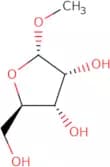
CAS:<p>Methyl a-D-ribofuranoside is a molecule that belongs to the group of conformers. It is a planar molecule, with its atoms in an orderly arrangement. The conformation of this molecule can be changed by rotating around the C-C bond, which has energies and displacements. Molecular orbital theory predicts that the conformation of methyl a-D-ribofuranoside is determined by the electron correlation between all atomic orbitals. The molecular structure of methyl a-D-ribofuranoside can be determined using spectroscopic methods, such as infrared and nuclear magnetic resonance spectroscopy. Coupling constants are used to measure how strongly two or more groups in a molecule are coupled together, while constants are used to measure the energy levels and frequencies in vibrational spectroscopy.</p>Formula:C6H12O5Purity:Min. 95%Molecular weight:164.16 g/molNGA4F N-Glycan
CAS:<p>NGA4F N-Glycan is a modification of the N-glycan structure. It is an oligosaccharide composed of a single monosaccharide, methylated and glycosylated to form a polysaccharide with sugar groups on every other carbon. This product can be custom synthesized by our chemists at your request.</p>Formula:C72H120N6O50Purity:Min. 95%Molecular weight:1,869.73 g/molD-Myo-inositol-1,3,5-triphosphate
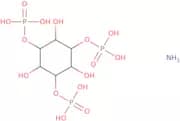
CAS:<p>D-myo-inositol-1,3,5-triphosphate is a carbohydrate that is modified with fluorine. It is a custom synthesis and can be synthesized in high purity. D-myo-inositol-1,3,5-triphosphate has several glycosylations and methylations. The modification of this compound includes click chemistry for the synthesis of oligosaccharides and saccharides. D-myo-inositol-1,3,5-triphosphate can be used as a sugar or an oligosaccharide in the modification of proteins or carbohydrates.</p>Purity:Min. 95%Methyl (4S)-b-cellobiosyl-4-thio-b-cellobioside
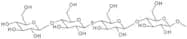
CAS:<p>Methyl (4S)-b-cellobiosyl-4-thio-b-cellobioside is a custom synthesis, modification and fluorination of methyl 4-thioacetate with b-D-cellobiosyl 4-thioacetate. This complex carbohydrate has been shown to have antiviral activity against herpes simplex virus type 1 (HSV1), and can be used as a monotherapy or in combination therapy for HSV1 infections. It inhibits the viral process by inhibiting the viral DNA polymerase and preventing DNA replication. Methyl (4S)-b-cellobiosyl-4-thio-b-cellobioside also inhibits the enzyme glycosyltransferase that is required for HSV1 replication.<br>Methyl (4S)-b - cellobiosyl - 4 - thio - b - cellobioside is a sugar that can be modified with click chemistry to produce different derivatives such as phosph</p>Formula:C25H44O20SPurity:Min. 95%Molecular weight:696.67 g/mol8-Hydroxymirtazapine b-D-glucuronide
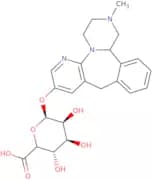
CAS:<p>8-Hydroxymirtazapine b-D-glucuronide is a fluorinated, monosaccharide, synthetic oligosaccharide. It is a complex carbohydrate that has been custom synthesized with glycosylation and polysaccharides. The sugar structure has been modified by methylation and click modification in order to produce a high purity product. CAS No. 155239-47-7</p>Formula:C23H27N3O7Purity:Min. 95%Molecular weight:457.49 g/mola-D-[2-13C]-Galactopyranosyl 1-phosphate dipotassium salt
CAS:a-D-[2-13C]-Galactopyranosyl 1-phosphate dipotassium salt is a synthetic, fluorinated monosaccharide. It is used as a fluorine probe for glycosylation reactions and for the synthesis of oligosaccharides with novel properties. This product is also used in click chemistry to attach methyl groups to sugars and in methylation studies.Formula:C6H13O9P·2KPurity:Min. 95%Color and Shape:PowderMolecular weight:339.33 g/molPhenyl 2,3-di-O-benzyl-6-deoxy-b-D-thioglucopyranoside
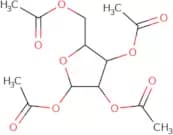
CAS:<p>Phenyl 2,3-di-O-benzyl-6-deoxy-b-D-thioglucopyranoside is a synthetic glycosylated sugar with a fluorinated benzene ring. It is used as an intermediate in the synthesis of oligosaccharides, polysaccharides and saccharides. Phenyl 2,3-di-O-benzyl-6-deoxy-b-D-thioglucopyranoside has an appearance of a white powder and a melting point of around 100°C. This compound has been evaluated for its purity and quality by analytical methods such as high performance liquid chromatography (HPLC), gas chromatography (GC) and nuclear magnetic resonance (NMR).</p>Formula:C26H28O4SPurity:Min. 95%Molecular weight:436.56 g/mol1,2,3,5-Tetra-o-acetyl-D-xylofuranose
CAS:<p>1,2,3,5-Tetra-o-acetyl-D-xylofuranose is a fatty acid that is found in human red blood cells. It is used as a biochemical marker to diagnose the activity index of fatty acids in the red cell membrane. The activity index can be used to determine whether an individual has metabolic disorders such as hepatic steatosis or lc-ms/ms method. 1,2,3,5-Tetra-o-acetyl-D-xylofuranose also has antimicrobial effects against bacteria and fungi and can be used for the treatment of infectious diseases.</p>Formula:C13H18O9Purity:Min. 95%Molecular weight:318.28 g/mol1,2,5-Tri-O-acetyl-3-deoxy-D-ribofuranose
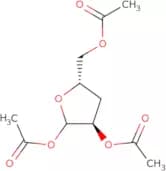
CAS:<p>1,2,5-Tri-O-acetyl-3-deoxy-D-ribofuranose is a modification of the sugar 3-deoxyribofuranose. It is a white to off-white powder that is soluble in water and methanol. 1,2,5-Tri-O-acetyl-3-deoxyribofuranose has been shown to be an inhibitor of bacterial growth in vitro as well as antiulcerogenic and cytotoxic. The compound also inhibits the growth of cancer cells and has been shown to inhibit the production of inflammatory cytokines such as tumor necrosis factor alpha and interleukin 1 beta.</p>Formula:C11H16O7Purity:Min. 95%Molecular weight:260.24 g/mol3,2',3',4'-Tetra-O-acetyl-6,6'-di-O-tert-butyldiphenylsilyl-lactal
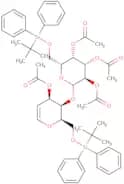
CAS:<p>3,2',3',4'-Tetra-O-acetyl-6,6'-di-O-tert-butyldiphenylsilyl-lactal is a modification of the oligosaccharide. The structure of this compound is an alpha-(1→4)-linked beta-D-galactopyranosyl residue, which is attached to a 3,2',3',4'-tetra-O-acetyl 6,6'-di-O-[ tert -butyldiphenylsilyl] lactal residue. This compound has been shown to be synthesized by methylation and glycosylation of the monosaccharide maltose. This modification has also been shown to inhibit the growth of bacteria. CAS No. 308103-45-9</p>Purity:Min. 95%Sennoside C
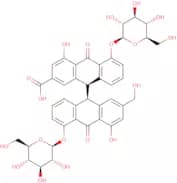
CAS:<p>Sennoside C is a bioactive phytochemical extracted from the leaves of Eclipta prostrata. It has been shown to have anti-tumor and anti-inflammatory properties. Sennoside C has also been found to be effective in treating autoimmune diseases, including psoriasis and rheumatoid arthritis. Sennoside C is a low-energy compound that binds with fatty acids to form a bound form. This bound form can be hydrolyzed by sodium hydroxide solution to release free sennosides, which are anthraquinone glycosides that can be used for the treatment of skin conditions such as eczema and dermatitis.</p>Formula:C42H40O19Purity:Min. 95%Color and Shape:SolidMolecular weight:848.76 g/mol2-Azidoethyl b-D-glucopyranosiduronic acid
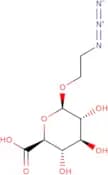
CAS:<p>2-Azidoethyl b-D-glucopyranosiduronic acid is a synthetic, fluorinated sugar that is used as a click modification to saccharides. It has the ability to be modified with methyl groups and glycosylation, which provide potential for synthesis of complex carbohydrates. The CAS number for 2-azidoethyl b-D-glucopyranosiduronic acid is 128095-64-7.</p>Formula:C8H13N3O7Purity:Min. 95%Molecular weight:263.2 g/mol





![a-D-[2-13C]-Galactopyranosyl 1-phosphate dipotassium salt](/_next/image/?url=https%3A%2Fstatic.cymitquimica.com%2Fproducts%2F3D%2Fthumb-webp%2FMG138862.webp&w=3840&q=75)