Glycoscience
Glycoscience is the study of carbohydrates and their derivatives, as well as the interactions and biological functions they participate in. This field of research is crucial for understanding a wide variety of biological processes, including cell recognition, signaling, immune response, and disease development. Glycoscience has important applications in biotechnology, medicine, and the development of new drugs and therapies. At CymitQuimica, we offer a wide selection of high-quality, high-purity products for glycoscience research. Our catalog includes monosaccharides, oligosaccharides, polysaccharides, glycoconjugates, and specific reagents, designed to support researchers in their studies on the structure, function, and applications of carbohydrates in biological systems. These resources are intended to facilitate scientific discoveries and practical applications in various areas of bioscience and medicine.
Subcategories of "Glycoscience"
- Aminosugars(108 products)
- Glyco-Related Antibodies(282 products)
- Glycolipids(46 products)
- Glycosaminoglycans (GAGs)(55 products)
- Glycosides(419 products)
- Monosaccharides(6,622 products)
- Oligosaccharides(3,682 products)
- Polysaccharides(503 products)
Found 11041 products of "Glycoscience"
Sort by
Purity (%)
0
100
|
0
|
50
|
90
|
95
|
100
Decasaccharide dp10
<p>Decasaccharide dp10 is a complex carbohydrate that is made up of ten monosaccharides. It is a synthetic oligosaccharide that has been fluorinated and glycosylated. The decasaccharide has been synthesized using click chemistry and methylation, before being purified to produce a high-purity product. Decasaccharide dp10 can be used in the modification of complex carbohydrates, as well as for the synthesis of glycans with customized structures.</p>Formula:C60H155N25O95S15Purity:Min. 95%Molecular weight:3,227.97 g/mol1-Deoxy-D-glucitol
CAS:<p>1-Deoxy-D-glucitol is a sugar alcohol that is a reduction product of glucose. It can be produced by the reduction of glucose 6-phosphate in muscle cells. The enzyme dehydrogenase catalyzes this reaction, which is influenced by the presence of gemini surfactants such as DMSO. 1-Deoxy-D-glucitol has been shown to have anti-fungal properties against Aspergillus parasiticus and other organisms. This activity may be due to its ability to inhibit phosphofructokinase, hexokinases, or other enzymes that are involved in the metabolism of glucose by these organisms.</p>Formula:C6H14O5Purity:Min. 95%Molecular weight:166.17 g/molD3-Ethyl β-D-glucuronide
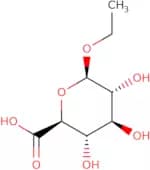
CAS:<p>D3-Ethyl β-D-glucuronide is a metabolite of ethanol. Detection of this compound may be used to diagnose alcohol consumption during pregnancy. The detection time is approximately 5 hours after a single drink. D3-Ethyl β-D-glucuronide can be reliably detected in maternal blood using solid phase microextraction and LC-MS/MS methods. The body mass index (BMI) can be used to determine the risk for alcohol consumption during pregnancy, with higher BMIs indicating an increased risk. Logistic regression models were created to estimate the probability of D3-Ethyl β-D glucuronide being present in maternal blood and the probability of alcohol consumption during pregnancy given a positive result. These models were then used to create diagnostic tools that are sensitive enough for clinical use.</p>Formula:C8H11D3O7Purity:Min. 95%Color and Shape:White Off-White PowderMolecular weight:225.21 g/molS-Hydroxy topiramate
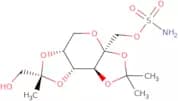
CAS:<p>S-Hydroxy topiramate is a modification of topiramate, which is a sugar. The chemical name for this compound is carbamic acid, N-[(1R,2S)-2-[[(3S)-3-methyl-4-(2,2,2-trifluoroethoxy)piperidin-1-yl]carbonyl]cyclopentyl]-3-[(phenylmethoxy)methyl]-, monosodium salt. It has the following properties: CAS No. 198215-62-2; Carbohydrate; complex carbohydrate; Custom synthesis; Oligosaccharide; High purity; Synthetic; Monosaccharide; Methylation; Glycosylation; Polysaccharide. This product can be used in the following applications: Fluorination, saccharide.</p>Formula:C12H21NO9SPurity:Min. 95%Molecular weight:355.36 g/mola-D-Galactose-PAA-biotin
<p>a-D-Galactose-PAA-biotin is a carbohydrate compound that has been modified by the addition of a PAA group and biotin. This compound can be synthesized with high purity and is available for custom synthesis. It is an oligosaccharide, a sugar, and a saccharide. The CAS number for this compound is 97320-93-4.</p>Purity:Min. 95%Color and Shape:Solid4-Amino-2,6-anhydro-3,4-dideoxy-D-glycero-D-galacto-non-2-enoic acid
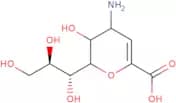
CAS:<p>4-Amino-2,6-anhydro-3,4-dideoxy-D-glycero-D-galacto-non-2-enoic acid is a modified oligosaccharide that is used in biochemical and medicinal research. This product can be custom synthesized to order and may be available as an off the shelf product. It has high purity and is available with a monosaccharide or methylated glycosylated saccharide. The CAS number for this product is 263155-12-0.</p>Formula:C9H15NO7Purity:Min. 95%Molecular weight:249.22 g/mol2-Deoxy-2-fluoro-D-lactose
<p>Used for studies of the D-lactose pathway by non-invasive techniques, using ¹â¹F-NMR spectroscopy or positron emission from the ¹âžF-labeled compound.</p>Formula:C12H21O10FPurity:Min. 95%Color and Shape:White PowderMolecular weight:344.29 g/mol1,6-Anhydro-4-O-b-D-galactopyranosyl-b-D-glucopyranose
CAS:<p>N-acetyllactosamine is a monosaccharide that belongs to the group of n-acetyllactosamine. It can be found in the form of an agglutinin, lactose, and lectin. The conformation of this molecule is an equilibrium between its alpha and beta forms. The pyridine can act as an acid catalyst for the alpha conformation. There are two forms of this molecule: one synthesized from D-glucose and one synthesized from D-galactose. 1,6-Anhydro-4-O-b-D-galactopyranosyl-b-D-glucopyranose is synthesized from D-glucose. Oligosaccharides containing this molecule have been expressed in Saccharomyces cerevisiae cells and purified by affinity chromatography on columns that contain immobilized antibody to human serum albumin. This molecule has been shown</p>Formula:C12H20O10Purity:Min. 95%Molecular weight:324.28 g/mol4-Amino-4-deoxy-fructose
<p>4-Amino-4-deoxy-fructose is a catalyzed product of ribulose. Its reaction with an aldehyde produces tagatose, which is a carbohydrate that has been shown to have therapeutic properties in mice. Tagatose can be used to produce dihydroxyacetone phosphate, an intermediate in the glycolytic pathway. 4-Amino-4-deoxy-fructose also accelerates the reaction between the ketoses and acceptors in the presence of an enzyme called enolase. This process is known as enantioselective reduction. The aminosugar 4-amino-4-deoxyglucose was synthesized using this methodology, and it has been shown to inhibit bacterial growth by binding to DNA gyrase, preventing DNA replication and transcription.</p>Purity:Min. 95%H Type II-APD-BSA
<p>H Type II-APD-BSA is a custom synthetic sugar that is used as an electron acceptor to reduce a variety of electron-deficient aromatic compounds. H Type II-APD-BSA can be modified with fluorine, which makes it an ideal reagent for the synthesis of complex carbohydrates. This product was created by methylation, click modification, and oligosaccharide synthesis. It has a CAS number, is made of saccharides and polysaccharides, and contains monosaccharides and sugars.</p>Purity:Min. 95%Entecavir 3''-O-b-D-glucuronide
<p>Entecavir 3''-O-b-D-glucuronide is a synthetic compound that is a methylated, fluorinated, and modified oligosaccharide. It has CAS number 68655-87-8 and it is a high purity, complex carbohydrate with a saccharide unit. Entecavir 3''-O-b-D-glucuronide can be used in the synthesis of monosaccharides and polysaccharides.</p>Formula:C18H23N5O9Purity:Min. 95%Color and Shape:SolidMolecular weight:453.4 g/mol1,4-Dideoxy-1,4-imino-D-xylitol HCl
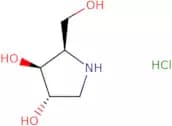
CAS:<p>1,4-Dideoxy-1,4-imino-D-xylitol HCl (DDX) is a potent inhibitor of the enzyme carboxypeptidase A2. DDX has been shown to inhibit the growth of HIV in vitro and in vivo. DDX also inhibits the production of proinflammatory cytokines and neurotrophic factors from HL60 cells. It has been shown to be a potential drug target for the treatment of infectious diseases such as alphaviruses, which produce a severe neuroinvasive disease in humans. DDX binds to dna with high affinity and specificity, but does not bind to RNA or proteins. DDX inhibits mitochondrial membrane potential by binding to ATP synthase and blocking the synthesis of ATP. DDX has also been shown to have an anti-oxidative injury effect on mitochondria, which may contribute to its inhibition of viral replication.</p>Formula:C5H11NO3·HClPurity:Min. 95%Molecular weight:169.61 g/molRaloxifene-4'-D-glucuronide lithium salt
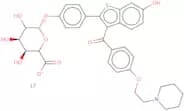
CAS:<p>Raloxifene-4'-D-glucuronide lithium salt is a metabolite of raloxifene, an estrogen receptor modulator. It has been used in the treatment of osteoporosis and breast cancer. Raloxifene-4'-D-glucuronide lithium salt inhibits protein synthesis by inhibiting the activity of ribosomes. Raloxifene-4'-D-glucuronide lithium salt binds to microsomal preparations, which are organelles found in liver cells that synthesize proteins. This binding slows down the rate at which proteins are synthesized, leading to its anti-cancer properties.</p>Formula:C34H34NO10S·LiPurity:Min. 95%Molecular weight:655.64 g/molGlycyl-3'-fucosyllactose
<p>Glycyl-3'-fucosyllactose is a synthetic, fluorinated polysaccharide that can be modified with glycosylation and methylation. It has the CAS No. of 12078-02-9 and is a high purity product.</p>Formula:C20H36N2O15Purity:Min. 95%Molecular weight:544.5 g/mol1-Benzyl-4,6-O-acetamidogalactose
<p>1-Benzyl-4,6-O-acetamidogalactose is an aminoglycoside antibiotic that inhibits the growth of bacteria by binding to the 50S ribosomal subunit. It enters the bacterial cell wall and blocks the synthesis of peptidoglycan, which is an essential component of the cell wall. 1-Benzyl-4,6-O-acetamidogalactose has been shown to have a potent bactericidal effect against Mycobacterium tuberculosis, with a half maximal inhibitory concentration (IC50) of 0.5 µg/mL. It also has a significant inhibitory effect on Mycobacterium avium complex (MIC=8 µg/mL).</p>Purity:Min. 95%1,2,3,4-Tetra-O-isobutyryl-b-D-glucuronide methyl ester
CAS:<p>1,2,3,4-Tetra-O-isobutyryl-b-D-glucuronide methyl ester is a custom synthesis that is used to modify oligosaccharides and polysaccharides. It is a high purity product with a purity of >99%. This product has been fluorinated and modified to create a complex carbohydrate. 1,2,3,4-Tetra-O-isobutyryl-b-D-glucuronide methyl ester is an example of a sugar that has been synthesized in the lab.</p>Formula:C23H36O11Purity:Min. 95%Color and Shape:White PowderMolecular weight:488.53 g/molDisialylated pentaose type I
<p>Disialylated pentaose type I (DSI-1) is a disaccharide sugar that is synthesized in high purity by custom synthesis. It is a complex carbohydrate that consists of five monosaccharides: glucose, galactose, mannose, fucose and N-acetylneuraminic acid. DSI-1 has been shown to have glycosylation and methylation activity. This product has been modified with fluorination and saccharide modification, as well as Click chemistry. Disialylated pentaose type I is used in the pharmaceutical industry as an intermediate for the production of glycoconjugates and in the food industry to produce artificial sweeteners.</p>Formula:C42H67N3O32Na2Purity:Min. 95%Molecular weight:1,171.96 g/molRhamnolipid
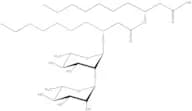
<p>Rhamnolipids are a class of biosurfactants which contain rhamnose as the sugar moiety linked to β-hydroxylated fatty acid chains. Rhamnolipids can be widely applied in many industries including; petroleum, food, agriculture and bioremediation etc.</p>Formula:C26H48O9Purity:(%) Min. 95%Color and Shape:Yellow PowderMolecular weight:504.65 g/mol1-Deoxy-L-ribose
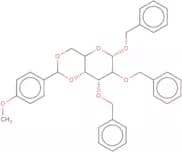
CAS:<p>1-Deoxy-L-ribose is a metabolite of acetone. It is a monosaccharide that contains one less oxygen atom than its parent compound. 1-Deoxy-L-ribose is found in the urine and blood of humans and animals. In animals, it can be synthesized from glucose by the enzyme ribose 1-phosphate reductase. This reaction requires an energy source such as ATP or NADH to reduce ribose 1,5-bisphosphate to 1,4-dihydroxyacetone phosphate, which then undergoes spontaneous dehydration to form 1-deoxy-D-ribose.</p>Formula:C5H10O4Purity:Min. 95%Molecular weight:134.13 g/mol1,2,3-Tri-O-benzyl-4,6-O-(4-methoxybenzylidene)-a-D-mannopyranoside
<p>Ai Product Descriptions 50 Creative</p>Formula:C35H36O7Purity:Min. 95%Molecular weight:568.66 g/mol