Glycoscience
Glycoscience is the study of carbohydrates and their derivatives, as well as the interactions and biological functions they participate in. This field of research is crucial for understanding a wide variety of biological processes, including cell recognition, signaling, immune response, and disease development. Glycoscience has important applications in biotechnology, medicine, and the development of new drugs and therapies. At CymitQuimica, we offer a wide selection of high-quality, high-purity products for glycoscience research. Our catalog includes monosaccharides, oligosaccharides, polysaccharides, glycoconjugates, and specific reagents, designed to support researchers in their studies on the structure, function, and applications of carbohydrates in biological systems. These resources are intended to facilitate scientific discoveries and practical applications in various areas of bioscience and medicine.
Subcategories of "Glycoscience"
- Aminosugars(108 products)
- Glyco-Related Antibodies(282 products)
- Glycolipids(46 products)
- Glycosaminoglycans (GAGs)(55 products)
- Glycosides(419 products)
- Monosaccharides(6,622 products)
- Oligosaccharides(3,682 products)
- Polysaccharides(503 products)
Found 11041 products of "Glycoscience"
Sort by
Purity (%)
0
100
|
0
|
50
|
90
|
95
|
100
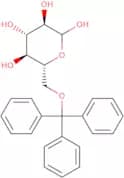
6-O-Trityl-D-glucose
CAS:<p>6-O-Trityl-D-glucose is a sugar derivative that is synthesized by reacting 6,6'-dichloro-1,1'-binaphthyl with D-glucose. It has been used as a model for the stereospecific hydrolysis of polystyrene catalyzed by lipase. The reactive carbonyl group in the molecule allows for substitution reactions to occur at the hydroxyl groups and yields are dependent on the substituent effects.</p>Formula:C25H26O6Purity:Min. 95%Color and Shape:White To Off-White SolidMolecular weight:422.47 g/mol2-Deoxy-2-fluoro-b-D-galactopyranosyl azide
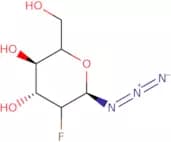
CAS:<p>2-Deoxy-2-fluoro-b-D-galactopyranosyl azide is a synthetic modification of the sugar 2,3,4,6-tetraacetamido-2,3,4,6-tetraazido-b-D-galactopyranose. It is used as a chemical probe for the study of glycosylation reactions and carbohydrate synthesis. 2-Deoxy-2-fluoro b D galactopyranosyl azide has been shown to be an efficient reagent for the methylation of saccharides. This compound is also used in the modification of polysaccharides.<br>Methylation reactions are often used to prepare modified carbohydrates that are difficult to synthesize by other methods. These compounds can be used as chemical probes for studying glycosylation reactions and carbohydrate synthesis.</p>Formula:C6H10FN3O4Purity:Min. 95%Molecular weight:207.16 g/mol(2R,4R)-2-[L-Xylo-tetrahydroxybut-1-yl]-1,3-thiazolidine-4-carboxylic acid
CAS:<p>(2R,4R)-2-[L-Xylo-tetrahydroxybut-1-yl]-1,3-thiazolidine-4-carboxylic acid is a methylated saccharide that can be used for the synthesis of glycosides and other carbohydrate derivatives. (2R,4R)-2-[L-Xylo-tetrahydroxybut-1-yl]-1,3-thiazolidine-4-carboxylic acid has been shown to react with various reagents such as iodine and bromine. This product has been synthesized by Click modification.</p>Formula:C8H15NO6SPurity:Min. 95%Molecular weight:253.27 g/mol1,5-Dideoxy-D-xylulose
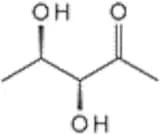
CAS:<p>1,5-Dideoxy-D-xylulose is a synthetic compound that has been modified to make it resistant to methylation and other modifications. It can be used as a raw material for the production of complex carbohydrates and saccharides, such as oligosaccharides and polysaccharides. 1,5-Dideoxy-D-xylulose is widely used in the modification of saccharides and carbohydrates. It is important in the production of high purity monosaccharides, which are used in the synthesis of pharmaceuticals. This product is also often used for fluorination reactions.</p>Formula:C5H10O3Purity:Min. 95%Molecular weight:118.13 g/molR,S-Flurbiprofen-acyl-b-D-glucuronide
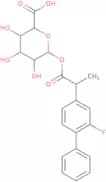
CAS:<p>R,S-Flurbiprofen-acyl-b-D-glucuronide is a custom synthesis of an oligosaccharide that has been modified by fluorination and methylation. This saccharide is synthesized from R,S-flurbiprofen using the click modification. It is a polysaccharide with glycosylation at the sugar level. The carbohydrate chain also contains monosaccharides and complex carbohydrates.</p>Formula:C21H21FO8Purity:Min. 95%Molecular weight:420.39 g/mol1-O-Acetyl-2-deoxy-5-O-p-methoxybenzoyl-3-O-(N,N-diethylthiocarbamoyl)-D-ribofuranose
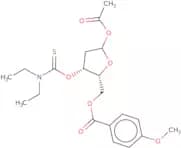
<p>1-O-Acetyl-2-deoxy-5-O-p-methoxybenzoyl-3-O-(N,N-diethylthiocarbamoyl)-Dribofuranose (1) is a fluorinated monosaccharide that is synthesized from 1,2:5,6:7,8:3',4'-hexamethyleneglucopyranosyl bromide and diethylthiocarbamic acid. This product has been shown to be an efficient glycosylation agent for complex carbohydrates and can be used in the synthesis of oligosaccharides and polysaccharides. It has also been modified by methylation and click chemistry.</p>Formula:C20H27NO7SPurity:Min. 95%Molecular weight:425.5 g/mol1,2,3,5-Tetra-O-acetyl-L-arabinofuranose
CAS:<p>1,2,3,5-Tetra-O-acetyl-L-arabinofuranose is an organic compound that belongs to the group of sugars. It is a component of many polysaccharides and glycoproteins. 1,2,3,5-Tetra-O-acetyl-L-arabinofuranose is a useful intermediate in the synthesis of lysine and theophylline. The most common method for deacetylation involves using triphenylphosphine and chlorine in dichloromethane or chloroform as solvent. This reaction yields 1,2,3,5-tetra-O-(chloroacetoxy)-L-arabinofuranose which can be purified by chromatography. The bioassay for 1,2,3,5-tetra-O-[chloroacetoxy]-L arabinofuranose was found to be similar to that for</p>Formula:C13H18O9Purity:Min. 95%Color and Shape:Colorless PowderMolecular weight:318.28 g/molMan5GlcNAc
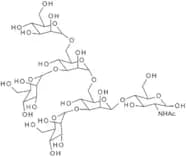
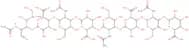
CAS:<p>Man5GlcNAc is a glycoprotein that is expressed in the Golgi apparatus of mammalian cells. It is cleaved by alpha-mannosidase II and alpha-mannosidase I, which are enzymes located in the golgi apparatus. Man5GlcNAc has been shown to be an effective glp-1 analogue, which is a hormone that stimulates insulin secretion. This protein has also been shown to have structural similarities to high mannose type oligosaccharides, which are found on the surface of some bacteria. The protein may also act as a signal peptide for proteins that are exported from the golgi to the cell membrane.</p>Formula:C38H65NO31Purity:Min. 95%Color and Shape:PowderMolecular weight:1,031.91 g/molHyaluronate octasaccharide
CAS:<p>Hyaluronate octasaccharide is a regulatory molecule that has been found to be useful for staining and as a chondrocyte culture supplement. Hyaluronate octasaccharide is composed of two sugar molecules: glucuronic acid and N-acetylglucosamine. The molecular weight of this compound is about 5000 Daltons, and it has been found to show high levels of proton hydrogen bonding interactions with other molecules in the extracellular matrix. It also contains oligosaccharides and disaccharides. Hyaluronate octasaccharide can be used in vitro to stimulate cell growth, which may be due to its ability to stabilize collagen and elastin fibers by binding with collagenase.</p>Formula:C56H86N4O45Purity:Min. 95%Molecular weight:1,535.3 g/mol2,3:4,5-Di-O-isopropylidene-b-D-fructopyranose-D12
Controlled Product<p>2,3:4,5-Di-O-isopropylidene-b-D-fructopyranose (2,3:4,5-di-OIPF) is a synthetic sugar that has been fluorinated and methylated. 2,3:4,5-Di-OIPF can be used as a building block for the synthesis of oligosaccharides or polysaccharides. It can also be modified with an acetal group to form an acetal sugar.</p>Formula:C12H8D12O6Purity:Min. 95%Molecular weight:272.35 g/mol3',4'-O-Carbonyl-6,6'-di-O-triisopropylsilyl lactal
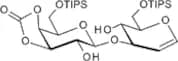
CAS:<p>3',4'-O-Carbonyl-6,6'-di-O-triisopropylsilyl lactal is a custom synthesis used for the modification of complex carbohydrates with glycosylation and methylation. It can be used to synthesize oligosaccharides or polysaccharides with high purity and good yield. 3',4'-O-Carbonyl-6,6'-di-O-triisopropylsilyl lactal is also an effective fluorinating agent that can be used in the synthesis of monosaccharides by click chemistry.</p>Formula:C31H58O10Si2Purity:Min. 95%Molecular weight:646.96 g/mol3-Azido-2,3-dideoxy-D-ribose
CAS:<p>3-Azido-2,3-dideoxy-D-ribose is a boron trifluoride etherate that has significant activity against the anomers of d-mannitol. It can be used as a stereoselective synthesis of the triflate on the corresponding anomer. Triflate is prepared by reaction with trifluoromethanesulfonic acid chloride and then reacted with sodium azide in ethanol to yield 3-azido-2,3-dideoxy-D-ribose. The product can be purified by recrystallization from acetic acid and water or by extraction with chloroform. This compound is also extracted from boric acid and dioxane using aqueous sodium hydroxide solution.</p>Purity:Min. 95%Xylaric acid disodium salt
CAS:<p>Xylaric acid disodium salt is a meso oxidised xylose analogue</p>Formula:C5H6Na2O7Purity:Min. 98 Area-%Color and Shape:PowderMolecular weight:224.08 g/molMonosialyl, monofucosyllacto-N-hexaose I
<p>Monosialyl, monofucosyllacto-N-hexaose I is a high purity sugar that has been custom synthesized for Click modification. The glycosylation reaction of this sugar was performed with methylated bovine erythrocyte as the glycosylase donor. The product will be delivered in the form of white powder and is available at CAS No. 71607-56-1.</p>Formula:C57H95N3O43Purity:Min. 95%Color and Shape:PowderMolecular weight:1,510.36 g/mol1,2,4,6-Tetra-O-acetyl-3-O-benzyl-b-D-glucopyranose
CAS:<p>Hypromellose is a polymer that is made from cellulose. It is used as an excipient in pharmaceutical formulations, such as tablets and capsules. Hypromellose can also be used as a food additive for thickening, stabilizing, and suspending. It has a molecular weight of about 20000 Daltons and may have the following side effects: mild gastrointestinal discomfort, diarrhea, nausea, or vomiting.</p>Formula:C21H26O10Purity:Min. 95%Color and Shape:PowderMolecular weight:438.43 g/mol3-Azido-5-O-benzoyl-3-deoxy-1,2-O-isopropylidene-a-D-ribofuranose
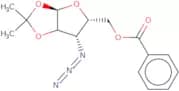
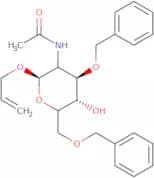
<p>3-Azido-5-O-benzoyl-3-deoxy-1,2-O-isopropylidene a D-ribofuranose (3ABI) is a synthetic monosaccharide that can be synthesized via a custom synthesis. 3ABI is an oligosaccharide that has the ability to modify glycosylation and polysaccharide synthesis. The fluorination of this sugar provides it with high purity and stability. 3ABI has been shown to have a CAS number of 44793-23-2.</p>Formula:C15H17N3O5Purity:Min. 95%Molecular weight:319.31 g/molAllyl 2-acetamido-3,6-di-O-benzyl-2-deoxy-b-D-glucopyranoside
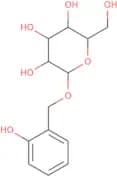
CAS:<p>Allyl 2-acetamido-3,6-di-O-benzyl-2-deoxy-b-D-glucopyranoside is a synthetic sugar that is used in the modification of complex carbohydrates. It is an Oligosaccharide that has a Glycosylation and fluorination. Allyl 2-acetamido-3,6-di-O-benzyl-2-deoxy-b--D--glucopyranoside contains a methyl group on the C1 position, which can be modified at the C1 position to produce various derivatives. Click chemistry reactions are also possible with this compound. The chemical name for this compound is 65730–02–1 and it has CAS number 65730–02–1.</p>Formula:C25H31NO6Purity:Min. 95%Molecular weight:441.53 g/mol2-Hydroxybenzylbeta-D-glucopyranoside
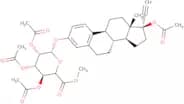
CAS:<p>2-Hydroxybenzylbeta-D-glucopyranoside is a fluorinated monosaccharide that has been custom synthesized for the glycosylation of complex carbohydrate. It is a synthetic compound that features a click modification and methylation. This product is offered in high purity and is available for custom synthesis.</p>Formula:C13H18O7Purity:Min. 95%Molecular weight:286.28 g/molEthynyl estradiol 17-acetate-3-(2',3',4'-tri-O-acetyl-b-D-glucuronide) methyl ester
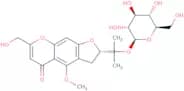
CAS:<p>Ethynyl estradiol 17-acetate-3-(2',3',4'-tri-O-acetyl-b-D-glucuronide) methyl ester is a glycosylated, fluorinated, Oligosaccharide, custom synthesized, high purity product. Ethynyl estradiol is a synthetic hormone used in oral contraceptives and estrogen replacement therapy. It is an estrogen that has been modified to have the chemical structure of a C17β unsaturated A ring. This modification prevents the breakdown of ethynyl estradiol by first pass metabolism and its subsequent transformation into estrone. Ethynyl estradiol 17-acetate 3-(2',3',4'-tri-O-acetyl-b-D-glucuronide) methyl ester is an acetate ester of ethinyl estradiol with a glucuronic acid conjugate at the C3 position.</p>Formula:C35H42O12Purity:Min. 95%Molecular weight:654.7 g/molCimifugin 4'-O-b-D-glucopyranoside
CAS:<p>Cimifugin 4'-O-b-D-glucopyranoside is a complex carbohydrate that has been modified with methylamine and fluorine. It is a custom synthesis of cimifugin, which is an oligosaccharide found in the roots of the Chinese medicinal plant Cimicifuga. Cimifugin 4'-O-b-D-glucopyranoside has been modified to increase its solubility and stability. The modification also increases its bioavailability, which may be due to the ability of methylamine to chelate heavy metals or the fluoroalkylation of cimifugin, making it more lipophilic. Cimifugin 4'-O-b-D-glucopyranoside has been shown to have antiinflammatory effects, as well as hepatoprotective properties.</p>Purity:Min. 95%

![(2R,4R)-2-[L-Xylo-tetrahydroxybut-1-yl]-1,3-thiazolidine-4-carboxylic acid](/_next/image/?url=https%3A%2Fstatic.cymitquimica.com%2Fproducts%2F3D%2Fthumb-webp%2FMX01046.webp&w=3840&q=75)