Glycoscience
Glycoscience is the study of carbohydrates and their derivatives, as well as the interactions and biological functions they participate in. This field of research is crucial for understanding a wide variety of biological processes, including cell recognition, signaling, immune response, and disease development. Glycoscience has important applications in biotechnology, medicine, and the development of new drugs and therapies. At CymitQuimica, we offer a wide selection of high-quality, high-purity products for glycoscience research. Our catalog includes monosaccharides, oligosaccharides, polysaccharides, glycoconjugates, and specific reagents, designed to support researchers in their studies on the structure, function, and applications of carbohydrates in biological systems. These resources are intended to facilitate scientific discoveries and practical applications in various areas of bioscience and medicine.
Subcategories of "Glycoscience"
- Aminosugars(108 products)
- Glyco-Related Antibodies(282 products)
- Glycolipids(46 products)
- Glycosaminoglycans (GAGs)(55 products)
- Glycosides(419 products)
- Monosaccharides(6,622 products)
- Oligosaccharides(3,682 products)
- Polysaccharides(503 products)
Found 11041 products of "Glycoscience"
Sort by
Purity (%)
0
100
|
0
|
50
|
90
|
95
|
100
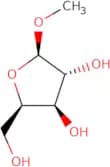
Methyl b-D-xylofuranoside
CAS:<p>Methyl b-D-xylofuranoside is a fluorinated monosaccharide that is synthesized by the replacement of hydroxyl groups with fluorine. Methyl b-D-xylofuranoside is used for the synthesis of oligosaccharides and polysaccharides, as well as for glycosylation and methylation reactions. The product has a CAS number of 1824-97-1 and can be custom synthesized to meet specific customer specifications.</p>Purity:Min. 95%Paricalcitol 25-b-D-glucuronide
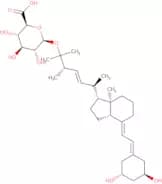
CAS:<p>Paricalcitol 25-b-D-glucuronide is a synthetic analogue of calcitriol, which is the active form of vitamin D. It is a high-purity glycosylate with an average molecular weight of 522.5 Da and a purity of >98%. Paricalcitol 25-b-D-glucuronide has been shown to be effective in prevention or treatment of secondary hyperparathyroidism in patients with chronic kidney disease (CKD). This compound has shown to inhibit calcium absorption in the gut and increase urinary excretion of calcium. It also increases serum phosphate levels, which may lead to increased calcium phosphate deposition in bone. Paricalcitol 25-b-D-glucuronide is methylated at the 25 position, which prevents it from being metabolized by the liver. This modification allows for higher concentrations to be administered without causing toxicity.</p>Formula:C33H52O9Purity:Min. 95%Molecular weight:592.76 g/mol4-Methoxyphenyl 4-O-{4-O-[[2,4-di-O-Ac-3-O-[2,4-di-O-(3,4,6-tri-O-Ac-2-PhthN -b-D-Glc)-3,6-di-O-Bn-a-D-Man]-6-O-[3,4-di-O-Ac-2,6-di- O-(3,4,6-tri-O-Ac-2-PhthN -b-D-Glc)-a-D-Man]-b-D-Man]]-3,6-di-O-Bn-2-PhthN-b-D-Glc}-3-O-Bn-6-O-(tri-O-Bn-a-L-Fuc)-2-Ph
CAS:<p>4-Methoxyphenyl 4-O-{4-O-[2,4-di-O-(3,4,6-tri-O-Ac-2-PhthN -bDGlc)-3,6-di-O-(3,4,6,-tri-OAc)aDMan]-bDMan} 3,6 di O-(3,4,6,-tri Ac) a D Man] 2 PhthN b D Glc} 6 O (tri Ac) a L Fuc} 2 PhthN b D Glc} 3 O Bn 6 O (tri Ac) a L Fuc} 2 PhthN b D Glc} is an oligosaccharide. It is custom synthesized to include methylation and glycosylation modifications. This product is for use in research only and should not be used in humans.</p>Formula:C203H206N6O73Purity:Min. 95%Molecular weight:3,897.8 g/molPhenyl 2,3,4-tri-O-benzoyl-b-D-thiogalactopyranoside
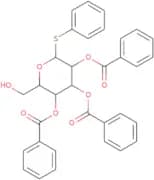
CAS:<p>Phenyl 2,3,4-tri-O-benzoyl-b-D-thiogalactopyranoside is a methylation product of b-D-thiogalactopyranoside. It has CAS No. 139608-11-0 and a molecular weight of 536.2. This compound is an Oligosaccharide with a molecular formula of C8H8O7 and a molecular weight of 432.1. Phenyl 2,3,4-tri-O-benzoyl-b-D-thiogalactopyranoside is also known as Methyl 3,4-(Benzoyloxy)galactoside or Methyl 3,4-(Benzoic acid)galactoside. This compound is soluble in water and ethanol and has the appearance of a white to off white powder at room temperature.</p>Purity:Min. 95%Man-7D1 N-Glycan
CAS:<p>Man-7D1 N-glycan is a synthetic, fluorinated, monosaccharide oligosaccharide that is custom synthesized for glycosylation. It has been shown to be an effective substrate for glycosylation and can be used in the synthesis of complex carbohydrates. The modification of Man-7D1 N-glycan includes fluorination, methylation, and click chemistry. This product is available in high purity and with a CAS number 83178-05-6.</p>Formula:C58H98N2O46Purity:Min. 95%Color and Shape:White to off-white solid.Molecular weight:1,559.38 g/molb-D-Lactosyltrichloroacetimidate heptaacetate
CAS:<p>b-D-Lactosyltrichloroacetimidate heptaacetate is a glycosylation product of the b-D-lactose and trichloroacetic anhydride. This compound is used in the synthesis of oligosaccharides and polysaccharides. It has been shown to be a fluorinated, methylated, or click modified monosaccharide or disaccharide which can be prepared through custom synthesis, or by modification of existing saccharides. This compound has been found to have high purity with a CAS number of 1142022-76-1.</p>Formula:C28H36Cl3NO18Purity:Min. 95%Molecular weight:780.94 g/molMethyl 6-O-trityl-a-D-galactopyranoside
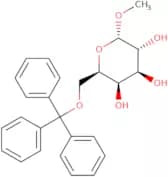
CAS:<p>Methyl 6-O-trityl-a-D-galactopyranoside is a custom synthesis, Click modification, and Oligosaccharide. It is a polysaccharide that consists of monosaccharides linked together with glycosidic bonds. This substance can be modified by fluorination and has a high purity. Methyl 6-O-trityl-a-D-galactopyranoside has CAS No. 35920-83-3 and is available in the form of white crystals.</p>Formula:C26H28O6Purity:Min. 95%Molecular weight:436.51 g/molMethyl 6-deoxy-3,4-O-isopropylidene-a-D-galactopyranoside
CAS:<p>Methyl 6-deoxy-3,4-O-isopropylidene-a-D-galactopyranoside is a saccharide that has been modified by a click reaction. It is used in the synthesis of complex carbohydrates and in the modification of glycosylations. This product is manufactured using high purity reagents and can be purchased with custom synthesis options. Methyl 6-deoxy-3,4-O-isopropylidene-a-D-galactopyranoside has CAS number 71772-35-5.</p>Formula:C10H18O5Purity:Min. 95%Molecular weight:218.25 g/mol(2-Hydroxypropyl)-a-cyclodextrin
CAS:<p>Alpha-cyclodextrin (α-CD) derivative with a hydrophilic exterior and lipophilic cavity (smaller than β-CDs and γ-CDs) to allocate certain guest molecules. This structural characteristic enables applications in molecular encapsulation, solubility enhancement, and stabilization across multiple industries. In pharmaceuticals, it serves as a drug delivery vehicle, enhancing the bioavailability and stability of active ingredients. The food industry utilizes it as a stabilizer for flavors, colors, and nutrients, as well as a functional ingredient for its effects on lipid metabolism. In cosmetics, it acts as a complex agent for fragrances and active components. Its applications extend to analytical chemistry for chiral separation and to materials science for developing smart materials and nanosystems.2-hydroxypropyl-alpha-cyclodextrin (HPCD) forms a stable inclusion complex with iodine. It also serves as a co-polymer for gene delivery vectors.</p>Color and Shape:PowderMolecular weight:1.01,2,3-Tri-O-benzyl-4-O-(2,3,4,6-tetra-O-benzyl-a-D-galactopyranosyl)-b-D-galactopyranoside
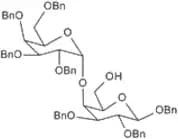
<p>1,2,3-Tri-O-benzyl-4-O-(2,3,4,6-tetra-O-benzyl-a-D-galactopyranosyl)-b-D-galactopyranoside is an oligosaccharide with a galactosamine residue at the nonreducing end. It is a triacylglycerol that has been methylated and fluorinated. This product can be used as a sugar for synthesis of complex carbohydrates or for modification of monosaccharides. The high purity of this product makes it suitable for use in pharmaceuticals and other applications requiring high purity.</p>Formula:C61H64O11Purity:Min. 95%Molecular weight:973.15 g/mol6-Amino-6-deoxy-1,2-O-isopropylidene-a-D-glucofuranose HCl
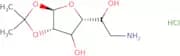
CAS:<p>6-Amino-6-deoxy-1,2-O-isopropylidene-a-D-glucofuranose HCl is a custom synthesis product that can be used in the synthesis of oligosaccharides and polysaccharides. It has a CAS No. of 24384-88-1 and can be used to modify saccharides, carbohydrates, and sugars. This product is also fluorinated and is made from high purity raw materials. The chemical name for this product is 6-(amino)-6-(deoxy)-1,2:5,6:9,10:4′,5′:4′′,5′′′-[3H]isopropylidenea D glucofuranose hydrochloride.</p>Formula:C9H17NO5·HClPurity:Min. 95%Molecular weight:255.7 g/molLewis A trisaccharide methyl glycoside tetrabenzylether
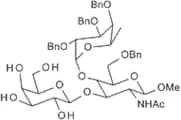
CAS:<p>Lewis A trisaccharide methyl glycoside tetrabenzylether is a synthetic glycosylated oligosaccharide. It is a custom synthesis product that can be modified to the customer's specifications. The modification reaction yields a high-purity, complex carbohydrate with a saccharide content of 95%. This product is soluble in DMSO and DMF and is stable at pH 3-11.</p>Formula:C49H61NO15Purity:Min. 95%Molecular weight:904.01 g/molAnthrose
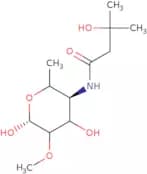
CAS:<p>Anthrose is a natural product that has been isolated from the larvae of Galleria mellonella, an insect. It has been shown to have antiviral activity against anthracis, a bacterium that causes anthrax. Anthrose treatment leads to cell lysis and DNA degradation in both prokaryotic and eukaryotic cells. The mechanism of action of this compound is not yet known, but it may be due to its ability to act as a competitive inhibitor for the enzyme aminotransferase activity. It also has antimicrobial properties and has been shown to inhibit Mycobacterium tuberculosis growth.</p>Formula:C12H23NO6Purity:Min. 95%Color and Shape:PowderMolecular weight:277.31 g/molGT2-Oligosaccharide
<p>GT2 oligosaccharide (free acid) has a core trisaccharide structure (GalNAcβ1,4Galβ1,4Glc) with three sialic acid residues (NeuAc) linked α2,8/α2,8/α2,3 to the inner galactose residue (Ledeen, 2009). GT2 oligosaccharide is the carbohydrate moiety in the GT2 ganglioside. A key role has been reported for gangliosides, such as, GT1b and GT2 as modulators in the interaction between microglia (resident cells of the brain that regulate brain development) and brain tumors. It is possible that they will be important targets for therapeutical intervention in the near future (Daniele, 2020). In addition, C-series gangliosides, such as GT3, GT2, GQ1c, and CP1c are expressed in normal pancreatic tissue but are practically lost in the pancreas of diabetic animals (Saito, 1999).</p>Formula:C53H83N4O40Na3Purity:Min. 95%Molecular weight:1,485.2 g/mol22-Dehydroclerosterol glucoside
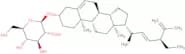
CAS:<p>22-Dehydroclerosterol glucoside is a biochemical that has been shown to have antihepatotoxic activity. It has been shown to inhibit the production of glutamate and oxaloacetate in the liver, as well as phosphatase activity, which may be due to its ability to inhibit glutamate oxaloacetate transaminase. 22-Dehydroclerosterol glucoside can be extracted from clerodendrum species or synthesized from 22-dehydrocholesterol. This product is an alkaline substance with a chemical structure similar to that of cholesterol. It is used in parameters for determining glutamic oxaloacetic transaminase (GOT).</p>Purity:Min. 95%Benzyl 2-acetamido-2-deoxy-D-glucopyranoside
CAS:<p>Benzyl 2-acetamido-2-deoxy-D-glucopyranoside is a fluorinated glycosylation reagent that has been developed for the synthesis of complex carbohydrates, oligosaccharides, and saccharides. This compound is also useful in the modification of natural products and as a synthetic intermediate. Benzyl 2-acetamido-2-deoxy-D-glucopyranoside is an excellent substrate for Click chemistry, which can be used to modify saccharide units. The purity of this product is high, with no detectable impurities.</p>Formula:C15H21NO6Purity:Min. 95%Molecular weight:311.33 g/mol6-O-Benzoyl-3-O-tert-butyldimethylsilyl-D-glucal
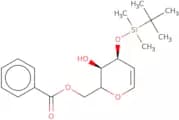
<p>6-O-Benzoyl-3-O-tert-butyldimethylsilyl-D-glucal is a custom synthesis that is used in the modification of monosaccharides and oligosaccharides. It is a synthetic molecule that has been modified with fluorination, methylation, and click chemistry. This product is a saccharide with a CAS number.</p>Formula:C19H28O5SiPurity:Min. 95%Molecular weight:364.51 g/molMethyl b-D-glucopyranoside hemihydrate
CAS:<p>Methyl b-D-glucopyranoside hemihydrate is a white crystalline solid that is soluble in water. It is a synthetic product, which can be custom synthesized and modified to suit the needs of customers. Methyl b-D-glucopyranoside hemihydrate is used for the synthesis of glycosidic substances and as a raw material for saccharide derivatives. This compound has been shown to have high purity, and is often used in the production of oligosaccharides and monosaccharides.</p>Formula:C7H14O6H2OPurity:Min. 95%Color and Shape:White to off-white solid.Molecular weight:203.19 g/molN-Acetyl-D-glucosamine 6-acetate
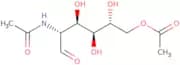
CAS:<p>N-Acetyl-D-glucosamine 6-acetate is a modification of the sugar N-acetyl-D-glucosamine. It is an Oligosaccharide, which is a complex carbohydrate consisting of two or more simple sugars. N-Acetyl-D-glucosamine 6-acetate can be custom synthesized and is available in high purity. The CAS number for this compound is 131832-93-4. Synthetic modifications of this compound include methylation, glycosylation and fluorination. This compound can also be considered a polysaccharide because it consists of many saccharides connected together by glycosidic bonds.</p>Formula:C10H17NO7Purity:Min. 97 Area-%Color and Shape:White PowderMolecular weight:263.24 g/mol4-O-(2-O-Methyl-b-D-galactopyranosyl)-D-glucopyranose
CAS:<p>4-O-(2-O-Methyl-b-D-galactopyranosyl)-D-glucopyranose is a disaccharide. The lacto-n-biose unit is a nonreducing sugar that contains an alpha, beta unsaturated 1,6 glycosidic bond and a lactose molecule. 4-O-(2-O-Methyl-b-D-galactopyranosyl)-D-glucopyranose has been found to stimulate the synthesis of galectin in vitro, which may be due to its ability to bind to lectins. This disaccharide can also cause denaturation at high temperatures.</p>Formula:C13H24O11Purity:Min. 95%Molecular weight:356.32 g/mol