Glycoscience
Glycoscience is the study of carbohydrates and their derivatives, as well as the interactions and biological functions they participate in. This field of research is crucial for understanding a wide variety of biological processes, including cell recognition, signaling, immune response, and disease development. Glycoscience has important applications in biotechnology, medicine, and the development of new drugs and therapies. At CymitQuimica, we offer a wide selection of high-quality, high-purity products for glycoscience research. Our catalog includes monosaccharides, oligosaccharides, polysaccharides, glycoconjugates, and specific reagents, designed to support researchers in their studies on the structure, function, and applications of carbohydrates in biological systems. These resources are intended to facilitate scientific discoveries and practical applications in various areas of bioscience and medicine.
Subcategories of "Glycoscience"
- Aminosugars(108 products)
- Glyco-Related Antibodies(282 products)
- Glycolipids(46 products)
- Glycosaminoglycans (GAGs)(55 products)
- Glycosides(419 products)
- Monosaccharides(6,622 products)
- Oligosaccharides(3,682 products)
- Polysaccharides(503 products)
Found 11041 products of "Glycoscience"
Sort by
Purity (%)
0
100
|
0
|
50
|
90
|
95
|
100
3-Azido-3-deoxy-1,2-O-isopropylidene-a-D-ribofuranose
CAS:<p>3-Azido-3-deoxy-1,2-O-isopropylidene-a-D-ribofuranose is a synthetic carbohydrate that contains fluorine and is used as a glycosylation and methylation reagent. It has been shown to react with various saccharides, including glucose, maltose, lactose, sucrose, and cellobiose. In addition to its use in glycosylation reactions, 3-azido-3-deoxy-1,2-O-isopropylidene -a D ribofuranose can be used for click chemistry. This reagent is available in high purity and is synthesized from the natural sugar ribofuranose.</p>Purity:Min. 95%Mefenamic acid-acyl-b-D-glucuronide
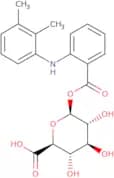
CAS:<p>Mefenamic acid-acyl-b-D-glucuronide is a synthetic drug that binds to albumin and human serum albumin. It has been shown to irreversibly inhibit human UDP-glucuronosyltransferase, an enzyme in the human liver that catalyzes the addition of glucuronic acid to drugs and other xenobiotics. Mefenamic acid-acyl-b-D-glucuronide has also been shown to inhibit the activity of a wide range of enzymes in humans, including isoenzyme UGT1A6, which is found in the liver and kidney. This drug has been studied as a potential treatment for pain and inflammation in humans.</p>Formula:C21H23NO8Purity:Min. 95%Color and Shape:White To Off-White SolidMolecular weight:417.41 g/molMethyl cellulose - viscosity 40000 cP
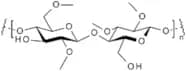
CAS:<p>Cellulose derivative, food thickener and emulsifier, bulk forming laxative</p>Purity:Min. 95%Color and Shape:Powder1,2,4,6-Tetra-O-acetyl-3-O-(2,3,4,6-tetra-O-acetyl-a-D-galactopyranosyl)-D-galactopyranose
CAS:<p>1,2,4,6-Tetra-O-acetyl-3-O-(2,3,4,6-tetra-O-acetyl-aDgalactopyranosyl)-Dgalactopyranose is a modified sugar that can be synthesized by the Click chemistry reaction. It has been used in the modification of saccharides and polysaccharides. This product is CAS No. 123809-61-0 and is available for custom synthesis. 1,2,4,6 tetra O acetyl 3 O-(2 3 4 6 tetra O acetyl a D galactopyranosyl) D galactopyranose is a high purity carbohydrate with glycosylation and fluorination.<br>END> END></p>Formula:C28H38O19Purity:Min. 95%Molecular weight:678.59 g/molD-Glucose-6-phosphate dipotassium salt hydrate
CAS:<p>Glucose 6-phosphatase substrate</p>Formula:C6H11O9PK2·H2OPurity:Min. 95%Molecular weight:354.33 g/molOnitin 2'-O-glucoside
CAS:<p>Onitin 2'-O-glucoside is a sugar that is custom synthesized and purified. It is a modification of oligosaccharides, complex carbohydrates, and polysaccharides. Onitin 2'-O-glucoside is an Oligosaccharide Carbohydrate which can be used in the synthesis of high purity monosaccharides and methylations. It also has the ability to form glycosylation with saccharides, such as glucose or fructose. This product can also be fluorinated to produce saccharides that are water soluble.</p>Purity:Min. 95%Methyl 5-acetamido-4,7,8,9-tetra-O-acetyl-2,6-anhydro-3,5-dideoxy-D-glycero-D-galacto-non-2-enonate
CAS:<p>Methyl 5-acetamido-4,7,8,9-tetra-O-acetyl-2,6-anhydro-3,5-dideoxy-D-glycero-D-galacto-non-2-enonate is a synthetic oligosaccharide that is used in the synthesis of glycosides. The carbohydrate has been modified to include fluorination and glycosylation. This product can be custom synthesized to meet your specifications.</p>Formula:C20H27NO12Purity:Min. 95%Color and Shape:White To Off-White SolidMolecular weight:473.43 g/molGlobotriose-sp-biotin
<p>Globotriose-sp-biotin is a custom synthesis that contains a fluorinated, methylated, and modified monosaccharide. It is a synthetic oligosaccharide with glycosylation at the reducing end. Globotriose-sp-biotin can be used in the modification of polysaccharides and complex carbohydrates to improve their bioactivity. This product has a CAS number of 127798-73-5 and is listed as an Oligosaccharide under Glycosylations in the Carbohydrate section.</p>Purity:Min. 95%Color and Shape:Powder3-Acetamido-3,6-dideoxy-D-galactose
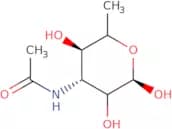
CAS:<p>3-Acetamido-3,6-dideoxy-D-galactose is a monosaccharide with two functional groups. It has been shown to be bifunctional and can act as a glycosyl donor or acceptor. 3-Acetamido-3,6-dideoxy-D-galactose was isolated from the type strain of Streptomyces venezuelae. It is also found in fatty acids and some strains of bacteria, such as Bacillus megaterium. The biological properties of 3-acetamido--3,6-dideoxy--D--galactose have been studied using monoclonal antibodies, magnetic resonance spectroscopy (MRS), and 13C nuclear magnetic resonance spectroscopy (NMR).</p>Formula:C8H15NO5Purity:Min. 95%Color and Shape:PowderMolecular weight:205.21 g/molDipyridamole di-O-b-D-glucuronide
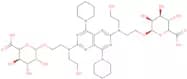
CAS:<p>Dipyridamole di-O-b-D-glucuronide is a fluorinated oligosaccharide that has been synthesized using the click chemistry reaction. It is a monosaccharide that has been glycosylated and modified with methyl groups to produce a high purity product. The carbohydrate consists of one or more sugar units linked by glycosidic bonds. Carbohydrates are classified by their number of sugar units and by the presence of other chemical groups such as phosphate, sulfate, or hydroxyl. This product is also used in the synthesis of complex carbohydrates and polysaccharides.</p>Formula:C36H56N8O16Purity:Min. 95%Molecular weight:856.87 g/molLacto-N-neofucopentaose
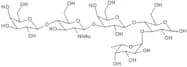
<p>Neutral pentasasaccharide naturally present in human breast milk</p>Formula:C32H55NO25Purity:Min. 90 Area-%Color and Shape:PowderMolecular weight:853.77 g/molMaltose
CAS:<p>Please enquire for more information about Maltose including the price, delivery time and more detailed product information at the technical inquiry form on this page</p>Formula:C12H22O11Molecular weight:342.3 g/mol2,3,4,6-Tetra-O-benzyl-5-thio-D-glucono-1,5-lactone
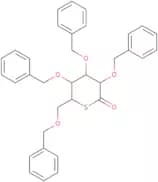
CAS:<p>2,3,4,6-Tetra-O-benzyl-5-thio-D-glucono-1,5-lactone is a complex carbohydrate that can be modified with methylation and glycosylation. It is a saccharide that can be modified by fluorination and click modification. This compound is synthesized by the polymerization of allose in the presence of an enzyme to produce 2,3,4,6-tetra-O-(benzyloxymethyl)-5-thio--D--glucono--1,5--lactone.</p>Formula:C34H34O5SPurity:Min. 95%Molecular weight:554.7 g/molPhenethyl glucosinolate potassium salt
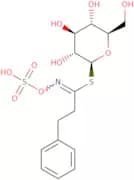
CAS:<p>Phenethyl glucosinolate potassium salt is a compound found in plants belonging to the Brassicaceae family. It has been shown to be highly toxic to larvae of the cabbage butterfly and other insects that feed on brassica plants. Phenethyl glucosinolate potassium salt has been shown to inhibit the development of these insects, probably by inhibiting protein synthesis in the insect's gut. The major sulfur-containing compound in this product is gluconasturtiin, which has been shown to inhibit growth of pekinensis at high temperatures. This compound also inhibits radiation-induced DNA damage and does not show significant effects on nonsignificant organisms such as yeast and mold.</p>Formula:C15H20NO9S2KPurity:Min. 95%Color and Shape:PowderMolecular weight:461.55 g/molDigalactosyldiacylglycerol - 10mg/ml in Chloroform-Methanol
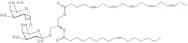
CAS:<p>In plants and algae, the two main galactolipids, monogalactosyldiacyglycerol (MGDG) and digalactosyldiacyglycerol (DGDG), are synthesized by galactosyltransferases in the plastid envelope. They have been linked to the anti-inflammatory and cancer benefits of a green leafy vegetable diet in humans due to their ability to regulate the levels of free radicals like nitric oxide (NO)</p>Formula:C51H84O15Purity:Min. 95%Color and Shape:PowderMolecular weight:937.2 g/molD-Arabinose-5-phosphate
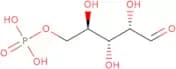
CAS:<p>D-Arabinose-5-phosphate is an intermediate in the pentose phosphate pathway. It is synthesized from D-xylulose-5-phosphate by xylitol dehydrogenase. D-Arabinose-5-phosphate inhibits the enzyme xylitol dehydrogenase, which converts xylulose to d-xylulose, and thus prevents the formation of 5-hydroxyisoxazole phosphate, a precursor to the synthesis of NADPH. In this way, it blocks the synthesis of NADPH, which is essential for aerobic metabolism. This inhibition leads to a decrease in ATP production and consequently cell death.</p>Formula:C5H11O8PPurity:Min. 95%Molecular weight:230.11 g/molMaltotridecaose
CAS:<p>Maltotridecaose is a sugar alcohol with an acceptor group that can be introduced into a cavity in a molecule. It is a sweetener that has been shown to have oligosaccharide properties, which are the molecules that comprise dietary carbohydrates. Maltotridecaose can be found as an unlabeled ingredient in foods such as sugar-free chewing gum, chocolate, and ice cream. The debranching of maltotridecaose occurs by way of glucans and licheniformis.</p>Formula:C78H132O66Purity:Min. 95%Color and Shape:White/Off-White SolidMolecular weight:2,125.84 g/mol2,3-O-Isopropylidene-L-glyceraldehyde - 50% DCM solution
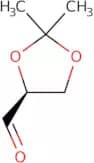
CAS:<p>2,3-O-Isopropylidene-L-glyceraldehyde (2,3-OIPA) is a synthetic compound that was developed as an alternative to paraformaldehyde for the synthesis of enantiopure compounds. It has been used in metathesis reactions and catalysed the conversion of β-unsaturated ketones to enantiopure products. 2,3-OIPA also has significant cytotoxic activity against a range of human cancer cell lines. This compound can be used in asymmetric syntheses to produce chiral molecules with a high degree of optical purity.</p>Formula:C6H10O3Purity:Min. 95%Color and Shape:Colorless PowderMolecular weight:130.14 g/mol1,2,3,4-Tetra-O-benzyl-6-O-trityl-a-D-mannopyranose
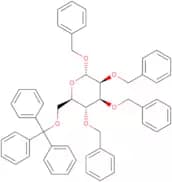
CAS:<p>1,2,3,4-Tetra-O-benzyl-6-O-trityl-a-D-mannopyranose is a methylated form of mannopyranose. It can be custom synthesized and modified with various functional groups to produce a wide range of saccharide derivatives and oligosaccharides. The 1,2,3,4-tetra-O-benzyl group is commonly used for glycosylation reactions because it can be easily removed by acid hydrolysis. The methylation of the sugar molecule also increases its stability and prevents further reactions from occurring. This product is available in high purity and has been fluorinated on one or more hydroxyl groups to make it resistant to hydrolysis.</p>Formula:C53H50O6Purity:Min. 95%Color and Shape:White PowderMolecular weight:782.96 g/molD-Glucosamine-3,4,6-tri-O-sulphate trisodium salt
CAS:<p>D-Glucosamine-3,4,6-tri-O-sulphate trisodium salt is a high purity and custom synthesis of D-glucosamine. It is a sugar with click modification and fluorination. It has CAS No. 157297-03-5 and it is synthesized from glycosylation, methylation, and modification. It has a molecular weight of 517.85 g/mol and the chemical formula C9H14N2O12S3NaO6. Glucosamine is an oligosaccharide that can be found in many complex carbohydrates such as chitin or cellulose.</p>Formula:C6H10NO14S3Na3Purity:Min. 95%Color and Shape:PowderMolecular weight:485.31 g/mol