Compound Libraries
Compound libraries are collections of stored compounds that are widely used to efficiently identify molecules of interest. These libraries are essential tools in research and development, especially in the search for new drugs, as they enable thorough screenings and quality controls to be conducted efficiently. Compound libraries are useful for conducting highly demanding analyses, significantly reducing the cost and time associated with these processes. At CymitQuimica, we offer an extensive range of high-quality compound libraries designed to meet the research and development needs in various scientific and industrial areas. Our catalog includes libraries with a wide variety of compounds, facilitating the identification and development of molecules with therapeutic potential and other innovative applications.
Found 273 products of "Compound Libraries"
Sort by
Purity (%)
0
100
|
0
|
50
|
90
|
95
|
100
Ginsenoside Rb3
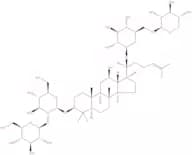
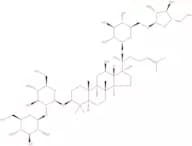
CAS:Ginsenoside Rb3 has anti-myocardial ischemia-reperfusion injury, neuroprotective, antidepressant-like, and antioxidant effects, it also possesses the potential of the clinical use in preventing and treating diabetes. Ginsenoside Rb3 significantly attenuates the changes of creatine kinase activity and lactate dehydrogenase activity, exhibits inhibitory effect on TNFα-induced NF-κB transcriptional activity with an IC50 of 8.2 μM in 293T cell lines, it also inhibits the induction of COX-2 and iNOS mRNA.Formula:C53H90O22Purity:95%~99%Molecular weight:1079.28Ginsenoside Rh3
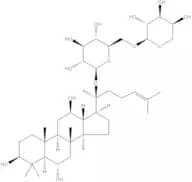
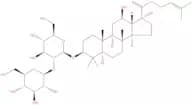
CAS:Ginsenoside Rh3 is a bacterial metabolite of Rg5, which is the main constituent of heat-processed ginseng, has anti-inflammatory effect in microglia by modulating AMPK and its downstream signaling pathways.Formula:C36H60O7Purity:95%~99%Color and Shape:White powderMolecular weight:604.869Ginsenoside Rb2
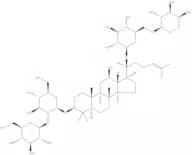
CAS:Ginsenosides, which are active compounds found in ginseng (Panax ginseng), are used as antidiabetic treatments; ginsenoside Rb2 may inhibit palmitate-induced gluconeogenesis via AMPK-induced SHP by relieving ER stress, a cause of gluconeogenesis.Formula:C53H90O22Purity:95%~99%Color and Shape:White powderMolecular weight:1079.28Ginsenoside RK1
CAS:Ginsenoside Rk1, one of the main elements of Sung Ginseng, has been confirmed as a new endothelial barrier enhancer recently and has anti-cancer activity, the mechanism involves coordination between inhibition of telomerase activity and induction of apoptosis.Formula:C42H70O12Purity:95%~99%Molecular weight:767.01Ginsenoside Rc
CAS:Ginsenoside Rc (Rc), a protopanaxadiol type ginsenoside, is the active component mainly responsible for the therapeutic and pharmacologic properties of ginseng, which are derived from its suppression of superoxide-induced free radicals, Rc can modulate Forkhead box O (FoxO1)phosphorylation through activation of PI3K/Akt and inhibition of AMPK and FoxO1 acetylation through interaction with CBP and SIRT1, and that this leads to upregulation of catalase under conditions of oxidative stress.Formula:C53H90O22Purity:95%~99%Color and Shape:White powderMolecular weight:1079.28Isoginkgetin
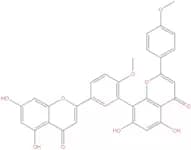
CAS:Isoginkgetin is a MMP-9 inhibitor, also a pre-mRNA splicing inhibitor with IC 50 of 30 uM. Isoginkgetin can up-regulate adiponectin secretion with potency comparable to that of rosiglitazone, a known modulator of adiponectin production. Isoginkgetin has anti-tumor activity, it can inhibit tumor cell invasion by regulating phosphatidylinositol 3-kinase/Akt-dependent matrix metalloproteinase-9 expression.Formula:C32H22O10Purity:95%~99%Molecular weight:566.518Pseudoginsenoside F11
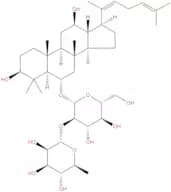
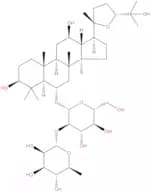
CAS:Pseudoginsenoside F11, a novel partial PPAR γ agonist, can promote adiponectin oligomerization and secretion in 3T3-L1 adipocytes and inhibit obesity-linked phosphorylation of PPAR γ at Ser-273 by Cdk5. It possesses significant neuroprotective activity, has been demonstrated to antagonize the learning and memory deficits induced by scopolamine, morphine and methamphetamine in mice; it also antagonizes the development of analgesia tolerance to morphine and blocks the development of morphine-induced behavioral sensitization via its effect, at least partially, on the glutamatergic system in the mPFC.Formula:C42H72O14Purity:95%~99%Molecular weight:801.013Ginsenoside F1
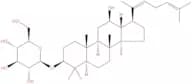
CAS:Ginsenoside (G)-F1 is an enzymatic metabolite generated from G-Rg1, it has been reported to suppress platelet aggregation and to reduce gap junction-mediated intercellular communication, also as a novel anti-skin cancer drug with anti-proliferative and anti-migration features.Formula:C36H62O9Purity:95%~99%Color and Shape:White powderMolecular weight:638.883Ginsenoside F2
CAS:Ginsenoside F2 has the anti-cancer activity, it induces apoptosis in breast cancer stem cells (CSCs) by activating the intrinsic apoptotic pathway and mitochondrial dysfunction, also induces the formation of acidic vesicular organelles, recruitment of GFP-LC3-II to autophagosomes, and elevation of Atg-7 levels, suggests that F2 initiates an autophagic progression in breast CSCs.Formula:C42H72O13Purity:95%~99%Color and Shape:White powderMolecular weight:785.025Ginsenoside Rb1
CAS:Ginsenosides, a class of ginseng compounds of herbal medicine, have therapeutic potential for the neuroprotection of brain damage after cerebral ischemia because of their anti-oxidant and anti-inflammation activities, ginsenoside Rb1 could represent promising applications as anti-oxidants for the anti-aging treatment of neurological disorders, such as stroke, in elderly patients.Formula:C54H92O23Purity:95%~99%Color and Shape:White powderMolecular weight:1109.31