Enzyme, Peptide and Protein Related Compounds
Enzyme, peptide, and protein-related compounds are critical for studying and manipulating biochemical pathways. These compounds include enzymes that catalyze biochemical reactions, peptides that serve as hormones and signaling molecules, and proteins that perform a wide array of functions within organisms. This category encompasses inhibitors, activators, substrates, and other reagents essential for enzymology, proteomics, and peptide research. At CymitQuimica, we offer a diverse selection of high-quality compounds to facilitate your research in enzyme kinetics, protein function, and peptide synthesis, ensuring precise and reliable results.
Subcategories of "Enzyme, Peptide and Protein Related Compounds"
- Amino Acids (AA)(40,540 products)
- Enzymes(3,561 products)
- Peptides(30,717 products)
- Proteins(15,020 products)
Found 1312 products of "Enzyme, Peptide and Protein Related Compounds"
Sort by
Purity (%)
0
100
|
0
|
50
|
90
|
95
|
100
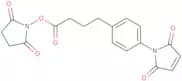
N-Succinimidyl 4-(p-maleimidophenyl)butyrate
CAS:<p>N-Succinimidyl 4-(p-maleimidophenyl)butyrate is a fatty acid that has been shown to regulate the effector proteins of cell surface receptors. It has been shown to be site specific, with water permeability and a molecule size of about 200 Daltons. It is able to bind to the regulatory sites on proteins and inhibit their function. The binding of N-succinimidyl 4-(p-maleimidophenyl)butyrate to antibodies can cause an antibody response in humans and other mammals. Additionally, this fatty acid can also be used as a substrate for protein synthesis. N-Succinimidyl 4-(p-maleimidophenyl)butyrate binds to the subunits of proteins by hydrogen bonding or hydrophobic interactions, which are necessary for protein synthesis. This compound has been shown to inhibit the messenger RNA (mRNA) production in Galleria mellonella larvae,</p>Formula:C18H16N2O6Purity:Min. 95%Color and Shape:PowderMolecular weight:356.33 g/mol1-Cyano-4-(dimethylamino)pyridinium tetrafluoroborate
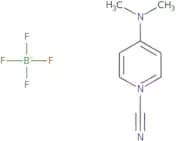
CAS:<p>1-Cyano-4-(dimethylamino)pyridinium tetrafluoroborate (CDAP) is an organic cyanylating agent. It is reactive under acidic conditions giving CDAP an advantage over other sulfhydryl labeling agents, as it can avoid potential thiol-disulfide exchange.</p>Formula:C8H10N3BF4Purity:Min. 98 Area-%Color and Shape:PowderMolecular weight:234.99 g/molTirofiban hydrochloride monohydrate
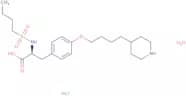
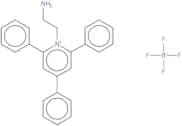
CAS:<p>Glycoprotein IIb/IIIa inhibitor; platelet aggregation inhibitor</p>Formula:C22H36N2O5S•HCl•H2OPurity:Min. 95%Color and Shape:White PowderMolecular weight:495.07 g/molN-Ethylamine-2,4,6-triphenyl pyridinium tetrafluoroborate
CAS:<p>N-Ethylamine-2,4,6-triphenyl pyridinium tetrafluoroborate is a chemical reagent that belongs to the group of fine chemicals. It is soluble in water and ethanol, and has a melting point of around 100°C. N-Ethylamine-2,4,6-triphenyl pyridinium tetrafluoroborate is used in organic synthesis as a useful building block or as a research chemical for the production of other compounds. This compound is a versatile building block that can be used in the preparation of complex compounds such as pharmaceuticals. N-Ethylamine-2,4,6-triphenyl pyridinium tetrafluoroborate has been classified as an extremely hazardous substance by the US Department of Transportation due to its high reactivity with water.</p>Formula:C25H23N2·BF4Purity:Min. 95%Molecular weight:438.27 g/molSDF-1β (human) trifluoroacetate salt
CAS:<p>Please enquire for more information about SDF-1beta (human) trifluoroacetate salt including the price, delivery time and more detailed product information at the technical inquiry form on this page</p>Formula:C382H620N114O97S5Purity:Min. 95%Molecular weight:8,522.05 g/molCocarboxylase tetrahydrate
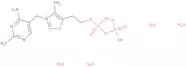
CAS:<p>Cocarboxylase tetrahydrate is a coenzyme form of vitamin B1; cofactor for enzymes involved in carbohydrate catabolism</p>Formula:C12H18N4O7P2S·4H2OPurity:Min 96%Color and Shape:White PowderMolecular weight:496.37 g/molZanamivir hydrate
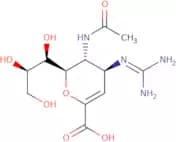
CAS:<p>Potent and selective inhibitor of influenza A and B sialidases (neuraminidases). This compound is a sialic acid analogue that occupies viral neuraminidase active site, inhibits enzyme’s hydrolytic activity and cleavage of sialic acid residues from host cell surface glycans. It therefore prevents shedding newly produced virions from infected cell surface and reduces infection of surrounding cells.</p>Formula:C12H20N4O7•(H2O)xPurity:Min. 95%Color and Shape:White PowderMolecular weight:332.31 g/molEthyl S-(+)-4-cyano-3-hydroxybutyrate
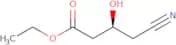
CAS:<p>Ethyl S-(+)-4-cyano-3-hydroxybutyrate is a chiral molecule that can be used as a catalyst in the transesterification reaction. It acts by binding to the enzyme and immobilizing it on a solid support, which increases its catalytic activity. The hydroxybutanoate is converted into butyric acid, which is produced at high yield using this method. This process of immobilization increases the kinetic rate of the reaction, making it possible for the product to be obtained more quickly.</p>Formula:C7H11NO3Purity:Min. 95%Molecular weight:157.17 g/molOxytetracycline dihydrate
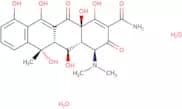
CAS:<p>A broad-spectrum antibiotic of tetracycline class which inhibits protein synthesis by targeting the 30S ribosome subunit. It has been used in human medicine as well as in veterinary medicine and agriculture.</p>Formula:C22H28N2O11Purity:Min. 95%Color and Shape:Yellow PowderMolecular weight:496.46 g/molN-α-Acetyl-DL-arginine dihydrate
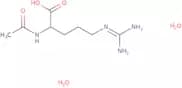
CAS:<p>N-alpha-Acetyl-DL-arginine dihydrate (AAD) is a versatile building block that can be used to synthesize functionalized molecules. AAD is an intermediate for the production of pharmaceuticals and other useful compounds. It is also a reaction component in organic synthesis, and has been shown to have high purity.</p>Formula:C8H16N4O3•(H2O)2Purity:90%Color and Shape:PowderMolecular weight:252.27 g/molErgotamine D-tartrate
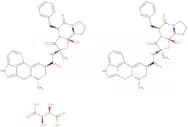
CAS:Controlled Product<p>Ergotamine D-tartrate is a drug that belongs to the group of nonsteroidal anti-inflammatory drugs. It is used in the treatment of migraine and other headaches. Ergotamine D-tartrate inhibits the production of nitric oxide, which has been shown to be involved in the process of angiogenesis. This drug also has long-term efficacy for headaches and migraines, as well as an anti-migraine effect. Ergotamine D-tartrate binds to specific receptors on neurons called alpha2 adrenergic receptors, which are located on blood vessels in the brain and have been implicated in migraine pathophysiology. These receptors are not present on vessels elsewhere in the body, which makes ergotamine a more selective drug for migraine than other nonsteroidal anti-inflammatory drugs.</p>Formula:(C33H35N5O5)2•C4H6O6Purity:Min. 95%Molecular weight:1,313.44 g/moltrans-Resveratrol-3,4',5-trisulfate trisodium salt
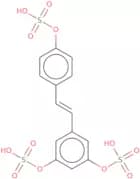
CAS:<p>Trans-resveratrol-3,4',5-trisulfate trisodium salt is a fine chemical that can be used as a building block for research chemicals and pharmaceuticals. It is often used as a reagent in organic synthesis, due to its solubility in organic solvents. This compound has been shown to have activity against Alzheimer's disease. Trans-resveratrol-3,4',5-trisulfate trisodium salt also has anti-inflammatory properties.</p>Formula:C14H9Na3O12S3Purity:Min. 95%Color and Shape:PowderMolecular weight:534.38 g/molManganese citrate decahydrate
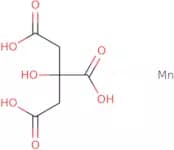
CAS:<p>Manganese citrate decahydrate is a diagnostic agent that reacts with human serum to form a complex. The reaction is catalyzed by citric acid and sodium carbonate. The solution containing the manganese citrate decahydrate, which has been dissolved in water and treated with magnesium salt (Mn++), reacts with fatty acids in the serum to form a complex of Mn++, citric acid and sodium carbonate. Manganese citrate decahydrate can be used as an indicator of peroxidase activity, which is an enzyme that catalyzes the oxidation of hydrogen peroxide to produce water vapor and oxygen gas. Manganese citrate decahydrate also acts as a structural analysis tool for the detection of iron-containing proteins such as ferritin or myoglobin.</p>Formula:C12H10Mn3O14·10H2OPurity:Min. 96.5%Color and Shape:Off-White PowderMolecular weight:723.17 g/mol25-Hydroxyvitamin D3 monohydrate
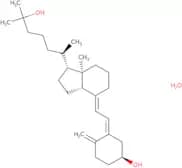
CAS:<p>25-Hydroxyvitamin D3 monohydrate is a vitamin D analog that has been shown to reduce elevated levels of parathyroid hormone and improve bone mineral density. It is used for the treatment of chronic kidney disease, hyperparathyroidism, and osteoporosis. 25-Hydroxyvitamin D3 monohydrate has been found to be effective in the treatment of these conditions because it increases the body's production of calcitriol, the active form of vitamin D. Calcitriol promotes calcium absorption in the gut and reduces renal excretion of calcium by inhibiting parathyroid hormone synthesis. This drug also inhibits pro-inflammatory cytokines such as IL-1β, IL-6, and TNF-α.</p>Formula:C27H44O2·H2OPurity:Min. 97 Area-%Color and Shape:White PowderMolecular weight:418.65 g/molTriethyl citrate
CAS:<p>Triethyl citrate (TEC) is an ester of citric acid, which is a natural compound. It is a reactive chemical that can react with potassium dichromate (K2Cr2O7) to form potassium citrate, or with malonic acid to form triethyl malonate. Triethyl citrate has been used as a reagent in analytical methods for the determination of water permeability and biological properties. In addition, it has been used as a precursor for the synthesis of dimethyl fumarate (DMF). DMF is an anti-inflammatory drug that may be useful in the treatment of multiple sclerosis.</p>Formula:C12H20O7Purity:Min. 99 Area-%Color and Shape:Colorless Clear LiquidMolecular weight:276.28 g/mol1,2,3-Benzenetricarboxylic acid hydrate
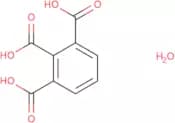
CAS:<p>1,2,3-Benzenetricarboxylic acid hydrate (BTAH) is a molecule that has been studied as a potential photosensitizer for photodynamic therapy. This compound is an organic semiconductor with a wide absorption spectrum and a large quantum yield in the visible region. It also has high charge carrier mobility, which makes it suitable for use in electronic devices. BTAH is an additive that can be used to inhibit the formation of cancer cells and reduce inflammation. BTAH has been shown to have anti-inflammatory properties by inhibiting prostaglandin synthesis. The molecular structure of BTAH consists of three benzene rings joined together by two carboxyl groups. The central ring in this molecule is also known as 1,2,3-benzenetricarboxylic acid or 3,4-dihydroxybenzoic acid.</p>Formula:C9H6O6·xH2OPurity:Min. 98 Area-%Color and Shape:PowderMolecular weight:210.14 g/molrec β-Defensin 1 (human)
<p>Please enquire for more information about rec beta-Defensin 1 (human) including the price, delivery time and more detailed product information at the technical inquiry form on this page</p>Purity:Min. 95%Nesfatin-1 (mouse) trifluoroacetate salt
CAS:<p>Please enquire for more information about Nesfatin-1 (mouse) trifluoroacetate salt including the price, delivery time and more detailed product information at the technical inquiry form on this page</p>Formula:C424H683N117O137Purity:Min. 95%Molecular weight:9,611.67 g/molFormyltetrathiafulvalene
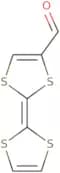
CAS:<p>Formyltetrathiafulvalene is an amide that contains a radical form. It is synthesized by the coordination of a copper complex with l-tartaric acid and imine. The optical properties of this molecule are sensitive to changes in its environment, such as pH and light intensity. Formyltetrathiafulvalene has been shown to absorb light and emit it again at a longer wavelength, which is the basis for its use in organic light-emitting diodes (OLEDs). Functional groups on the molecule can be used for hydrogen tartrate detection, electrochemical studies, or significant interactions with other molecules.</p>Formula:C7H4OS4Purity:Min. 98%Color and Shape:PowderMolecular weight:232.35 g/molL-Arginine a-ketoglutarate (1:1)
CAS:<p>L-Arginine a-ketoglutarate (1:1) is a water soluble compound that is used as a precursor for the synthesis of polyamines. It is also an intermediate in the urea cycle and can be used to synthesize glutamate, glutamine, and argininosuccinic acid. L-Arginine a-ketoglutarate (1:1) has been shown to improve myocardial function and reduce infarct size in animal models. This drug has also been shown to augment neuroprotective properties of metoprolol succinate on cerebellar Purkinje neurons in vitro. The degradation of L-arginine a-ketoglutarate (1:1) by monoamine oxidase B produces hydrogen peroxide, which may be responsible for its cardioprotective effects.</p>Formula:C6H14N4O2·C5H6O5Purity:Min. 95%Color and Shape:PowderMolecular weight:320.3 g/mol