Enzyme, Peptide and Protein Related Compounds
Enzyme, peptide, and protein-related compounds are critical for studying and manipulating biochemical pathways. These compounds include enzymes that catalyze biochemical reactions, peptides that serve as hormones and signaling molecules, and proteins that perform a wide array of functions within organisms. This category encompasses inhibitors, activators, substrates, and other reagents essential for enzymology, proteomics, and peptide research. At CymitQuimica, we offer a diverse selection of high-quality compounds to facilitate your research in enzyme kinetics, protein function, and peptide synthesis, ensuring precise and reliable results.
Subcategories of "Enzyme, Peptide and Protein Related Compounds"
- Amino Acids (AA)(40,579 products)
- Enzymes(3,561 products)
- Peptides(30,618 products)
- Proteins(15,043 products)
Found 1312 products of "Enzyme, Peptide and Protein Related Compounds"
Sort by
Purity (%)
0
100
|
0
|
50
|
90
|
95
|
100
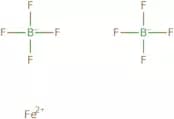
Iron(II) tetrafluoroborate - 40-45% aqueous solution
CAS:<p>Iron(II) tetrafluoroborate is a green-yellow crystalline solid that is soluble in water. It has been shown to have structural and optical properties that are similar to those of ferric chloride, but with the advantage of being less toxic. Iron(II) tetrafluoroborate is used as a homogeneous catalyst for organic reactions such as the hydrogenation of nitroarenes and the reduction of ketones. The catalytic activity of Iron(II) tetrafluoroborate arises from its ability to form hydrogen bonding interactions with other molecules and ions in solution.<br>Iron(II) tetrafluoroborate undergoes a number of reactions with other compounds, including cleavage products such as hydrogen sulfate and nitrogen atoms, which may be due to its chelate ligand. In coordination chemistry, Iron(II) tetrafluoroborate can form coordination complexes by reacting with potassium dichromate or calcium carbonate. These complexes are</p>Formula:B2F8FePurity:About 45%Color and Shape:Slightly Green Clear LiquidMolecular weight:229.45 g/molRef: 3D-FI105721
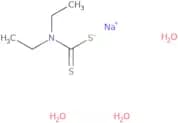
Discontinued productDiethyldithiocarbamic acid sodium trihydrate
CAS:<p>Diethyldithiocarbamic acid sodium salt trihydrate (DDC) is an inhibitor of the response element that belongs to a class of pharmacological agents called diethyldithiocarbamates. DDC inhibits the growth of tumor cells by blocking enzyme activities and decreasing the production of GSH-Px enzymes, which are required for cellular protection against oxidative stress. DDC is also a potent inducer of experimental models for myocardial infarcts. The matrix effect is another mechanism by which DDC exerts its antitumor activity. This effect is due to its ability to inhibit protein synthesis in tumor cells and its ability to inhibit the synthesis of collagen in endothelial cells, thereby preventing angiogenesis.</p>Formula:C5H11NS2•Na•(H2O)3Purity:Min. 95%Color and Shape:PowderMolecular weight:226.32 g/molRef: 3D-FD21836
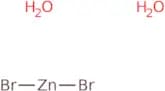
Discontinued productZinc bromide dihydrate
CAS:<p>Zinc bromide dihydrate is a crystalline compound that is used as a catalyst for the conversion of metalloporphyrins to hydroporphyrins. This process is used in the production of vitamin B12. Zinc bromide dihydrate can also be used to inhibit the function of ion pumps, which are proteins that pump ions across membranes. The inhibition of these pumps may lead to a decrease in intracellular calcium levels and an increase in free radicals.<br>Zinc bromide dihydrate has been shown to react with chlorophylls, vinylated heterostructures, and polyvinyl nonmetals. These reactions produce morphology changes in zinc bromide dihydrate crystals</p>Formula:ZnBr2•2H2OPurity:Min. 95%Color and Shape:PowderMolecular weight:261.22 g/molEndothelin-1 (human, bovine, dog, mouse, porcine, rat) acetate
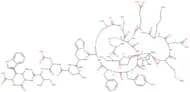
CAS:<p>Endothelin-1 (ET-1) is a peptide that is produced by the endothelium. ET-1 is involved in numerous biological processes, including vasoconstriction, inflammation, and cell proliferation. Endothelin-1 (human ET-1) acetate salt H-Cys-Ser-Cys-Ser-Ser-Leu-Met-Asp-Lys-(Glu)-Cys-(Val)-Tyr-(Phe)-Cys-(His)-Leu -Asp(-Ile)-Ile(-Trp)) acetate salt is a recombinant protein that has been shown to significantly upregulate the production of endothelin in primary pulmonary hypertension. It also plays an important role in bowel disease, where it may be involved in the development of chronic inflammatory bowel disease.</p>Formula:C109H159N25O32S5•(C2H4O2)xPurity:Min. 95%Molecular weight:2,491.91 g/molRef: 3D-FE109997
Discontinued productAcetyl-(Cys(Acm)33·42)-EGF (33-42) amide (mouse)
CAS:<p>Please enquire for more information about Acetyl-(Cys(Acm)33·42)-EGF (33-42) amide (mouse) including the price, delivery time and more detailed product information at the technical inquiry form on this page</p>Formula:C51H82N16O17S2Purity:Min. 95%Molecular weight:1,255.43 g/molRef: 3D-FA109117
Discontinued productPhosphomolybdic acid hydrate
CAS:<p>Phosphomolybdic acid hydrate is a molybdenum-containing compound that exhibits biological activity. It has been found to have an effect on water permeability and the biological sample, which can be detected by synchronous fluorescence. The electrochemical impedance spectroscopy can be used to measure the effects of phosphomolybdic acid hydrate on energy metabolism. This compound has also been shown to act as a catalyst in analytical methods, such as laser ablation, and can be used in a model system for hydrogen bonding interactions with zirconium oxide.</p>Formula:MoO3·H3PO4·xH2OPurity:Min. 95%Color and Shape:Off-White To Dark Yellow SolidMolecular weight:1,825.49 g/mol2-Dimethylaminoethanol (+)-bitartrate salt
CAS:Controlled Product<p>2-Dimethylaminoethanol (+)-bitartrate salt is a potent, reversible inhibitor of protein synthesis that binds reversibly to the 50S ribosomal subunit. It is used in regulatory toxicology and clinical pathology as a positive control for the study of chronic toxicity and long-term effects. 2-Dimethylaminoethanol (+)-bitartrate salt has shown no treatment effect on ovary weight or estrous cycle length in female Sprague-Dawley rats after chronic exposure and long-term exposure at doses up to 1,000 mg/kg/day. This drug has also shown no effect on rat fertility or reproductive performance, indicating it does not cause reproductive toxicity.</p>Formula:C4H11NO·C4H6O6Color and Shape:White Off-White PowderMolecular weight:239.22 g/molManganese(II) sulfate monohydrate
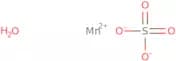
CAS:<p>Manganese sulfate monohydrate is a compound that is chemically stable at room temperature. It can be dissolved in water for use as a nutrient solution. Manganese sulfate monohydrate has been shown to be an essential cofactor for the activity of glycolytic enzymes in muscle cells, and is also important for normal neurological function. Manganese sulfate monohydrate has been shown to inhibit locomotor activity in rats, and may have potential applications in the treatment of Parkinson’s disease. The reaction mechanism is not well understood but it may be due to the inhibition of adenosine triphosphatase (ATP) synthesis by manganese ions.</p>Formula:MnO4S·H2OPurity:Min. 98.0%Color and Shape:PowderMolecular weight:169.02 g/molRef: 3D-FM47113
Discontinued productSodium phosphate dibasic dodecahydrate
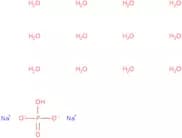
CAS:<p>Sodium phosphate dibasic dodecahydrate is a sodium salt that has been used in analytical chemistry, water treatment, and as a buffering agent. It is also used as a synergistic agent with other sodium salts to increase their bioavailability. This substance has been studied extensively for its effects on cancer tissues and has shown promise in inhibiting the growth of cancer cells. Sodium phosphate dibasic dodecahydrate is not very soluble in water but is highly permeable through human serum membranes. It can be administered orally or intravenously and will have different effects depending on the route of administration.</p>Formula:H3PO4·Na2·12H2OPurity:Min. 95%Molecular weight:358.14 g/molIron(III) sulfate hydrate
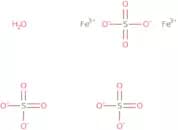
CAS:<p>Iron(III) sulfate hydrate is a chemical compound that is used as a coagulant in wastewater treatment. It reacts with hydrogen ions to form ferric hydroxides, which are insoluble and settle out of the water. Iron sulfate also has been used to identify the presence of bacteria in histological preparations by staining. The optimum concentration for this reaction is 1%. The reaction mechanism for this process is not known and it is difficult to determine the optimal pH range because it depends on the type of bacteria being studied. Iron(III) sulfate hydrate has a carcinogenic potential, but this risk can be minimized by adding an acidic substance such as caproic acid or citric acid to the solution. Iron(III) sulfate hydrate also has been shown to have nutrient-rich properties and can be used as a nutrient solution in conditions where other nutrients are unavailable. When heated, iron sulfate undergoes a redox reaction, producing water vapor and fer</p>Formula:Fe2(SO4)3•(H2O)xPurity:Min. 95%Color and Shape:Off-White To Yellow To Beige SolidMolecular weight:399.88 g/molRef: 3D-FI166723
Discontinued productDipotassium hydrogen phosphate trihydrate
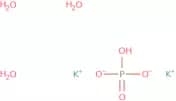
CAS:<p>Please enquire for more information about Dipotassium hydrogen phosphate trihydrate including the price, delivery time and more detailed product information at the technical inquiry form on this page</p>Formula:K2HPO4•(H2O)3Molecular weight:228.22 g/molRef: 3D-FD143178
Discontinued productPeptide YY (3-36) (human) trifluoroacetate salt
CAS:<p>Peptide YY (3-36) (human) trifluoroacetate salt H-Ile-Lys-Pro-Glu-Ala-Pro-Gly-Glu-Asp-Ala-Ser-Pro-Glu-Glu-Leu-Asn -Arg -Tyr -Tyr -Ala -Ser -Leu -Arg <br>Peptide YY (3.36) is a peptide hormone that is secreted by L cells in the small intestine and colon. It has been shown to be an effective treatment for obesity, type 2 diabetes, and other metabolic disorders. Peptide YY (3.36) has been shown to increase insulin sensitivity, reduce food intake and body weight, increase metabolic rate, and improve glucose homeostasis in animal studies. In humans, it has been found to have similar effects on postprandial plasma levels of peptide YY (3.</p>Formula:C180H279N53O54Purity:Min. 95%Molecular weight:4,049.47 g/molRef: 3D-FP110326
Discontinued product