Antifungals
Antifungals are compounds specifically designed to stop, prevent, and eliminate the growth of fungi. In this category, you will find a wide variety of antifungal agents essential for research and therapeutic applications. These compounds are crucial in treating fungal infections and preventing their recurrence, making them vital tools in both medical and agricultural settings. Researchers and healthcare professionals can explore numerous antifungals to understand their mechanisms, optimize their efficacy, and develop new treatments to combat resistant fungal strains. The extensive selection of antifungals supports ongoing advancements in fungal research and the development of effective antifungal therapies.
Found 874 products of "Antifungals"
Sort by
Purity (%)
0
100
|
0
|
50
|
90
|
95
|
100
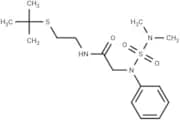
CDA-IN-3
CAS:CDA-IN-3 (NCDI) is a chitin deacetylase (CDA) inhibitor with antiparasitic properties. It disrupts chitin metabolism in nematodes, increasing ROS levels within these organisms and causing cellular damage. CDA-IN-3 significantly inhibits all developmental stages of Caenorhabditis elegans and can be utilized in research focused on anti-infective applications.Formula:C16H27N3O3S2Color and Shape:SolidMolecular weight:373.534RMG8-8
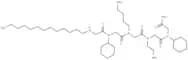
RMG8-8 shows the excellent efficacy against C. neoformans (1.56 μg/mL).Formula:C41H78N8O5Color and Shape:SolidMolecular weight:763.11HSP90-IN-9
HSP90-IN-9: potent HSP90 inhibitor, dose-dependent fungicide, impedes biofilm/morphology with FLC, reverses FLC resistance.Color and Shape:SolidWQ3810 TFA
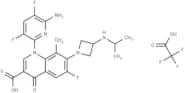
<p>WQ3810 TFA is an orally available fluoroquinolone with antimicrobial activity against Mycobacterium tuberculosis and inhibits the DNA rotamase activity of</p>Formula:C24H23F6N5O5Purity:99.52%Color and Shape:SoildMolecular weight:575.46Antifungal agent 16
<p>Antifungal agent 16 has antimicrobial activity comparable to that of ciprofloxacin and has higher antifungal activity than fluconazole.</p>Formula:C27H21N5O2SColor and Shape:SolidMolecular weight:479.55Succinate dehydrogenase-IN-8
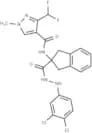
CAS:Succinate dehydrogenase-IN-8 (compound i19) is a potent inhibitor of succinate dehydrogenase (SDH). This indanoyl amino acid derivative demonstrates strong antifungal activity in vitro against Rhizoctonia solani (EC50 = 0.1843 mg/L), Botrytis cinerea (EC50 = 0.4829 mg/L), and Sclerotinia sclerotiorum (EC50 = 0.1349 mg/L).Formula:C22H19Cl2F2N5O2Color and Shape:SolidMolecular weight:494.32Tenellin
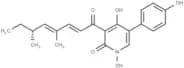
CAS:Tenellin is a fungal metabolite that inhibits Mg2+-, Ca2+-, and Na+/K+-ATPase activities in erythrocytes. Tenellin is cytotoxic to Sf9 and Sf21 insect cells.Formula:C21H23NO5Color and Shape:SolidMolecular weight:369.41Yck2-IN-1
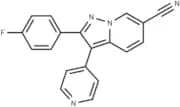
CAS:<p>Yck2-IN-1 (Compound 2a) is an inhibitor of the fungus Candida albicans Yck2. It has an IC50 of approximately 80 nM for Yck2 and an MIC80 of 12.5 µM for C. albicans, demonstrating good metabolic stability [66% remaining in mouse liver microsomes]. In a mouse model with drug-resistant Candida, Yck2-IN-1 significantly reduced fungal load in the kidneys. Yck2-IN-1 shows potential for research in antifungal infection treatments.</p>Formula:C19H11FN4Color and Shape:SolidMolecular weight:314.316D75-4590
CAS:<p>D75-4590, a β-1,6-Glucan synthetase inhibitor, combats fungal infections by targeting cell walls.</p>Formula:C21H27N5Purity:98.56% - 98.85%Color and Shape:SolidMolecular weight:349.474-Hydroxyvoriconazole
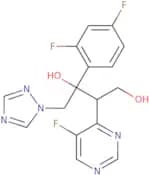
CAS:<p>Metabolite of voriconazole; sterol 14?-demethylase inhibitor</p>Purity:Min. 95%Rhizocticin A
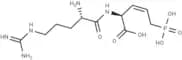
CAS:Rhizocticin A is a potential inhibitor of threonine synthase.Formula:C11H22N5O6PPurity:98%Color and Shape:SolidMolecular weight:351.32,7-Dihydroxynaphthalene
CAS:2,7-Dihydroxynaphthalene is a useful organic compound for research related to life sciences. The catalog number is T67338 and the CAS number is 582-17-2.Formula:C10H8O2Color and Shape:SolidMolecular weight:160.17Tetraconazole
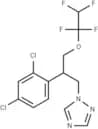
CAS:Tetraconazole is an agent of pesticides.Formula:C13H11Cl2F4N3OColor and Shape:Liquid ViscousMolecular weight:372.14Amphotericin A
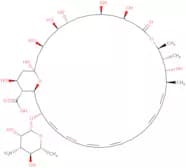
CAS:<p>Amphotericin A is a polyene macrolide antibiotic, which is derived primarily from the soil bacterium *Streptomyces nodosus*. This compound functions by binding to ergosterol, an essential component of fungal cell membranes. This binding creates pores in the membrane, increasing its permeability and ultimately leading to cell death. Unlike its more widely used counterpart Amphotericin B, Amphotericin A is less frequently utilized but is critical in the study and understanding of antifungal activity.</p>Formula:C47H75NO17Purity:Min. 95%Molecular weight:926.09 g/mol