Antimicrobials
Antimicrobials are agents that destroy or inhibit the growth of microorganisms, including bacteria, viruses, fungi, and parasites. These compounds are essential in the prevention and treatment of infections, playing a crucial role in medicine, agriculture, and the food industry. At CymitQuimica, we offer an extensive range of high-quality, high-purity antimicrobials suitable for various scientific and industrial applications. Our catalog includes antibiotics, antifungals, antivirals, and disinfectants, all designed to meet the needs of research and development, as well as clinical and production applications. With our products, professionals can ensure the effectiveness and safety in infection control and public health protection.
Subcategories of "Antimicrobials"
- Antibiotics(4,115 products)
- Antifungals(841 products)
- Antiparasitics(704 products)
- Antivirals(763 products)
Found 2422 products of "Antimicrobials"
Sort by
Purity (%)
0
100
|
0
|
50
|
90
|
95
|
100
3'-N-Desmethyl-3'-N-formyl azithromycin
CAS:<p>3'-N-Desmethyl-3'-N-formyl azithromycin is a semi-synthetic macrolide antibiotic, derived from the well-known azithromycin. It is created through structural modification, where the 3'-N-demethylated and 3'-N-formyl groups enhance its pharmacokinetic properties and potentially improve its antimicrobial efficacy.</p>Formula:C38H70N2O13Purity:Min. 95%Molecular weight:762.97 g/molVirginiamycin M1
CAS:<p>Inhibitor of protein synthesis; streptogramin</p>Formula:C28H35N3O7Purity:Min. 95%Molecular weight:525.59 g/molCenicriviroc sulfone
CAS:<p>Cenicriviroc sulfone is a small-molecule pharmaceutical compound, which is a synthetic product derived from medicinal chemistry optimization processes. It functions as a dual antagonist of the CCR2 and CCR5 receptors, which are chemokine receptors involved in inflammatory response and HIV entry, respectively. By blocking these receptors, Cenicriviroc sulfone inhibits the signaling pathways that lead to immune cell recruitment and inflammation.</p>Formula:C41H52N4O5SPurity:Min. 95%Molecular weight:712.90 g/molGriseoluteic acid
CAS:<p>Griseoluteic acid is a cyclic lipopeptide that inhibits bacterial growth by binding to the enzyme cyclase, which is involved in the production of cyclic AMP. Griseoluteic acid also inhibits the synthesis of rRNA (ribosomal RNA), which is required for protein synthesis. The compound has been shown to have a high degree of resistance against antibiotic-resistant strains and exhibits a low toxicity profile in vitro. Griseoluteic acid also has an inhibitory effect on hydrogen bonding interactions, which may be due to its ability to inhibit energy metabolism. This compound also exhibits anti-inflammatory properties and has been shown to have neurodevelopmental effects in animal models.</p>Formula:C15H12N2O4Purity:Min. 95%Molecular weight:284.27 g/molTriazoxide-desoxy
CAS:<p>Triazoxide-desoxy is an investigational compound, which is a synthetic derivative of triazoxide, originating from pharmacological research aimed at modulating physiological pathways. This compound acts primarily by influencing ion channel activity at a cellular level, impacting the regulation of potassium channels which are crucial for maintaining cellular homeostasis and signaling.</p>Formula:C10H6ClN5Purity:Min. 95%Molecular weight:231.64 g/molCeratotoxin A
CAS:<p>Ceratotoxin A is a peptide toxin, which is derived from the venom of the female fruit fly *Ceratitis capitata*. This toxin is part of a group of antimicrobial peptides that play a crucial role in the innate immune response of the fly. Ceratotoxin A functions by integrating into the cell membranes of bacteria, leading to membrane disruption and subsequent bacterial cell death.</p>Formula:C135H243N35O32Purity:Min. 95%Molecular weight:2,868.6 g/molCarbovir
CAS:<p>Carbovir is a nucleoside reverse transcriptase inhibitor (NRTI), which is derived from carbocyclic nucleosides. Its mode of action involves the selective inhibition of the reverse transcriptase enzyme, an essential component in the replication cycle of retroviruses, such as HIV. By incorporating into the viral DNA chain during synthesis, Carbovir effectively halts chain elongation, thereby impeding the virus's ability to proliferate.</p>Formula:C11H13N5O2Purity:Min. 95%Molecular weight:247.25 g/molCoumoxystrobin
CAS:<p>Coumoxystrobin is a fungicide, which is a product of synthetic chemistry with a mode of action that involves the inhibition of mitochondrial respiration. Specifically, it disrupts the electron transport chain by binding to the Qo site in complex III, thereby preventing the transfer of electrons. This action halts ATP production, leading to the death of fungal cells.</p>Formula:C26H28O6Purity:Min. 95%Molecular weight:436.5 g/molGentamicin C2 pentaacetate (2 : 1 Mixture of C2 and C2a)
CAS:Controlled Product<p>Gentamicin C2 pentaacetate (2 : 1 Mixture of C2 and C2a) is an aminoglycoside class antibiotic derivative, primarily derived from the fermentation of Micromonospora species. This product is a semi-synthetic compound, combining two closely related gentamicin components, C2 and C2a, in a specified ratio. Its mode of action involves binding to the 30S subunit of the bacterial ribosome, which disrupts protein synthesis resulting in bactericidal activity against a wide spectrum of Gram-negative and some Gram-positive bacteria.</p>Formula:C30H61N5O17Purity:Min. 95%Molecular weight:763.83 g/moltrans-Abacavir dihydrochloride
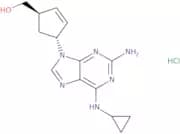
CAS:<p>trans-Abacavir dihydrochloride is a synthetic compound classified as a nucleoside analog. It is derived from chemical synthesis and serves as a prodrug that is metabolized in the body to its active form, carbovir triphosphate. Its primary mode of action involves the inhibition of the HIV-1 reverse transcriptase enzyme. This inhibition is achieved through the incorporation of the active metabolite into viral DNA, resulting in chain termination and preventing viral replication.</p>Formula:C14H18N6O·2HClPurity:Min. 95%Molecular weight:359.25 g/molAureonitol
CAS:<p>Aureonitol is a fungal metabolite, which is sourced from specific species of fungi, primarily within the Aspergillus and Penicillium genera. This is a naturally occurring compound that functions as an antibiotic, disrupting the biosynthesis processes within certain microorganisms. It achieves this action by inhibiting key enzymes involved in cell wall formation or by interfering with nucleic acid pathways, thereby impeding the growth and proliferation of bacterial cells.</p>Formula:C13H18O2Purity:Min. 95%Molecular weight:206.28 g/molLicoflavone B
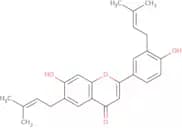
CAS:<p>Licoflavone B is a naturally occurring flavonoid, which is primarily derived from the roots of licorice plants, such as Glycyrrhiza inflata. It functions as a bioactive compound with potential antioxidant and anti-inflammatory activities. The mode of action of Licoflavone B involves the scavenging of free radicals, modulation of signaling pathways, and inhibition of pro-inflammatory mediators. These biological activities render it valuable in research focused on chronic diseases and oxidative stress.</p>Formula:C25H26O4Purity:Min. 95%Molecular weight:390.5 g/molFluhexafon
CAS:<p>Fluhexafon is an innovative acaricide, which is derived from advanced chemical synthesis. Its mode of action involves disrupting critical biological processes in mites, specifically targeting nerve receptor pathways to inhibit their survival and reproduction. By interfering with the neurotransmission, it effectively reduces mite populations, ensuring healthier crops.</p>Formula:C12H17F3N2O3SPurity:Min. 95%Molecular weight:326.34 g/molAcetophos
CAS:<p>Acetophos is an organophosphate insecticide, which is a synthetic chemical compound derived from phosphoric acid. It functions by inhibiting acetylcholinesterase, an essential enzyme in the nervous systems of insects. This inhibition leads to the accumulation of acetylcholine, causing continuous nerve impulses that result in the paralysis and eventual death of the pest.</p>Formula:C8H17O5PSPurity:Min. 95%Molecular weight:256.26 g/molNapyradiomycin A
CAS:<p>Napyradiomycin A is a secondary metabolite, classified as a type of antibiotic, which is derived from marine Streptomyces bacteria. This natural product is of considerable interest due to its unique biosynthetic origin, found specifically in marine ecosystems. Napyradiomycin A exhibits its mode of action primarily through the inhibition of bacterial RNA synthesis. This is achieved by interacting with bacterial enzymes, subsequently halting their reproductive and metabolic processes, which makes it a potent antibacterial agent.</p>Formula:C25H30Cl2O5Purity:Min. 95%Molecular weight:481.40 g/molSARS-CoV-IN-3
CAS:<p>SARS-CoV-IN-3 is a small-molecule inhibitor, which is derived through synthetic organic chemistry targeting SARS-CoV-2. It exhibits its mode of action by specifically inhibiting the viral RNA-dependent RNA polymerase (RdRp) enzyme. This enzyme is crucial for viral RNA synthesis, and by inhibiting its activity, SARS-CoV-IN-3 effectively suppresses viral replication within host cells.</p>Formula:C25H20ClFEN3OPurity:Min. 95%Molecular weight:469.74 g/molBiotinyl tobramycin amide
CAS:<p>Biotinyl tobramycin amide is a biotinylated form of the antibiotic tobramycin, which is derived from the actinobacterium Streptomyces tenebrarius. It features a tobramycin core, a potent aminoglycoside antibiotic, chemically linked to biotin. This modification allows for the specific attachment to avidin or streptavidin-labeled probes due to the strong biotin-streptavidin interaction, facilitating various labeling and detection techniques in research.</p>Formula:C28H51N7O11SPurity:Min. 95%Molecular weight:693.81 g/molMiconazole
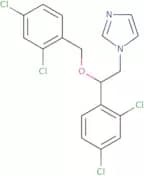
CAS:<p>Anti-fungal; sterol 14α-demethylase inhibitor</p>Formula:C18H14Cl4N2OPurity:Min. 95 Area-%Color and Shape:White Off-White PowderMolecular weight:416.13 g/molMecillinam, Antibiotic for Culture Media Use Only
CAS:<p>Mecillinam is a beta-lactam antibiotic specifically designed for use in culture media. It is derived from the amidinopenicillin family, featuring a unique ability to interfere with bacterial cell wall synthesis. Its mode of action involves inhibiting penicillin-binding protein 2 (PBP2), an essential enzyme for cell wall elongation and maintenance in Gram-negative bacteria. This targeted inhibition results in the formation of spherical cells and subsequent cell lysis.</p>Formula:C15H23N3O3SPurity:Min. 95 Area-%Molecular weight:325.43 g/molRef: 3D-Q-201343
5gTo inquire10gTo inquire25gTo inquire50gTo inquire2500mgTo inquire-Unit-ggTo inquireDSHS00884
CAS:<p>DSHS00884 is a CRISPR-associated enzyme, which is a type of gene-editing tool derived from bacterial immune systems. This enzyme functions as a molecular scissor that targets specific DNA sequences and introduces breaks or modifications at defined loci. The mode of action involves recognizing specific guide RNA sequences that direct the enzyme to complementary DNA sites where it executes precise edits. This precision stems from its ability to form base-pair interactions with the targeted DNA, ensuring minimal off-target effects.</p>Formula:C12H12N4O2S2Purity:Min. 95%Molecular weight:308.4 g/mol