Antimicrobials
Antimicrobials are agents that destroy or inhibit the growth of microorganisms, including bacteria, viruses, fungi, and parasites. These compounds are essential in the prevention and treatment of infections, playing a crucial role in medicine, agriculture, and the food industry. At CymitQuimica, we offer an extensive range of high-quality, high-purity antimicrobials suitable for various scientific and industrial applications. Our catalog includes antibiotics, antifungals, antivirals, and disinfectants, all designed to meet the needs of research and development, as well as clinical and production applications. With our products, professionals can ensure the effectiveness and safety in infection control and public health protection.
Subcategories of "Antimicrobials"
- Antibiotics(4,112 products)
- Antifungals(837 products)
- Antiparasitics(704 products)
- Antivirals(763 products)
Found 2422 products of "Antimicrobials"
Sort by
Purity (%)
0
100
|
0
|
50
|
90
|
95
|
100
SP187
CAS:<p>Please enquire for more information about SP187 including the price, delivery time and more detailed product information at the technical inquiry form on this page</p>Formula:C16H33NO5Purity:Min. 95%Molecular weight:319.44 g/molN-Nitroso-N-phenylbenzylamine
CAS:<p>N-Nitroso-N-phenylbenzylamine is a nitroso compound, which is synthesized through a chemical reaction involving nitrosation. It arises typically from the interaction of secondary amines and nitrosating agents. This compound functions as a potential mutagen due to its ability to form reactive intermediates that can interact with DNA. These intermediates can lead to modifications in the DNA structure, potentially causing mutations.</p>Formula:C13H12N2OPurity:Min. 95%Molecular weight:212.25 g/molBephenium
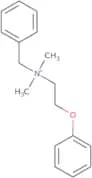
CAS:<p>Bephenium is an anthelmintic agent, which is a type of product used to treat infections caused by parasitic worms. It originates from synthetic chemical processes specifically designed to combat nematode infestations. The mode of action involves disrupting the neuromuscular activity of susceptible parasitic worms, such as hookworms and roundworms, leading to their paralysis and eventual expulsion from the host organism.</p>Formula:C17H22NOPurity:Min. 95%Molecular weight:256.36 g/molFervenulin
CAS:<p>Fervenulin is a synthetic compound, which is a chemically designed product developed for laboratory use. It is synthesized through a series of organic reactions, allowing for precise control over its molecular structure and properties. The mode of action for Fervenulin involves altering microbial growth pathways, particularly targeting specific enzymes and cellular processes critical for microbial proliferation. This mode of action effectively inhibits or modifies the activity of these cellular components, providing a tool for microbiologists to investigate microbial behavior under controlled conditions.</p>Formula:C7H7N5O2Purity:Min. 95%Molecular weight:193.16 g/molS-Ethyl (3-hydroxypropyl)propylthiocarbamate
CAS:<p>S-Ethyl (3-hydroxypropyl)propylthiocarbamate is a selective herbicide used primarily in the agricultural sector. Derived from synthetic organic chemistry, it belongs to the thiocarbamate class of herbicides. These compounds are known for their ability to inhibit the growth of undesirable plant species by interfering with lipid synthesis.</p>Formula:C9H19NO2SPurity:Min. 95%Molecular weight:205.32 g/molBisphenol A d14
CAS:<p>Bisphenol A d14 is an isotopically labeled compound, which is a variant of Bisphenol A (BPA) where hydrogen atoms are partially replaced with deuterium isotopes. This compound is produced through chemical synthesis, ensuring that 14 of the hydrogen atoms in the BPA molecule are replaced by deuterium to create a stable form with a slightly higher atomic mass, facilitating advanced analytical studies.</p>Formula:C15H16O2Purity:Min. 95%Molecular weight:242.37 g/molClothianidin-urea
CAS:<p>Clothianidin-urea is an insecticide, which is synthesized from chemical sources and belongs to the neonicotinoid class of compounds. Its mode of action involves binding to nicotinic acetylcholine receptors in the central nervous system of insects, disrupting normal nerve function and leading to paralysis and eventual death. This mode of action is selective to insects, offering a degree of safety to non-target species including humans and animals.</p>Formula:C6H8ClN3OSPurity:Min. 95%Molecular weight:205.67 g/molBottromycin A2
CAS:<p>Bottromycin A2 is a peptide antibiotic, which is a natural product derived from the fermentation of certain Streptomyces strains. It operates by targeting the bacterial ribosome, specifically inhibiting protein synthesis. The mode of action involves binding to the A-site of the 50S ribosomal subunit, thereby preventing the correct positioning of transfer RNA (tRNA) during translation. This inhibition halts the growth of bacteria by disrupting essential protein production processes.</p>Formula:C42H62N8O7SPurity:Min. 95%Molecular weight:823.1 g/molPosaconazole-d5
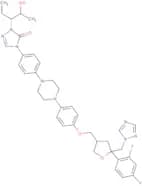
CAS:<p>Posaconazole-d5 is a deuterated form of the antifungal agent posaconazole, which is a synthetic compound derived from triazole. The substitution of hydrogen atoms with deuterium in this compound allows for enhanced stability and differentiation in analytical applications, particularly in pharmacokinetic and metabolic studies.</p>Formula:C37H42F2N8O4Purity:Min. 95%Molecular weight:705.8 g/molCephalosporin 87/359(cefoxitin impurity H)
CAS:<p>Cephalosporin 87/359 (cefoxitin impurity H) is an analytical reference standard, which is a secondary metabolite that can arise during the synthesis or degradation of the cephalosporin antibiotic, cefoxitin. It is sourced from chemical synthesis processes where isolation and purification of impurities are essential for ensuring the efficacy and safety of pharmaceutical products. The mode of action of this impurity is not therapeutic but crucial for analytical purposes, serving as a comparator to detect and quantify potential contaminants in cefoxitin production.</p>Formula:C15H15N3O6S2Purity:Min. 95%Molecular weight:397.40 g/molSTAADIUM™ PeptiZide L-Pyr
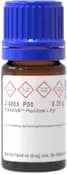
CAS:<p>STAADIUM⢠PeptiZide L-Pyr is a targeted inhibitor for pyroglutamyl-aminopeptidase-producing bacteria. The antibacterial activity of STAADIUM⢠PeptiZide L-Pyr is triggered by the enzyme pyroglutamyl aminopeptidase (a.k.a. pyrase or pyrrolidonyl peptidase) that is present, not only in bacteria, but also in archaea, plants and animals. STAADIUM⢠PeptiZide can be used to suppress the growth of Citrobacter freundii on diagnostic agar plates for Salmonella. L-pyrrolidonyl peptidase activity has also been exploited to distinguish Enterococcus species and Streptococcus pyogenes from other Streptococaceae species. More details in the application notes document.</p>Formula:C17H17N3O3SPurity:Min. 95 Area-%Molecular weight:343.41 g/molSisunatovir
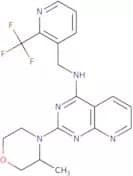
CAS:<p>Sisunatovir is an antiviral agent, which is a small-molecule compound with specificity designed to inhibit the fusion process of the respiratory syncytial virus (RSV). This small-molecule inhibitor is synthetically derived, with its action targeting the F (fusion) protein of the virus. The mechanism of action involves preventing the viral fusion with host cell membranes, thereby blocking entry and subsequent replication within the host cells.</p>Formula:C23H22F4N4OPurity:Min. 95%Molecular weight:446.4 g/molPhthalic acid, bis[2-(2-ethoxyethoxy)ethyl] ester
CAS:<p>Phthalic acid, bis[2-(2-ethoxyethoxy)ethyl] ester is a specialized industrial plasticizer, which is a type of additive used to enhance the flexibility and durability of polymer-based materials. It is derived from phthalic acid through esterification with ethylene glycol ether derivatives, resulting in a compound that effectively reduces the brittleness of plastic formulations by increasing their plasticity.</p>Formula:C20H30O8Purity:Min. 95%Molecular weight:398.4 g/molAWZ1066S
CAS:<p>AWZ1066S is a synthetic analog, which is a chemically engineered compound designed to mimic or influence biological molecules. This product is derived from sophisticated organic synthesis techniques that enable the precise modification of its molecular structure to enhance its specificity and efficacy. AWZ1066S operates through targeted binding to specific biomolecules or receptors, thereby modulating their function or facilitating their detection in complex biological systems.</p>Formula:C19H19F3N6OPurity:Min. 95%Molecular weight:404.4 g/molLenampicillin
CAS:<p>Lenampicillin is a semi-synthetic antibiotic, which is derived from ampicillin, a widely used beta-lactam antibiotic. It originates from the penicillin group of compounds, which are produced by the Penicillium fungi. This group of antibiotics is characterized by their bactericidal properties, which function through the inhibition of bacterial cell wall synthesis. Specifically, Lenampicillin targets and binds to penicillin-binding proteins present in susceptible bacteria. This action inhibits the transpeptidation step of peptidoglycan synthesis, weakening the cell wall and eventually causing cell lysis and death.</p>Formula:C21H23N3O7SPurity:Min. 95%Molecular weight:461.5 g/mol6-[(1,1-Dimethylethyl)amino]-1,3,5-triazine-2,4(1H,3H)-dione,1,3,5-triazine-2,4(1H,3H)-dione
CAS:<p>6-[(1,1-Dimethylethyl)amino]-1,3,5-triazine-2,4(1H,3H)-dione, commonly known as Terbuthylazine, is a selective systemic herbicide, which is synthesized chemically and primarily sourced from the triazine group of compounds. It operates by inhibiting photosynthesis, specifically interfering with the electron transport in photosystem II. This disruption in the photosynthetic pathway effectively halts the growth of susceptible weed species.</p>Formula:C7H12N4O2Purity:Min. 95%Molecular weight:184.2 g/molDimoxystrobin-5-benzoic acid
CAS:<p>Dimoxystrobin-5-benzoic acid is a chemical fungicide, which is a synthetic compound derived from the strobilurin class of fungicides. It functions by inhibiting mitochondrial respiration in fungi, specifically blocking the electron transfer at the Qo site of the cytochrome bc1 complex. This mode of action disrupts energy production in fungal cells, thereby curbing their growth and proliferation.</p>Formula:C19H20N2O5Purity:Min. 95%Molecular weight:356.4 g/molValidamycin B
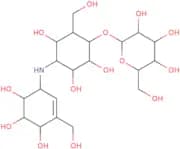
CAS:<p>Validamycin B is an aminoglycoside antibiotic, which is a type of product derived from the bacterium *Streptomyces hygroscopicus*. Its mode of action involves inhibiting the trehalase enzyme, an essential component for fungal cell viability, thereby disrupting the energy supply within the fungal cells. This disruption leads to impediments in fungal growth and proliferation.</p>Formula:C20H35NO14Purity:Min. 95%Molecular weight:513.5 g/molEthyl 6-fluoro-7-benzofurancarboxylate
CAS:<p>Ethyl 6-fluoro-7-benzofurancarboxylate is a synthetic organic compound, belonging to the class of ester derivatives, which is primarily used in chemical research and potential pharmaceutical development. This compound is synthesized through a series of organic reactions involving fluorination and esterification processes, originating from precursors of benzofuran derivatives.</p>Formula:C11H9FO3Purity:Min. 95%Molecular weight:208.18 g/molMBX-4132
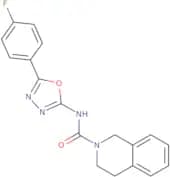
CAS:<p>Please enquire for more information about MBX-4132 including the price, delivery time and more detailed product information at the technical inquiry form on this page</p>Formula:C18H15FN4O2Purity:Min. 95%Molecular weight:338.3 g/mol


![Phthalic acid, bis[2-(2-ethoxyethoxy)ethyl] ester](/_next/image/?url=https%3A%2Fstatic.cymitquimica.com%2Fproducts%2F3D%2Fthumb-webp%2FAAA11785.webp&w=3840&q=75)
![6-[(1,1-Dimethylethyl)amino]-1,3,5-triazine-2,4(1H,3H)-dione,1,3,5-triazine-2,4(1H,3H)-dione](/_next/image/?url=https%3A%2Fstatic.cymitquimica.com%2Fproducts%2F3D%2Fthumb-webp%2FJMA92318.webp&w=3840&q=75)