Antimicrobials
Antimicrobials are agents that destroy or inhibit the growth of microorganisms, including bacteria, viruses, fungi, and parasites. These compounds are essential in the prevention and treatment of infections, playing a crucial role in medicine, agriculture, and the food industry. At CymitQuimica, we offer an extensive range of high-quality, high-purity antimicrobials suitable for various scientific and industrial applications. Our catalog includes antibiotics, antifungals, antivirals, and disinfectants, all designed to meet the needs of research and development, as well as clinical and production applications. With our products, professionals can ensure the effectiveness and safety in infection control and public health protection.
Subcategories of "Antimicrobials"
- Antibiotics(4,115 products)
- Antifungals(837 products)
- Antiparasitics(704 products)
- Antivirals(763 products)
Found 2422 products of "Antimicrobials"
Sort by
Purity (%)
0
100
|
0
|
50
|
90
|
95
|
100
Lydicamycin
CAS:<p>Lydicamycin is an antibacterial compound, which is a polyketide-derived antibiotic produced by the microorganism Streptomyces. This natural compound functions by inhibiting bacterial protein synthesis, effectively interrupting critical cellular processes within susceptible bacteria. The mode of action primarily focuses on binding to the bacterial ribosome, thereby disrupting protein production and inhibiting bacterial growth.</p>Formula:C47H74N4O10Purity:Min. 95%Molecular weight:855.11 g/molNoracronycine
CAS:<p>Please enquire for more information about Noracronycine including the price, delivery time and more detailed product information at the technical inquiry form on this page</p>Formula:C19H17NO3Purity:Min. 95%Molecular weight:307.3 g/molThiamphenicol
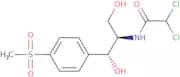
CAS:<p>Thiamphenicol is a semisynthetic derivative of chloramphenicol with action on bacterial protein synthesis inhibition and is used for treating bacterial infections, particularly in veterinary medicine.</p>Formula:C12H15Cl2NO5SPurity:Min. 98 Area-%Color and Shape:PowderMolecular weight:356.22 g/molFuraprofen
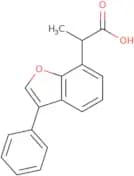
CAS:<p>Furaprofen is a nonsteroidal anti-inflammatory drug (NSAID), which is a synthetic pharmaceutical compound derived from the carboxylic acid class. Its mode of action involves inhibiting the enzyme cyclooxygenase (COX), which plays a crucial role in the biosynthesis of pro-inflammatory prostaglandins. By blocking COX activity, Furaprofen reduces the formation of these signaling molecules, thereby alleviating inflammation and pain.</p>Formula:C17H14O3Purity:Min. 95%Molecular weight:266.29 g/molGemifioxacin
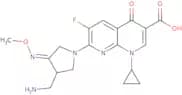
CAS:<p>Gemifloxacin is an antibacterial agent primarily classified as a fluoroquinolone antibiotic, which is a synthetic compound derived from chemical processes in pharmaceutical manufacturing. Its mechanism of action involves the inhibition of key bacterial enzymes, namely DNA gyrase and topoisomerase IV. These enzymes are crucial for bacterial DNA replication, transcription, repair, and recombination. By obstructing these enzymes, Gemifloxacin effectively inhibits bacterial cell division and growth, leading to the eradication of susceptible bacterial strains.</p>Formula:C18H20FN5O4Purity:Min. 95%Molecular weight:389.38 g/molLetrozole
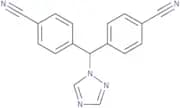
CAS:Controlled Product<p>Letrozole is a non-steroidal aromatase inhibitor, which is synthesized chemically. This product acts by inhibiting the aromatase enzyme, thus reducing estrogen production in the body. Estrogen plays a critical role in the proliferation of hormone-sensitive breast cancer cells, and by lowering its levels, Letrozole effectively impedes cancer growth.</p>Formula:C17H11N5Molecular weight:285.30 g/molAT-511
CAS:<p>AT-511 is an antiviral compound, which is derived from organic synthesis processes associated with the development of nucleotide analogs. It acts by targeting the RNA-dependent RNA polymerase, a crucial enzyme in the replication process of RNA viruses. By inhibiting this enzyme, AT-511 effectively halts viral replication, reducing the viral load within the host.</p>Formula:C24H33FN7O7PPurity:Min. 95%Molecular weight:581.5 g/molTuberculosis inhibitor 3
CAS:<p>Tuberculosis inhibitor 3 is a synthesized chemical compound designed to target the Mycobacterium tuberculosis bacterium, which is the causative agent of tuberculosis. This inhibitor is derived through advanced chemical synthesis techniques, involving the modification of specific molecular structures to enhance its binding affinity and specificity toward the bacterial cellular targets.</p>Formula:C21H22F6N4O3SPurity:Min. 95%Molecular weight:524.5 g/molDuocarmycin MA
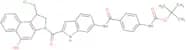
CAS:<p>Duocarmycin MA is a cytotoxic compound, which is a derivative of natural products isolated from bacteria of the Streptomyces genus. Its mode of action involves the alkylation of DNA, leading to the cleavage of the DNA helix and ultimately resulting in cell apoptosis. This process is highly selective for adenine-thymine rich regions, allowing it to precisely target and disrupt cancerous cells.</p>Formula:C34H31ClN4O5Purity:Min. 95%Molecular weight:611.1 g/molSulconazole nitrate
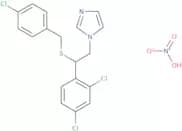
CAS:<p>Sulconazole nitrate is an antifungal agent, which is a synthetic compound derived from imidazole. Its mode of action involves the inhibition of ergosterol synthesis, an essential component of fungal cell membranes, leading to increased membrane permeability and ultimately cell death.</p>Formula:C18H16Cl3N3O3SPurity:Min. 95%Molecular weight:460.76 g/molClindamycin-d3 hydrochloride
CAS:Controlled Product<p>Clindamycin-d3 hydrochloride is an isotopically labeled pharmaceutical compound, specifically designed for use in the field of analytical chemistry and pharmacokinetics. It is derived from clindamycin, a known antibiotic sourced from modifications of the naturally occurring compound lincomycin, produced by the actinobacterium Streptomyces lincolnensis. The incorporation of deuterium atoms, replacing hydrogen, allows for its use in sophisticated analytical methods such as mass spectrometry, where it serves to trace the metabolic pathways and to quantify the bioavailability and distribution of clindamycin in biological systems with high precision.</p>Formula:C18H30ClD3N2O5S•HClPurity:Min. 95%Molecular weight:464.46 g/molFosfomycin calcium monohydrate
CAS:<p>Fosfomycin calcium monohydrate is an antibacterial agent, derived from Streptomyces species. This compound functions as a structural analog of phosphoenolpyruvate, interfering with cell wall synthesis. Specifically, it targets and irreversibly inhibits the enzyme UDP-N-acetylglucosamine enolpyruvyl transferase (MurA), which is critical in the early stages of bacterial cell wall biosynthesis. This inhibition prevents the formation of peptidoglycan, leading to bacterial cell lysis.</p>Formula:C3H7CaO5PPurity:Min. 95%Molecular weight:194.14 g/molNaftifine N-Oxide
CAS:<p>Naftifine N-Oxide is an antifungal agent, which is derived from synthetic chemical processes. Its structure is based on the modification of the known antifungal, naftifine, by introducing an N-oxide functional group, which may enhance certain pharmacokinetic properties. As a synthetic derivative, Naftifine N-Oxide is specifically designed to interfere with the biosynthesis of ergosterol, an essential component of fungal cell membranes. By inhibiting squalene epoxidase, an enzyme crucial to the ergosterol pathway, Naftifine N-Oxide effectively disrupts the development and maintenance of the fungal cell membrane, compromising cell integrity and leading to antifungal activity.</p>Formula:C21H21NOPurity:Min. 95%Molecular weight:303.4 g/molCeftibuten Hydrate
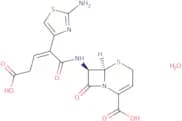
CAS:<p>Ceftibuten Hydrate is a third-generation cephalosporin antibiotic, which is a synthetic derivative of naturally occurring cephalosporin C, derived from the fungus Acremonium. It functions by inhibiting bacterial cell wall synthesis, leading to cell lysis and death. This bactericidal action is accomplished through the binding to specific penicillin-binding proteins (PBPs) located inside the bacterial cell wall, disrupting the final transpeptidation step of peptidoglycan synthesis in bacterial cell walls.</p>Formula:C15H14N4O6S2·xH2OPurity:Min. 95%Molecular weight:410.42 g/molPropicillin
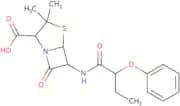
CAS:<p>Propicillin is a broad-spectrum antimicrobial agent that has been shown to be effective against both gram-positive and gram-negative bacteria. Propicillin belongs to the group of nonsteroidal anti-inflammatory drugs. It is a particle that is soluble in water and lipid. Propicillin does not inhibit the growth of Streptococcus species, but does cause cell lysis by attaching to fatty acids on the surface of cells. Propicillin also inhibits microbial infection by inhibiting enzymes involved in fatty acid synthesis. The human serum pharmacokinetics of propicillin have been studied and found to be similar to those of ampicillin, which allows for use as an intravenous drug in humans. The pharmacokinetics, biochemical properties, and cellular mechanisms are complex, but it is known that propicillin binds to bacterial ribosomes and inhibits protein synthesis by binding to the peptidyl transferase centre on the ribosome.</p>Formula:C18H22N2O5SPurity:Min. 95%Molecular weight:378.4 g/molCoronarin D ethyl ether
CAS:<p>Coronarin D ethyl ether is a diterpenoid compound, which is derived from the plant Hedychium coronarium, also known as white ginger lily. This compound belongs to a class of naturally occurring chemicals with complex polycyclic structures. The source of Coronarin D ethyl ether is the rhizome of Hedychium coronarium, which is part of the Zingiberaceae family. These plants are often studied for their bioactive properties and potential therapeutic applications.</p>Formula:C22H34O3Purity:Min. 95%Molecular weight:346.5 g/molPyrimorph
CAS:<p>Pyrimorph is a fungicide, which is a synthetic compound with specific activity against oomycete pathogens. It belongs to the chemical class of morpholines. Its mode of action involves the disruption of the biosynthetic pathways essential for the survival and proliferation of oomycetes, leading to their effective inhibition. Pyrimorph specifically targets the biosynthesis of cellulose in the cell walls of these pathogens, inhibiting their capacity to multiply and cause disease.</p>Formula:C22H25ClN2O2Purity:Min. 95%Molecular weight:384.9 g/molClindamycin 4-phosphate
CAS:<p>Clindamycin 4-phosphate is a semi-synthetic antibiotic, which is a derivative of the natural antibiotic lincomycin. It is specifically synthesized from Streptomyces lincolnensis cultures. The mode of action of Clindamycin 4-phosphate involves inhibiting bacterial protein synthesis by binding to the 50S subunit of the bacterial ribosome, thus preventing peptide chain elongation and subsequent bacterial growth.</p>Formula:C18H34ClN2O8PSPurity:Min. 95%Molecular weight:504.96 g/molA2ti-1
CAS:<p>A2ti-1 is a specialized therapeutic agent, which is derived from recombinant DNA technology with the specific mode of action of targeting and modulating cytokine signaling pathways within the immune system. It is designed to interact with specific cytokine receptors, thereby inhibiting or modulating the downstream signaling cascades that are pivotal in the inflammatory response and immune regulation.</p>Formula:C20H22N4O2SPurity:Min. 95%Molecular weight:382.5 g/molAcetoxypolygodial
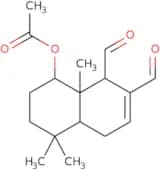
CAS:<p>Acetoxypolygodial is a sesquiterpenoid compound, which is a naturally derived product from the roots of the plant Polygonum hydropiper. This compound exhibits its mode of action through its ability to disrupt microbial cell membranes, leading to increased permeability and eventual cell death. Its primary mechanism involves direct interaction with lipid bilayers, causing destabilization.</p>Formula:C17H24O4Purity:Min. 95%Molecular weight:292.4 g/mol