


Antiparasitics
Antiparasitics are compounds designed to treat and prevent parasitic infections by inhibiting the growth and survival of parasites. This category includes a range of antiparasitic agents intended exclusively for laboratory use and not for human consumption. These products are essential for research purposes, allowing scientists to study parasitic life cycles, mechanisms of action, and the development of resistance. The use of antiparasitics in laboratory settings aids in the discovery and optimization of new treatments for parasitic diseases, contributing to advancements in medical and veterinary parasitology. Researchers rely on these products to enhance their understanding of parasitic infections and to develop more effective therapies.
Found 704 products of "Antiparasitics"
Sort by
Purity (%)
0
100
|
0
|
50
|
90
|
95
|
100
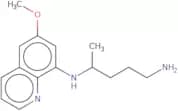
Primaquine
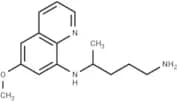
CAS:<p>Primaquine is an antimalarial agent with action on Plasmodium hypnozoites in the liver and is used for preventing relapses of malaria caused by Plasmodium vivax and Plasmodium ovale.</p>Formula:C15H21N3OPurity:Min. 95%Color and Shape:PowderMolecular weight:259.35 g/molBenznidazole
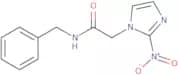
CAS:<p>Benznidazole is an antiprotozoal agent and is used for the treatment of Chagas disease. It generates free radicals that damage the DNA and other cellular components of the parasite.</p>Formula:C12H12N4O3Purity:Min. 97 Area-%Color and Shape:White PowderMolecular weight:260.25 g/molFumagillin
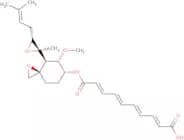
CAS:<p>Inhibits methionine aminopeptidase-2; anti-angiogenic; antibiotic</p>Formula:C26H34O7Purity:Min. 95%Color and Shape:White PowderMolecular weight:458.54 g/molHexadecylphosphocholine
CAS:<p>Hexadecylphosphocholine, better known as miltefosine, belongs to the group of phospholipids. The long alkyl chain and a polar group of a molecule proved to be essential for antitumor activity, especially to cure breast cancer cells. The apoptotic process takes place in the plasma membrane, where molecules are inserted and then influence signaling pathways. Moreover, during preclinical studies hexadecylphosphocholine (He-PC) found to be highly effective in inhibiting the growth of chemically induced rat mammary carcinomas, and even a high percentage of the tumors regressed completely. The He-PC has many more applications such as antifungal agent, antiprotozoal drug, protein kinase inhibitor or immunomodulator. Even though miltefosine was originally developed in the 1980s as an anti-cancer agent, new studies have demonstrated activity against Leishmania parasites and neoplastic cells, and due to broad spectrum of antimicrobial effects, it is recommended as a first line treatment for free-living amebae infections.</p>Formula:C21H46NO4PMolecular weight:407.57 g/molRef: 3D-M-7200
1gTo inquire5gTo inquire10gTo inquire500mgTo inquire2500mgTo inquire-Unit-ggTo inquireTriclabendazole
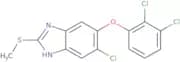
CAS:<p>Triclabendazole is a benzimidazole anthelmintic with action on liver flukes by disrupting their microtubule formation and is used for treating fascioliasis in humans and animals.</p>Formula:C14H9Cl3N2OSPurity:Min. 95%Color and Shape:White PowderMolecular weight:359.66 g/molMebendazole
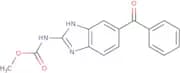
CAS:<p>Mebendazole is a benzimidazole anthelmintic with action on microtubule formation in parasitic worms and is used for treating intestinal worm infections like threadworms and roundworms.</p>Formula:C16H13N3O3Purity:99.0 To 101.0%Color and Shape:PowderMolecular weight:295.29 g/molFenbendazole
CAS:<p>Fenbendazole is a benzimidazole anthelmintic with action on microtubule formation in parasites and is used for treating gastrointestinal parasites in animals.</p>Formula:C15H13N3O2SPurity:Min. 97.5 Area-%Color and Shape:PowderMolecular weight:299.35 g/molN-Desethyl Amodiaquine-d5 DiHCl
CAS:N-Desethyl Amodiaquine-d5 DiHCl is a deuterated compound of N-Desethyl Amodiaquine DiHCl. N-Desethyl Amodiaquine DiHCl has a CAS number of 79352-78-6. N-Desethyl amodiaquine dihydrochloride is an antiparasitic agent,is the major biologically active Amodiaquine metabolite .Formula:C18H15D5Cl3N3OColor and Shape:SolidMolecular weight:405.76Tafenoquine
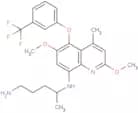
CAS:<p>Tafenoquine (WR 238605) is an antimalarial prophylactic agent with schizonticidal activity, useful in hemolytic anemia research.</p>Formula:C24H28F3N3O3Purity:99.56%Color and Shape:SolidMolecular weight:463.49Primaquine
CAS:<p>Primaquine is an antimalarial compound and a gametocytocide, clearing liver schizonts and dormant forms of Plasmodium vivax.</p>Formula:C15H21N3OPurity:98.62%Color and Shape:SolidMolecular weight:259.35Dehydrocorydaline nitrate
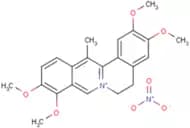
CAS:<p>DHC curbs antibody and cell-mediated allergies, inhibits mitochondrial potential in macrophages, and has antinociceptive, anti-inflammatory effects.</p>Formula:C22H24N2O7Purity:99.79% - 99.92%Color and Shape:SolidMolecular weight:428.44(+)-Isopulegol
CAS:<p>(+)-Isopulegol is a monoterpenoid from Mentha canadensis L.</p>Formula:C10H18OPurity:99.885%Color and Shape:SolidMolecular weight:154.25Farnesal
CAS:Controlled Product<p>Applications Farnesal is a reagent in the synthesis of farnesylpyrophosphate analogues which acts as bisubstrate inhibitors of protein farnesyltransferase and has antiparasitics properties.<br>References Duez, S. et al.: Bioorg. Med. Chem., 18, 543 (2010);<br></p>Formula:C15H24OColor and Shape:NeatMolecular weight:220.35Amopyroquine
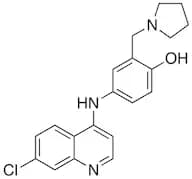
CAS:Controlled Product<p>Applications Antimalarial agent. The compound showed antimalarial activity similar to that of Chloroquine.<br>References Desjardins, R., et al.: Antimicrob. Agents Chemother., 16, 710 (1979), McKie, J., et al.: J. Med. Chem., 41, 1367 (1998), Gozalbes, R., et al.: J. Pharm. Pharmacol., 52, 111 (1999), Marrero-Ponce, Y., et al.: Bioorg. Med. Chem., 13, 1293 (2005),<br></p>Formula:C20H20ClN3OColor and Shape:NeatMolecular weight:353.855-Amino-1-(1,1-dimethylethyl)-3-[(3-methylphenyl)methyl]-1H-pyrazole-4-carbonitrile
Controlled Product<p>Applications 5-Amino-1-(1,1-dimethylethyl)-3-[(3-methylphenyl)methyl]-1H-pyrazole-4-carbonitrile is an derivative in the synthesis of small molecule inhibitors of calcium-dependent protein kinase 1 to prevent infection by toxoplasma gondii.<br>References Lourido, S., et al.: J. Med. Chem., 56, 3068 (2013);<br></p>Formula:C17H22N4Color and Shape:NeatMolecular weight:282.383Methyl 2-((1R,3R,4''S,5R,5'S,7R)-Dispiro[adamantane-2,3'-[1,2,4]trioxolane-5',1''-cyclohexan]-4''-yl)acetate
CAS:Controlled Product<p>Applications Methyl 2-((1R,3R,4''S,5R,5'S,7R)-dispiro[adamantane-2,3'-[1,2,4]trioxolane-5',1''-cyclohexan]-4''-yl)acetate is an intermediate for the synthesis of Arterolane p-Toluenesulfonic Acid (A614161), which is an antimalaria agent.<br>References Valecha, N., et al.: Clin Infect Dis. 55, 663 (2012); Patil, C. Y., et al.: Ann Med Health Sci Res. 4, 466 (2014)<br></p>Formula:C19H28O5Color and Shape:NeatMolecular weight:336.421-Methyl-4-nitro-1H-imidazole-5-carboxamide
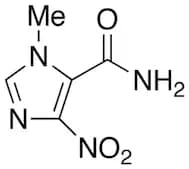
CAS:Controlled Product<p>Applications A substituted imidazolothiazole derivative as possible antiparasitic agents.<br>References Sarasin, J., et al.: Helv. Chim. Acta, 7, 713 (1924),<br></p>Formula:C5H6N4O3Color and Shape:NeatMolecular weight:170.13(±)-2-(2,4-Dichlorophenyl)-2-hydroxyethylamine
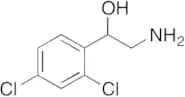
CAS:Controlled Product<p>Applications (±)-2-(2,4-Dichlorophenyl)-2-hydroxyethylamine is an intermediate in the synthesis of Aminoazabenzimidazoles, a novel class of orally active antimalarial agent.<br>References Hameed, P., et al.: J. Med. Chem., 57, 5702 (2014);<br></p>Formula:C8H9Cl2NOColor and Shape:NeatMolecular weight:206.07cis-Dispiro[cyclohexane-1,3'-[1,2,4]trioxolane-5',2''-tricyclo[3.3.1.13,7]decane]-4-acetic Acid
CAS:Controlled Product<p>Applications cis-Dispiro[cyclohexane-1,3'-[1,2,4]trioxolane-5',2''-tricyclo[3.3.1.13,7]decane]-4-acetic Acid is an intermediate for the synthesis of Arterolane p-Toluenesulfonic Acid (A614161), which is an antimalaria agent.<br>References Valecha, N., et al.: Clin Infect Dis. 55, 663 (2012); Patil, C. Y., et al.: Ann Med Health Sci Res. 4, 466 (2014)<br></p>Formula:C18H26O5Color and Shape:NeatMolecular weight:322.4N-(2-Indol-3-ylethyl)-succinamic Acid Methyl Ester
CAS:Controlled Product<p>Applications N-(2-Indol-3-ylethyl)-succinamic Acid Methyl Ester is an intermediate in the synthesis of Canthin-6-one (C175635), which is used as an anticancer agent compromising cancer cells showing multi-drug resistance. Also used in the synthesis of β-carbolinium compounds as antimalarial agents.<br>References Murakami, C. et al.: Bioorg. Med. Chem., 12, 4963 (2004); Takasu, K. et al.: Chem. Pharm. Bull., 53, 653 (2005);<br></p>Formula:C8H12N3O5PColor and Shape:NeatMolecular weight:261.172







![5-Amino-1-(1,1-dimethylethyl)-3-[(3-methylphenyl)methyl]-1H-pyrazole-4-carbonitrile](/_next/image/?url=https%3A%2Fstatic.cymitquimica.com%2Fproducts%2FTR%2Fthumb-webp%2FA605035.webp&w=3840&q=75)
![Methyl 2-((1R,3R,4''S,5R,5'S,7R)-Dispiro[adamantane-2,3'-[1,2,4]trioxolane-5',1''-…](/_next/image/?url=https%3A%2Fstatic.cymitquimica.com%2Fproducts%2FTR%2Fthumb-webp%2FM858575.webp&w=3840&q=75)
![cis-Dispiro[cyclohexane-1,3'-[1,2,4]trioxolane-5',2''-tricyclo[3.3.1.13,7]decane]-4-acetic Acid](/_next/image/?url=https%3A%2Fstatic.cymitquimica.com%2Fproducts%2FTR%2Fthumb-webp%2FD784595.webp&w=3840&q=75)
