Polyunsaturated Fatty Acid (Pufa) and Impurities
Found 81 products of "Polyunsaturated Fatty Acid (Pufa) and Impurities"
Sort by
Purity (%)
0
100
|
0
|
50
|
90
|
95
|
100
Ethyl Ximenynate ((11E)-11-Octadecen-9-ynoic acid ethyl ester)
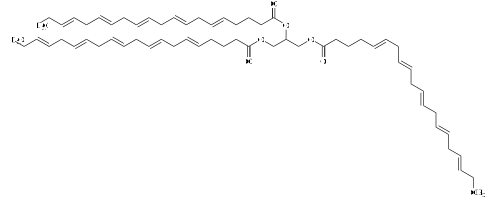
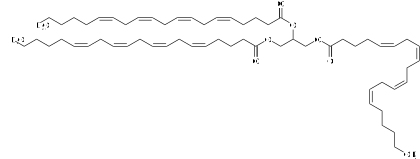
CAS:Formula:C20H34O2Color and Shape:Colorless LiquidMolecular weight:306.49all-cis-7,10,13,16,19-Docosapentaenoic Acid Impurity 3-13C3
Formula:C3C20H26O2Molecular weight:337.44all-cis-7,10,13,16,19-Docosapentaenoic Acid Impurity 4-13C3
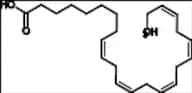
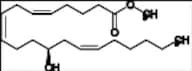
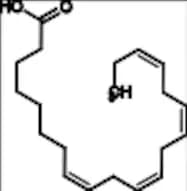
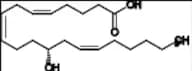
Formula:C3C20H36O2Molecular weight:347.5220-Hydroxy-(5Z,8Z,11Z,14Z)-Eicosatetraenoic Acid (20-HETE)
CAS:Formula:C20H32O3Molecular weight:320.47(5Z,8Z,12S,14Z)-12-hydroxy-5,8,14-Eicosatrienoic acid methyl ester
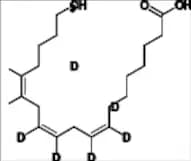
CAS:Formula:C21H36O3Molecular weight:336.52all-cis-7,10,13,16,19-Docosapentaenoic Acid Impurity 2-13C3
Formula:C3C11H13BrMolecular weight:264.14Anandamide
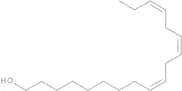
CAS:Controlled Product<p>Applications Anandamide is an endogenous cannabinoid and TRPV1 receptor agonist. Findings suggest that endocannabinoids such as anandamide may help cause runner’s high, the feeling of euphoria, reduced anxiety and lessened ability to feel pain associated with exercise.<br>References Devane, W., et al.: Sci., 258, 1946 (1992); Ryberg, E., et al.: Brit. J. Pharm., 152, 1092 (2007); Ross, R.: Brit. J. Pharm., 140, 790 (2003); Chem. and Eng. News, (<a href="http://cen.acs.org/articles/93/web/2015/10/Exploring-Molecular-Basis-Runners-High.html)" target="_blank" rel="noreferrer noopener">http://cen.acs.org/articles/93/web/2015/10/Exploring-Molecular-Basis-Runners-High.html)</a><br></p>Formula:C22H37NO2Color and Shape:Light Yellow To YellowMolecular weight:347.53(9Z,12Z,15Z)-Octadeca-9,12,15-trien-1-ol (>90%)
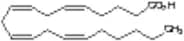
CAS:<p>Stability Light Sensitive<br>Applications (9Z,12Z,15Z)-octadeca-9,12,15-trien-1-ol is an essential oil component of Osmanthus fragrans.<br>References Hu, C., et al.: Huaxue Shiji, 32, 231 (2010); Tian, G., et al.: Anhui Nongye Kexue, 36, 7214 (2008)<br></p>Formula:C18H32OPurity:>90%Color and Shape:ColourlessMolecular weight:264.45Arachidonic Acid
CAS:<p>Stability Light and Temperature Sensitive<br>Applications Arachidonic Acid is an essential fatty acid and a precursor in the biosynthesis of prostaglandins, thromboxanes, and leukotrienes. Arachidonic Acid occurs in liver, brain, glandular organs, and depot fats of animals, in small amounts in human depot fats, and Arachidonic Acid is also a constituent of animal phosphatides.<br>References Kurosawa, T., et al.: J. Cell. Physiol., 219, 606 (2009); Mazalli, M., et al.: J. Agric. Food Chem., 57, 5028 (2009);<br></p>Formula:C20H32O2Purity:>97%Color and Shape:Colourless OilyMolecular weight:304.47Stearidonic Acid Ethyl Ester
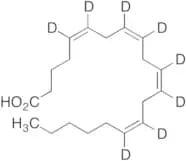
CAS:Controlled Product<p>Applications A fatty acid ester as cholecystokinin receptor, used for preventing and treating gastric disorders.<br>References Ghioni C., et al.: Lipids, 36, 145 (2001),<br></p>Formula:C20H32O2Color and Shape:NeatMolecular weight:304.47Arachidonic Acid-d8 (Major, 10mg/ml in Methyl Acetate)
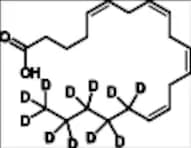
CAS:Controlled Product<p>Stability Light Sensitive, Temperature Sensitive<br>Applications Arachidonic Acid-d8 is the deuterated form of Arachidonic Acid (A765000), which is an essential fatty acid and a precursor in biosynthesis of prostaglandins, thromboxanes, and leukotrienes. Arachidonic Acid occurs in the liver, brain, glandular organs, and depot fats of animals, in small amounts in human depot fats, and it is also a constituent of animal phosphatides.<br>References Kurosawa, T., et al.: J. Cell. Physiol., 219, 606 (2009); Mazalli, M., et al.: J. Agric. Food Chem., 57, 5028 (2009);<br></p>Formula:C20H24D8O2Color and Shape:Single SolutionMolecular weight:312.52N-Oleoylethanolamide
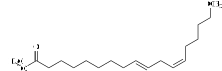
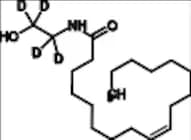
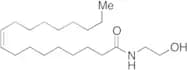
CAS:Controlled Product<p>Applications N-Oleoylethanolamide is an agonist of peroxisome proliferator-activated receptor-α (PPAR-α). N-Oleoylethanolamide generates an intestinal signal that stimulates central dopamine activity establishing a link between caloric-homeostatic and hedonic-homeostatic controllers. Oleoylethanolamide has been implicated as the molecular mechanism associated with gastric bypass success. N-Oleoylethanolamide is a selective GPR55 agonist.<br>References Sasso, O., et. al.: Pain, 154, 350 (2013); Begg, D.P., Woods, S.C.: Cell Met., 18, 459 (2013); Chem. and Eng. News p.7, Jan. 8 (2017)<br></p>Formula:C20H39NO2Color and Shape:Off-WhiteMolecular weight:325.53Ref: 4Z-P-191070
Discontinued productRef: 4Z-P-191055
Discontinued productRef: 4Z-P-191044
Discontinued product