Fatty Acids
Fatty acids are carboxylic acids with long hydrocarbon chains, which can be either saturated or unsaturated. They are essential components of lipids, serving as key building blocks for complex lipids, energy sources, and signaling molecules. Fatty acids are involved in various biological processes, including metabolism, cell membrane structure, and inflammation. At CymitQuimica, we offer a diverse range of high-quality fatty acids to support your research in lipid biochemistry, nutrition, and related fields.
Subcategories of "Fatty Acids"
- Acylglycerols/Glycerides(43 products)
- Eicosanoids(6 products)
- Fatty Acid Esters(946 products)
- Halogenated Fatty Acids(32 products)
Found 2447 products of "Fatty Acids"
Sort by
Purity (%)
0
100
|
0
|
50
|
90
|
95
|
100
(S)-9,10-Difluoro-2,3-dihydro-3-methyl-7-oxo-7H-pyrido[1,2,3-de]-1,4-benzoxazine-6-carboxylic acid ethyl ester
CAS:(S)-9,10-Difluoro-2,3-dihydro-3-methyl-7-oxo-7H-pyrido[1,2,3-de]-1,4-benzoxazine-6-carboxylic acid ethyl ester is an acidic substance that can be produced by the amination of piperazine with chloroacetic acid. The reaction solution is heated to a temperature of about 120°C for about 30 minutes and then cooled to room temperature. The product precipitates as a white solid. This compound has been shown to have antibacterial activity against methicillin resistant Staphylococcus aureus (MRSA) in plates.Formula:C15H13F2NO4Purity:Min. 95%Molecular weight:309.26 g/molAscorbyl tetraisopalmitate
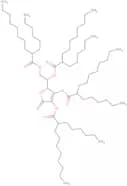
CAS:<p>Antioxidant; skin whitener</p>Formula:C70H128O10Purity:Min. 80%Color and Shape:Clear LiquidMolecular weight:1,129.76 g/molN-Boc-L-pyroglutamic acid ethyl ester
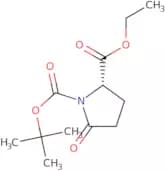
CAS:<p>N-Boc-L-pyroglutamic acid ethyl ester is a chiral building block that can be used for the preparation of amides. It is a good activating agent and is used to synthesize amide bonds from carboxylic acids. N-Boc-L-pyroglutamic acid ethyl ester can be used to synthesize sulfoxides and piperidines, which are ligands. It is also an amido, stereoselective and DPP-4 inhibitor. This chemical simplifies catalysis reactions by replacing the use of toxic solvents.</p>Formula:C12H19NO5Purity:Min. 95%Molecular weight:257.28 g/mol2-[(5-Chloropyridin-2-yl)amino]-2-oxoacetic acid ethyl ester monohydrochloride
CAS:Intermediate in the synthesis of edoxabanFormula:C9H9ClN2O3·HClPurity:Min. 95%Molecular weight:265.09 g/molDocosahexaenoic acid ethyl ester
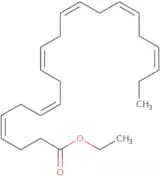
CAS:Docosahexaenoic acid ethyl ester (DHAEE) is a biologically active form of docosahexaenoic acid (DHA), which is an omega-3 polyunsaturated fatty acid. DHAEE is synthesized from DHA through the process of acylation with ethanol. It has been shown to have antioxidant and anti-inflammatory properties in animal studies, as well as improved brain functions. When given to rats, it prevents neuronal death and has been shown to reduce the risk of congestive heart failure.Formula:C24H36O2Purity:Min. 95%Color and Shape:Colorless Yellow Clear LiquidMolecular weight:356.54 g/mol4-Chloro-Nicotinic acid ethyl ester hydrochloride
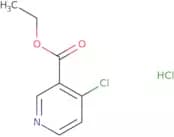
CAS:<p>4-Chloro-Niacin is a lead compound for the treatment of diabetes. The drug is an agonist of the G protein coupled receptor, which is involved in glucose homeostasis and insulin secretion. 4-Chloro-Niacin has been shown to decrease blood glucose levels in diabetic rats by activating the G protein coupled receptor, thereby increasing the release of insulin from pancreatic beta cells. This compound also has an affinity for pyridine nucleotide receptors, suggesting that it may be useful for treating metabolic syndromes.</p>Formula:C8H8ClNO2·HClPurity:Min. 95%Molecular weight:222.07 g/mol1-Oleoyl-3-palmitoyl-rac-glycero-2-phosphoethanolamine
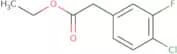
CAS:<p>Please enquire for more information about 1-Oleoyl-3-palmitoyl-rac-glycero-2-phosphoethanolamine including the price, delivery time and more detailed product information at the technical inquiry form on this page</p>Formula:C39H76NO8PPurity:Min. 95%Molecular weight:718 g/mol(4-Chloro-3-fluorophenyl)acetic acid ethyl ester
CAS:Please enquire for more information about (4-Chloro-3-fluorophenyl)acetic acid ethyl ester including the price, delivery time and more detailed product information at the technical inquiry form on this pageFormula:C10H10ClFO2Purity:Min. 95%Molecular weight:216.64 g/molMitogenic Pentapeptide Palmitoyl-Cys((RS)-2,3-di(palmitoyloxy)-propyl)-Ser-Ser-Asn-Ala-OH
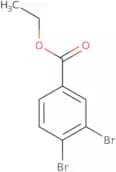
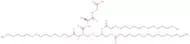
CAS:Mitogenic Pentapeptide Palmitoyl-Cys((RS)-2,3-di(palmitoyloxy)-propyl)-Ser-Ser-Asn-Ala-OH is a synthetic pentapeptide that can be used to induce cell proliferation and antibody production. This peptide has been used in clinical trials with regulatory approval for use in humans. It has been shown to promote antibody response in animal experiments and to be active against tumor cells in tissue culture and cell cultures. Mitogenic Pentapeptide Palmitoyl-Cys((RS)-2,3-di(palmitoyloxy)-propyl)-Ser-Ser-Asn-Ala-OH also activated the monoclonal antibodies produced by hybridoma cells.Formula:C67H124N6O14SPurity:Min. 95%Molecular weight:1,269.8 g/mol3,4-Dibromobenzoic acid ethyl ester
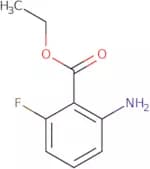
CAS:3,4-Dibromobenzoic acid ethyl ester is a high quality reagent that can be used as an intermediate for the synthesis of complex compounds. It is also useful as a building block for the synthesis of speciality chemicals and research chemicals. 3,4-Dibromobenzoic acid ethyl ester can be used in reactions such as Friedel-Crafts reactions, reducing reactions, and condensations. This chemical is a versatile building block that can be used to construct organic molecules with diverse structures. 3,4-Dibromobenzoic acid ethyl ester is a fine chemical with CAS number 60469-88-7.Formula:C9H8Br2O2Purity:Min. 95%Molecular weight:307.97 g/mol2-Amino-6-fluorobenzoic acid ethyl ester
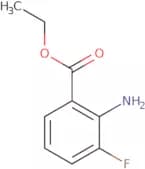
CAS:<p>2-Amino-6-fluorobenzoic acid ethyl ester is a chemical that can be used as a building block in the synthesis of more complex compounds. It is a versatile intermediate and can be used to synthesize other important compounds, such as pharmaceuticals. This compound has been shown to be useful for the preparation of 2-amino-4,6-difluorobenzoic acid ethyl ester and many other derivatives. The colorless solid is soluble in ether and dichloromethane.</p>Formula:C9H10FNO2Purity:Min. 95%Color and Shape:PowderMolecular weight:183.18 g/mol2-Amino-3-fluorobenzoic acid ethyl ester
CAS:Please enquire for more information about 2-Amino-3-fluorobenzoic acid ethyl ester including the price, delivery time and more detailed product information at the technical inquiry form on this pageFormula:C9H10FNO2Purity:Min. 95%Color and Shape:PowderMolecular weight:183.18 g/molDexamethasone 21-palmitate
CAS:Controlled Product<p>Dexamethasone 21-palmitate is a sample preparation agent that is used to prevent the loss of cells or particles during storage. It can be used in vitro as an immunosuppressant to inhibit lymphocyte transformation, particle, and cell nuclei formation. Dexamethasone 21-palmitate is also used for eye disorders, inflammatory bowel disease, and human macrophages. The product may also be used for choroidal neovascularization in eye disorders.</p>Formula:C38H59FO6Purity:Min. 95%Color and Shape:White PowderMolecular weight:630.87 g/molVitamin A palmitate
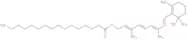
CAS:<p>Vitamin A palmitate is a fat-soluble vitamin that has antioxidant properties. It is available as a supplement in the form of retinol and retinyl palmitate. Vitamin A palmitate is an inactive form of vitamin A that can be converted to retinol in vivo by esterases and other enzymes. The conversion of vitamin A palmitate to retinol may be inhibited by various substances, such as estradiol benzoate. This conversion leads to the formation of free radicals, which cause oxidative injury to cells. Studies have shown that vitamin A palmitate can be toxic for humans because it interferes with the synthesis of mucin, an important constituent of human lungs and airways. Vitamin A palmitate also alters gene expression in some experimental models, leading to changes in cell growth or death.</p>Formula:C36H60O2Color and Shape:Yellow PowderMolecular weight:524.86 g/mol16-Mercaptohexadecanoic acid
CAS:<p>16-Mercaptohexadecanoic acid (16MHDA) is a fatty acid that has been shown to be an effective inhibitor of the enzyme fatty acid synthase. This enzyme is responsible for the synthesis of long-chain polyunsaturated fatty acids and their derivatives, which are key components of cell membranes and also act as signaling molecules. 16MHDA can be used in the treatment of diseases such as psoriasis, rheumatoid arthritis, and cancer. 16MHDA has been shown to have a high detection sensitivity and activity index when used in electrochemical impedance spectroscopy experiments. The x-ray diffraction data show that 16MHDA forms an acid complex with its substrate, which is thought to be the reaction mechanism. Colloidal gold has been used to study the interaction between 16MHDA and DNA duplexes. This compound was also found to have monoclonal antibody binding properties in human serum samples.</p>Formula:C16H32O2SPurity:Min. 95%Color and Shape:PowderMolecular weight:288.49 g/molPalmitoyl-Cys((RS)-2,3-di(palmitoyloxy)-propyl)-Ala-Gly-OH
CAS:<p>Palmitoyl-Cys((RS)-2,3-di(palmitoyloxy)-propyl)-Ala-Gly-OH is a molecule that can be used to generate an antigen against tumor necrosis factor alpha (TNFα). It has been shown to be able to bind TNFα and prevent it from binding to its receptors. This leads to a decrease in the production of cytokines, as well as a decrease in the activation of cytosolic guanylate cyclase. Palmitoyl-Cys((RS)-2,3-di(palmitoyloxy)-propyl)-Ala-Gly-OH has also been shown to inhibit the proliferation of cancer cells by inhibiting extracellular Ca2+ influx and cytosolic Ca2+ ion concentrations.</p>Formula:C59H111N3O9SPurity:Min. 95%Molecular weight:1,038.59 g/molPalmitoleic acid methyl ester
CAS:<p>Palmitoleic acid methyl ester is a bio-based chemical that can be used in wastewater treatment. It has been shown to inhibit the activity of lipase, an enzyme that catalyzes the hydrolysis of triglycerides, and may be useful for the removal of fatty acids from wastewater. Palmitoleic acid methyl ester has a phase transition temperature of about 120°C and a thermal expansion coefficient similar to polyethylene. This product was found to be a good solid catalyst for the production of nitric oxide from nitrogen atoms. The antioxidant vitamins C and E were found to have synergistic effects with palmitoleic acid methyl ester. This product also has antimicrobial properties against infectious diseases such as tuberculosis, which may be due to its ability to inhibit protein synthesis by disrupting ribosomal function.</p>Formula:C17H32O2Purity:Min. 95%Molecular weight:268.43 g/molEthoxyiminoacetic acid ethyl ester
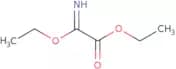
CAS:Ethoxyiminoacetic acid ethyl ester is an annulated, lactam-containing compound that is synthesized via the condensation of ethyl thiooxamate and carboxylic acid. This drug has been shown to be efficient in inhibiting the growth of bacteria that are resistant to antibiotics such as polycyclic, triazoles, and condensates. It also inhibits protein synthesis by binding to bacterial DNA gyrase and topoisomerase IV. Ethoxyiminoacetic acid ethyl ester has shown significant antimicrobial activity against Gram-positive bacteria such as streptococci and staphylococci.Formula:C6H11NO3Purity:Min. 95%Molecular weight:145.16 g/mol1-Palmitoyl-rac-glycero-3-phosphocholine
CAS:1-Palmitoyl-rac-glycero-3-phosphocholine is a biological lipid that has been shown to be a potent growth factor for cells in culture. It binds to DNA and modulates transcriptional regulation. 1-Palmitoyl-rac-glycero-3-phosphocholine also inhibits the production of lysophosphatidylcholine, which is an inflammatory mediator that promotes the release of histamine from mast cells. This compound may be useful as an antimicrobial agent, as it has been shown to inhibit the growth of bacteria and fungi.Formula:C24H50NO7PPurity:Min. 95%Molecular weight:495.63 g/molZinc 1,2,3,4,8,9,10,11,15,16,17,18,22,23,24,25-hexadecafluoro-29H,31H-phthalocyanine
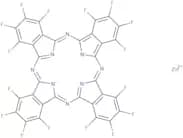
CAS:Please enquire for more information about Zinc 1,2,3,4,8,9,10,11,15,16,17,18,22,23,24,25-hexadecafluoro-29H,31H-phthalocyanine including the price, delivery time and more detailed product information at the technical inquiry form on this pageFormula:C32F16N8ZnPurity:Min. 95%Molecular weight:865.75 g/molAllyl Nonanoate
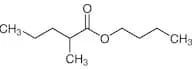
CAS:Formula:C12H22O2Purity:>97.0%(GC)Color and Shape:Colorless to Almost colorless clear liquidMolecular weight:198.31Butyl 2-Methylvalerate
CAS:Formula:C10H20O2Purity:>98.0%(GC)Color and Shape:Colorless to Almost colorless clear liquidMolecular weight:172.2716-Hydroxyhexadecanoic Acid
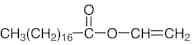
CAS:Formula:C16H32O3Purity:>98.0%(T)Color and Shape:White to Light yellow to Light orange powder to crystalMolecular weight:272.43Vinyl Stearate (stabilized with MEHQ)
CAS:Formula:C20H38O2Purity:>95.0%(GC)Color and Shape:White or Colorless to Light yellow powder to lump to clear liquidMolecular weight:310.52Ref: IN-DA019DHY
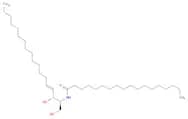
Discontinued productHexadecanamide,N-[(1S,2R,3E)-2-hydroxy-1-(hydroxymethyl)-3-heptadecenyl]-
CAS:Formula:C34H67NO3Purity:99%Color and Shape:SolidMolecular weight:537.9007N-Stearoyl-D-Sphingosine
CAS:Formula:C36H71NO3Purity:97%Color and Shape:SolidMolecular weight:565.9538399999999Ref: IN-DA007P0G
Discontinued productLecithin Hydrogenated
CAS:Formula:C42H84NO8PPurity:95%Color and Shape:SolidMolecular weight:762.0920210000005Ref: IN-DA00GRBD
Discontinued productMalonyl coenzyme A lithium salt
CAS:Formula:C24H38LiN7O19P3SPurity:90%Color and Shape:SolidMolecular weight:860.5213030000003Ref: IN-DA007D27
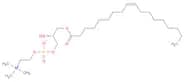
Discontinued productL-α-LYSOPHOSPHATIDYLCHOLINE, OLEOYL
CAS:Formula:C26H52NO7PPurity:97%Color and Shape:SolidMolecular weight:521.6673C14Ceramide
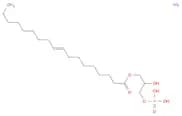
CAS:Formula:C32H63NO3Purity:97.0%Color and Shape:SolidMolecular weight:509.84751999999963Lysophosphatidic Acid
CAS:Formula:C21H41NaO7PPurity:95%Color and Shape:SolidMolecular weight:459.5096Malonicaciddisodiumsalt
CAS:Formula:C3H2Na2O4Purity:99%Color and Shape:SolidMolecular weight:148.0251CLA 9(Z),11(E) / CLA 10(E),12(Z) free Fatty acid 80%
CAS:Formula:C18H32O2Purity:>80%Color and Shape:LiquidMolecular weight:280.459-Hydroperoxy-10(E),12(E)-octadecadienoic acid
CAS:Formula:C18H32O4Purity:>98%Color and Shape:SolidMolecular weight:312.449-Octadecynoic acid
CAS:Formula:C18H32O2Purity:>98%Color and Shape:In solution, EthanolMolecular weight:280.4513-Hydroperoxy-9(E),11(E)-octadecadienoic acid
CAS:Formula:C18H32O4Purity:>98%Color and Shape:SolidMolecular weight:312.44cis-9,10-Methyleneoctadecanoic acid, >80%
CAS:Formula:C19H36O2Purity:>80%Color and Shape:SolidMolecular weight:296.4911(E)-Octadecen-9-ynoic acid
CAS:Formula:C18H30O2Purity:>98%Color and Shape:In solution, EthanolMolecular weight:278.4315-Oxo-5(Z),8(Z),11(Z),13(E)-eicosatetraenoic acid
CAS:Formula:C20H30O3Purity:>98%Color and Shape:White SolidMolecular weight:318.455(S),6(S)-dihydroxy-7(E),9(E),11(Z),14(Z)-eicosatetraenoic acid
CAS:Formula:C20H32O4Purity:>98%Color and Shape:In solution, EthanolMolecular weight:336.47cis-2-Nonen-1-ol
CAS:Formula:C9H18OPurity:>95.0%(GC)Color and Shape:Colorless to Light yellow clear liquidMolecular weight:142.24Palmitoyl-DL-carnitine chloride
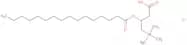
CAS:<p>Palmitoyl-DL-carnitine chloride is a fatty acid that is an important component of cellular membranes. It has been shown to inhibit the growth of cancer cells in rats and mice by increasing the concentration of diacylglycerol in the cell membrane, which leads to increased formation of procyanidins. Palmitoyl-DL-carnitine chloride can also be used as an absorption enhancer for drugs and other compounds. The compound can be used to deliver drugs or other substances into cells, such as Caco-2 cells, for therapeutic purposes. Palmitoyl-DL-carnitine chloride has been shown to increase the production of ornithine in cultured mouse fibroblasts, which may be due to its ability to enhance cellular carnitine levels.</p>Formula:C23H46ClNO4Purity:Min. 95%Color and Shape:PowderMolecular weight:436.07 g/molRef: 3D-FP16302
Discontinued product
![(S)-9,10-Difluoro-2,3-dihydro-3-methyl-7-oxo-7H-pyrido[1,2,3-de]-1,4-benzoxazine-6-carboxylic acid…](/_next/image/?url=https%3A%2Fstatic.cymitquimica.com%2Fproducts%2F3D%2Fthumb-webp%2FFD21854.webp&w=3840&q=75)

![2-[(5-Chloropyridin-2-yl)amino]-2-oxoacetic acid ethyl ester monohydrochloride](/_next/image/?url=https%3A%2Fstatic.cymitquimica.com%2Fproducts%2F3D%2Fthumb-webp%2FFC63138.webp&w=3840&q=75)









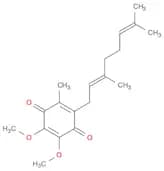


![Hexadecanamide,N-[(1S,2R,3E)-2-hydroxy-1-(hydroxymethyl)-3-heptadecenyl]-](/_next/image/?url=https%3A%2Fstatic.cymitquimica.com%2Fproducts%2FIN%2Fthumb-webp%2FDA00I4QC.webp&w=3840&q=75)