Cinnamic Acids
Cinnamic acids are a class of phenolic acids that are widely present in plants. They have a basic structure of phenylacrylic acid and are known for their antioxidant and anti-inflammatory properties. Cinnamic acids play a significant role in the biosynthesis of lignin and other plant metabolites. These compounds are valuable in research areas related to plant biology, pharmacology, and synthetic chemistry.
Found 657 products of "Cinnamic Acids"
Sort by
Purity (%)
0
100
|
0
|
50
|
90
|
95
|
100
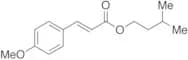
Isoamyl 4-Methoxycinnamate
CAS:Controlled Product<p>Applications Isoamyl 4-Methoxycinnamate is used in the highly protective sunscreen composition against the UVA/UVB.<br>References Cuderman, P., et al: Anal. Bioanal. Chem., 387, 1343 (2007), Zhao, X., et al.: Environ. Sci. Technol., 42, 1201 (2008), Dubrovski, P., et al.: Text Res. J., 79, 351 (2009),<br></p>Formula:C15H20O3Color and Shape:NeatMolecular weight:248.324-Aminocinnamic acid hydrochloride
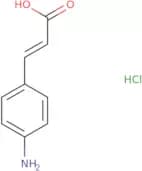
CAS:<p>4-Aminocinnamic acid hydrochloride (4ACA) is a synthetic compound that inhibits the bacterial membrane by binding to the polypeptide chain of the protein. It is a water-soluble polymer that is capable of enhancing the water solubility of other compounds and has been shown to inhibit the growth of typhimurium. 4ACA binds to chalcone, anilines, and styrene, which are all substrates for bacterial enzymes. The interaction between 4ACA and these substrates alters their chemical properties and provides resistance to bacteria.</p>Formula:C9H9NO2·HClPurity:Min. 95%Color and Shape:Off-White PowderMolecular weight:199.63 g/mol2,3-Methylenedioxycinnamic acid
CAS:<p>2,3-Methylenedioxycinnamic acid is a synthetic, isomeric compound. It has been postulated that this compound could be a topoisomerase poison and that it mediates the alkenylation of protoberberine alkaloids. The physicochemical properties of 2,3-methylenedioxycinnamic acid have not been determined.</p>Formula:C10H8O4Purity:Min. 95%Color and Shape:PowderMolecular weight:192.17 g/molIsopentyl 4-methoxycinnamate
CAS:<p>Isopentyl 4-methoxycinnamate is a fluorescent molecule that is used to measure otoacoustic emissions in neonates. The viscosity of isopentyl 4-methoxycinnamate can be measured by using an analytical method for determining the melting point. Isopentyl 4-methoxycinnamate has been shown to inhibit the growth of bacteria such as Staphylococcus aureus, which is resistant to ciprofloxacin. Isopentyl 4-methoxycinnamate has also been shown to have potent inhibition activity against Escherichia coli and Pseudomonas aeruginosa, but not against Enterobacter cloacae. The fluorescence intensity of isopentyl 4-methoxycinnamate can be enhanced by adding glycerin or sodium citrate to the solution. It can also be prepared as a particle by adding sodium chloride or potassium chloride</p>Formula:C15H20O3Purity:Min. 95%Color and Shape:PowderMolecular weight:248.32 g/molMethyl 3,4,5-trimethoxycinnamate
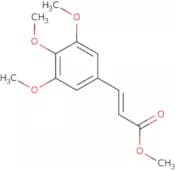
CAS:<p>Methyl 3,4,5-trimethoxycinnamate (MTMC) is a compound that has been used as the active ingredient in traditional Chinese medicine for the treatment of cardiac disease. It has been shown to have an inhibitory effect on ventricular myocytes and to induce apoptosis in rat heart cells. MTMC also inhibits neutrophil recruitment and reduces the expression of pro-apoptotic proteins. It has also been shown to be effective in treating congestive heart failure by blocking cardiac hypertrophy and myocardial apoptosis. Methyl 3,4,5-trimethoxycinnamate has not been tested on humans or animals for safety or efficacy in treating depression.</p>Formula:C13H16O5Purity:Min. 95%Color and Shape:White PowderMolecular weight:252.26 g/molEthyl 3,4,5-trimethoxycinnamate
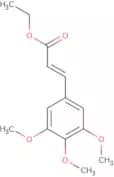
CAS:<p>Ethyl 3,4,5-trimethoxycinnamate is a cinnamic acid derivative that has significant cytotoxicity and anticancer activity. It inhibits the growth of Leishmania parasites by inhibiting the production of gamma-aminobutyric acid, which is essential for cell division and survival. Ethyl 3,4,5-trimethoxycinnamate has been shown to inhibit the growth of cancer cells in vitro by binding to DNA at dipole sites and disrupting the integrity of the molecule. This compound also has optical properties that may be due to its ability to absorb light in the blue region of the spectrum. The anti-cancer effects of ethyl 3,4,5-trimethoxycinnamate may be related to its ability to inhibit cell growth.</p>Formula:C14H18O5Purity:Min. 95%Color and Shape:SolidMolecular weight:266.29 g/moltrans-Ferulic acid
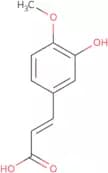
CAS:<p>Hydroxycinnamic acid; inhibitor of 5-LO and 12-LO enzymes</p>Formula:C10H10O4Purity:Min. 99.0 Area-%Color and Shape:White PowderMolecular weight:194.18 g/mol2-Nitro-4-(trifluoromethyl)cinnamic acid
CAS:<p>2-Nitro-4-(trifluoromethyl)cinnamic acid is a versatile building block that can be used in the synthesis of complex compounds. It is a useful reagent, speciality chemical, and reaction component. 2-Nitro-4-(trifluoromethyl)cinnamic acid has been shown to be an intermediate for the synthesis of other compounds such as anti-tuberculosis drugs, antibiotics, and pharmaceuticals. This compound also has high quality and can be used as a scaffold for the synthesis of other compounds.</p>Formula:C10H6F3NO4Purity:Min. 95%Molecular weight:261.15 g/molMethyl 4-hydroxy-3-methoxycinnamate
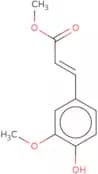
CAS:<p>Methyl 4-hydroxy-3-methoxycinnamate is a natural phenolic compound that is found in small quantities in many plants and foods. It is used to produce other compounds, such as vanillin, which are used as flavoring agents. Methyl 4-hydroxy-3-methoxycinnamate can be quantified using the enzymatic reaction of peroxidase with 3,4,5-trimethoxybenzene. The kinetics of this reaction have been studied by titration calorimetry. Aspergillus niger catalase has been shown to be sensitive to methyl 4-hydroxy-3-methoxycinnamate. Birch and oak wood lignocellulosic biomass can be converted into sugars through a hydrolysis process with methyl 4-hydroxy-3-methoxycinnamate. The carbohydrate content of birch and oak wood was reduced by approximately 60</p>Formula:C11H12O4Purity:Min. 95%Color and Shape:PowderMolecular weight:208.21 g/mola-Cyano-4-hydroxycinnamic acid
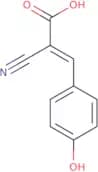
CAS:<p>a-Cyano-4-hydroxycinnamic acid is a cyclic peptide that has been shown to have cytotoxic and antimicrobial properties. It has been shown to be effective in reducing the viability of cells in vitro by interfering with DNA synthesis and cell signaling pathways, as well as causing oxidative stress. This compound also induces apoptosis in squamous carcinoma cells and hypoxic tumor cells; this effect may be due to its ability to induce the release of cytochrome c from mitochondria. a-Cyano-4-hydroxycinnamic acid has been shown to produce antibacterial activity against Gram-positive bacteria, such as Streptococcus pneumoniae and Staphylococcus aureus, but not against Gram-negative bacteria, such as Escherichia coli or Pseudomonas aeruginosa.</p>Formula:C10H7NO3Color and Shape:Slightly Yellow PowderMolecular weight:189.17 g/molCaffeic acid
CAS:<p>Caffeic acid is naturally produced by the metabolism of plants and fungi. Caffeic acid has an antioxidant activity that can be higher than tocopherol in oil-in-water emulsions. Caffeic acid has proven antimicrobial activity against Staphylococcus aureus. In mice, caffeic acid inhibits the enzyme 5-lipoxygenase thus inhibititing the biosynthesis of the inflammatory mediators leukotrienes.</p>Formula:C9H8O4Purity:Min. 98.0 Area-%Molecular weight:180.16 g/molMethyl 4-hydroxycinnamate
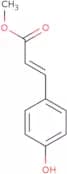
CAS:<p>Methyl 4-hydroxycinnamate is a protocatechuic acid that can be produced by the reaction of hydrochloric acid and b16 mouse melanoma. This chemical has been shown to have an anti-inflammatory effect in rats with inflammatory bowel disease. Methyl 4-hydroxycinnamate is also a natural compound found in plants, such as celery, cinnamon, and apples. The mechanism of this chemical's action is unknown but it has been shown to inhibit the activity of rat liver microsomes. It is theorized that methyl 4-hydroxycinnamate may inhibit the production of proinflammatory substances by altering the membrane composition or activity of enzymes.br>br><br>br>br><br>Methyl 4-hydoxycinnamate may be synthesized from anhydrous sodium acetate and an acid complex in a model system using reaction solution. The product is then purified using column chromatography before being reacted with methylamine and sulfur</p>Formula:C10H10O3Purity:Min. 95%Color and Shape:PowderMolecular weight:178.18 g/mol3,4-Dimethoxy-5-hydroxycinnamic acid
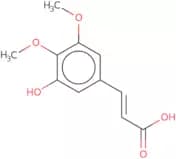
CAS:<p>3,4-Dimethoxy-5-hydroxycinnamic acid is a monoterpenoid indole alkaloid that belongs to the class of biochemical compounds. It is a promiscuous compound and can be found in many plants, such as coffee beans, black pepper, cinnamon, and thyme. 3,4-Dimethoxy-5-hydroxycinnamic acid has been shown to have antimicrobial properties against bacteria and fungi. The metabolomics study showed that this compound may also have anti-inflammatory effects. 3,4-Dimethoxy-5-hydroxycinnamic acid was shown to enhance the transcription of ferulic acid in E. coli cells. This compound was also shown to decrease the levels of transcripts for genes involved in lipid metabolism and fatty acid biosynthesis in human liver cells.</p>Formula:C11H12O5Purity:Min. 98 Area-%Color and Shape:PowderMolecular weight:224.21 g/molcis-4-Hydroxycinnamic acid
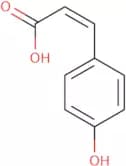
CAS:<p>Cis-4-Hydroxycinnamic acid is a phenolic acid that is found in plants and is a natural compound. It has been shown to be an inhibitor of cell proliferation. Cis-4-Hydoxycinnamic acid inhibits the synthesis of DNA and RNA, which may inhibit the growth of bacteria and fungi. This compound can be extracted from plant materials by acetate extract or preparative high-performance liquid chromatography (HPLC). Cis-4-Hydoxycinnamic acid also has anti-inflammatory properties, which may be due to its inhibition of prostaglandin synthesis.</p>Formula:C9H8O3Purity:Min. 95%Color and Shape:PowderMolecular weight:164.16 g/mol2,5-Dihydroxycinnamic acid
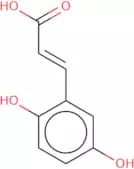
CAS:<p>2,5-Dihydroxycinnamic acid is an intermediate in the metabolism of 4-hydroxycinnamic acid and is a precursor for the formation of methylthioadenosine. It has been shown to stimulate the growth of human epidermal cells and increase colony-stimulating factor production. 2,5-Dihydroxycinnamic acid also has been found to have cytotoxic effects on HL-60 cells, as well as inhibitory effects on human serum. The detection sensitivity for this compound is 0.1 mg/L, which can be achieved using liquid chromatography with UV detection. 2,5-Dihydroxycinnamic acid can be prepared by hydrolysis of dimethylthiourea with alkaline or acidic conditions at room temperature or 37 degrees Celsius. This compound has pharmacokinetic properties that are similar to those of 4-hydroxycinnamic acid and is believed to act similarly by inhibiting protein</p>Formula:C9H8O4Purity:Min. 95%Color and Shape:Off-White PowderMolecular weight:180.16 g/mol3,4-Dimethoxycinnamic acid
CAS:<p>3,4-Dimethoxycinnamic acid is a bioactive phenolic compound that has antioxidant and anti-inflammatory properties. It is also known to reduce oxidative injury in the human serum. 3,4-Dimethoxycinnamic acid is found in chlorogenic acids, which are bioactive phenolic compounds found in plants. These phenolic compounds have been shown to be effective against autoimmune diseases and carcinoma cell lines. 3,4-Dimethoxycinnamic acid has also been shown to inhibit the growth of cancer cells by interfering with their ability to synthesize DNA and RNA. This compound binds to DNA gyrase, inhibiting its activity and preventing it from unwinding the double helix during replication. The crystal structures of 3,4-dimethoxycinnamic acid have been determined using x-ray crystallography and subcritical water extraction.</p>Formula:C11H12O4Purity:Min. 95%Color and Shape:PowderMolecular weight:208.21 g/molFerulic acid
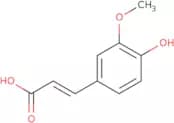
CAS:<p>Ferulic acid is a plant polyphenol that has been shown to induce apoptosis in human leukemia cells and inhibit the production of tumor necrosis factor-α (TNF-α), thereby improving glucose tolerance. Ferulic acid inhibits the mitochondrial membrane potential by binding to the Mcl-1 protein and inducing its degradation, leading to anion radical scavenging. This compound also has significant cytotoxicity in a model system and has been shown to have hypoglycemic effects in animal studies. Ferulic acid also induces cell cycle arrest by inhibiting the expression of cyclin D1, which is involved in regulating the G1 phase of the cell cycle.</p>Formula:C10H10O4Purity:Min. 95%Color and Shape:PowderMolecular weight:194.18 g/mol4-Hydroxy-3-nitrocinnamic acid
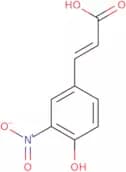
CAS:<p>4-Hydroxy-3-nitrocinnamic acid is a monophenolic compound that contains a reactive residue. It has been shown to have antibacterial and biological properties, which may be due to its ability to inhibit the growth of bacteria. 4-Hydroxy-3-nitrocinnamic acid has also been shown to be an antibiotic, although it is not categorized as one. 4-Hydroxycinnamic acid is a metabolite of this compound, which can be formed in the liver through oxidation by cytochrome P450 enzymes.</p>Formula:C9H7NO5Purity:Min. 95%Color and Shape:PowderMolecular weight:209.16 g/mol