Cinnamic Acids
Cinnamic acids are a class of phenolic acids that are widely present in plants. They have a basic structure of phenylacrylic acid and are known for their antioxidant and anti-inflammatory properties. Cinnamic acids play a significant role in the biosynthesis of lignin and other plant metabolites. These compounds are valuable in research areas related to plant biology, pharmacology, and synthetic chemistry.
Found 657 products of "Cinnamic Acids"
Sort by
Purity (%)
0
100
|
0
|
50
|
90
|
95
|
100
Ref: 10-F663973
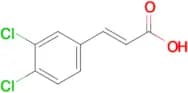
1g492.00€5g1,309.00€10g2,617.00€2.5g1,150.00€50mg120.00€100mg160.00€250mg223.00€500mg410.00€(E)-3-(3,4-Dichlorophenyl)acrylic acid
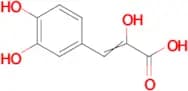
CAS:Formula:C9H6Cl2O2Purity:95%Color and Shape:SolidMolecular weight:217.053-(3,4-Dihydroxyphenyl)-2-oxopropanoic acid
CAS:Formula:C9H8O5Purity:95%Color and Shape:SolidMolecular weight:196.158[6]-Shogaol
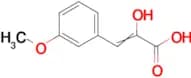
CAS:Formula:C17H24O3Purity:>90.0%(HPLC)Color and Shape:Light yellow to Yellow clear liquidMolecular weight:276.383-Methoxycinnamic acid
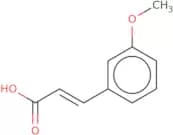
CAS:<p>3-Methoxycinnamic acid is a hydroxycinnamic acid that has been shown to inhibit the migration of polymorphonuclear cells and leukocytes. It also inhibits chemotaxis by blocking the production of intracellular cyclic AMP (cAMP) in these cells. 3-Methoxycinnamic acid has been shown to have an inhibitory effect on the production of cAMP in leukocytes and polymorphonuclear cells, as well as inhibiting chemotaxis. The compound is also known to be a potent antioxidant due to its ability to scavenge reactive oxygen species (ROS).</p>Formula:C10H10O3Purity:Min. 95%Color and Shape:PowderMolecular weight:178.18 g/mol4-Phenylcinnamic acid
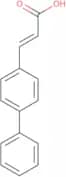
CAS:<p>4-Phenylcinnamic acid is a prenylated aromatic compound that is used as a chromatographic stationary phase. It has been shown to inhibit the activity of tyrosinase and thus may be used for the treatment of hyperpigmentation disorders such as melasma. 4-Phenylcinnamic acid interacts with piperidine and inhibits its activity, which may lead to new drug development. Molecular modelling of 4-phenylcinnamic acid has shown that it is possible to introduce functional groups into the molecule, making it more reactive. The introduction of biphenyl derivatives may improve the lipophilicity of this molecule.</p>Formula:C15H12O2Purity:Min. 95%Color and Shape:White PowderMolecular weight:224.25 g/mol(2E)-3-(3-bromo-4-methoxyphenyl)acrylic acid
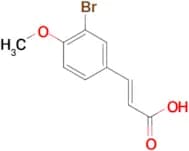
CAS:Formula:C10H9BrO3Purity:95.0%Color and Shape:SolidMolecular weight:257.0833-(4-(Trifluoromethoxy)phenyl)acrylic acid
CAS:Formula:C10H7F3O3Purity:95%Color and Shape:SolidMolecular weight:232.1583-(4-Propoxyphenyl)acrylic acid
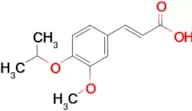
CAS:Formula:C12H14O3Purity:97%Color and Shape:SolidMolecular weight:206.241(2E)-3-(4-isopropoxy-3-methoxyphenyl)acrylic acid
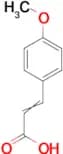
CAS:Formula:C13H16O4Purity:95.0%Color and Shape:SolidMolecular weight:236.2673-(4-Methoxyphenyl)acrylic acid
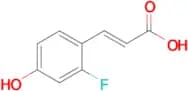
CAS:Formula:C10H10O3Purity:95%Color and Shape:SolidMolecular weight:178.187(E)-3-(2-Fluoro-4-hydroxy-phenyl)-acrylic acid
CAS:Formula:C9H7FO3Purity:95.0%Molecular weight:182.15Phenylpyruvic acid
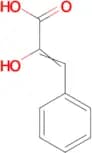
CAS:Formula:C9H8O3Purity:97%Color and Shape:Solid, Crystalline Powder or PowderMolecular weight:164.16



![[6]-Shogaol](/_next/image/?url=https%3A%2Fstatic.cymitquimica.com%2Fproducts%2F3B%2Fthumb-webp%2FH1771.webp&w=3840&q=75)