Cinnamic Acids
Found 660 products of "Cinnamic Acids"
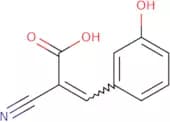
alpha-Cyano-3-hydroxycinnamic acid
CAS:alpha-Cyano-3-hydroxycinnamic acid is a mitochondrial matrix analog that has been shown to inhibit the uptake of carnitine, glutamate, and branched-chain amino acids. This compound also inhibits the activity of glyceraldehyde-3-phosphate dehydrogenase and dodecyl CoA dehydrogenase, which are enzymes involved in the production of cellular energy. alpha-Cyano-3-hydroxycinnamic acid also inhibits the synthesis of mitochondrial DNA and RNA. The compound binds to the enzyme succinate dehydrogenase, inhibiting its function. This inhibition leads to a decrease in cellular energy production and an increase in oxidative stress.
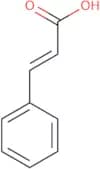
Formula:C10H7NO3Purity:Min. 95%Color and Shape:PowderMolecular weight:189.17 g/moltrans-Cinnamic acid
CAS:Cinnamic acid is a phenolic acid that is found in plants and has a general structure of CH2-C6H4-CO2H. It can be metabolized by the enzyme cinnamate 4-hydroxylase to caffeic acid. Cinnamic acid has been shown to have genotoxic activity through its ability to form DNA adducts, which can cause mutations in cells. This compound also has antioxidant properties and may be used as an anticancer agent due to its ability to inhibit proliferation of cancer cells and induce apoptosis. Cinnamic acid inhibits the production of prostaglandin E2 (PGE2) in rat primary astrocytes, which may lead to the development of inflammatory eye disorders such as uveitis or retinal detachment. The compound is also able to suppress the expression of toll-like receptor 2 (TLR2), which may make it useful for treatment of infectious diseases. Cinnamic acid also forms hydrogen bondsFormula:C9H8O2Purity:Min. 95%Color and Shape:White PowderMolecular weight:148.16 g/molRef: 10-F749587
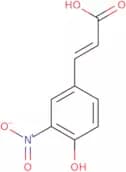
Discontinued product4-Hydroxy-3-nitrocinnamic acid
CAS:4-Hydroxy-3-nitrocinnamic acid is a monophenolic compound that contains a reactive residue. It has been shown to have antibacterial and biological properties, which may be due to its ability to inhibit the growth of bacteria. 4-Hydroxy-3-nitrocinnamic acid has also been shown to be an antibiotic, although it is not categorized as one. 4-Hydroxycinnamic acid is a metabolite of this compound, which can be formed in the liver through oxidation by cytochrome P450 enzymes.
Formula:C9H7NO5Purity:Min. 95%Color and Shape:PowderMolecular weight:209.16 g/molRef: 3D-FH67918
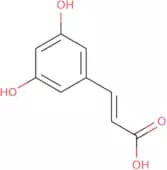
Discontinued product3,5-Dihydroxycinnamic acid
CAS:3,5-Dihydroxycinnamic acid is a metabolite of the amino acid tyrosine and an intermediate in the biosynthesis of phenylalanine. It has been shown to have anti-inflammatory properties that may be due to its ability to inhibit prostaglandin synthesis. 3,5-Dihydroxycinnamic acid has also been identified as a carcinogen and is associated with an increased risk of cancer in women. 3,5-Dihydroxycinnamic acid is found in urine samples at concentrations between 2 and 10 µmol/L.
Formula:C9H8O4Purity:Min. 98 Area-%Color and Shape:PowderMolecular weight:180.16 g/molRef: 3D-FD67031
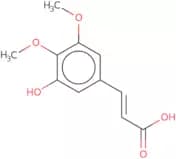
Discontinued product3,4-Dimethoxy-5-hydroxycinnamic acid
CAS:3,4-Dimethoxy-5-hydroxycinnamic acid is a monoterpenoid indole alkaloid that belongs to the class of biochemical compounds. It is a promiscuous compound and can be found in many plants, such as coffee beans, black pepper, cinnamon, and thyme. 3,4-Dimethoxy-5-hydroxycinnamic acid has been shown to have antimicrobial properties against bacteria and fungi. The metabolomics study showed that this compound may also have anti-inflammatory effects. 3,4-Dimethoxy-5-hydroxycinnamic acid was shown to enhance the transcription of ferulic acid in E. coli cells. This compound was also shown to decrease the levels of transcripts for genes involved in lipid metabolism and fatty acid biosynthesis in human liver cells.
Formula:C11H12O5Purity:Min. 98 Area-%Color and Shape:PowderMolecular weight:224.21 g/molRef: 3D-FD67793
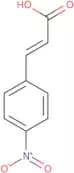
Discontinued producttrans-4-Nitrocinnamic acid
CAS:Trans-4-nitrocinnamic acid is an organic compound that is synthesized from 4-hydroxycinnamic acid by nitration with aqueous or alcoholic nitric acid. Trans-4-Nitrocinnamic acid has been shown to inhibit tyrosinase activity in the presence of metal hydroxides, such as copper, zinc, and iron. The reaction mechanism is unclear but may involve an initial protonation of the phenolic group followed by an electron transfer to the nitro group. This reaction results in an irreversible inhibition of tyrosinase activity. Trans-4-Nitrocinnamic acid also reacts with hydrochloric acid to produce a carboxylate salt that can be used for sample preparation.
Formula:C9H7NO4Purity:Min. 95%Color and Shape:PowderMolecular weight:193.16 g/molRef: 3D-FN30623
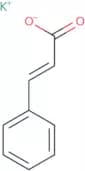
Discontinued productPotassium cinnamate
CAS:Potassium cinnamate is a white crystalline solid that is soluble in water, ethanol and acetone. It has been shown to be effective for wastewater treatment and can be used as a reducing agent. Potassium cinnamate has been shown to have high values of hydroxide solution, which are often used in the manufacturing of polymers. Potassium cinnamate also exhibits enzyme activities, such as being able to catalyze the oxidation of propionate. This product has been shown to have anti-oxidant properties and can be used for radiation protection. The polymerization of potassium cinnamate leads to polymaleic acid, which is used in the production of plastics.
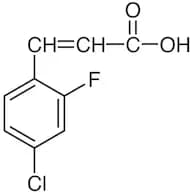
Formula:C9H7KO2Purity:Min. 98 Area-%Color and Shape:White PowderMolecular weight:186.25 g/mol4-Chloro-2-fluorocinnamic Acid
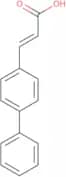
CAS:Formula:C9H6ClFO2Purity:>97.0%(GC)(T)Color and Shape:White to Almost white powder to crystalMolecular weight:200.594-Phenylcinnamic acid
CAS:4-Phenylcinnamic acid is a prenylated aromatic compound that is used as a chromatographic stationary phase. It has been shown to inhibit the activity of tyrosinase and thus may be used for the treatment of hyperpigmentation disorders such as melasma. 4-Phenylcinnamic acid interacts with piperidine and inhibits its activity, which may lead to new drug development. Molecular modelling of 4-phenylcinnamic acid has shown that it is possible to introduce functional groups into the molecule, making it more reactive. The introduction of biphenyl derivatives may improve the lipophilicity of this molecule.
Formula:C15H12O2Purity:Min. 95%Color and Shape:White PowderMolecular weight:224.25 g/mol