Flavonoids
Flavonoids are a group of plant metabolites with antioxidant properties that contribute to the color of fruits and flowers. They play a significant role in protecting plants from UV radiation and pathogens. Flavonoids are studied for their potential health benefits, including anti-inflammatory, antiviral, and anticancer properties. They are widely researched in the fields of pharmacology, nutrition, and molecular biology.
Subcategories of "Flavonoids"
- Anthocyanidins(46 products)
- Anthocyanin(46 products)
- Catechin(88 products)
- Chalcones(237 products)
- Pterocarpan(28 products)
Found 2404 products of "Flavonoids"
Sort by
Purity (%)
0
100
|
0
|
50
|
90
|
95
|
100
Tectorigenin
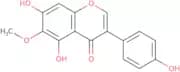
CAS:<p>Tectorigenin is a naturally occurring isoflavone, which is derived from plants such as Belamcanda chinensis and the Pueraria genus. It functions primarily as an antioxidant and has demonstrated various biological activities. Tectorigenin acts by inhibiting certain enzymes and signaling pathways, which contributes to its anti-inflammatory, anti-cancer, and neuroprotective effects.</p>Formula:C16H12O6Purity:Min. 95%Color and Shape:White PowderMolecular weight:300.26 g/molNaringin dihydrate
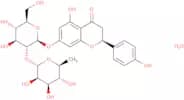
CAS:<p>Naringin dihydrate is a flavonoid glycoside, which is a bioactive compound found primarily in citrus fruits, especially grapefruits and oranges. It acts as a potent antioxidant and anti-inflammatory agent, which functions by scavenging free radicals and modulating signaling pathways involved in oxidative stress and inflammation.</p>Formula:C27H32O14·2H2OPurity:Min. 95%Molecular weight:616.57 g/molOrobol 7,3'-dimethyl ether
CAS:<p>Orobol 7,3'-dimethyl ether is a flavonoid compound, which is derived from natural plant sources. This compound is synthesized as a methylated ether of Orobol, a type of isoflavone. The mode of action of Orobol 7,3'-dimethyl ether involves interacting with biological pathways that may influence cellular processes, including antioxidant and anti-inflammatory activities. By modulating these pathways, it potentially impacts various physiological functions.</p>Formula:C17H14O6Purity:Min. 95%Molecular weight:314.29 g/mol3',4',7-Trimethoxyflavone
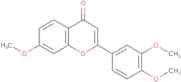
CAS:<p>3',4',7-Trimethoxyflavone is a bioactive flavonoid compound, which is predominantly sourced from certain plant species, including those within the genus Kaempferia. This compound is part of the larger class of flavonoids known for their diverse biological activities. Its mode of action primarily involves modulating various cellular pathways, including signaling pathways related to inflammation, angiogenesis, and apoptosis. Recent studies suggest its potential as an inhibitor of specific enzymes and receptors, enabling its role in reducing oxidative stress and modulating immune responses.</p>Formula:C18H16O5Purity:Min. 95%Molecular weight:312.32 g/mol3',5'-Diprenylliquiritigenin
CAS:<p>3',5'-Diprenylliquiritigenin is a prenylated flavonoid, which is a type of naturally occurring compound found in certain plants. This specific compound is isolated primarily from licorice root, where it is synthesized as part of the plant's secondary metabolites. Its mode of action involves modulating various signaling pathways within biological systems, demonstrating potential antioxidant, anti-inflammatory, and anti-cancer properties.</p>Formula:C25H28O4Purity:Min. 95%Molecular weight:392.49 g/mol7-Hydroxyisoflavone-7-O-glucoside
CAS:<p>7-Hydroxyisoflavone-7-O-glucoside is a glucoside derivative of isoflavone, which is a naturally occurring flavonoid often sourced from plants such as legumes and soy. This compound is known for its biochemical properties, primarily its role as an antioxidant and its capacity to modulate inflammation.</p>Formula:C21H20O8Purity:Min. 95%Molecular weight:400.38 g/molScutellarein-7-O-glucoside
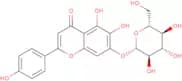
CAS:<p>Scutellarein-7-O-glucoside is a flavonoid glucoside, which is a type of phenolic compound commonly found in plants. This compound is primarily sourced from the Scutellaria species, among other botanical sources, where it occurs as a glycoside derivative of scutellarein. It serves a vital role in plant defense mechanisms, contributing to resistance against pathogens and ultraviolet radiation.</p>Formula:C21H20O11Purity:Min. 95%Color and Shape:White PowderMolecular weight:448.38 g/molRothindin
CAS:<p>Please enquire for more information about Rothindin including the price, delivery time and more detailed product information at the technical inquiry form on this page</p>Formula:C22H20O10Purity:Min. 95%Color and Shape:PowderMolecular weight:444.39 g/mol7,8,4'-Trimethoxyisoflavone
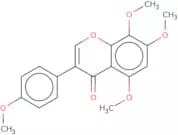
CAS:<p>7,8,4'-Trimethoxyisoflavone is a naturally occurring isoflavone, which is a type of flavonoid commonly found in various plants. It is derived from natural botanical sources, where it functions as a secondary metabolite. Isoflavones are known for their complex chemical structures and ability to interact with various biological pathways.</p>Formula:C18H16O5Purity:Min. 95%Molecular weight:312.32 g/molDihydrogenistein 4'-methyl ether
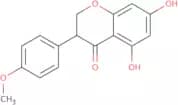
CAS:<p>Dihydrogenistein 4'-methyl ether is a phytoestrogen compound, which is derived from botanical sources such as Leguminosae plants. Its molecular structure consists of a flavonoid backbone, specifically modified with a methyl ether group at the 4' position. This structural modification imparts unique biological properties to the compound.</p>Formula:C16H14O5Purity:Min. 95%Color and Shape:PowderMolecular weight:286.28 g/mol7-Hydroxyflavone-β-D-glucoside
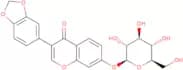
CAS:<p>7-Hydroxyflavone-beta-D-glucoside is a glucoside compound, which is a type of natural flavonoid derivative. This compound is derived from plant sources, particularly those rich in flavonoids, where it is a metabolite formed through the glycosylation of 7-hydroxyflavone. The mode of action of 7-Hydroxyflavone-beta-D-glucoside involves interacting with cellular antioxidative pathways. It potentially offers protection against oxidative stress by scavenging free radicals and modulating enzyme activities related to oxidative metabolism.</p>Formula:C21H20O8Purity:Min. 95%Color and Shape:PowderMolecular weight:400.38 g/mol5-Hydroxyflavanone
CAS:<p>5-Hydroxyflavanone is a naturally occurring flavonoid compound, which is predominantly sourced from various plant species, including fruits, vegetables, and certain herbs. These plants synthesize flavonoids as part of their secondary metabolism, aiding in defense mechanisms against pathogens and contributing to their pigmentation.</p>Formula:C15H12O3Purity:Min. 95%Color and Shape:Off-White PowderMolecular weight:240.25 g/molNeoisoastilbin
CAS:<p>Neoisoastilbin is a chemical compound, specifically a flavonoid derivative, derived primarily from natural botanical sources such as certain species of plants. It is characterized by its unique structural configuration which distinguishes it from its closely related isomers. As a flavonoid, Neoisoastilbin acts through multiple biochemical pathways, notably by scavenging free radicals and modulating oxidative stress responses, which can have significant implications in biological systems.Neoisoastilbin's notable applications lie in its potential antioxidant properties, which are of particular interest in the fields of pharmacology and biochemistry. Researchers study its effects on cellular models to understand its role in protecting cells from oxidative damage. It also has potential applications in the development of therapeutic agents aiming to mitigate conditions associated with oxidative stress, such as neurodegenerative diseases or cardiovascular disorders. Investigations into its pharmacodynamics and pharmacokinetics are essential to elucidate its full potential and mechanisms within complex biological systems.</p>Formula:C21H22O11Purity:Min. 95%Molecular weight:450.39 g/mol5-Hydroxy-7,4'-dimethoxy-6,8-dimethylflavone
CAS:<p>5-Hydroxy-7,4'-dimethoxy-6,8-dimethylflavone is a bioactive flavonoid compound, which is naturally derived from certain plant sources. As a type of flavone, this compound is notable for its polyphenolic skeleton that contributes to notable biological properties. Its mode of action primarily involves modulating various enzymatic pathways and cellular signaling processes due to its structural ability to interact with biomolecules like enzymes and receptors. This interaction can lead to a range of biological effects, including antioxidant and anti-inflammatory activities.</p>Formula:C19H18O5Purity:Min. 95%Molecular weight:326.34 g/molIsoaloeresin D (contains up to 20% Aloeresin D)
CAS:<p>Isoaloeresin D is a natural compound product, which is derived from the Aloe plant, specifically containing up to 20% Aloeresin D. It is a phytochemical extracted from the leaves of Aloe species, renowned for its inclusion of various bioactive compounds. The primary mode of action of Isoaloeresin D involves its potential antioxidant properties, which may contribute to the neutralization of free radicals and reduction of oxidative stress within biological systems.</p>Formula:C29H32O11Purity:Min. 95%Color and Shape:PowderMolecular weight:556.56 g/mol5-Hydroxy-7,2',3',4',5'-pentamethoxyflavone
CAS:<p>5-Hydroxy-7,2',3',4',5'-pentamethoxyflavone is a flavone that can be found in coffee. It has been shown to inhibit the enzyme arabinose isomerase and psiadiarabin, which are involved in the conversion of sugar into energy in plants. 5-Hydroxy-7,2',3',4',5'-pentamethoxyflavone also inhibits the plant enzyme phytase, which breaks down phytic acid. Phytic acid is a naturally occurring substance that binds to minerals such as calcium and zinc, preventing their absorption by the body. This compound has not shown any significant activity against bacterial DNA gyrase or topoisomerase IV or human DNA gyrase or topoisomerase II.</p>Formula:C20H20O8Purity:Min. 95%Molecular weight:388.37 g/molDihydroisoformononetin
CAS:<p>Dihydroisoformononetin is an isoflavonoid compound, which is a type of phytoestrogen derived primarily from plant sources, such as legumes and certain medicinal herbs. This compound is of significant interest due to its structural similarity to estrogen, which allows it to interact with estrogen receptors in the body. Its mode of action involves modulating estrogenic activity by acting either as an agonist or antagonist, depending on the tissue context. Such dual behavior makes it an intriguing subject of study in endocrine research.</p>Formula:C16H14O4·H2OPurity:Min. 95%Molecular weight:288.3 g/mol8-Hydroxygenistein-5,7,8,4'-tetramethyl ether
CAS:<p>8-Hydroxygenistein-5,7,8,4'-tetramethyl ether is a natural product with bioactive properties. It is an 8-hydroxy derivative of genistein that is found in soybeans and other legumes. The purity of this compound is confirmed by HPLC standards and it has been isolated from the plant source. This compound can be used as a reference material for analytical purposes or for quality control testing.</p>Formula:C19H18O6Purity:Min. 95%Molecular weight:342.34 g/mol4,7-Dihydroxy-2'-methoxyisoflavan
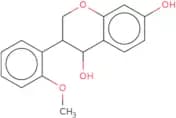
CAS:<p>4,7-Dihydroxy-2'-methoxyisoflavan is a naturally occurring isoflavan compound, which is typically extracted from various plant sources known for their medicinal properties. These sources include legumes and other plant families rich in phytoestrogens and related secondary metabolites.</p>Formula:C16H16O4Purity:Min. 95%Molecular weight:272.3 g/molQuercetin 3-rhamnoside 7-glucoside
CAS:<p>Quercetin 3-rhamnoside 7-glucoside is a naturally occurring flavonoid glycoside, which is derived from various plant sources, particularly those rich in flavonoids like fruits, vegetables, and leaves. This compound is characterized by its complex structure that includes quercetin linked to sugar moieties, specifically rhamnose and glucose, at the 3 and 7 positions.</p>Formula:C27H30O16Purity:Min. 95%Color and Shape:PowderMolecular weight:610.52 g/mol