Flavonoids
Flavonoids are a group of plant metabolites with antioxidant properties that contribute to the color of fruits and flowers. They play a significant role in protecting plants from UV radiation and pathogens. Flavonoids are studied for their potential health benefits, including anti-inflammatory, antiviral, and anticancer properties. They are widely researched in the fields of pharmacology, nutrition, and molecular biology.
Subcategories of "Flavonoids"
- Anthocyanidins(46 products)
- Anthocyanin(46 products)
- Catechin(88 products)
- Chalcones(237 products)
- Pterocarpan(28 products)
Found 2404 products of "Flavonoids"
Sort by
Purity (%)
0
100
|
0
|
50
|
90
|
95
|
100
7,8-Dihydroxyflavanone
CAS:<p>7,8-Dihydroxyflavanone is a naturally occurring flavonoid compound, which is typically sourced from various plant species. This compound is structurally characterized by two hydroxyl groups, which are crucial for its biochemical activity. Its mode of action primarily involves the modulation of cellular signaling pathways, including those related to oxidative stress and enzyme inhibition. By interfering with these pathways, 7,8-Dihydroxyflavanone exerts antioxidant and possibly anti-inflammatory effects.</p>Purity:Min. 95%Isoastilbin
CAS:<p>Isoastilbin is a bioactive flavonoid, which is a naturally occurring compound found primarily in certain plant species, such as the Chinese herb Smilax glabra and Engelhardtia roxburghiana Wall leaf. As a derivative of astilbin, it possesses a unique mechanism that involves the modulation of cellular redox states. Isoastilbin's mode of action is primarily through its antioxidant properties, where it scavenges free radicals and thus, mitigates oxidative stress at a cellular level. Additionally, it exhibits anti-inflammatory effects by inhibiting the production of pro-inflammatory cytokines.The applications of Isoastilbin are diverse and promising in scientific research. It is extensively studied for its potential therapeutic benefits in combating diseases associated with oxidative stress and inflammation, such as cardiovascular diseases, neurodegenerative disorders, and certain metabolic syndromes. Furthermore, its role in cell signaling and apoptosis makes it a candidate for cancer research, offering insights into the molecular pathways that can be targeted for therapeutic intervention. Isoastilbin’s multifunctional properties make it a compelling subject for ongoing pharmacological and biomedical research.</p>Formula:C21H22O11Purity:Min. 95%Color and Shape:PowderMolecular weight:450.39 g/mol5-Hydroxy-7-methoxyisoflavone
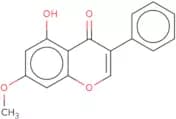
CAS:<p>5-Hydroxy-7-methoxyisoflavone is an isoflavone compound, a type of naturally occurring organic substance usually derived from plant sources such as soybeans and other legumes. These compounds are known for their significant role in the plant kingdom, often contributing to the plant's resistance against pathogens and environmental stresses. The mode of action of 5-Hydroxy-7-methoxyisoflavone involves its potential antioxidant properties, where it may neutralize free radicals, thereby reducing oxidative stress and cellular damage. This activity arises primarily from its chemical structure, enabling it to donate electrons to unstable molecules.</p>Formula:C16H12O4Purity:Min. 95%Molecular weight:268.26 g/molHesperidin (natural)
CAS:<p>Hesperidin is a bioflavonoid compound, which is naturally sourced from citrus fruits, primarily found in the peels of oranges and lemons. Its mode of action involves acting as a potent antioxidant by scavenging free radicals and reducing oxidative stress. Hesperidin also exhibits anti-inflammatory effects by modulating various signaling pathways and inhibiting the release of pro-inflammatory cytokines.In scientific applications, hesperidin is extensively studied for its potential therapeutic benefits. Its antioxidant properties make it a candidate for mitigating oxidative damage in various tissues, while its anti-inflammatory effects are explored in the context of chronic inflammatory conditions. Research has shown potential cardiovascular benefits, including the improvement of endothelial function and lipid profiles. Additionally, hesperidin is investigated for its neuroprotective effects and potential in managing metabolic disorders. These diverse applications highlight the significance of hesperidin in pharmacological research, aiming to leverage its natural properties for health benefits.</p>Formula:C28H34O15Purity:Min. 90 Area-%Color and Shape:Off-White PowderMolecular weight:610.56 g/mol2',6-Dihydroxyflavone
CAS:<p>2',6-Dihydroxyflavone is a natural flavonoid compound, which is derived from various plant sources. This compound is known for its interaction with cellular pathways and has been studied extensively for its potential neuroprotective effects. 2',6-Dihydroxyflavone acts as an agonist for the TrkB receptor, which is the high-affinity catalytic receptor for the brain-derived neurotrophic factor (BDNF). By activating this receptor, it plays a crucial role in neuronal survival, development, and plasticity.</p>Formula:C15H10O4Purity:Min. 95%Molecular weight:254.24 g/molTamarixetin-7-O-rutinoside
CAS:<p>Tamarixetin-7-O-rutinoside is a flavonoid glycoside, which is a natural compound derived from the Tamarix plant. In nature, it is typically isolated from species within this genus, known for its phytoactive compounds. Tamarixetin-7-O-rutinoside acts primarily through its antioxidant mechanism, which involves scavenging free radicals and reducing oxidative stress within biological systems. This activity is crucial in minimizing cellular damage and maintaining homeostasis.</p>Formula:C28H32O16Purity:Min. 95%Color and Shape:PowderMolecular weight:624.54 g/molHesperetin 7-O-β-D-glucuronide
CAS:<p>Hesperetin 7-O-beta-D-glucuronide is a flavonoid metabolite, which is a derivative of hesperetin commonly found in citrus fruits. This compound is produced through the biotransformation of hesperetin, involving conjugation with glucuronic acid in the liver, and is integral to the metabolism of flavonoids in humans. Hesperetin 7-O-beta-D-glucuronide exhibits potential antioxidant properties, making it of interest in scientific research aimed at exploring its bioactivity and potential therapeutic benefits.</p>Formula:C22H22O12Purity:Min. 95%Molecular weight:478.4 g/mol7-O-Methyl-liquiritigenin
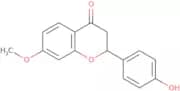
CAS:<p>7-O-Methyl-liquiritigenin is a flavonoid that has been shown to have anticarcinogenic properties. It has been studied in human studies and shown to be safe for use in cancer patients. 7-O-Methyl-liquiritigenin inhibits the growth of cancer cells by inhibiting cell proliferation, inducing apoptosis, and arresting the cell cycle at G2/M phase. 7-O-Methyl-liquiritigenin also inhibits the production of cyclooxygenase 2 (COX2) and prostaglandin E2 (PGE2), which have been linked to tumor promotion. 7-O-Methyl-liquiritigenin has been shown to inhibit the growth of human colon cancer cells in vitro, as well as in vivo when injected into mice. This compound also inhibits PIM1, an oncogene that regulates cellular proliferation, differentiation, tumor progression, angiogenesis, and metast</p>Formula:C16H14O4Purity:Min. 95%Molecular weight:270.28 g/molRhodiosin
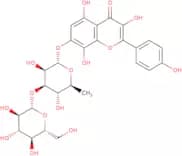
CAS:<p>Rhodiosin is a bioactive compound, which is a polyphenolic glycoside derived from the plant Rhodiola rosea. This compound is primarily sourced through extraction processes that isolate active constituents from the roots of Rhodiola, a perennial plant native to cold regions and known for its traditional medicinal uses. Rhodiosin exhibits its mode of action through various molecular pathways, particularly influencing the central nervous system and enhancing cellular resistance to stress. It acts as an adaptogen, a class of metabolic regulators that promote homeostasis and increase the body's resilience to environmental and physical stressors.</p>Formula:C27H30O16Purity:Min. 95%Color and Shape:PowderMolecular weight:610.52 g/mol8-Prenylnaringenin
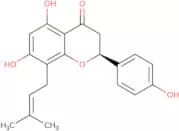
CAS:<p>8-Prenylnaringenin is a flavonoid compound, which is a naturally occurring phytoestrogen. It is primarily found in hops (Humulus lupulus), a plant commonly used in brewing beer. The compound is known for its high estrogenic activity, which is attributed to its ability to bind to estrogen receptors, particularly the estrogen receptor alpha.</p>Formula:C20H20O5Purity:Min. 98 Area-%Color and Shape:PowderMolecular weight:340.37 g/molIsogentisin
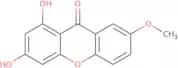
CAS:<p>Isogentisin is a specific type of biochemical compound that falls under the category of xanthones, which are naturally occurring polyphenolic compounds. It is typically sourced from certain medicinal plants, where it is found in the roots or other plant parts. The mode of action of isogentisin is primarily related to its antioxidant properties, which involve neutralizing free radicals and reducing oxidative stress within biological systems. This action can potentially protect cells and tissues from damage that may lead to various diseases.</p>Formula:C14H10O5Purity:Min. 95%Molecular weight:258.23 g/molPuerarin
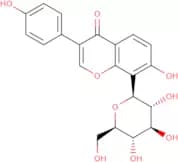
CAS:<p>Puerarin is a bioactive isoflavone, which is extracted from the root of Pueraria lobata, commonly known as kudzu. It functions as a phytoestrogen and exhibits multiple pharmacological activities. The mode of action of puerarin involves interacting with various biological pathways, including antioxidant, anti-inflammatory, and neuroprotective mechanisms. It modulates enzyme activities and influences cell signaling pathways, making it a versatile compound for therapeutic research.</p>Formula:C21H20O9Purity:Min. 98 Area-%Color and Shape:White PowderMolecular weight:416.38 g/molDeguelin
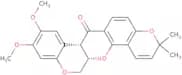
CAS:<p>Deguelin is a rotenoid, which is a naturally occurring compound derived primarily from the roots of plants in the Leguminosae family, such as Mundulea sericea and Derris species. It functions as a potent inhibitor of mitochondrial complex I, interfering with cellular respiration by blocking electron transport within the mitochondrial electron transport chain. This action leads to the inhibition of ATP production, which is essential for cellular energy.</p>Formula:C23H22O6Purity:Min. 95%Molecular weight:394.42 g/molPuerarin
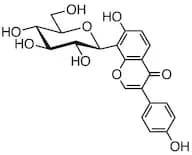
CAS:Formula:C21H20O9Purity:>98.0%(T)(HPLC)Color and Shape:White to Almost white powder to crystalMolecular weight:416.38Orobol 7,3',4'-trimethyl ether
CAS:<p>Orobol 7,3',4'-trimethyl ether is a synthetic flavonoid compound, which is derived from the chemical modification of natural flavonoids. These modifications involve methylation, specifically at the 7, 3', and 4' positions of the flavone structure. This chemical derivation allows for enhanced stability and solubility compared to its natural counterparts.</p>Formula:C18H16O6Purity:Min. 95%Molecular weight:328.32 g/molAureusidin
CAS:<p>Aureusidin is a flavonoid pigment, which is a type of plant-derived compound. It is primarily sourced from various flowering plants, where it contributes to the coloration of petals. Aureusidin is synthesized through the enzymatic oxidation of chalcones, which involves flavonoid oxidase activity.</p>Formula:C15H10O6Purity:(%) Min. 96%Color and Shape:Orange PowderMolecular weight:286.24 g/mol5a-Pregnane-3-one-20a-ol
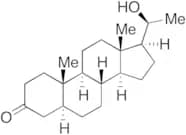
CAS:Controlled Product<p>Applications 5α-Pregnane-3-one-20α-ol, is a steroid metabolome, that can be used for in studies of a possible tool for laboratory diagnosis of schizophrenia. It is also a metabolite of Progesterone (P755900) in adipose cells.<br>References Bicikova, M., et al.: J. Steriod Biochem. Mol. Bio., 77, 133 (2013); Zhang, Y., et al.: Mol. Cell. Endocrinology, 298, 76 (2009);<br></p>Formula:C21H34O2Color and Shape:NeatMolecular weight:318.49Typhaneoside
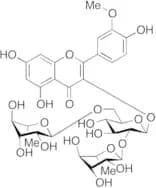
CAS:Controlled Product<p>Applications Typhaneoside is a flavonoid glycoside plant extract with potential ability to treat primary dysmenorrhea through the Shaofu Zhuyu decoction.<br>References Shulan S. et al.: Am. J. Chin. Med., 38, 777 (2010); Huang, X. et al.: J. Chrom. B. Anal. Tech. Biomed. Life Sci., 962, 75 (2014);<br></p>Formula:C34H42O20Color and Shape:NeatMolecular weight:770.688,9-Di-O-methyl-urolithin D
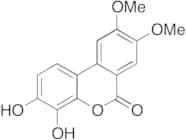
CAS:Controlled Product<p>Applications 8,9-Di-O-methyl-urolithin D is a derivative of Urolithin D (U847020) which is used in biological studies to evaluate DNA gyrase inhibitory activity of ellagic acid derivatives.<br>References Weidner-Weels, M. A., et al: Bioorg. Med. Chem. Lett., 8, 97 (1998)<br></p>Formula:C15H12O6Color and Shape:NeatMolecular weight:288.25