Flavonoids
Subcategories of "Flavonoids"
- Anthocyanidins(46 products)
- Anthocyanin(46 products)
- Catechin(88 products)
- Chalcones(237 products)
- Pterocarpan(28 products)
Found 2410 products of "Flavonoids"
Vitexin-4'-rhamnoside
CAS:Vitexin-4'-rhamnoside is a flavonoid glycoside, which is a compound derived from plants such as hawthorn and certain types of buckwheat. This compound belongs to the class of natural products known as flavonoid glycosides, which are well-regarded for their diverse biological activities. Vitexin-4'-rhamnoside is characterized by its ability to scavenge free radicals, thanks to its antioxidant properties. This action is primarily achieved by donating hydrogen atoms or electrons to neutralize reactive oxygen species, thereby mitigating oxidative stress.Purity:Min. 95%5,7,3'-Trihydroxyflavone
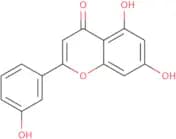
CAS:5,7,3'-Trihydroxyflavone is a flavonoid compound, which is a type of polyphenolic molecule found in plants. This compound is derived from various plant sources such as fruits, vegetables, and certain herbs, where it naturally occurs as part of the plant's secondary metabolites. It exhibits several biochemical actions, predominantly due to its antioxidant properties. This involves scavenging free radicals and chelating metal ions, which contribute to oxidative stress reduction. Additionally, it may influence various signaling pathways related to cell survival and inflammation.
Formula:C15H10O5Purity:Min. 95%Molecular weight:270.24 g/mol7-Hydroxy-2',4'-dimethoxyisoflavone
CAS:7-Hydroxy-2',4'-dimethoxyisoflavone is a synthetic isoflavone, which is derived from the structural modification of natural isoflavones found in various plants, such as soybeans and other legumes. It exerts its biological activity primarily through its interaction with cellular signaling pathways related to oxidative stress and inflammation. This compound functions by modulating enzyme activity, influencing the expression of genes involved in antioxidant defenses, and suppressing pro-inflammatory cytokines.
Formula:C17H14O5Purity:Min. 95%Molecular weight:298.29 g/molKaempferol 6-C-glucoside
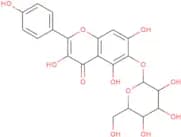
CAS:Kaempferol 6-C-glucoside is a flavonoid glycoside, which is a natural compound found in various plant sources, particularly in leaves and fruits. It is a type of C-glycosyl flavonoid, where the glucose moiety is bound directly to the carbon atom of the flavonoid skeleton, differentiating it from the more common O-glycosides.
Formula:C21H20O11Purity:Min. 95%Molecular weight:448.38 g/molAzicemicin B
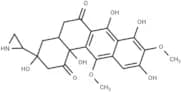
CAS:Azicemicin B exhibits mild antibacterial activity, and when administered to mice via intraperitoneal injection at a dosage of 150 mg/kg, it does not result in any acute toxicity.Formula:C22H23NO9Color and Shape:SolidMolecular weight:445.419Bromoflavone
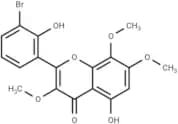
CAS:Bromoflavone (CJ-19784) is a flavonoid isolated from Aspergillus candidus. It demonstrates antitubercular activity against Mycobacterium tuberculosis (MTB) with an MIC90 of 1.2 μM. Additionally, Bromoflavone acts as an antifungal agent, inhibiting the growth of pathogenic fungi such as Candida albicans, Cryptococcus neoformans, and Aspergillus fumigatus with IC50 values of 0.11 μg/mL, 20 μg/mL, and 0.54 μg/mL, respectively.Formula:C18H15BrO7Color and Shape:SolidMolecular weight:423.21Ipriflavone
CAS:Ipriflavone analytical standard provided with chromatographic purity, to be used as reference material for qualitative determination.
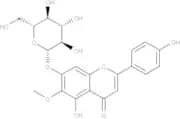
Formula:C18H16O3Purity:(HPLC) ≥90%Color and Shape:PowderMolecular weight:280.33Hispidulin-7-O-glucoside
CAS:Hispidulin-7-O-glucoside analytical standard provided with w/w absolute assay, to be used for quantitative titration.
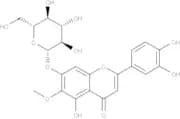
Formula:C22H22O11Purity:(HPLC) ≥98%Color and Shape:PowderMolecular weight:462.41Nepetin-7-O-glucoside
CAS:Nepetin-7-O-glucoside analytical standard provided with w/w absolute assay, to be used for quantitative titration.
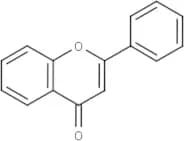
Formula:C22H22O12Purity:(HPLC) ≥98%Color and Shape:PowderMolecular weight:478.41Flavone
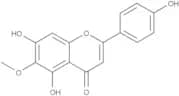
CAS:Flavone analytical standard provided with chromatographic purity, to be used as reference material for qualitative determination.Formula:C15H10O2Purity:(HPLC) ≥95%Color and Shape:PowderMolecular weight:222.25Hispidulin
CAS:Hispidulin analytical standard provided with w/w absolute assay, to be used for quantitative titration.
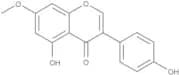
Formula:C16H12O6Purity:(HPLC) ≥98%Color and Shape:PowderMolecular weight:300.27Prunetin
CAS:Prunetin analytical standard provided with chromatographic purity, to be used as reference material for qualitative determination.
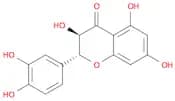
Formula:C16H12O5Purity:(HPLC) ≥95%Color and Shape:PowderMolecular weight:284.28(2R,3R)-3,3',4',5,7-Pentahydroxyflavanone
CAS:Formula:C15H12O7Purity:98%Color and Shape:SolidMolecular weight:304.2516Pinostrobin
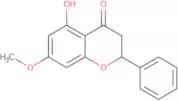
CAS:Pinostrobin is a natural flavonoid compound, which is derived primarily from the rhizomes of plants such as the fingerroot (Boesenbergia rotunda) and various species of the Pinus genus. Its mode of action involves potent antioxidant activity, where it scavenges free radicals, thus reducing oxidative stress. Additionally, Pinostrobin exhibits antimicrobial properties by disrupting microbial cell membranes and inhibiting essential microbial enzymes.
Formula:C16H14O4Color and Shape:PowderMolecular weight:270.28 g/molRef: 3D-FP66572
Discontinued product4'-O-Methylpunctatin
CAS:4'-O-Methylpunctatin is a specialized natural product, classified as a methoxyflavone, which is derived from specific plant sources known for their diverse phytochemical compositions. Structurally, it is a derivative of punctatin, modified through methylation, enhancing its biological properties and stability. This compound acts through various mechanisms, primarily influencing glucose metabolism pathways. It exhibits inhibitory effects on enzymes like α-glucosidase and provides antioxidant properties that protect pancreatic β-cells from oxidative stress.
Formula:C18H16O6Purity:Min. 95%Molecular weight:328.32 g/molRobinin
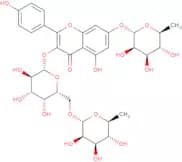
CAS:Robinin is a flavonoid glycoside, which is a naturally occurring phytochemical compound. It is derived from plant sources, particularly within the Fabaceae family, such as Robinia pseudoacacia. The mode of action of Robinin involves its interaction with various cellular and molecular pathways, exhibiting properties such as antioxidant and anti-inflammatory effects.
Formula:C33H40O19Purity:Min. 95 Area-%Color and Shape:PowderMolecular weight:740.66 g/molα-Naphthoflavanone
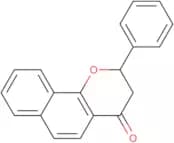
CAS:**α-Naphthoflavanone** is a synthetic flavanone compound, which is derived from natural plant polyphenols. It exhibits its mode of action primarily through the modulation of various biochemical pathways, potentially influencing enzyme activity, receptor binding, and signaling cascades. As a flavanone, it interacts with specific molecular targets, leading to possible antioxidant and anti-inflammatory effects.Formula:C19H14O2Purity:Min. 95%Color and Shape:SolidMolecular weight:274.31 g/molCannflavin B
CAS:Cannflavin B is a specialized flavonoid compound, which is a secondary metabolite derived from Cannabis sativa. It exhibits a distinct mode of action as a potent anti-inflammatory agent. Cannflavin B exerts its effects through the inhibition of pro-inflammatory mediators such as prostaglandins and leukotrienes. These biochemical pathways are typically linked with the cyclooxygenase (COX) and lipoxygenase (LOX) enzymes, and Cannflavin B effectively interferes with these enzymatic processes to reduce inflammation at the molecular level.
Formula:C21H20O6Purity:Min. 95 Area-%Color and Shape:PowderMolecular weight:368.38 g/molRef: 3D-XC176307
Discontinued product7-Hydroxy-2',4',5'-trimethoxyisoflavone
CAS:7-Hydroxy-2',4',5'-trimethoxyisoflavone is a naturally occurring flavonoid, which is commonly isolated from various plant sources, including legumes and other flavonoid-rich botanical species. This compound exhibits a unique structural configuration characterized by hydroxyl and methoxy functional groups, contributing to its notable bioactivity.
Formula:C18H16O6Purity:Min. 95%Color and Shape:PowderMolecular weight:328.32 g/molHinokiflavone pentamethyl ether
CAS:Hinokiflavone pentamethyl ether is a synthetic flavonoid derivative, which is a chemically modified compound sourced from the natural biflavonoid, hinokiflavone. It is characterized by the methylation of phenolic hydroxyl groups, enhancing its stability and solubility. This compound can be derived through organic synthesis techniques involving the catalytic methylation of hinokiflavone.
Formula:C35H28O10Purity:Min. 95%Molecular weight:608.59 g/mol