Catechin
Found 86 products for "Catechin".
- Lower prices
- Higher prices
- Lower purities
- Higher purities
- Faster estimated delivery
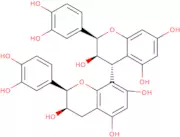
Procyanidin B2
CAS:Procyanidin B2 is a type of polyphenol, specifically a flavonoid compound, which is derived from plant sources such as grape seeds, apples, and cacao beans. This compound is characterized by its dimeric structure, consisting of two epicatechin units linked through a specific bond. The mode of action of Procyanidin B2 involves its function as a potent antioxidant, which allows it to neutralize free radicals and reduce oxidative stress at the cellular level. Additionally, it influences various signaling pathways, modulating enzyme activity and gene expression related to inflammation and cell survival.
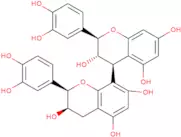
Formula:C30H26O12Purity:Min. 98 Area-%Color and Shape:Off-White PowderMolecular weight:578.52 g/molProcyanidin B4
CAS:Procyanidin B4 is a type of proanthocyanidin, which is a class of flavonoids. This compound is predominantly derived from various plant sources, notably grape seeds and certain fruits like apples. Its mode of action is primarily through its antioxidant properties, which involve scavenging free radicals and reducing oxidative stress at the cellular level. Procyanidin B4 operates by stabilizing free radicals with its phenolic hydroxyl groups, thereby inhibiting lipid peroxidation and protecting cellular components such as DNA, proteins, and lipids from oxidative damage.
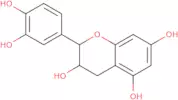
Formula:C30H26O12Purity:Min. 98 Area-%Color and Shape:White PowderMolecular weight:578.52 g/mol(±)-Catechin
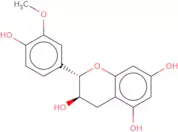
CAS:(±)-Catechin is a type of flavonoid, a class of compounds known for their diverse range of biological activities. It is primarily sourced from a variety of plants, including tea leaves, cocoa, and certain fruits, where it exists as a natural antioxidant. The mode of action of (±)-catechin involves scavenging free radicals, thereby protecting cells from oxidative stress and potential damage. This protective mechanism is largely attributed to its polyphenolic structure, allowing it to neutralize reactive oxygen species (ROS).Formula:C15H14O6Purity:Min. 98 Area-%Color and Shape:White PowderMolecular weight:290.27 g/mol3'-O-Methylcatechin
CAS:3'-O-Methylcatechin is a naturally occurring flavonoid, which is derived from various plant sources, such as tea and certain fruits. It belongs to the class of compounds known as catechins, which are polyphenolic compounds widely recognized for their beneficial health effects. The methylation at the 3' position distinguishes it from other catechins, potentially influencing its bioavailability and biochemical activity.Formula:C16H16O6Purity:Min. 95%Molecular weight:304.29 g/mol(-)-Gallocatechin 3-(4''-O-methyl)gallate
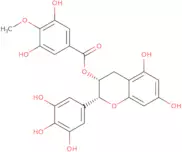
CAS:(-)-Gallocatechin 3-(4''-O-methyl)gallate is a naturally occurring flavonoid, which is a type of polyphenolic compound. It is derived from plant sources, specifically found in certain teas and other botanical products. This compound exhibits its mode of action primarily through its antioxidant properties, where it scavenges free radicals and inhibits oxidative stress, thereby protecting cellular systems from damage.Formula:C23H20O11Purity:Min. 95%Molecular weight:472.4 g/mol(+)-Gallocatechin
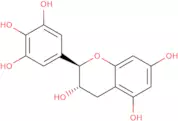
CAS:(+)-Gallocatechin is a flavonoid, which is a type of polyphenol compound, naturally found in a variety of plant sources such as tea leaves, cocoa, and certain fruits. It is structurally related to other catechins, sharing similar properties and biological activities. As an antioxidant, (+)-Gallocatechin acts by scavenging free radicals, thereby inhibiting oxidative stress—a process linked to various chronic diseases and aging.Formula:C15H14O7Purity:Min. 95%Molecular weight:306.27 g/mol