Cannabinoids
Cannabinoids are a class of diverse chemical compounds derived from fatty acids or polyketides that act on cannabinoid receptors in cells, altering neurotransmitter release in the brain. Found primarily in cannabis plants, cannabinoids like THC and CBD are widely studied for their therapeutic effects, including pain relief, anti-inflammatory properties, and potential use in neurodegenerative diseases. At CymitQuimica, you will find a wide variety of cannabinoids for research in pharmacology, neurobiology, and medical chemistry.
Found 298 products of "Cannabinoids"
Sort by
Purity (%)
0
100
|
0
|
50
|
90
|
95
|
100
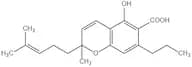
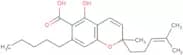
Cannabichromevarinic acid
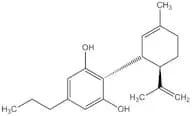
CAS:Carboxylic acid with phenol functionFormula:C20H26O4Purity:≥ 98.0 % (HPLC)Color and Shape:PowderMolecular weight:330.42Cannabidivarin
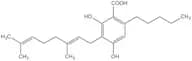
CAS:PolyphenolFormula:C19H26O2Purity:≥ 90.0 % (HPLC)Color and Shape:PowderMolecular weight:286.41Cannabigerolic acid
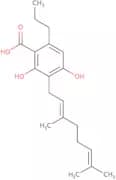
CAS:Carboxylic acid with phenol functionFormula:C22H32O4Purity:≥ 90.0 % (HPLC)Color and Shape:PowderMolecular weight:360.49S-Methoprene
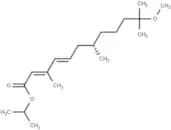
CAS:<p>S-Methoprene (ZR2458), a juvenile hormone analog, acts as an insecticide influencing redox activity and male sex differentiation.</p>Formula:C19H34O3Purity:97.05% - 98.55%Color and Shape:SolidMolecular weight:310.47CB1/2 agonist 3
CAS:<p>CB1/2 agonist 3 is a competitive and potent CB1/CB2 agonist with high affinity for hCB1 and hCB2 and can be used to study neurological disorders.</p>Formula:C25H41NO2Purity:98.78%Color and Shape:SolidMolecular weight:387.6(-)-Isoperitenone
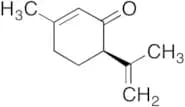
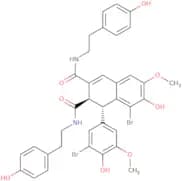
CAS:Controlled Product<p>Applications (-)-Isoperitenone, is a derivative of (-)-Cannabidiol (C175300), a major, non psychotropic constituent of cannabis.<br>References Hanus, L. et al.: Organic & Biomolecular Chemistry, Vol.3, Issue 6 (2005);<br></p>Formula:C10H14OColor and Shape:NeatMolecular weight:150.22rel-(1R,2S)-8-Bromo-1-(3-bromo-4-hydroxy-5-methoxyphenyl)-1,2-dihydro-7-hydroxy-N2,N3-bis[2-(4-hydroxyphenyl)ethyl]-6-methoxy-2,3-na phthalenedicarboxamide
CAS:<p>rel-(1R,2S)-8-Bromo-1-(3-bromo-4-hydroxy-5-methoxyphenyl)-1,2-dihydro-7-hydroxy-N2,N3-bis[2-(4-hydroxyphenyl)ethyl]-6-methoxy-2,3-naphthalenedicarboxamide is a synthetic chemical compound, which is derived through targeted organic synthesis and structural optimization efforts. Its source lies in advanced laboratory methodologies designed to enhance specific pharmacological properties. The mode of action is expected to involve selective interaction with particular molecular targets, potentially modulating distinct pathways related to cellular function or signaling processes.</p>Formula:C36H34Br2N2O8Purity:Min. 95%Color and Shape:PowderMolecular weight:782.47 g/molC2
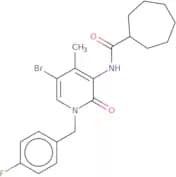
CAS:Positive allosteric modulator (PAM) of cannabinoid receptors CB2. The C2 modulator is the first synthetic PAM of CB2 receptors with antinociceptive properties, which were observed in a mouse model of neuropathic pain.Formula:C21H24BrFN2O2Purity:Min. 95%Color and Shape:White PowderMolecular weight:435.33 g/molGW 833972A hydrochloride
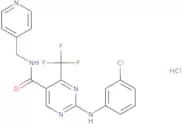
CAS:<p>A cannabinoid receptor agonist, which binds more selectively to CB2 than CB1 receptors (1000-fold). GW833972A inhibits vagus nerve depolarization induced by tussive agents, such as hypertonic saline (EC50 = 6.5 μM), capsaicin (EC50 = 33.9 μM) or PGE2 (EC50 = 15.9 μM).</p>Formula:C18H13ClF3N5O·HClPurity:Min. 95%Color and Shape:White/Off-White SolidMolecular weight:444.24 g/molGW 833972A
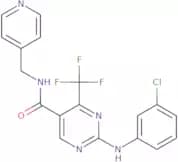
CAS:<p>A cannabinoid receptor agonist, which binds more selectively to CB2 than CB1 receptors (1000-fold). GW833972A inhibits vagus nerve depolarization induced by tussive agents, such as hypertonic saline (EC50 = 6.5 μM), capsaicin (EC50 = 33.9 μM) or PGE2 (EC50 = 15.9 μM).</p>Formula:C18H13ClF3N5OPurity:Min. 95%Color and Shape:White To Off-White SolidMolecular weight:407.78 g/molACEA, 5mg/ml solution in ethanol
CAS:<p>Cannabinoid type 1 (CB1) receptor agonist. Anti-depressant activity demonstrated in vivo alone, as well as enhancing the effect of fluoxetine. In the brain, ACEA activates CB1 receptors expressed in the mitochondria of neuronal cells to elicit neuroprotective effects. This is mediated by inducing glycogen synthase kinase-3β (GSK-3β) phosphorylation and inhibiting the opening of mitochondrial permeability transition pore (MPTP).<br>Sold by weight of solid</p>Formula:C22H36ClNOPurity:Min. 95%Color and Shape:Clear LiquidMolecular weight:365.98 g/molAnandamide
CAS:<p>Anandamide is an endogenous cannabinoid, which is a bioactive lipid mediator primarily found in the brain and peripheral organs. It is synthesized from membrane phospholipid precursors through enzymatic pathways, primarily involving the enzyme N-acyl phosphatidylethanolamine phospholipase D (NAPE-PLD). Anandamide acts as a ligand for cannabinoid receptors, mainly the CB1 receptor located in the central nervous system, and the CB2 receptor found in peripheral tissues.</p>Formula:C22H37NO2Purity:Min. 95%Color and Shape:Clear LiquidMolecular weight:347.53 g/molCannabichromenic Acid
CAS:<p>Cannabichromenic acid is a non-psychoactive phytocannabinoid and a precursor of cannabichromene1 which toxicological and pharmacological properties are unknown. Due to its structural similarity to cannabichromene, it is thought to reportedly exert anti-analgesic and anti-inflammatory activity.</p>Formula:C22H30O4Purity:Min. 95%Molecular weight:358.47 g/molCannabigerovarinic acid
CAS:Controlled Product<p>Cannabigerovarinic acid is a phytocannabinoid and the precursor to tetrahydrocannabivarinic acid, cannabidivarinic acid, and cannabichromevarinic acid1. No in vitro or in vivo pharmacological and toxicological studies have been conducted on cannabigerovarinic acid.</p>Formula:C20H28O4Purity:Min. 95%Molecular weight:332.43 g/molAPD 371
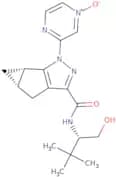
CAS:<p>A selective cannabinoid receptor type 2 (CB2) agonist. Commonly, CB2 agonists induce receptor internalization, which results in desensitization and tachyphylaxis. However, APD 371 mediates efficient recycling of internalized receptors back to the plasma membrane and thus sustains analgesic effects, upon subchronic treatment, in an osteoarthritis pain model in vivo.</p>Formula:C18H23N5O3Purity:Min. 95%Color and Shape:White PowderMolecular weight:357.41 g/mol1,2,3,9-Tetrahydro-4H-carbazol-4-one
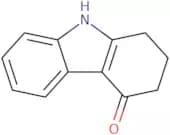
CAS:<p>1,2,3,9-Tetrahydro-4H-carbazol-4-one is a cyclic ketone compound, which can be synthesized through various organic reactions involving appropriate precursors. It is often derived from indole-based substrates through catalytic hydrogenation, allowing the formation of its stable tetrahydro structure with a retained core carbazole skeleton.</p>Formula:C12H11NOPurity:Min. 95%Color and Shape:PowderMolecular weight:185.23 g/mol