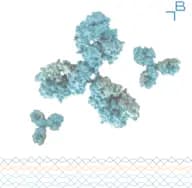
Primary Antibodies
Primary antibodies are immunoglobulins that bind specifically to an antigen of interest, allowing for the detection and quantification of proteins, peptides, or other biomolecules. These antibodies are critical tools in a wide range of applications, including Western blotting, immunohistochemistry, and ELISA. At CymitQuimica, we offer an extensive selection of high-quality primary antibodies that provide specificity and sensitivity for various research needs, including cancer, immunology, and cell biology studies.
Subcategories of "Primary Antibodies"
- Cancer Research Antibodies(3,620 products)
- Cardiovascular Antibodies(2 products)
- Developmental Biology(751 products)
- Epigenetics Antibodies(162 products)
- Immunology Antibodies(2,566 products)
- Metabolism Antibodies(279 products)
- Microbiology Antibodies(736 products)
- Signal Transduction(2,717 products)
- Tags & Cellular Markers(33 products)
Show 1 more subcategories
Found 75323 products of "Primary Antibodies"
Sort by
Purity (%)
0
100
|
0
|
50
|
90
|
95
|
100
IBA antibody
<p>The IBA antibody is a polyclonal antibody that is widely used in the field of life sciences. It specifically targets various proteins and factors, including alpha-fetoprotein, chemokines, growth factor-1 receptor, natriuretic factors, fatty acids, telomerase, and many others. This antibody is highly effective in detecting and quantifying these molecules in various biological samples such as human serum or nuclear extracts. The IBA antibody is available both as polyclonal antibodies and monoclonal antibodies, providing researchers with different options for their specific experimental needs. With its high specificity and sensitivity, this antibody is a valuable tool for studying the role of these proteins in various cellular processes and disease mechanisms.</p>CD40L antibody
The CD40L antibody is a monoclonal antibody that specifically targets the CD40 ligand, a molecule involved in immune responses. It has been shown to be effective against various diseases, including cryptosporidium infection and certain types of cancer. The CD40L antibody binds to the CD40 ligand on immune cells, leading to the activation of immune responses and the inhibition of disease progression. This antibody can be used in research laboratories and clinical settings for studying immune system function and developing new therapeutic approaches. Additionally, it has potential applications in gene therapy, as it can be delivered using adeno-associated viruses or other delivery systems. The CD40L antibody is a valuable tool for researchers in the Life Sciences field and holds promise for future medical advancements.MIP1 α antibody
MIP1 alpha antibody was raised in mouse using highly pure recombinant human MIP-1 alpha as the immunogen.Human Growth Hormone antibody
The Human Growth Hormone antibody is a basic protein that falls under the category of Life Sciences. It is a monoclonal antibody that has the unique ability to neutralize interferon (IFN) and chemokine activity. This antibody has been extensively tested and proven to effectively inhibit the growth factor activity of IFN-gamma, which plays a crucial role in various physiological processes. Additionally, this antibody has been shown to reduce viscosity levels in certain biological fluids, making it an invaluable tool for research and diagnostic purposes. Its high specificity and affinity for its target make it an ideal choice for scientists and researchers working in the field of molecular biology and immunology. With its ability to block the action of growth factors like acetylcholine and endothelial growth factor, this antibody opens up new possibilities for therapeutic interventions in various diseases and conditions.Goat anti-Human IgM antibody
The Goat anti-Human IgM antibody is a polyclonal antibody that specifically targets and binds to human IgM. This antibody is widely used in various life science assays and research applications. It can be used in immunohistochemistry, flow cytometry, and other techniques to detect and quantify IgM levels in human serum or other samples. The Goat anti-Human IgM antibody has high affinity and specificity for IgM, making it an excellent tool for studying immune responses and antibody-mediated processes. Its use can provide valuable insights into the role of IgM in various diseases and conditions.ST2 antibody
The ST2 antibody is a monoclonal antibody that acts as an inhibitor against several growth factors and binding proteins. It specifically targets the ST2 protein, which is involved in various biological processes such as inflammation and immune response. This antibody has been extensively studied in the field of life sciences and has shown promising results in inhibiting the activity of colony-stimulating factors like GM-CSF and adipose tissue-derived colony-stimulating factor. Additionally, it has been found to have anti-MERTK antibody activity, which plays a crucial role in regulating actin filaments. The ST2 antibody offers potential therapeutic applications in various diseases related to immune dysregulation and inflammatory disorders.Donkey anti Chicken IgY (H + L) (Alk Phos)
<p>Donkey anti-chicken IgY (H + L) (Alk Phos) was raised in donkey using chicken IgG (H & L) as the immunogen.</p>Anti-Grip71 antibody - 0.4mg/mL
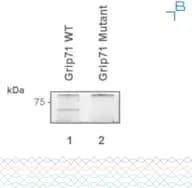
<p>Grip71 was first identified in Drosophila and named Drosophila gamma ring protein with WD repeats (Dgp71WD). It is a component of the γ-tubulin ring complex (γ-TuRC) and is a homologue of the mammalian NEDD1 (alternatively named GCP-WD). Despite the name, Grip71 lacks Grip domains and instead contains N-terminal WD40 repeats and a C-terminal domain with unknown structure required for Grip71's association with the γ-TuRC. Grip71 recruits γ-TuRC to different microtubule organising centres (MTOCs). Grip71 is recruited to the spindle equator and poles by Augmin. In mitotic cells, a loss of Grip71 or Augmin leads to a dramatic decrease in the spindle microtubule density.<br>For use in WB (1:1000), ELISA (1:1000) and Immunoprecipitation. Reacts with Drosophila.</p>Anti-SUMO1 antibody (N-ter) - 0.1mg/mL
<p>SMALL UBIQUITIN-LIKE MODIFIER (SUMO) protein is a small protein which can be conjugated to target proteins, a process known as SUMOylation. SUMOylation is a key post translational modification in plants that is involved in a wide array of biological processes ranging from development to environmental sensing. SUMOylation acts in a similar way to ubiqutination in that SUMOlayed proteins are targeted for degredation in the proteasome. SUMO conjugation to its protein target involves an enzyme cascade involving activation of the SUMO polypeptide by SUMO protease and ligation of the SUMO polypeptide to lysine residues in target proteins. The removal of SUMO occurs by deconjugating SUMO protease enzymes. Plants have two SUMO E3 ligases, AtHPY2 and AtSIZ1, encoded by the Arabidopsis genome. SUMOylation is reversible due to the presence of SUMO proteases that possess de-conjugation activity and are able to cleave SUMO from target proteins.<br>Reacts with Arabidopsis.</p>Anti-Cache Valley Virus (CVV) Nucleocaps - 1mg/mL
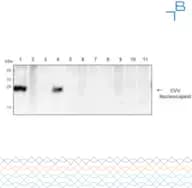
<p>Cache Valley virus (CVV) belongs to the Peribunyaviridae family of viruses (previously called Bunyaviridae) and is a mosquito born virus which is widespread throughout North and Central America. CVVs preferred mosquito vectors include several species of Aedes and it infects many species of domestic sheep and cattle. CVV infection in sheep causes spontaneous abortion, stillbirth, and congenital defects. The virus is neuroinvasive in humans and can cause central nervous system (CNS) diseases, such as encephalitis and meningitis and in rare cases has caused death. There appears to be a high infection rate (up to 18% of population) in virus-endemic areas. This antibody recognises the nucleocapsid protein in Cache Valley virus and Batai virus but not other members of the Bunyamwera serogroup such as Kairi virus and Bunyamwera virus.<br>1mg/ml. Used for WB/ELISA. Reacts with Cache Valley Virus, Batai virus.<br>Western blot image provided courtesy of Dr Alain Kohl's Laboratory: Western blot analysis of BHK-21 cells infected with a variety of orthobunyaviruses. The Anti-CVV Nucleocapsid antibody recognises nucleocapsid proteins in some members of the Bunyamwera serogroup.<br>Lane 1: Cache valley virus (Bunyamwera)<br>Lane 2: Kairi virus (Bunyamwera)<br>Lane 3: Bunyamwera virus (Bunyamwera)<br>Lane 4: Batai virus (Bunyamwera)<br>Lane 5: M'poko virus (Turlock)<br>Lane 6: Tacaiuma virus (Anopheles A)<br>Lane 7: Bwamba virus (Bwamba)<br>Lane 8: Guama virus (Guama)<br>Lane 9: Eretmapodites virus (Nyando)<br>Lane 10: Akabane virus (Simbu)<br>Lane 11: Schmallenberg virus (Simbu)<br>Secondary: Goat anti-rabbit IgG conjugated to HRP dilution 1:2000</p>Anti-RAMP2 antibody - 0.1mg/mL
<p>Receptor activity-modifying protein 2 (RAMP2) is a receptor accessory protein that alters the pharmacology of G-protein coupled receptors (GPCRs). RAMP2 associates with GPCRs to alter ligand specificity and mediate receptor trafficking. RAMP2 forms a receptor complex with calcitonin receptor-like receptor (CRLR) known as the calcitonin gene-related protein (CGRP) receptor. RAMP2 is responsible for the transport of this receptor to the plasma membrane. RAMPs also associate with other family B G-protein coupled receptors including the calcitonin receptor, the vasoactive intestinal polypeptide/pituitary AC-activating peptide 1 (VPAC1) receptor, and the glucagon receptor (GCGR) where they modulate ligand and G-protein selection.<br>1mg/ml. For use in WB (1:40), IF (1:200) and ELISA (1:1000). Reacts with human.</p>Anti-crc antibody - serum
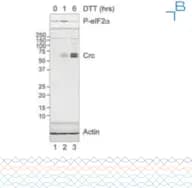
<p>Cryptocephal (CRC) is a basic-leucine zipper (bZIP) transcription factor in Drosophila and the homologue of vertebrate activating transcription factor 4 (ATF4), a member of the CREB/ATF family of transcription factors. CRC interacts with EcR-B2 to promote ecdysone-dependent expression of ecdysis triggering hormone (ETH), an essential regulator of insect moulting behaviour. The crc gene is expressed throughout development and mutations in crc causes pleiotropic defects in ecdysone-regulated events during Drosophila moulting and metamorphosis. In third instar larvae, crc expression is high in targets of ecdysone signalling, such as the leg and wing imaginal discs and in the ring gland, where ecdysone is produced.<br>Serum. For use in WB (1:1000) and ELISA (1:1000). Reacts with UniProtKB - Q9VID3_DROME.<br>Image: Anti-crc antibody (crb2005253) (1:1000)<br>Western blot analysis of nuclear extract of Drosophila Schneider 2 cells (S2 cells) (50µg) treated with 2mM DTT to induced by ER stress.<br>Lane 1: S2 cells<br>Lane 2: S2 cells treated with 2mM DTT for 1 hour<br>Lane 3: S2 cells treated with 2mM DTT for 6 hours<br>Secondary: IRDye®800CW Goat anti-Rabbit IgG 1:2000</p>Color and Shape:PowderFCGR1 antibody
The FCGR1 antibody is a highly specialized monoclonal antibody used in the field of Life Sciences. It specifically targets and binds to the Fc gamma receptor 1 (FCGR1), a glycoprotein found on the surface of immune cells. This antibody has shown great potential in various applications, including therapeutic use and research.Cytokeratin 19 antibody
<p>Cytokeratin 19 antibody was raised in mouse using Keratin K19 from cultured human MCF-7 cells as the immunogen.</p>Donkey anti Mouse IgG (H + L) (FITC)
<p>Donkey anti-mouse IgG (H + L) (FITC) was raised in donkey using mouse IgG (H&L) as the immunogen.</p>Influenza A antibody
The Influenza A antibody is a monoclonal antibody used in the field of life sciences. It is commonly used for research purposes and has various applications in the study of influenza A virus. This antibody specifically targets and binds to antigens associated with the influenza A virus, allowing for the detection and analysis of viral proteins. Monoclonal antibodies like the Influenza A antibody have revolutionized scientific research by providing highly specific tools for studying various biological processes. They are widely used in immunohistochemistry, flow cytometry, and other techniques to identify and characterize specific molecules or cells. The Influenza A antibody can be used in combination with other antibodies or reagents to develop diagnostic tests or therapeutic interventions against influenza A infections. Its high affinity and specificity make it a valuable tool for researchers working on understanding the mechanisms of viral infection, developing vaccines, or testing antiviral drugs. In addition to its applications in virology, this monoclonal antibody has also beenGAPDH antibody
<p>The GAPDH antibody is a cholinergic monoclonal antibody that is commonly used in flow immunoassays. It specifically targets and binds to glyceraldehyde-3-phosphate dehydrogenase (GAPDH), an enzyme involved in glycolysis and other cellular processes. This antibody can be used for various applications, including dilution tests, detection of GAPDH in human serum samples, and studying the role of GAPDH in different biological pathways.</p>RBP4 antibody
<p>The RBP4 antibody is a powerful tool in the field of Life Sciences. This monoclonal antibody specifically targets and binds to Retinol Binding Protein 4 (RBP4), a protein that plays a crucial role in the transportation of retinol (vitamin A) in the bloodstream. By binding to RBP4, this antibody allows for accurate detection and measurement of RBP4 levels in various biological samples.</p>MUC1 antibody
<p>MUC1 antibody was raised in mouse using human milk fat globule membranes as the immunogen.</p>Thrombin antibody (HRP)
Thrombin antibody (HRP) was raised in sheep using Thrombin prepared from purified human Prothrombin as the immunogen.hPL antibody
The hPL antibody is a highly specialized protein that plays a crucial role in various biological processes. It has been extensively studied for its ability to induce fas-mediated apoptosis in activated cells, making it a potent cytotoxic agent. This monoclonal antibody specifically targets molecules involved in cell growth and survival, neutralizing their effects and promoting cell lysis.Ankyrin B antibody
<p>Ankyrin B antibody was raised in mouse using a synthetic peptide corresponding to amino acids from the spectrin-binding domain of human Ankyrin B as the immunogen.</p>C1 Esterase Inhibitor antibody (HRP)
C1 Esterase Inhibitor antibody (HRP) was raised in goat using C1 esterase inhibitor purified from human plasma as the immunogen.DAP12 antibody
<p>The DAP12 antibody is a highly specialized antibody that is designed to target and bind to dinitrophenyl (DNP) antigens. It can be used in various applications, including research, diagnostics, and therapeutics. This antibody has been extensively studied and has shown excellent specificity and affinity for DNP antigens.</p>ApoE antibody
<p>The ApoE antibody is a highly specialized monoclonal antibody used in Life Sciences research. It is designed to specifically target and bind to the low-density lipoprotein receptor-related protein 1 (LRP1), which plays a crucial role in the clearance of amyloid plaques associated with Alzheimer's disease. This antibody has been extensively studied and validated in various assays, including ELISA, Western blotting, immunohistochemistry, and flow cytometry.</p>GDNF antibody
<p>The GDNF antibody is a specific antibody that targets the growth factor GDNF (Glial cell line-Derived Neurotrophic Factor). It is widely used in Life Sciences research, particularly in the study of liver microsomes and adipocyte biology. This polyclonal antibody binds to GDNF and can be used for various applications such as immunohistochemistry, Western blotting, and ELISA assays. The GDNF antibody is highly specific and shows minimal cross-reactivity with other proteins such as alpha-fetoprotein, collagen, or TGF-beta. Whether you're studying adiponectin receptor signaling or investigating the role of GDNF in adipose tissue development, this monoclonal antibody is an essential tool for your research. Trust in its reliability and specificity to provide accurate and reproducible results in your experiments.</p>Factor VIII antibody
<p>Factor Vlll antibody was raised in mouse using purified human factor VIII as the immunogen.</p>Actin-pan antibody
<p>Actin-pan antibody was raised in mouse using chicken gizzard actin as the immunogen.</p>CRP antibody
The CRP antibody is a highly effective monoclonal antibody that targets C-reactive protein (CRP). This antibody has been extensively studied and proven to inhibit the activity of CRP, which plays a crucial role in inflammation and immune response. By binding to CRP, this antibody prevents its interaction with other molecules and inhibits its phosphatase activity.TSH antibody
TSH antibody is a monoclonal antibody that exhibits cytotoxic properties. It is commonly used in electrophoresis and bioassay experiments to detect the presence of thyroid-stimulating hormone (TSH). This antibody specifically binds to TSH, inhibiting its activity and preventing the interaction with its receptor. Additionally, TSH antibody has been shown to have an affinity for epidermal growth factor (EGF)-like growth factors, such as lecithin, histidine, glycine, and glutamate. In life sciences research, this antibody is widely utilized for the detection and quantification of TSH levels in various biological samples. Its high specificity and sensitivity make it an invaluable tool in studying thyroid function and related disorders.CKMB antibody
The CKMB antibody is a monoclonal antibody that is designed to target and bind to CK-MB, which is an enzyme found in human serum. This antibody has been extensively studied and proven to be highly specific for CK-MB, making it an essential tool in various research applications.Purity:Min. 95%CD28 antibody (Allophycocyanin)
<p>CD28 antibody (Allophycocyanin) was raised in hamster using CD28 costimulatory receptor as the immunogen.</p>Purity:Min. 95%Molecular weight:0 g/molHIV1 p24 antibody
The HIV1 p24 antibody is a monoclonal antibody that specifically targets the glycosylation of the HIV1 p24 protein. This antibody plays a crucial role in detecting and studying the presence of HIV infection. It binds to the HIV1 p24 protein, inhibiting its interaction with other cellular proteins and interfering with viral replication. The HIV1 p24 antibody is widely used in research laboratories and diagnostic settings for the detection and quantification of HIV infection. Its high specificity and sensitivity make it an essential tool in the field of life sciences and antibody-based diagnostics.Purity:Min. 95%Afelimomab
CAS:Anti-TNF alpha monoclonal antibody; used in the treatment of rheumatoid arthritis, Chrohn's disease and plaque psoriasisCitatuzumab
CAS:Antibody-drug conjugate (ADC) Cituximab bogatox is a therapeutic agent comprising a Fab fragment of a humanized antibody directed against EpCAM and a modified cytotoxin bouganin.Shiga Toxin antibody
The Shiga Toxin antibody is a highly reactive monoclonal antibody used in Life Sciences research. It has been extensively tested and proven to effectively detect and quantify Shiga Toxin in various samples. The antibody can be used in different assay formats, including electrochemical impedance spectroscopy, where it is immobilized on an electrode surface for sensitive detection. The Shiga Toxin antibody has also been successfully conjugated to magnetic particles for easy separation and purification of the toxin from complex matrices.Purity:Min. 95%Nimacimab
CAS:Monoclonal antibody targeting cannabinoid 1 receptor (CB1); obesity and renal complicationsCarotuximab
CAS:A human chimeric monoclonal antibody that inhibits tumor growth by binding to CD105 (endoglin).Troponin I antibody
<p>Troponin I antibody is a neutralizing antibody that targets β-catenin, a key protein involved in various cellular processes. This antibody is widely used in Life Sciences research to study the function and regulation of β-catenin. It has been shown to inhibit the activity of transforming growth factor-beta 1 (TGF-β1), an important growth factor involved in cell proliferation and differentiation. Additionally, troponin I antibody can be used to detect and measure the levels of fibronectin, an extracellular matrix protein, which is often associated with tissue remodeling and wound healing. This monoclonal antibody is highly specific and has been extensively validated for its use in various experimental techniques. Researchers can rely on troponin I antibody to accurately detect and quantify their target proteins of interest, making it an essential tool in molecular biology and biomedical research.</p>Purity:Min. 95%ANXA6 antibody
The ANXA6 antibody is a highly specialized antibody that has various applications in the field of Life Sciences. It is particularly useful for studying the viscosity and multidrug resistance of cells. This antibody specifically targets lipase enzymes, including lipoprotein lipase and hepatic lipase, which are involved in lipid metabolism. Additionally, it has been shown to interact with interleukin-6, a cytokine involved in immune response regulation.Purity:Min. 95%Idarucizumab
CAS:A humanized monoclonal antibody fragment that is a reversal agent for a direct oral anticoagulant (DOAC).Troponin I antibody
The Troponin I antibody is a cholinergic monoclonal antibody that is used in Life Sciences research. This reactive and neutralizing antibody specifically targets troponin I, which is a protein involved in muscle contraction. It can be used to study the role of troponin I in various biological processes, such as muscle development and function. The Troponin I antibody has been shown to effectively bind to troponin I and inhibit its activity, making it a valuable tool for researchers studying the mechanisms of muscle contraction. Additionally, this antibody has cytotoxic effects on cells expressing troponin I, making it useful for targeted therapy approaches. It has also been shown to modulate the production of interleukin-6, a pro-inflammatory cytokine involved in immune responses. With its specificity and versatility, the Troponin I antibody is an essential tool for researchers in the field of Life Sciences.Purity:Min. 95%Bemarituzumab
CAS:Humanized, afucosylated IgG1 monoclonal antibody targeting fibroblast growth factor receptor 2b (FGFR2b)CD59 antibody
<p>CD59 antibody was raised in mouse using human CD59 as the immunogen.</p>Purity:Min. 95%CYP1A1 antibody
<p>CYP1A1 antibody was raised in mouse using partially purified P450 1A1 induced rat liver microsomes as the immunogen.</p>Purity:Min. 95%Brolucizumab
CAS:Humanized single-chain antibody fragment targeting Vascular endothelial growth factor A (VEGFA)Nirsevimab
CAS:Human recombinant monoclonal antibody targeting the F protein of respiratory syncytial virus (RSV)CD44 antibody
<p>CD44 antibody was raised in mouse using T-cell blasts as the immunogen.</p>Purity:Min. 95%Streptavidin antibody (HRP)
Streptavidin antibody (HRP) was raised in rabbit using streptavidin as the immunogen.Purity:Min. 95%Cosfroviximab
CAS:A mouse/human chimeric monoclonal antibody against Ebola virus glycoprotein (EBOV-GP).