Primary Antibodies
Primary antibodies are immunoglobulins that bind specifically to an antigen of interest, allowing for the detection and quantification of proteins, peptides, or other biomolecules. These antibodies are critical tools in a wide range of applications, including Western blotting, immunohistochemistry, and ELISA. At CymitQuimica, we offer an extensive selection of high-quality primary antibodies that provide specificity and sensitivity for various research needs, including cancer, immunology, and cell biology studies.
Subcategories of "Primary Antibodies"
- Cancer Research Antibodies(3,609 products)
- Cardiovascular Antibodies(2 products)
- Developmental Biology(746 products)
- Epigenetics Antibodies(162 products)
- Immunology Antibodies(2,609 products)
- Metabolism Antibodies(278 products)
- Microbiology Antibodies(736 products)
- Signal Transduction(2,710 products)
- Tags & Cellular Markers(33 products)
Show 1 more subcategories
Found 75080 products of "Primary Antibodies"
Sort by
Purity (%)
0
100
|
0
|
50
|
90
|
95
|
100
Influenza B Antibody
<p>The Influenza B Antibody is a powerful tool in the fight against the influenza virus. This antibody composition, developed by Life Sciences, is specifically designed to target and neutralize the virus hemagglutinin, a protein found on the surface of influenza B viruses.</p>Perilipin antibody
<p>Perilipin antibody was raised using the N terminal of PLIN corresponding to a region with amino acids STQFTAANELACRGLDHLEEKIPALQYPPEKIASELKDTISTRLRSARNS</p>SUNC1 antibody
<p>SUNC1 antibody was raised using the C terminal of SUNC1 corresponding to a region with amino acids IKLATKIIPTAVTMEHISEKVSPSGNISSAPKEFSVYGITKKCEGEEIFL</p>Osteocalcin antibody
<p>The Osteocalcin antibody is a highly specialized monoclonal antibody that targets and neutralizes the activity of osteocalcin. Osteocalcin is a protein involved in bone formation and remodeling. This antibody specifically binds to osteocalcin, preventing its activation and inhibiting its function.</p>Glucagon Receptor antibody
<p>The Glucagon Receptor antibody is a highly potent and activated antibody that targets the glucagon receptor. It has been shown to effectively inhibit VEGF-induced angiogenesis in various studies. This antibody specifically binds to fibrinogen and human serum albumin, allowing for targeted delivery and enhanced efficacy. Additionally, it has been demonstrated to have anticoagulant properties, making it a promising therapeutic option for cardiovascular disorders. The Glucagon Receptor antibody also acts as an endogenous hematopoietic growth factor, promoting the production of insulin and other important factors involved in glucose metabolism. With its wide range of applications in the field of Life Sciences, this Polyclonal Antibody is an invaluable tool for researchers studying various cellular processes. Its unique properties make it suitable for use in electrode-based assays and fatty acid analysis.</p>Insulin Receptor beta subunit antibody
<p>Insulin receptor beta subunit antibody was raised in mouse using a 15-mer synthetic peptide corresponding to aa Tyr-KKNGILTLPRSNPS from the C-terminal of human insulin receptor beta-subunit as the immunogen.</p>CYFRA21-1 antibody
<p>The CYFRA21-1 antibody is a Monoclonal Antibody that specifically targets the activated form of the CYFRA21-1 protein. This protein is found in human serum and has been associated with various diseases, including cancer. The antibody works by binding to the CYFRA21-1 protein, preventing its interaction with other molecules and inhibiting its function.</p>Heme Oxygenase 1 antibody
<p>Heme Oxygenase 1 antibody was raised in mouse using a synthetic peptide corresponding to the sequence near the N-terminus of human HO-1 as the immunogen.</p>CYFRA21-1 antibody
<p>The CYFRA21-1 antibody is a highly specialized monoclonal antibody that targets specific growth factors and tyrosine residues. It has been extensively studied for its potential in various fields, including neurology and oncology. The antibody has shown promising results in identifying alpha-synuclein aggregates, which are associated with neurodegenerative diseases such as Parkinson's disease. Additionally, it can be used to detect recombinant proteins and activated antibodies in research settings. The CYFRA21-1 antibody has also demonstrated its efficacy in the field of immunotherapy, particularly in combination with interferon-gamma (IFN-gamma) or interleukin therapy. Its ability to selectively bind to certain cellular markers makes it a valuable tool for targeted drug delivery and precision medicine applications.</p>PPA1 antibody
<p>The PPA1 antibody is a highly specialized antibody that targets the kinase receptor tyrosine phosphatase. It plays a crucial role in various biochemical processes, including the regulation of cell growth and differentiation. The PPA1 antibody has been extensively studied in the field of Life Sciences and has shown promising results as an antibody-drug conjugate.</p>HBsAg antibody
The HBsAg antibody is a vital component in the field of Life Sciences. This antibody specifically targets and binds to the hepatitis B surface antigen (HBsAg), which is a glycoprotein found on the surface of the hepatitis B virus. By binding to HBsAg, this antibody plays a crucial role in diagnostics and research related to hepatitis B infection.Staphylococcus aureus antibody
<p>Staphylococcus aureus antibody was raised in mouse using staphylococcus aureus as the immunogen.</p>GCSF antibody
<p>The 6-Fluoro-3-indoxyl-beta-D-galactopyranoside is a powerful antituberculosis drug that falls under the class of rifamycins. It is specifically designed to combat tuberculosis infection by targeting the active compounds responsible for bactericidal activity. This drug inhibits bacterial growth by binding to DNA-dependent RNA polymerase, effectively preventing transcription and replication. Its effectiveness has been extensively studied using advanced techniques such as patch-clamp technique on human erythrocytes. The active form of this drug undergoes various metabolic transformations, including hydrolysis by esterases or glucuronidases, oxidation by cytochrome P450 enzymes, reduction by glutathione reductase, or conjugation with glucuronic acid. Additionally, it specifically binds to markers expressed at high levels in Mycobacterium tuberculosis strains and inhibits cell growth in culture.</p>Anti-Peroxiredoxin SO2/3 antibody - 0.24mg/ml
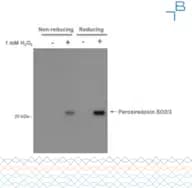
<p>Peroxiredoxins (Prxs) are a recently identified highly abundant and reactive family of antioxidant enzymes that reduce H2O2 via cysteine residue reactivity and make up the major cellular sink for cellular peroxides. Prxs are essential for preventing neurodegenerative disorders, haemolytic anaemia and inflammation from oxidative stress through the elimination of H2O2. The cysteine residues of Prx1-4 proteins are converted to thioredoxin (Trx) via a sulfenic intermediate and a disulphide bridge. However due to the slow rate of conversion to the disulfide, the sulfenic intermediate is occasionally over-oxidized to cysteine sulfinic acid (Cys-SO2H) or cysteine sulfonic acid (Cys-SO3H), which leads to the inactivation of the peroxidase activity. Prx proteins exhibit circadian cycles in their oxidation status in the absence of transcription and the inactivated form of the enzyme displays circadian accumulation. Overoxidized Prxs are also seen in excessive oxidative stress conditions such as the balloon-injured rat carotids, human atherosclerotic lesions, Pyrazole-induced liver Injury, and aged rat liver.</p>Color and Shape:PowderAnti-FGFR2c antibody - 1mg/mL
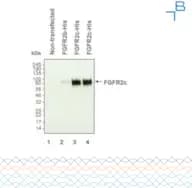
<p>The fibroblast growth factor receptor (FGFR) family consists of four transmembrane receptor tyrosine kinases (FGFR1-4), which regulate important physiological processes, such as cell proliferation, differentiation, migration and survival throughout the body. FGFR2c is known as the mesenchymal FGFR2 isoform and when aberrantly expressed in epithelial cells it induces epithelial-mesenchymal transition (EMT) and is involved in cancer progression. FGFR2 signalling is critical for proper craniofacial development. A gain-of-function mutation in the 2c splice variant is associated with Crouzon syndrome, which is characterized by craniosynostosis, the premature fusion of one or more of the cranial vault sutures, leading to craniofacial maldevelopment. FGFR2c-mediated ERK-MAPK signalling is a key mediator of craniofacial growth and coronal suture development.<br>1mg/ml. For use in WB (1:1000) and ELISA (1:1000). Reacts with human.<br>Image: Western blot analysis of conditioned media from non-transfected HEK293 cells.</p>Anti-sCTLA-4 antibody CRB4B8 - 1mg/mL
<p>Cytotoxic T-lymphocyte-associated protein 4 (CTLA4) in an immunoglobulin superfamily receptor important for downregulating immune responses. CTLA4 is expressed in T-cells where it transmits an inhibitory signal to the cells. The secreted soluble form of CTLA-4 (sCTLA-4) lacks the transmembrane domain as well as the membrane proximal cysteine residue required for covalent homodimerization and therefore sCTLA-4 is only present in monomeric form. In human and mouse sCTLA-4 mRNA expression is mainly detected in resting T-cells, at levels similar to transmembrane CTLA-4 (Tm-CTLA-4) mRNA, however following T-cell activation, Tm-CTLA-4 is upregulated and becomes the predominant transcript. Mutations in CTLA4 are associated with multiple autoimmune diseases, including type 1 diabetes (T1D), Graves' disease (GD), rheumatoid arthritis and celiac disease, an increase of sCTLA-4 is also seen in autoimmune diseases.<br>1mg/ml. For use in WB and ELISA. Reacts with human.Host: Mouse Monoclonal IgG</p>Candida albicans antibody (FITC)
Candida albicans antibody (FITC) was raised in rabbit using Candida albicans, type A as the immunogen.Clostridium difficile antibody
<p>Clostridium difficile antibody is a medicament that contains monoclonal antibodies specifically designed to target the amino-terminal region of the Clostridium difficile glycoprotein. These antibodies have been extensively studied in the field of Life Sciences and have shown neutralizing activity against Clostridium difficile, a bacterium known to cause severe gastrointestinal infections. The glycosylation pattern of these antibodies allows them to bind to specific glycans on the surface of Clostridium difficile, preventing its attachment and subsequent infection. Additionally, these antibodies have been shown to inhibit the production of chemokines and tumor necrosis factor-alpha (TNF-α), which are inflammatory molecules involved in the immune response. With their unique structure, these antibodies form dimers that enhance their binding affinity and efficacy. Overall, Clostridium difficile antibody is a powerful tool in combating infections caused by this bacterium and has promising applications in both research and clinical settings.</p>Human IgA Antibody
<p>The 6-Fluoro-3-indoxyl-beta-D-galactopyranoside is a powerful antituberculosis drug that falls under the category of rifamycins. It is highly effective in treating tuberculosis infections as it contains active compounds with bactericidal activity. Through its unique mechanism of action, this drug binds to DNA-dependent RNA polymerase, inhibiting bacterial growth and preventing transcription and replication.</p>IGFBP4 antibody
<p>The 6-Fluoro-3-indoxyl-beta-D-galactopyranoside is a powerful antituberculosis drug that falls under the category of rifamycins. It is known to be highly effective in treating tuberculosis infections, thanks to its bactericidal activity. This compound works by binding to DNA-dependent RNA polymerase, preventing transcription and replication, thus inhibiting bacterial growth. Its potency has been demonstrated through extensive research using the patch-clamp technique on human erythrocytes. The active form of this drug undergoes various metabolic transformations, including hydrolysis by esterases or glucuronidases, oxidation by cytochrome P450 enzymes, reduction by glutathione reductase, or conjugation with glucuronic acid. Additionally, it specifically targets markers expressed at high levels in Mycobacterium tuberculosis strains and inhibits their cell growth in culture.</p>IL6 monoclonal antibody
<p>The IL6 monoclonal antibody is a powerful tool in the field of Life Sciences. This antibody specifically targets and binds to interleukin-6 (IL6), a protein involved in various biological processes such as inflammation and immune response. By blocking the interaction between IL6 and its receptors, this monoclonal antibody can modulate the activity of IL6, leading to potential therapeutic benefits.</p>Influenza A antibody
<p>The Influenza A antibody is a monoclonal antibody used in the field of life sciences. It is commonly used for research purposes and has various applications in the study of influenza A virus. This antibody specifically targets and binds to antigens associated with the influenza A virus, allowing for the detection and analysis of viral proteins. Monoclonal antibodies like the Influenza A antibody have revolutionized scientific research by providing highly specific tools for studying various biological processes. They are widely used in immunohistochemistry, flow cytometry, and other techniques to identify and characterize specific molecules or cells. The Influenza A antibody can be used in combination with other antibodies or reagents to develop diagnostic tests or therapeutic interventions against influenza A infections. Its high affinity and specificity make it a valuable tool for researchers working on understanding the mechanisms of viral infection, developing vaccines, or testing antiviral drugs. In addition to its applications in virology, this monoclonal antibody has also been</p>GAPDH antibody
<p>The GAPDH antibody is a cholinergic monoclonal antibody that is commonly used in flow immunoassays. It specifically targets and binds to glyceraldehyde-3-phosphate dehydrogenase (GAPDH), an enzyme involved in glycolysis and other cellular processes. This antibody can be used for various applications, including dilution tests, detection of GAPDH in human serum samples, and studying the role of GAPDH in different biological pathways.</p>RBP4 antibody
<p>The RBP4 antibody is a powerful tool in the field of Life Sciences. This monoclonal antibody specifically targets and binds to Retinol Binding Protein 4 (RBP4), a protein that plays a crucial role in the transportation of retinol (vitamin A) in the bloodstream. By binding to RBP4, this antibody allows for accurate detection and measurement of RBP4 levels in various biological samples.</p>Listeria antibody
<p>The Listeria antibody is a monoclonal antibody specifically designed for use in Life Sciences. It is used in various applications such as electrode-based assays and peroxidase conjugate-based assays. This antibody is highly effective in detecting and targeting Listeria, a bacterium responsible for causing foodborne illnesses. The Listeria antibody can be utilized in biomolecule analysis, polymerase chain reaction (PCR) experiments, and flow cytometry detection. Its high surface affinity ensures accurate and reliable results. This antibody is also activated against other target molecules, making it a versatile tool for research purposes. With its exceptional performance and specificity, the Listeria antibody is an essential component in the development of new antimicrobial agents and diagnostic tests.</p>Bisphenol A antibody
<p>The Bisphenol A antibody is a monoclonal antibody that targets and binds to Bisphenol A, a chemical compound commonly found in plastics and other consumer products. This antibody has been extensively studied in the field of Life Sciences and has shown inhibitory effects on chemokine activity. It can also bind to other biomolecules such as glutamate and collagen, making it a versatile tool for various research applications. The Bisphenol A antibody has been successfully used in immunoassays to detect and quantify Bisphenol A in human serum, pleural fluid, and other biological samples. With its high specificity and affinity, this monoclonal antibody is an invaluable resource for researchers studying the effects of Bisphenol A on human health and exploring potential therapeutic interventions.</p>Thrombin antibody (HRP)
<p>Thrombin antibody (HRP) was raised in sheep using Thrombin prepared from purified human Prothrombin as the immunogen.</p>hPL antibody
<p>The hPL antibody is a highly specialized protein that plays a crucial role in various biological processes. It has been extensively studied for its ability to induce fas-mediated apoptosis in activated cells, making it a potent cytotoxic agent. This monoclonal antibody specifically targets molecules involved in cell growth and survival, neutralizing their effects and promoting cell lysis.</p>FSH antibody
<p>The FSH antibody is a monoclonal antibody that targets the follicle-stimulating hormone (FSH), a growth factor present in human serum. This antibody has been extensively studied and shown to have high specificity and affinity towards FSH. It can be used for various applications in the field of life sciences, including research, diagnostics, and therapeutic development.</p>Renin antibody
<p>Renin antibody is a monoclonal antibody that specifically targets and inhibits the activity of renin, an enzyme involved in the regulation of blood pressure. This antibody has been shown to effectively bind to renin in human serum and inhibit its enzymatic activity. By blocking renin, this antibody helps regulate blood pressure levels and maintain cardiovascular health. Additionally, studies have demonstrated that renin antibody can modulate various pathways such as alpha-fetoprotein, family kinase inhibitor, actin filaments, adrenomedullin, colony-stimulating factors, collagen synthesis, macrophage colony-stimulating factors, TGF-beta signaling pathway, glycation processes and many more. This makes it a promising therapeutic option for the treatment of hypertension and other related conditions. With its high specificity and effectiveness in targeting renin, this monoclonal antibody offers a potential solution for individuals seeking to manage their blood pressure levels effectively.</p>Procalcitonin antibody
<p>Procalcitonin antibody is a low-density nanocomposite that belongs to the class of antibodies used in Life Sciences. It is designed to specifically bind and neutralize procalcitonin, a peptide that is activated during bacterial infections. This monoclonal antibody inhibits the activity of procalcitonin, preventing its interaction with receptors and subsequent signaling pathways. The excipients used in the formulation of this antibody ensure stability and enhance its therapeutic efficacy. Additionally, this antibody has been shown to have neutralizing effects on other inflammatory mediators such as epidermal growth factor and interferon, making it a versatile tool for research and therapeutic applications.</p>Keratin K5 + K8 antibody
<p>Keratin K5/K8 antibody was raised in mouse using human Keratin 8 purified from SDS PAGE as the immunogen.</p>Thyroid Peroxidase antibody
<p>Thyroid Peroxidase antibody is a protein that plays a crucial role in the synthesis of thyroid hormones. It is an autoantibody that targets thyroid peroxidase, an enzyme involved in the production of thyroid hormones. This antibody specifically binds to the enzyme and inhibits its activity, leading to reduced hormone synthesis. Thyroid Peroxidase antibody has been extensively studied in the field of Life Sciences, particularly in relation to hepatocyte growth factor (HGF) signaling pathway. It has been shown that this antibody can interfere with HGF signaling by binding to HGF dimers and preventing their interaction with receptors on target cells. Furthermore, low-molecular-weight antibodies have been identified as cytotoxic against thyroid cells, leading to cell death and disruption of hormone production. Monoclonal Antibodies targeting Thyroid Peroxidase have also been developed for therapeutic use, such as neutralizing antibodies against angiopoietin-like 3 (ANGPTL3), which have shown promising</p>HSP70 antibody
<p>HSP70 antibody was raised in mouse using recombinant human HSP70 as the immunogen.</p>EIF3M antibody
<p>EIF3M antibody was raised using the N terminal of EIF3M corresponding to a region with amino acids MSVPAFIDISEEDQAAELRAYLKSKGAEISEENSEGGLHVDLAQIIEACD</p>C1 Esterase Inhibitor antibody (HRP)
<p>C1 Esterase Inhibitor antibody (HRP) was raised in goat using C1 esterase inhibitor purified from human plasma as the immunogen.</p>DAP12 antibody
<p>The DAP12 antibody is a highly specialized antibody that is designed to target and bind to dinitrophenyl (DNP) antigens. It can be used in various applications, including research, diagnostics, and therapeutics. This antibody has been extensively studied and has shown excellent specificity and affinity for DNP antigens.</p>ApoE antibody
<p>The ApoE antibody is a highly specialized monoclonal antibody used in Life Sciences research. It is designed to specifically target and bind to the low-density lipoprotein receptor-related protein 1 (LRP1), which plays a crucial role in the clearance of amyloid plaques associated with Alzheimer's disease. This antibody has been extensively studied and validated in various assays, including ELISA, Western blotting, immunohistochemistry, and flow cytometry.</p>GDNF antibody
<p>The GDNF antibody is a specific antibody that targets the growth factor GDNF (Glial cell line-Derived Neurotrophic Factor). It is widely used in Life Sciences research, particularly in the study of liver microsomes and adipocyte biology. This polyclonal antibody binds to GDNF and can be used for various applications such as immunohistochemistry, Western blotting, and ELISA assays. The GDNF antibody is highly specific and shows minimal cross-reactivity with other proteins such as alpha-fetoprotein, collagen, or TGF-beta. Whether you're studying adiponectin receptor signaling or investigating the role of GDNF in adipose tissue development, this monoclonal antibody is an essential tool for your research. Trust in its reliability and specificity to provide accurate and reproducible results in your experiments.</p>Factor VIII antibody
<p>Factor Vlll antibody was raised in mouse using purified human factor VIII as the immunogen.</p>Actin-pan antibody
<p>Actin-pan antibody was raised in mouse using chicken gizzard actin as the immunogen.</p>Calcitonin antibody
<p>The Calcitonin antibody is a highly specialized monoclonal antibody that targets and neutralizes the activity of calcitonin, an important hormone involved in calcium metabolism. This antibody has been extensively studied in the field of Life Sciences and has shown great potential for therapeutic applications.</p>Vaccinia virus antibody (HRP)
<p>Vaccinia virus antibody (HRP) was raised in rabbit using new york city board of health (NYCBOH) strain, Vaccinia (whole virus) as the immunogen.</p>AAV VP1 antibody
<p>The AAV VP1 antibody is a low-density monoclonal antibody that has antiangiogenic properties. It is used in Life Sciences research to study endothelial growth and angiogenesis. This antibody specifically targets the VP1 protein of adeno-associated virus (AAV) and inhibits its activity. The AAV VP1 antibody has been shown to block the nuclear translocation of VP1 and prevent its interaction with cellular factors involved in angiogenesis. Additionally, this antibody has been used to detect glycosylation and glycation patterns of proteins in human serum samples. Its high specificity and sensitivity make it a valuable tool for studying protein-protein interactions and signaling pathways related to cell growth and apoptosis.</p>Anti-HRVA16 di-uridylated antibody R1G - 0.5mg/mL
human rhinovirus (HRV) VPg uridylylation.Purity:Min. 95%Anti-ANO1 antibody R2G - 1mg/mL
<p>Please enquire for more information about Anti-ANO1 antibody R2G - 1mg/mL including the price, delivery time and more detailed product information at the technical inquiry form on this page</p>Purity:Min. 95%Anti-HRVA16 di-uridylated antibody R2G - 0.2mg/mL
<p>human rhinovirus (HRV) VPg uridylylation.</p>Purity:Min. 95%Anti-ANO1 antibody R1T - 0.4mg/mL
<p>Please enquire for more information about Anti-ANO1 antibody R1T - 0.4mg/mL including the price, delivery time and more detailed product information at the technical inquiry form on this page</p>Purity:Min. 95%CKMB antibody
<p>The CKMB antibody is a monoclonal antibody that is designed to target and bind to CK-MB, which is an enzyme found in human serum. This antibody has been extensively studied and proven to be highly specific for CK-MB, making it an essential tool in various research applications.</p>Purity:Min. 95%CD28 antibody (Allophycocyanin)
<p>CD28 antibody (Allophycocyanin) was raised in hamster using CD28 costimulatory receptor as the immunogen.</p>Purity:Min. 95%Molecular weight:0 g/molPasotuxizumab
CAS:<p>A prostate-specific membrane antigen-targeting bispecific T-cell engager therapy</p>Citatuzumab
CAS:<p>Antibody-drug conjugate (ADC) Cituximab bogatox is a therapeutic agent comprising a Fab fragment of a humanized antibody directed against EpCAM and a modified cytotoxin bouganin.</p>Nimacimab
CAS:Monoclonal antibody targeting cannabinoid 1 receptor (CB1); obesity and renal complications