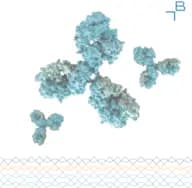
Primary Antibodies
Primary antibodies are immunoglobulins that bind specifically to an antigen of interest, allowing for the detection and quantification of proteins, peptides, or other biomolecules. These antibodies are critical tools in a wide range of applications, including Western blotting, immunohistochemistry, and ELISA. At CymitQuimica, we offer an extensive selection of high-quality primary antibodies that provide specificity and sensitivity for various research needs, including cancer, immunology, and cell biology studies.
Subcategories of "Primary Antibodies"
- Cancer Research Antibodies(3,620 products)
- Cardiovascular Antibodies(2 products)
- Developmental Biology(751 products)
- Epigenetics Antibodies(162 products)
- Immunology Antibodies(2,494 products)
- Metabolism Antibodies(279 products)
- Microbiology Antibodies(736 products)
- Signal Transduction(2,717 products)
- Tags & Cellular Markers(33 products)
Show 1 more subcategories
Found 75302 products of "Primary Antibodies"
Sort by
Purity (%)
0
100
|
0
|
50
|
90
|
95
|
100
SNRPD2 antibody
<p>SNRPD2 antibody was raised using the middle region of SNRPD2 corresponding to a region with amino acids ENVKEMWTEVPKSGKGKKKSKPVNKDRYISKMFLRGDSVIVVLRNPLIAG</p>CUGBP2 antibody
<p>CUGBP2 antibody was raised using the N terminal of CUGBP2 corresponding to a region with amino acids TSAFKLDFLPDMMVEGRLLVPDRINGTANKMNGALDHSDQPDPDAIKMFV</p>HSD17B10 antibody
<p>HSD17B10 antibody was raised in Rabbit using Human HSD17B10 as the immunogen</p>CD5 antibody (biotin)
<p>CD5 antibody (biotin) was raised in rat using CD5/Lyt-1 as the immunogen.</p>CSNK1A1L antibody
<p>CSNK1A1L antibody was raised in Rabbit using Human CSNK1A1L as the immunogen</p>VEGFR2 antibody
<p>The VEGFR2 antibody is a polyclonal antibody that specifically targets the vascular endothelial growth factor receptor 2 (VEGFR2). This receptor plays a crucial role in angiogenesis, which is the process of new blood vessel formation. The VEGFR2 antibody can be used in various life science applications to study the activation and signaling of this important growth factor.</p>DPH2 antibody
<p>DPH2 antibody was raised using a synthetic peptide corresponding to a region with amino acids CLSPPARPLPVAFVLRQRSVALELCVKAFEAQNPDPKAPVVLLSEPACAH</p>PLC beta 3 antibody
<p>The PLC beta 3 antibody is a highly specialized protein complex that plays a crucial role in various cellular processes. It functions as a growth factor and has been shown to have neutralizing effects on mycoplasma genitalium. Additionally, this antibody has been found to interact with trastuzumab, an important therapeutic agent used in the treatment of certain types of cancer.</p>CALB2 antibody
<p>The CALB2 antibody is a polyclonal antibody that specifically targets the CALB2 protein. It is commonly used in research and diagnostic applications to detect and quantify CALB2 levels in various samples. This antibody has high affinity and specificity for CALB2, making it an ideal tool for studying the expression and localization of this protein in different tissues and cell types.</p>BAD antibody
<p>The BAD antibody is a monoclonal antibody that specifically targets the BAD protein, an important regulator of cell survival and apoptosis. This antibody has been shown to inhibit endothelial growth and promote adipose and hepatocyte growth. It also acts as an inhibitor of lipase activity, which plays a crucial role in lipid metabolism. The BAD antibody has potential therapeutic applications in various fields, including cancer treatment, cardiovascular disease, and metabolic disorders. Additionally, it can be used in research studies to investigate the role of the BAD protein in different biological processes. With its high specificity and potency, this monoclonal antibody is a valuable tool for scientists and clinicians alike.</p>GSPT2 antibody
<p>GSPT2 antibody was raised using the middle region of GSPT2 corresponding to a region with amino acids GANIKEQSDFCPWYTGLPFIPYLDNLPNFNRSIDGPIRLPIVDKYKDMGT</p>NQO1 antibody
<p>NQO1 antibody was raised in rabbit using the C terminal of NQO1 as the immunogen</p>ANKRD11 antibody
<p>ANKRD11 antibody was raised using the N terminal of ANKRD11 corresponding to a region with amino acids KRKLPFTAGANGEQKDSDTEKQGPERKRIKKEPVTRKAGLLFGMGLSGIR</p>AK2 antibody
<p>AK2 antibody was raised using the N terminal of AK2 corresponding to a region with amino acids MAPSVPAAEPEYPKGIRAVLLGPPGAGKGTQAPRLAENFCVCHLATGDML</p>Laminin Gamma 1 antibody
<p>The Laminin Gamma 1 antibody is a highly specialized monoclonal antibody used in Life Sciences research. It is designed to specifically target and bind to the laminin gamma 1 protein, which plays a crucial role in cell adhesion and migration. By blocking the activity of this protein, the antibody can inhibit the formation of new blood vessels, known as microvessel density, which is essential for tumor growth and metastasis. Additionally, this antibody has been shown to activate phosphatase enzymes, which are involved in regulating cellular processes such as signal transduction and gene expression. The Laminin Gamma 1 antibody can be used in various applications, including immunohistochemistry and Western blotting, to study the role of laminin gamma 1 in different biological systems. Researchers can also use this antibody to investigate potential therapeutic targets for diseases involving abnormal angiogenesis or aberrant cell adhesion.</p>MCM6 antibody
<p>The MCM6 antibody is a specific antibody that targets the c-myc protein. It is commonly used in research and life sciences to study various cellular processes. This monoclonal antibody has been shown to effectively detect and bind to the c-myc protein, allowing for its visualization and analysis. The MCM6 antibody can be used in various immunological techniques such as Western blotting, immunohistochemistry, and immunofluorescence. It has also been used to study microvessel density and the expression of growth factors like epidermal growth factor (EGF) and transforming growth factor-beta (TGF-beta). Additionally, this monoclonal antibody has been utilized in cancer research, particularly in studies involving the plasminogen receptor and its role in tumor progression. With its high specificity and reliability, the MCM6 antibody is an essential tool for researchers aiming to explore the functions of c-myc protein and related pathways.</p>MYPT1 antibody
<p>The MYPT1 antibody is a highly specialized steroid that is used in the field of Life Sciences. It is available in both polyclonal and monoclonal forms, making it versatile for various research applications. This antibody has been extensively tested and validated for its efficacy in detecting MYPT1 expression in different cell lines, including MCF-7.</p>Adenovirus antibody (HRP)
Adenovirus antibody (HRP) was raised in goat using hexon from ADV, type 2 as the immunogen.Campylobacter jejuni antibody (FITC)
Campylobacter jejuni antibody (FITC) was raised in rabbit using ATCC strain 29428 as the immunogen.FSTL5 antibody
<p>FSTL5 antibody was raised using the middle region of FSTL5 corresponding to a region with amino acids EAFDIYTNLHISDLAFQPSFTEAHQYNIYGSSSTQTDVLFVELSSGKVKM</p>MAS1 antibody
<p>MAS1 antibody was raised using the middle region of MAS1 corresponding to a region with amino acids RPKYQSALVCALLWALSCLVTTMEYVMCIDREEESHSRNDCRAVIIFIAI</p>Tau antibody
<p>The 6-Fluoro-3-indoxyl-beta-D-galactopyranoside is a powerful antituberculosis drug that falls under the class of rifamycins. It is known for its bactericidal activity against tuberculosis infection. This active compound works by inhibiting bacterial growth through binding to DNA-dependent RNA polymerase, preventing transcription and replication. Its effectiveness has been demonstrated through patch-clamp technique on human erythrocytes. The drug undergoes various metabolic transformations, including hydrolysis, oxidation, reduction, or conjugation with glucuronic acid. Additionally, it specifically targets markers expressed in Mycobacterium tuberculosis strains and inhibits cell growth in culture.</p>KEAP1 antibody
<p>The KEAP1 antibody is a highly specialized monoclonal antibody that belongs to the category of Life Sciences products. It is specifically designed to target and bind to KEAP1, a protein involved in cellular response to oxidative stress. This antibody has been extensively studied and has shown promising results in various research fields.</p>ADAR1 antibody
<p>The ADAR1 antibody is a reactive growth factor that is commonly used in Life Sciences research. It has the ability to bind to lipoprotein lipase and serum albumin, forming a disulfide bond. This specific monoclonal antibody is highly effective in detecting autoantibodies and can be used for various applications in research and diagnostics. Additionally, it has shown binding affinity towards cations and anti-thyroglobulin antibodies. With its high specificity and sensitivity, the ADAR1 antibody is an essential tool for studying protein-protein interactions and understanding disease mechanisms.</p>KIAA0859 antibody
<p>KIAA0859 antibody was raised using the C terminal of KIAA0859 corresponding to a region with amino acids NEILFCQLHPEQKLATPELLETAQALERTLRKPGRGWDDTYVLSDMLKTV</p>CPN60 antibody
<p>The CPN60 antibody is a highly specialized monoclonal antibody that targets CPN60, a protein involved in various biological processes. It has been extensively studied for its role in interferon signaling and its ability to bind to autoantibodies. This antibody has also shown promising results in inhibiting lipoprotein lipase glycosylation, which is important for lipid metabolism. Furthermore, it has been found to regulate fibroin production and promote fas-mediated apoptosis. The CPN60 antibody is widely used in life sciences research and has become an essential tool for studying protein interactions and cellular processes. Whether you need polyclonal or monoclonal antibodies, the CPN60 antibody is a valuable addition to your laboratory toolkit.</p>POU2F2 antibody
<p>The POU2F2 antibody is a monoclonal antibody used in Life Sciences research. It specifically targets the chemokine POU2F2 and can be used for various applications such as immunohistochemistry and Western blotting. This antibody has been shown to neutralize the activity of POU2F2, preventing its interaction with other molecules and inhibiting its function. Additionally, it can be used as a cross-linking agent in experiments involving colloidal antigen-antibody complexes. The POU2F2 antibody has high affinity and specificity, allowing for accurate detection and analysis of POU2F2 in samples. Its activated form has been shown to effectively lyse cells expressing high levels of tumor necrosis factor-alpha (TNF-α) receptors, making it a valuable tool for studying TNF-α signaling pathways.</p>Prolactin antibody
<p>Prolactin antibody is a highly versatile and potent antibody that has various applications in the field of life sciences. It exhibits antiviral and anticoagulant properties, making it an essential tool for research in these areas. Additionally, this antibody can bind to antiphospholipid antibodies, which are associated with autoimmune disorders such as lupus and antiphospholipid syndrome.</p>HNF4G antibody
HNF4G antibody was raised using the N terminal of HNF4G corresponding to a region with amino acids MDMANYSEVLDPTYTTLEFETMQILYNSSDSSAPETSMNTTDNGVNCLCANewcastle disease virus antibody
<p>The Newcastle disease virus antibody is a highly effective monoclonal antibody that is used in the field of Life Sciences. This recombinant virus antibody specifically targets the Newcastle disease virus, a type 2 cytokine that causes respiratory and neurological disorders in birds. The antibody works by binding to specific markers on the virus, preventing its replication and spread within the host. Additionally, this antibody has been shown to have probiotic effects by promoting the growth of beneficial bacteria in the gut. It can be used for various applications such as enzyme labeling, diagnostic assays, and research purposes. With its high specificity and superoxide dismutase activity, this monoclonal antibody is an essential tool for scientists and researchers working in the field of virology.</p>PROM2 antibody
<p>The PROM2 antibody is a highly activated Monoclonal Antibody that is widely used in the Life Sciences field. It specifically targets the PROM2 protein, which plays a crucial role in various cellular processes. This antibody has been shown to have neutralizing and cytotoxic effects on cells expressing PROM2, making it an effective tool for studying its function.</p>Follistatin antibody
<p>The Follistatin antibody is a monoclonal antibody that targets and binds to Follistatin, a protein involved in various biological processes. Follistatin plays a crucial role in regulating the activity of growth factors such as glucagon and colony-stimulating factors (CSFs). By binding to Follistatin, this antibody inhibits its function and prevents it from interacting with its binding proteins. This inhibition can have several effects on different systems in the body.</p>PGBD3 antibody
<p>PGBD3 antibody was raised using the N terminal of PGBD3 corresponding to a region with amino acids AESDSDDPSYAPKDDSPDEVPSTFTVQQPPPSRRRKMTKILCKWKKADLT</p>C16orf70 antibody
<p>C16orf70 antibody was raised in Rabbit using Human C16orf70 as the immunogen</p>PPME1 antibody
<p>PPME1 antibody was raised using the N terminal of PPME1 corresponding to a region with amino acids MSALEKSMHLGRLPSRPPLPGSGGSQSGAKMRMGPGRKRDFSPVPWSQYF</p>Thrombopoietin antibody
<p>Thrombopoietin antibody is a highly specialized antibody that is used in the field of life sciences. It is designed to target and bind to thrombopoietin, a protein found in human serum. This antibody plays a crucial role in regulating platelet production and function.</p>RAD23B antibody
<p>RAD23B antibody was raised using a synthetic peptide corresponding to a region with amino acids QSSAVAAAAATTTATTTTTSSGGHPLEFLRNQPQFQQMRQIIQQNPSLLP</p>SCARB2 antibody
<p>SCARB2 antibody was raised in rabbit using the N terminal of SCARB2 as the immunogen</p>MRE11A antibody
<p>The MRE11A antibody is a highly specific monoclonal antibody that is used in various research applications in the field of Life Sciences. This antibody specifically targets the MRE11A protein, which plays a crucial role in DNA repair and maintenance. It has been widely used in studies related to amyloid plaque formation, anti-angiogenesis, alpha-fetoprotein detection, and growth factor signaling pathways.</p>Histone H2B antibody
<p>The Histone H2B antibody is a highly specific monoclonal antibody that is derived from plasma. It is commonly used in Life Sciences research to study various cellular processes, including chromatin remodeling and gene expression regulation. This antibody has been shown to have high affinity and specificity for Histone H2B, a protein involved in DNA packaging within the cell nucleus.</p>IDO1 antibody
<p>The IDO1 antibody is a monoclonal antibody that is used for immunohistochemical detection of IDO1 protein expression. It has high serum immunoreactivity and can effectively detect IDO1 protein levels in various samples, including human serum. This antibody specifically binds to the IDO1 protein and inhibits its activity, making it useful for studying the role of IDO1 in various biological processes.</p>ARPC2 antibody
<p>The ARPC2 antibody is a growth factor that plays a crucial role in various cellular processes. It is a monoclonal antibody specifically designed to target and neutralize anti-dnp antibodies. The ARPC2 antibody has been extensively studied and proven effective in laboratory experiments using electrodes. Additionally, it has shown promising results in combination therapy with other antibodies such as trastuzumab, targeting the epidermal growth factor receptor.</p>Copine I antibody
<p>Copine I antibody was raised using the middle region of CPNE1 corresponding to a region with amino acids VQCSDYDSDGSHDLIGTFHTSLAQLQAVPAEFECIHPEKQQKKKSYKNSG</p>CD8 antibody (Spectral Red)
<p>CD8 antibody (Spectral Red) was raised in mouse using human CD8 as the immunogen.</p>BRUNOL6 antibody
<p>BRUNOL6 antibody was raised using a synthetic peptide corresponding to a region with amino acids QAALLAAAQGPGLGPVAAVAAQMQHVAAFSLVAAPLLPAAAANSPPGSGP</p>